The Story
Plant Bio
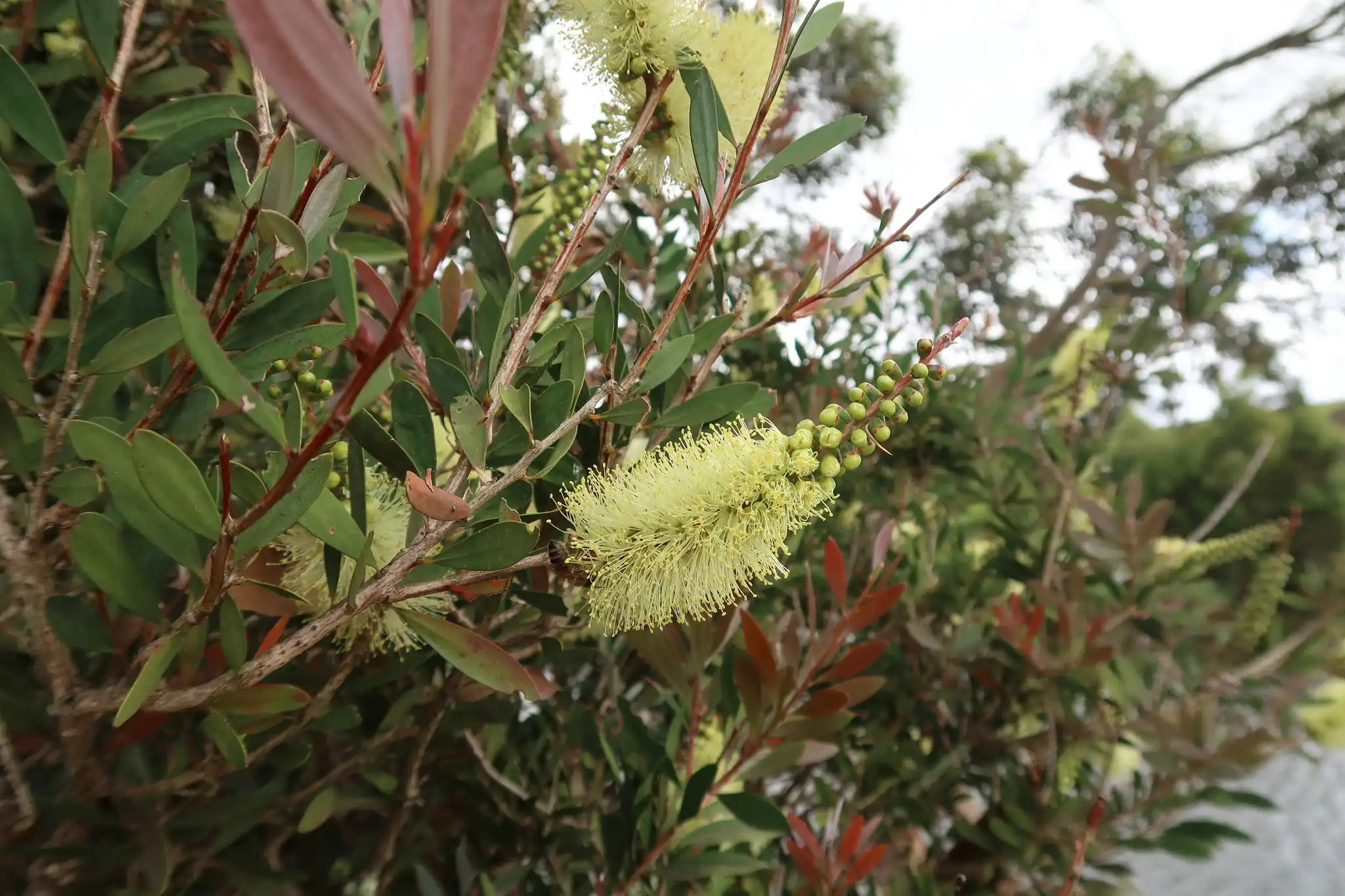
Callistemon pallidus, the lemon bottlebrush, is an upright, evergreen shrub native to southeastern Australia that reaches five to twelve feet in height. The small, leathery leaves are grey-green to bluish-green and feature a sharp, pungent point at the tip, with new growth emerging in silvery, silky hairs or pinkish tones.
The pale yellow to cream flowers are arranged in dense, cylindrical spikes resembling a bottlebrush, with the stem continuing to grow past the spike into a leafy shoot. These nectar-rich blooms appear from late spring through summer, attracting bees, butterflies, and hummingbirds.
Uses & Benefits:
Essentials
At a Glance
Plant Type
Shrub
Height
144"
Width
120"
Light
Full Sun, Partial Sun
Zones
7, 8, 9, 10
Water
Low to Moderate
Humidity
Moderate
Lifespan
Long-lived
Native To
Australia
Toxicity
Non-toxic (sharp leaf tips)
Bloom period
Late spring – Summer
In flower about 4 months of the year
Planting
How to Grow
- Plant in a full sun location to ensure maximum flower production, though partial shade is tolerated.
- Set the plant in well-draining, slightly acidic soil, though it adapts to clay, loam, and sandy types.
- Water regularly during the first growing season to establish a deep, drought-tolerant root system.
- Prune the branch tips annually immediately after the flowering cycle to maintain a dense, compact habit.
Pro Tip
Prune selectively immediately after flowering finishes, cutting just below the spent spikes; shearing mechanically into formal geometric shapes removes future flower buds and exposes bare, unproductive wood.
Keep It Thriving
Care Guide
Do
- Prune lightly right after flowering to encourage heavier blooms the following season.
- Water occasionally during prolonged dry spells even after the plant is fully established.
- Use a balanced, low-phosphorus fertilizer sparingly after flowering if supplemental feeding is required.
Don't
- Do not prune hard into old, leafless woody stems as they lack latent buds and will fail to shoot.
- Do not allow the plant to sit in stagnant, standing water, which can lead to root rot.
- Do not shear the shrub mechanically into formal geometric shapes.
Seasonal Care Calendar
| Task | Jan | Feb | Mar | Apr | May | Jun | Jul | Aug | Sep | Oct | Nov | Dec |
|---|---|---|---|---|---|---|---|---|---|---|---|---|
| Fertilize | ||||||||||||
| Pest Check | ||||||||||||
| Propagate | ||||||||||||
| Prune |
Watch Out For
Pests & Diseases
Common Pests
Common Diseases
In the Garden
Landscape Uses & Companions
Landscape Uses
Multiply
Propagation Methods
Good to Know
Common Questions
Lemon Bottlebrush questions
What zones can Lemon Bottlebrush grow in?
Lemon Bottlebrush is hardy in USDA Zones 7–10. Inside that range it survives winter in the ground; outside it, grow it as an annual or a container plant you protect.
Is Lemon Bottlebrush deer resistant?
Yes — Lemon Bottlebrush is rated deer-resistant. Deer typically pass it over, though extreme hunger can override any plant's defenses.
When does Lemon Bottlebrush bloom?
Lemon Bottlebrush typically blooms in late spring through summer. Exact timing shifts a week or two with your zone — Sow's bloom calendar maps it to your garden.
Does Lemon Bottlebrush need full sun?
Lemon Bottlebrush does best in full sun to part shade. In hot climates, afternoon shade keeps blooms fresher longer.
Is Lemon Bottlebrush drought tolerant?
Yes — once established (usually after the first full season), Lemon Bottlebrush handles dry spells with minimal watering. Water deeply its first year to build the root system that makes that possible.
More Callistemon to compare
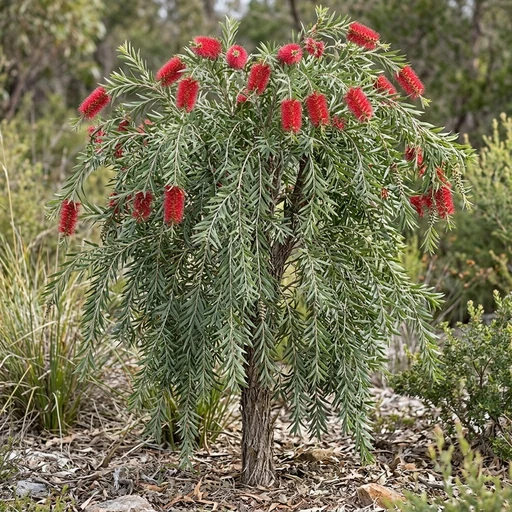
Weeping Bottlebrush
Callistemon viminalis
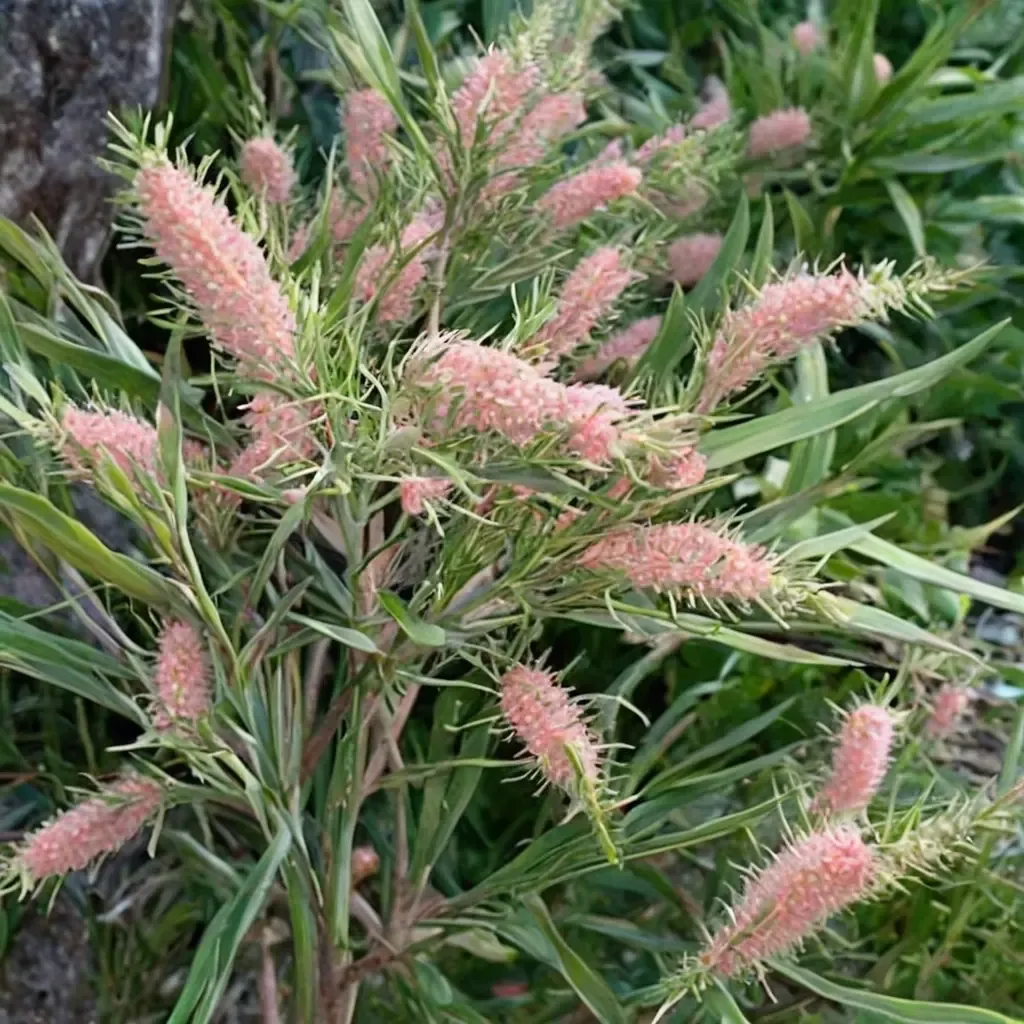
Cane's Hybrid Bottlebrush
Callistemon citrinus 'Cane's Hybrid'
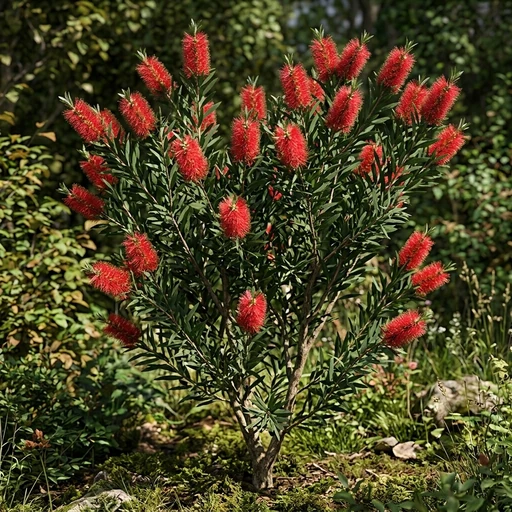
Woodlander's Hardy Bottlebrush
Callistemon x hybrida 'Woodlander'S Hardy'
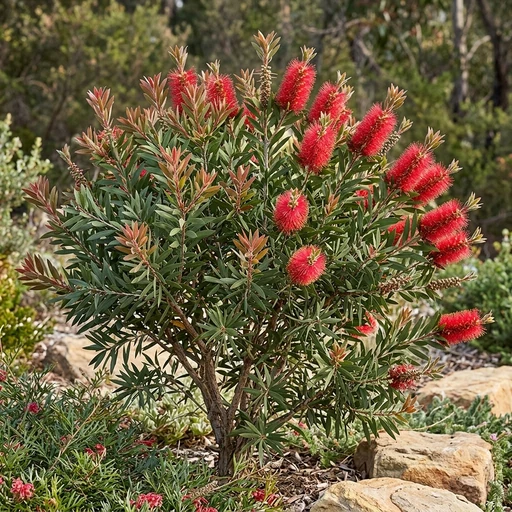
Little John Dwarf Bottlebrush
Callistemon citrinus 'Little John'
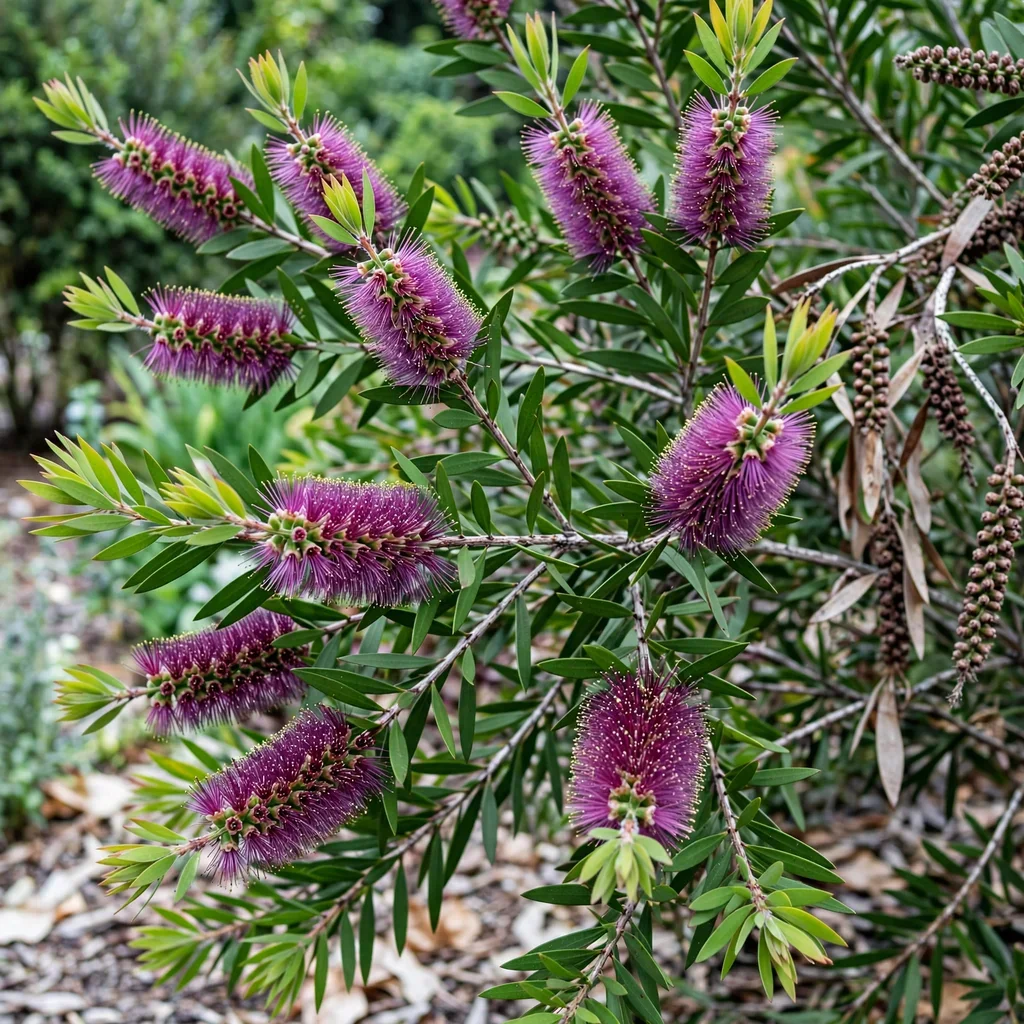
Violet Bottlebrush
Callistemon x hybrida 'Violaceus'
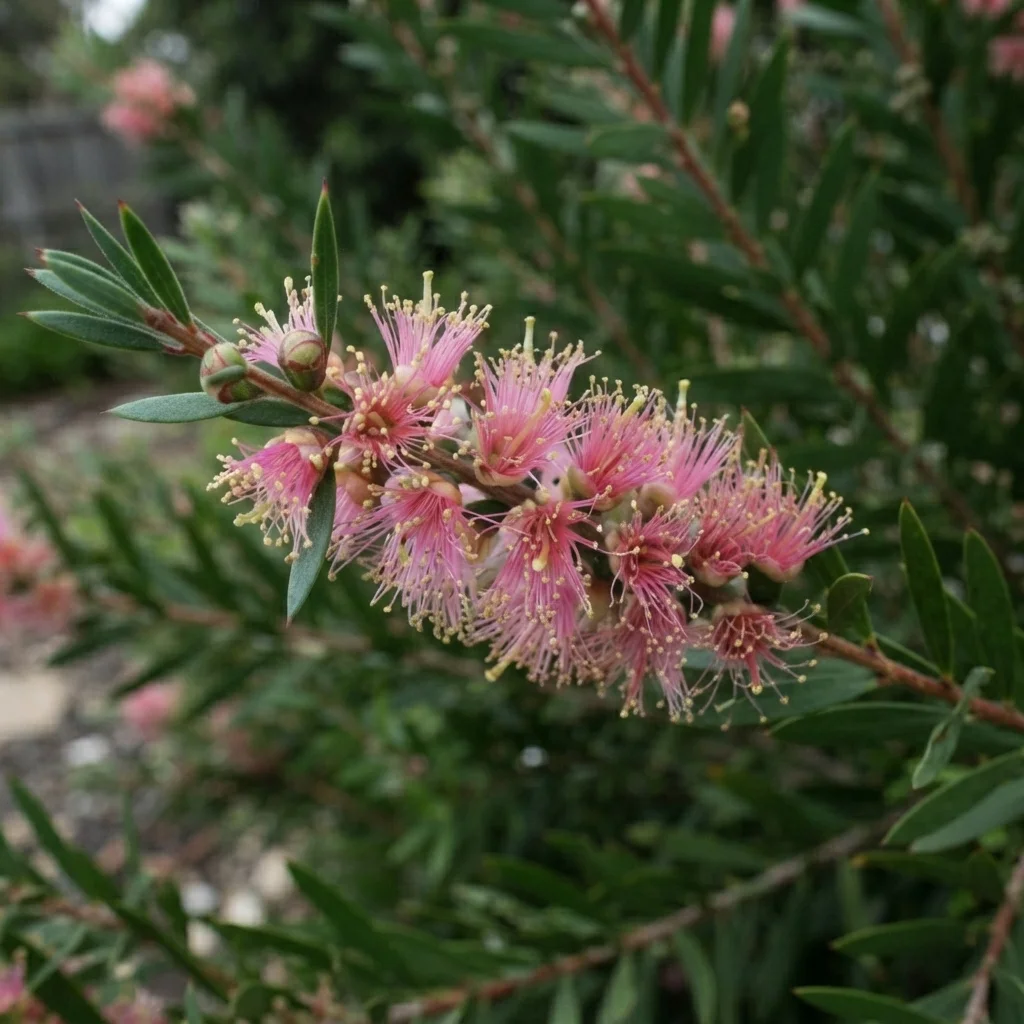
River Bottlebrush
Callistemon sieberi
Keep exploring
Explore the genus
Hardy in your zone?
Grow Lemon Bottlebrush with confidence
See it in a design of your actual yard, get zone-matched care reminders, and track it season by season in your garden journal.