The Story
Plant Bio
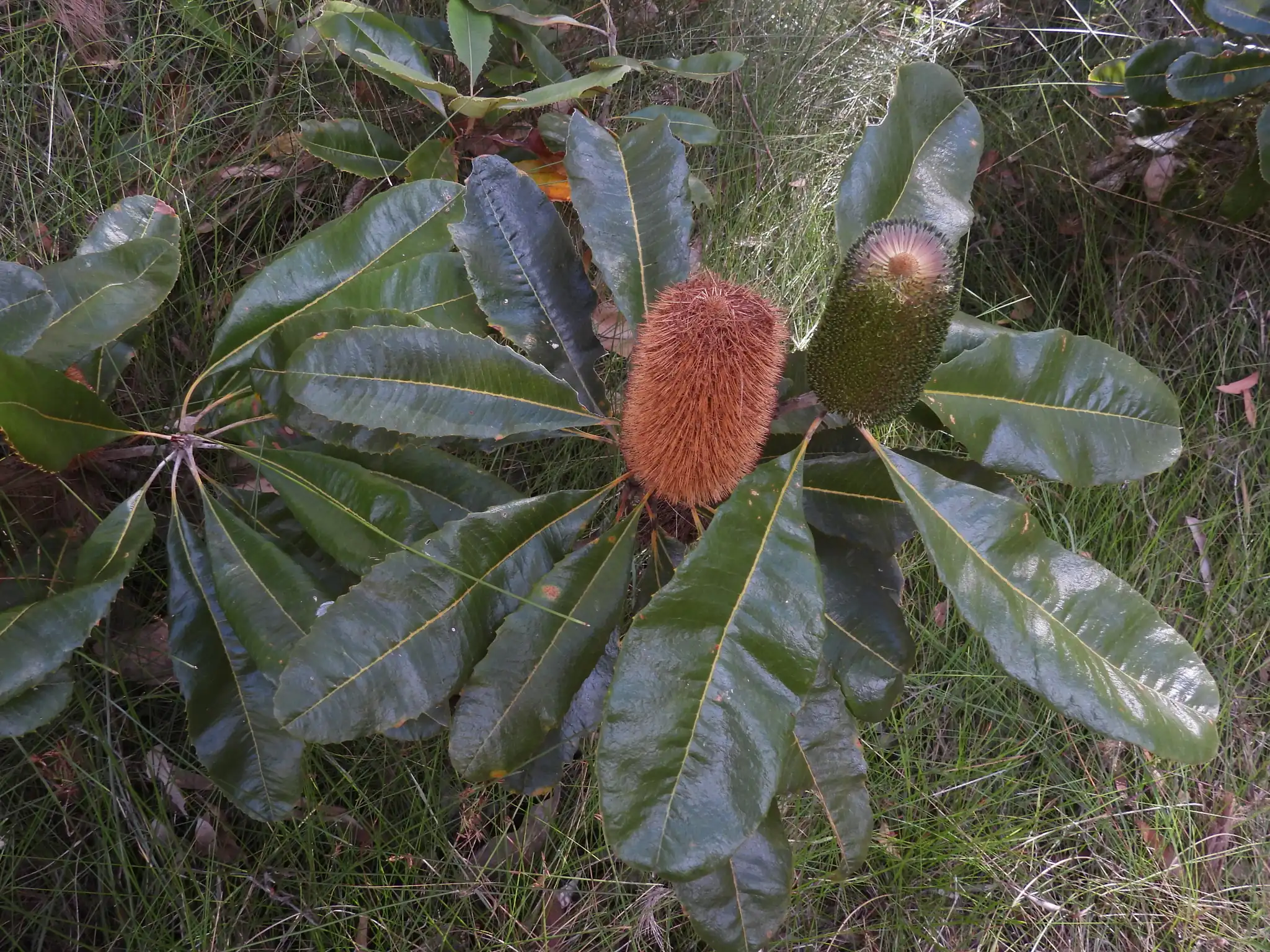
Banksia robur is an open, spreading multi-stemmed evergreen shrub native to the sandy, damp coastal regions of eastern Australia. It is distinguished by its exceptionally large, leathery, serrated leaves that reach up to sixteen inches in length, featuring a shiny green upper surface and a pale, flannel-like underside.
The cylindrical flower spikes emerge as metallic bottle-green buds before opening to a greenish-yellow and eventually aging to a deep chocolate-brown. New foliage growth is covered in a velvet, rusty-brown to pinkish-red down that contrasts sharply with the mature green leaves.
Uses & Benefits:
Essentials
At a Glance
Plant Type
Shrub
Height
118"
Width
118"
Light
Full Sun
Zones
8, 9, 10
Water
High
Humidity
High
Lifespan
Long-lived
Native To
Australia
Toxicity
Non-toxic
Bloom period
Fall – Winter
In flower about 6 months of the year
Planting
How to Grow
- Select a planting site in full sun with acidic, sandy or peaty soil that retains moisture.
- Water young plants deeply and regularly during their first year to establish a deep root system.
- Protect young, soft growth from frost during the first winter using a temporary cover.
- Apply only low-phosphorus fertilizers formulated for native Australian plants to avoid root toxicity.
Pro Tip
Do not panic when the base of the shrub develops a swollen, woody lump at or below ground level; this is a natural lignotuber, not a disease or graft failure.
Keep It Thriving
Care Guide
Do
- Provide supplemental water during extended dry spells to prevent leaf drop.
- Use organic mulch to help retain soil moisture and keep the root zone cool.
- Prune lightly into active growth to maintain a compact, bushy habit.
Don't
- Do not apply standard garden fertilizers containing high levels of phosphorus.
- Do not prune deeply into old, bare wood that lacks active foliage or dormant buds.
- Do not allow the soil to dry out completely during the plant's establishment phase.
Seasonal Care Calendar
| Task | Jan | Feb | Mar | Apr | May | Jun | Jul | Aug | Sep | Oct | Nov | Dec |
|---|---|---|---|---|---|---|---|---|---|---|---|---|
| Fertilize | ||||||||||||
| Pest Check | ||||||||||||
| Prune | ||||||||||||
| Winter Prep |
Watch Out For
Pests & Diseases
Common Pests
Common Diseases
In the Garden
Landscape Uses & Companions
Landscape Uses
Companion Plants
Multiply
Propagation Methods
Good to Know
Common Questions
Swamp Banksia questions
What zones can Swamp Banksia grow in?
Swamp Banksia is hardy in USDA Zones 8–10. Inside that range it survives winter in the ground; outside it, grow it as an annual or a container plant you protect.
Is Swamp Banksia deer resistant?
Not reliably. Deer may browse Swamp Banksia, especially tender spring growth — plan on repellents or fencing where pressure is high.
When does Swamp Banksia bloom?
Swamp Banksia typically blooms in fall through winter. Exact timing shifts a week or two with your zone — Sow's bloom calendar maps it to your garden.
Does Swamp Banksia need full sun?
Swamp Banksia does best in full sun (6+ hours).
Is Swamp Banksia drought tolerant?
Yes — once established (usually after the first full season), Swamp Banksia handles dry spells with minimal watering. Water deeply its first year to build the root system that makes that possible.
More Banksia to compare
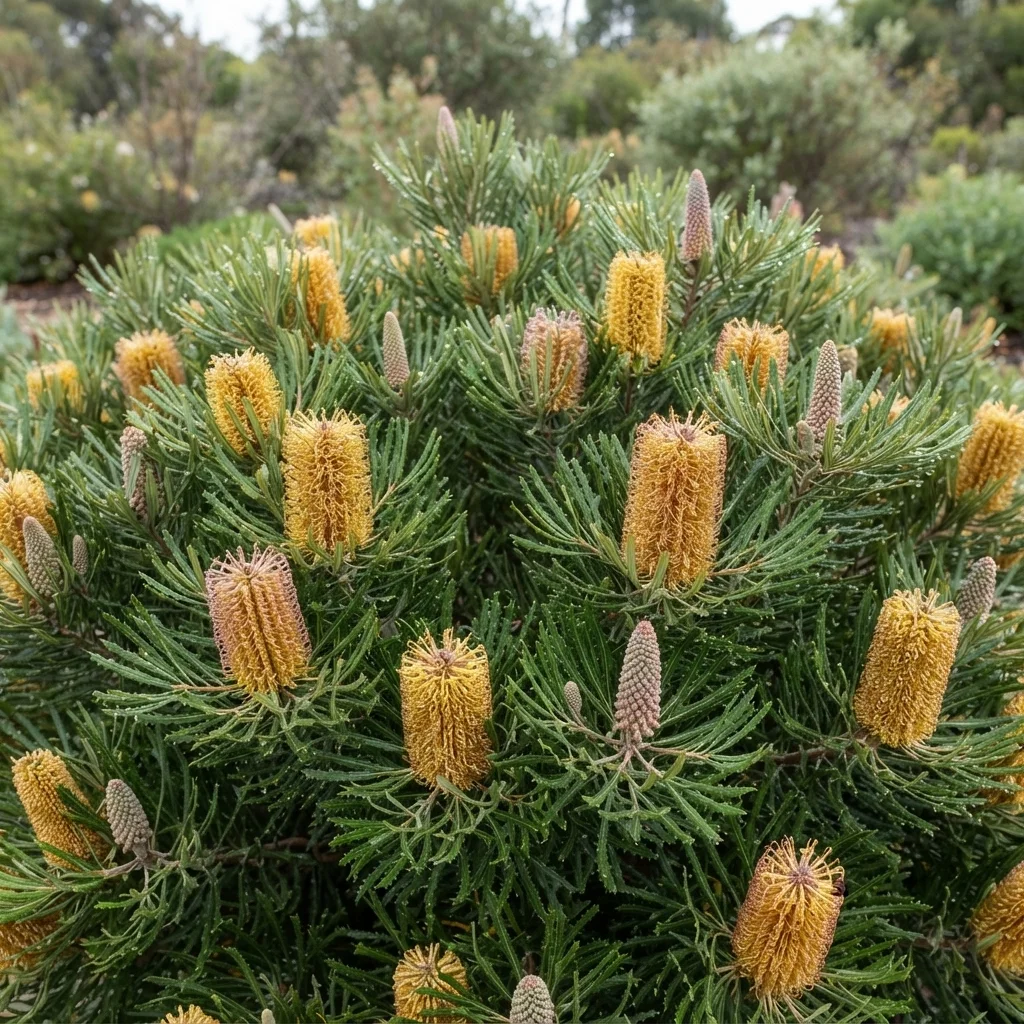
Birthday Candles Banksia
Banksia spinulosa 'Birthday Candles'
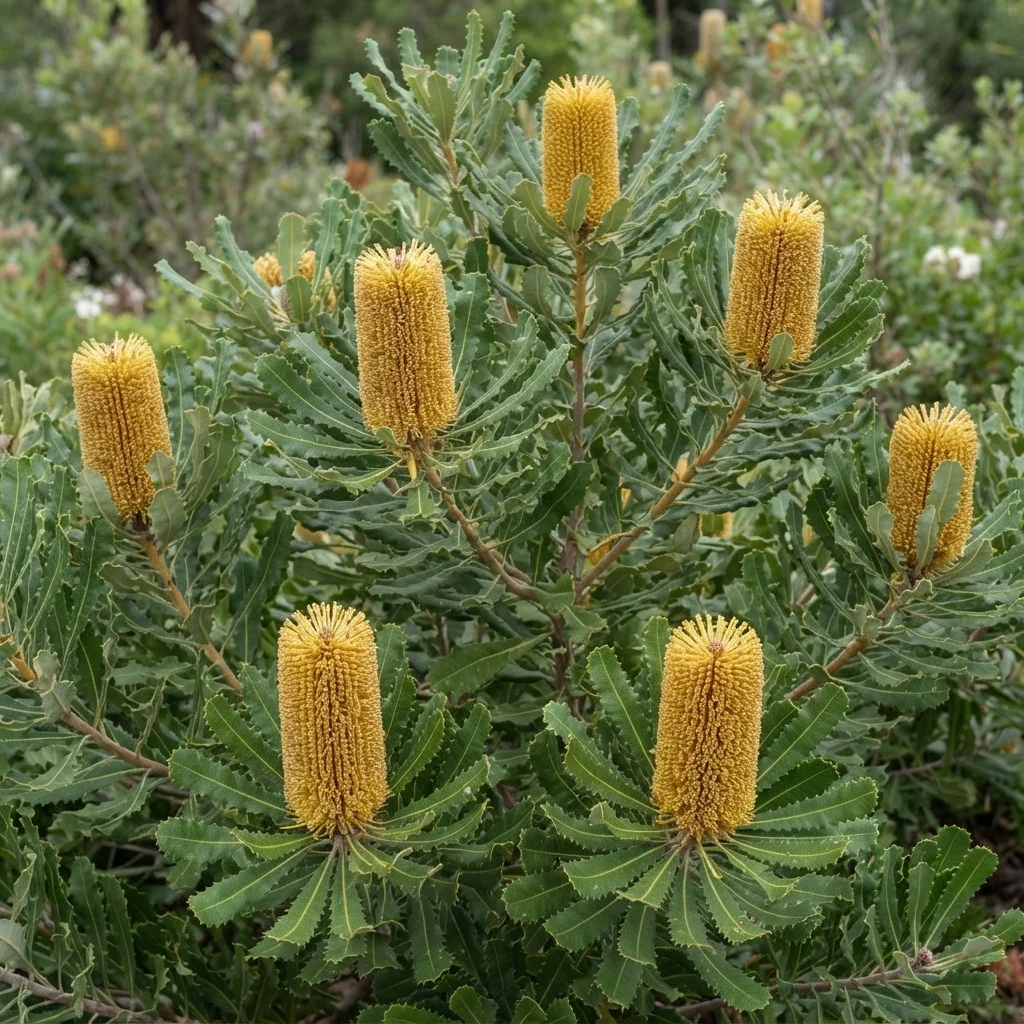
Southern Plains Banksia
Banksia media
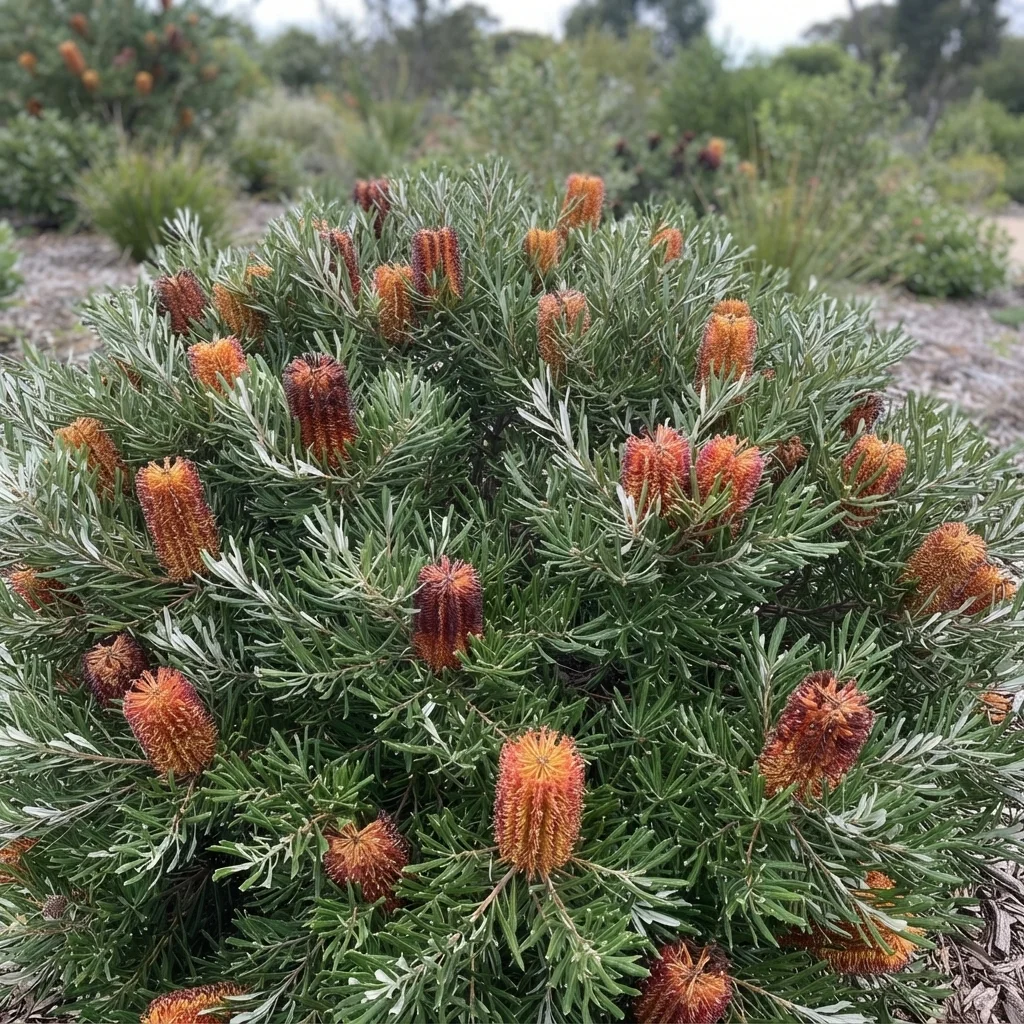
Hairpin Banksia
Banksia spinulosa 'Honeypots'
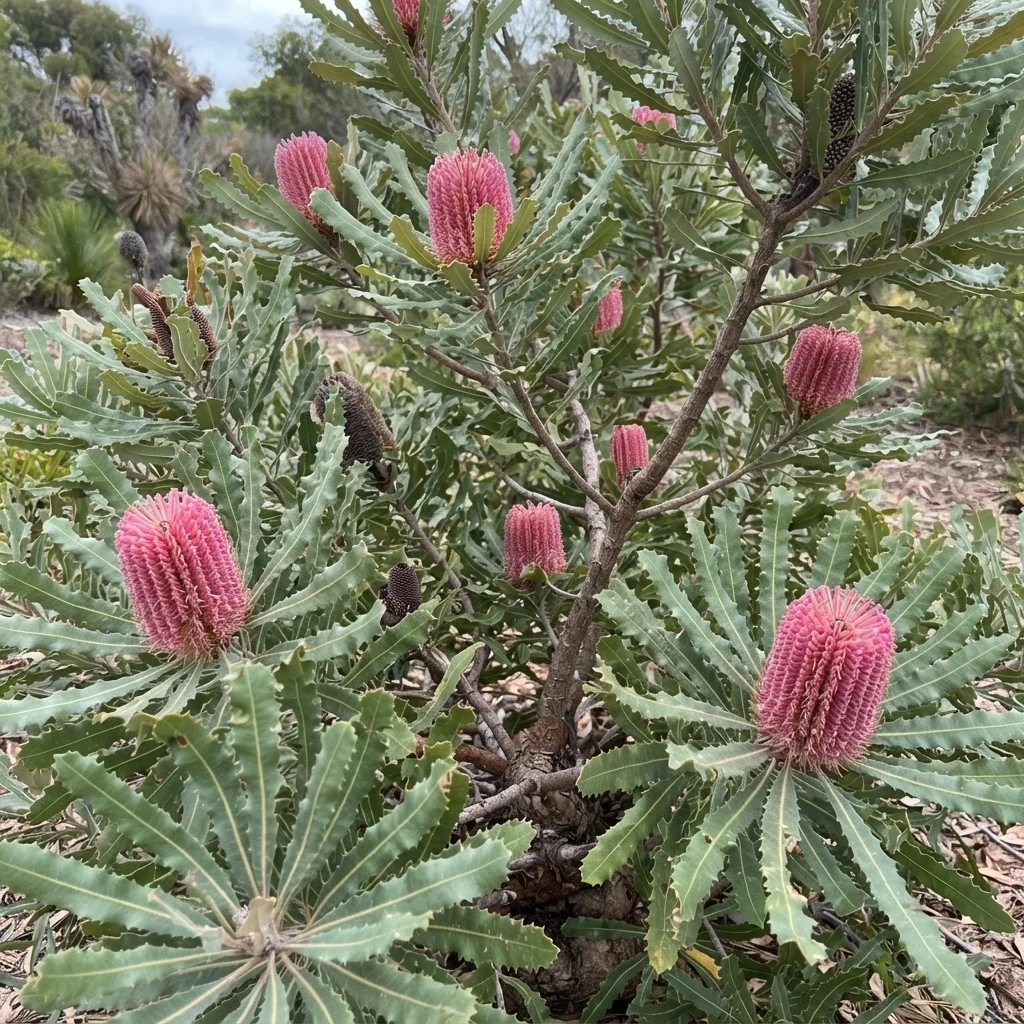
Menzies' Banksia
Banksia menziesii
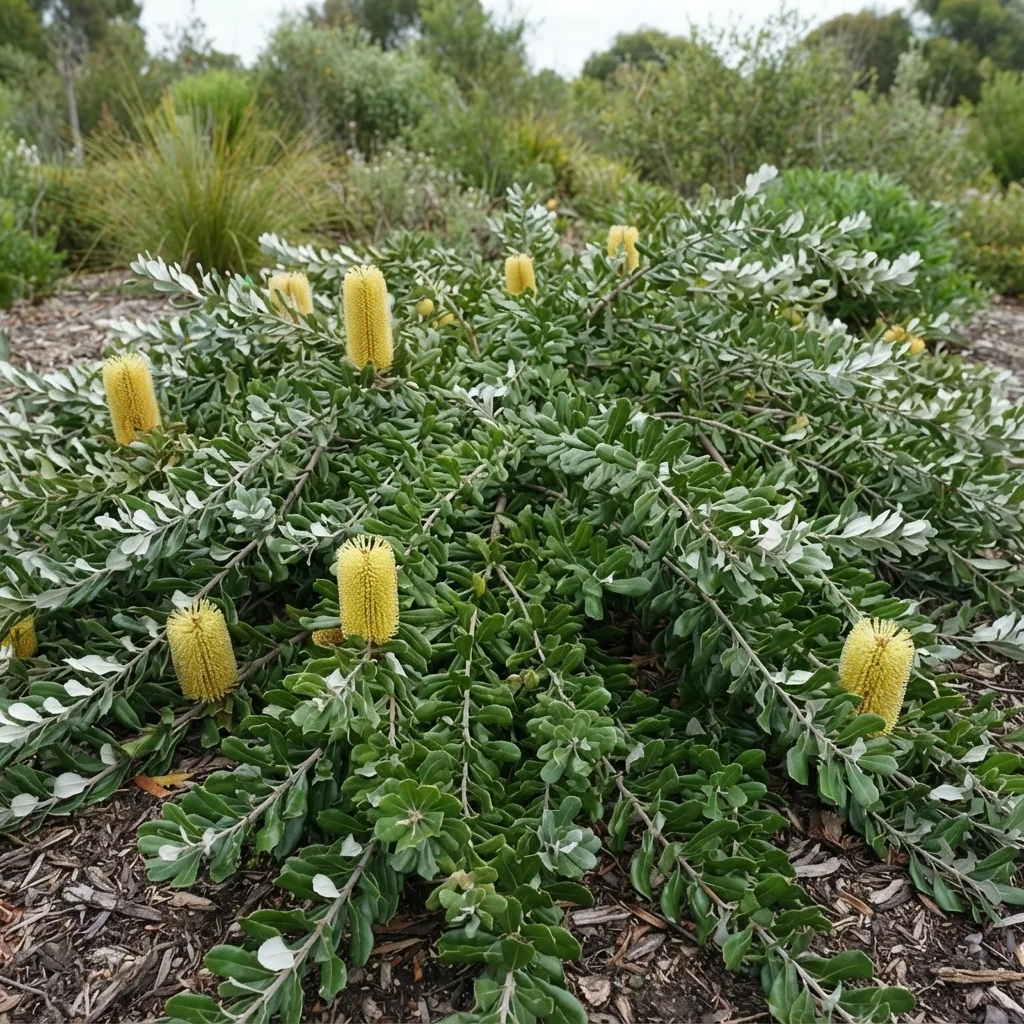
Prostrate Coast Banksia
Banksia integrifolia 'Roller Coaster'
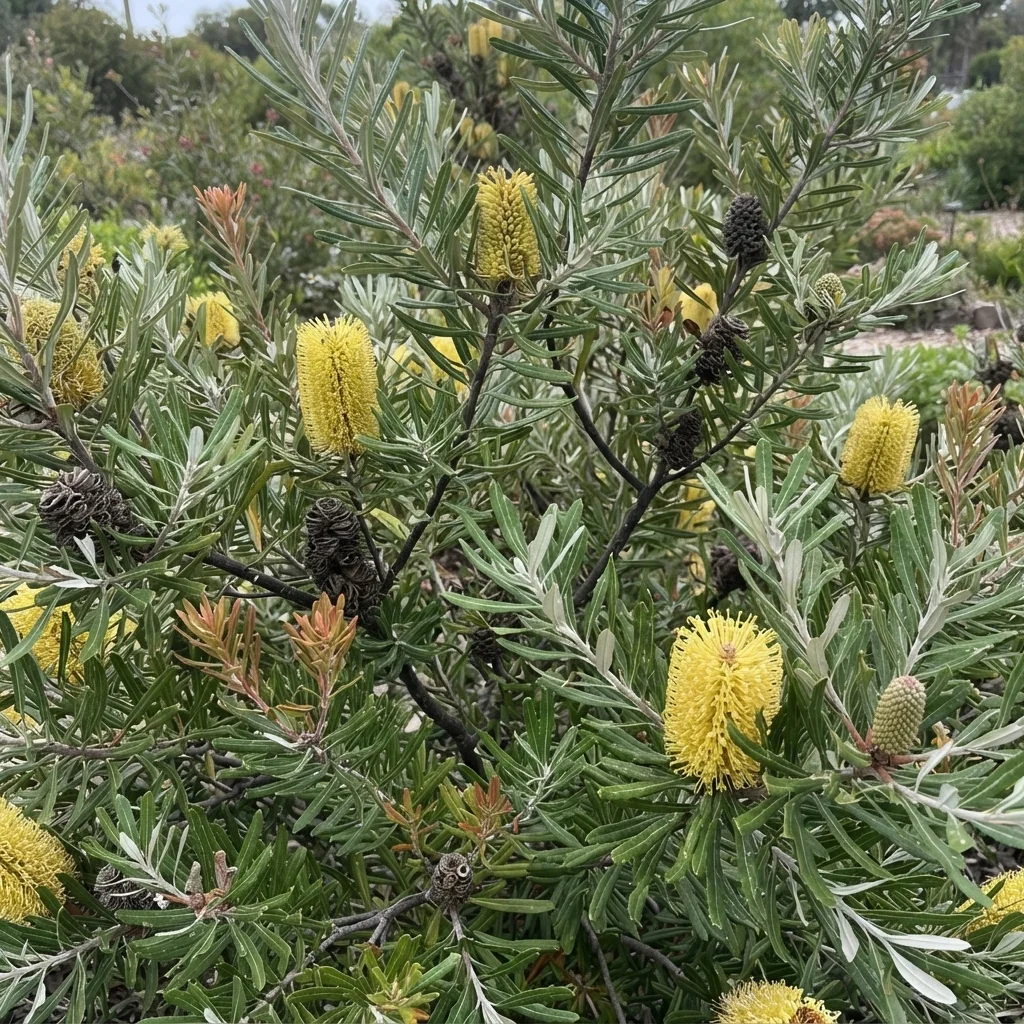
Silver Banksia
Banksia marginata
Keep exploring
Explore the genus
Hardy in your zone?
Grow Swamp Banksia with confidence
See it in a design of your actual yard, get zone-matched care reminders, and track it season by season in your garden journal.