The Story
Plant Bio
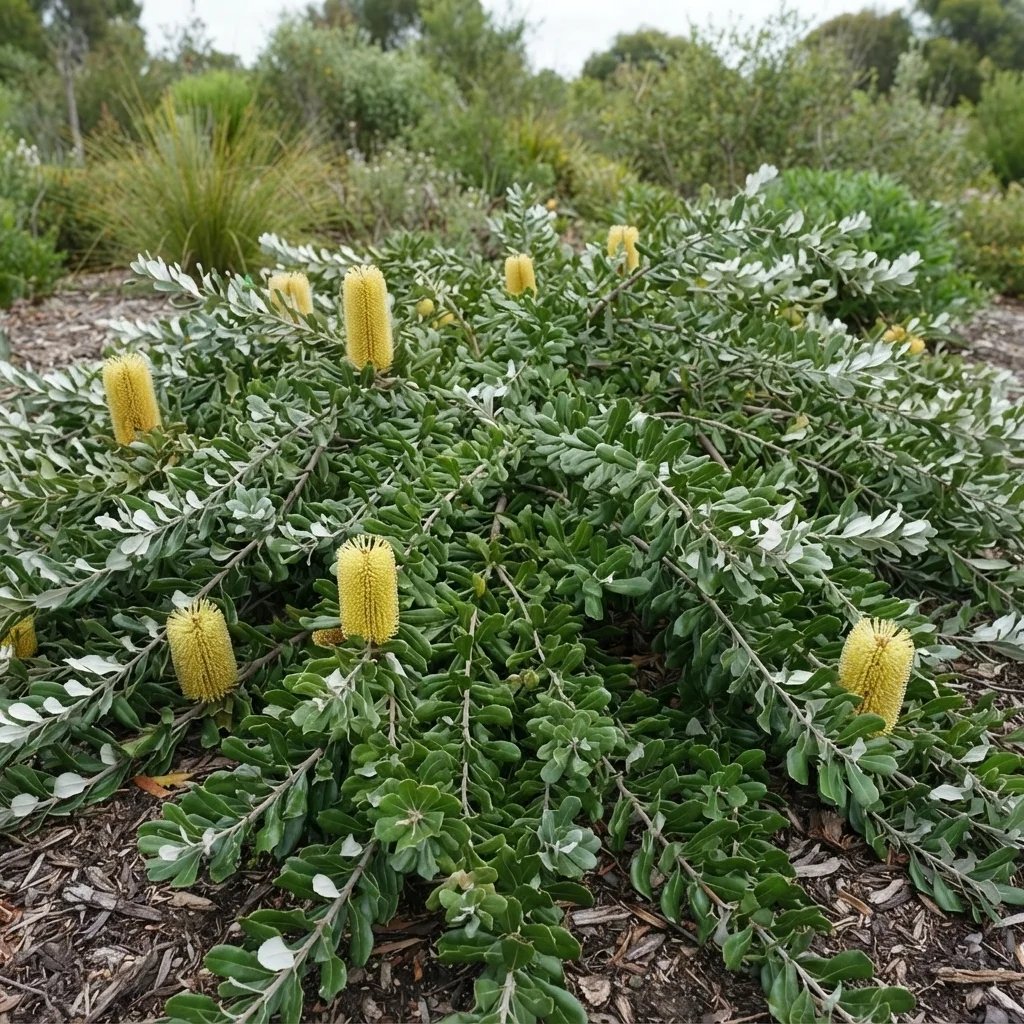
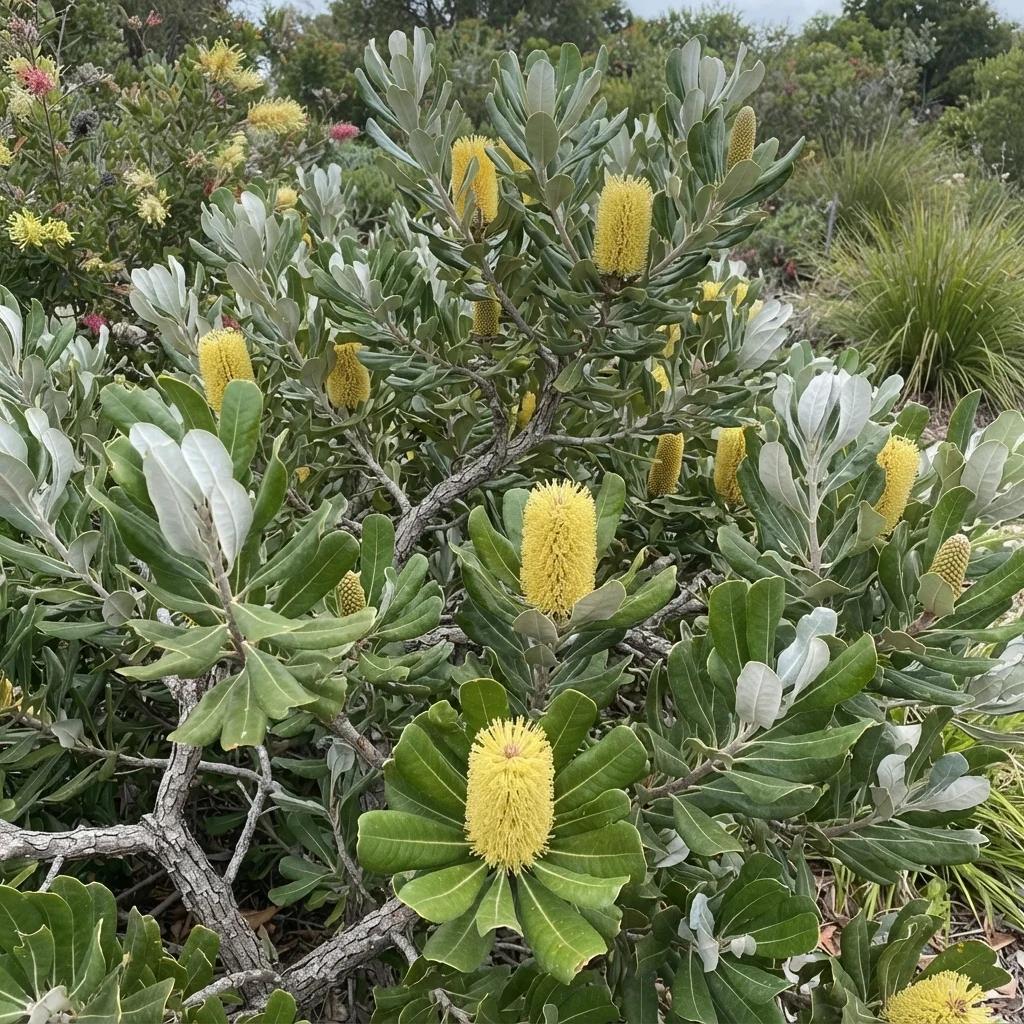
Banksia integrifolia, commonly known as coast banksia, is a highly adaptable evergreen woody plant native to eastern Australia that thrives in coastal dunes and sandy soils. It is exceptionally tolerant of salt spray, wind, and poor soils, producing upright, cylindrical yellow flower spikes that provide a critical nectar source for wildlife.
'Roller Coaster' is a vigorous, prostrate selection that forms a dense, cascading mat of arching stems layering upon themselves to suppress weeds and control erosion. Its stiff, leathery leaves feature glossy dark green upper surfaces contrasted by striking silvery-white undersides, and it displays bright lemon-yellow flower brushes from summer through winter.
Uses & Benefits:
Essentials
At a Glance
Plant Type
Groundcover
Height
24"
Width
98"
Light
Full Sun, Partial Sun
Zones
8, 9, 10
Water
Low
Humidity
Low to moderate
Lifespan
Perennial
Native To
Australia
Toxicity
Non-toxic
Bloom period
Summer – Winter
In flower about 9 months of the year
Planting
How to Grow
- Select a planting site in full sun to light shade with sharp, excellent drainage.
- Dig a hole twice as wide as the root ball and of equal depth, backfilling with native soil without adding organic matter.
- Install the plant so the crown sits slightly above the surrounding soil level to prevent water pooling around the stem.
- Water deeply to settle the soil, then apply a low-phosphorus native fertilizer and a thick layer of coarse mulch.
Pro Tip
Tip-prune only the soft green growth after flowering; cutting back into old, leafless wood prevents the plant from shooting back and leaves permanent bare patches.
Keep It Thriving
Care Guide
Do
- Plant in sandy, loamy, or well-drained clay-loam soils.
- Use only low-phosphorus fertilizers formulated specifically for native Proteaceae plants.
- Provide excellent air circulation to minimize fungal leaf spot issues.
Don't
- Do not allow the root zone to sit in wet, boggy, or waterlogged soil.
- Do not prune hard into old, bare wood that lacks green leaves.
- Do not apply standard garden fertilizers containing high levels of phosphorus.
Seasonal Care Calendar
| Task | Jan | Feb | Mar | Apr | May | Jun | Jul | Aug | Sep | Oct | Nov | Dec |
|---|---|---|---|---|---|---|---|---|---|---|---|---|
| Fertilize | ||||||||||||
| Pest Check | ||||||||||||
| Plant | ||||||||||||
| Prune |
Watch Out For
Pests & Diseases
Common Pests
Common Diseases
In the Garden
Landscape Uses & Companions
Landscape Uses
Companion Plants
Multiply
Propagation Methods
Good to Know
Common Questions
Prostrate Coast Banksia questions
What zones can Prostrate Coast Banksia grow in?
Prostrate Coast Banksia is hardy in USDA Zones 8–10. Inside that range it survives winter in the ground; outside it, grow it as an annual or a container plant you protect.
When does Prostrate Coast Banksia bloom?
Prostrate Coast Banksia typically blooms in summer through winter. Exact timing shifts a week or two with your zone — Sow's bloom calendar maps it to your garden.
Does Prostrate Coast Banksia need full sun?
Prostrate Coast Banksia does best in full sun to part shade. In hot climates, afternoon shade keeps blooms fresher longer.
Is Prostrate Coast Banksia drought tolerant?
Yes — once established (usually after the first full season), Prostrate Coast Banksia handles dry spells with minimal watering. Water deeply its first year to build the root system that makes that possible.
More Banksia to compare
Birthday Candles Banksia
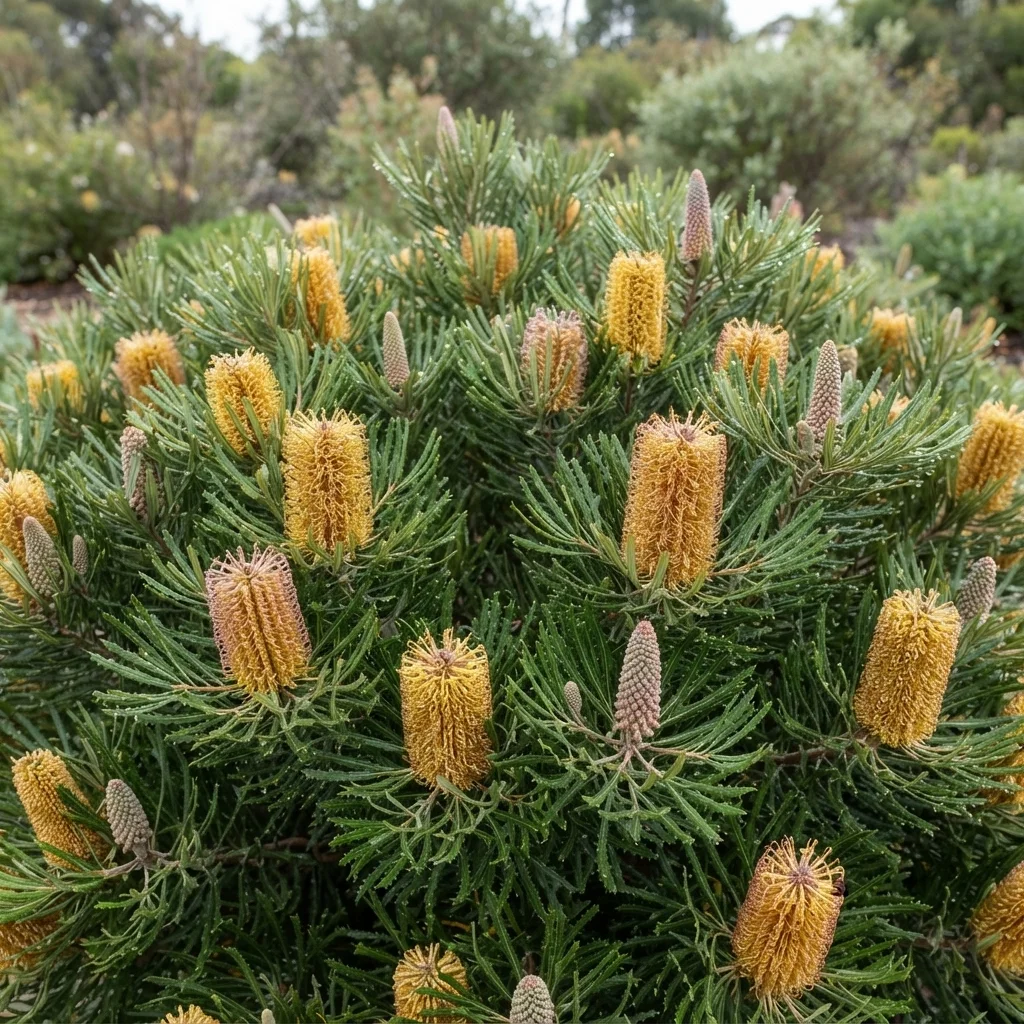
Banksia spinulosa 'Birthday Candles'
Swamp Banksia
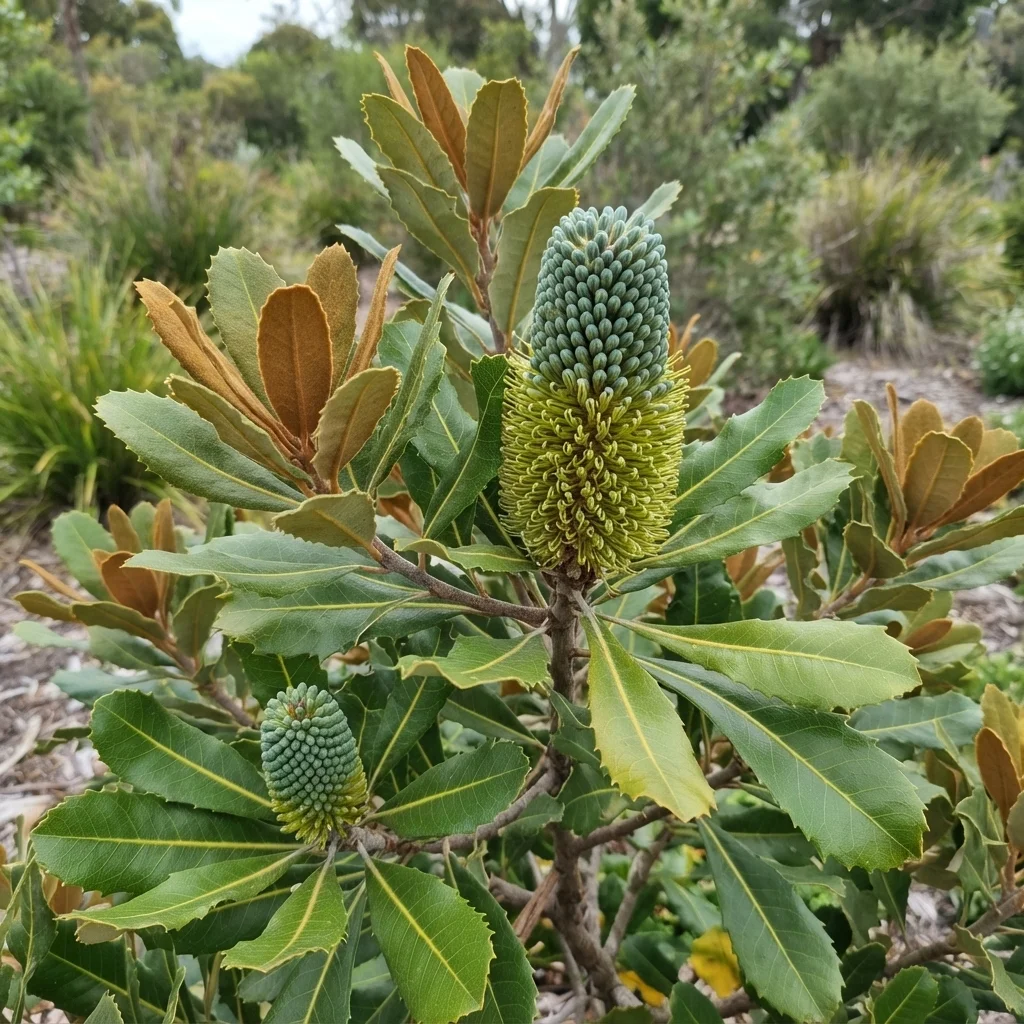
Banksia robur
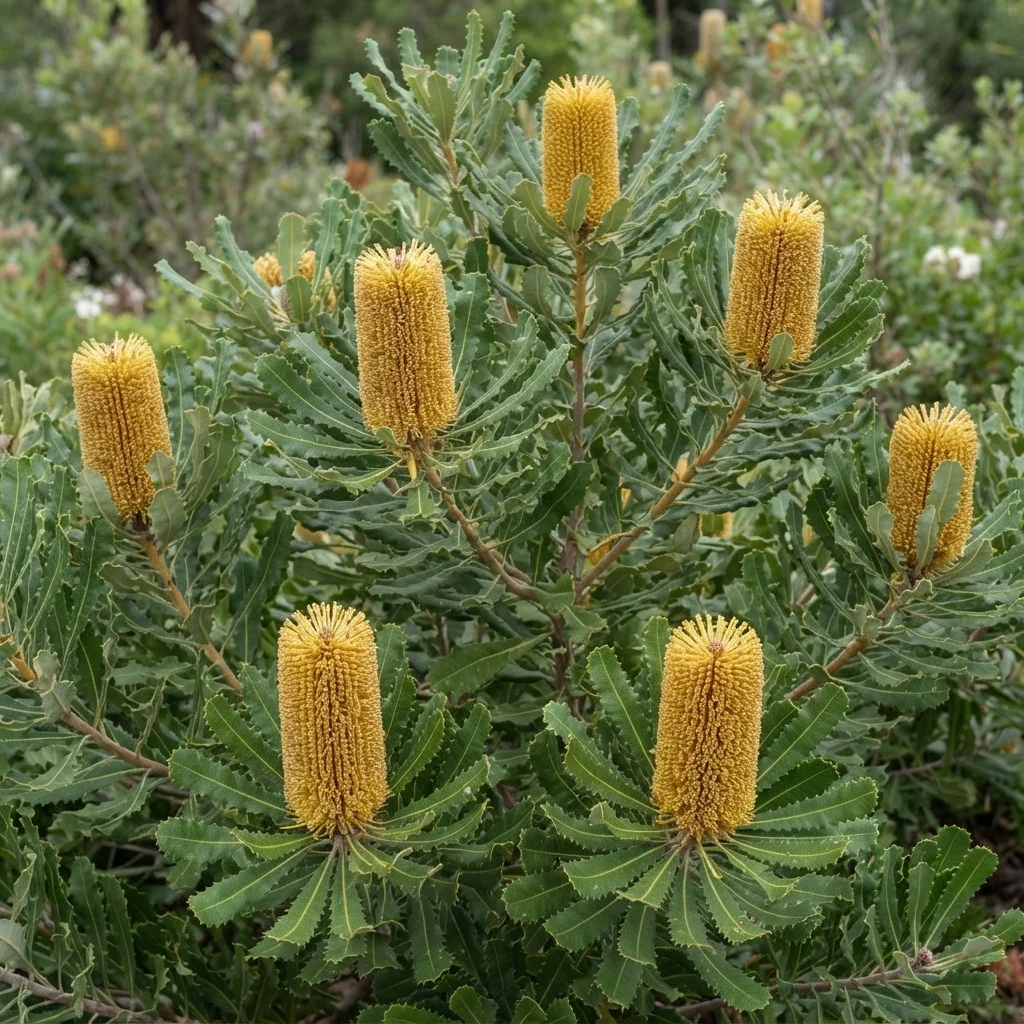
Southern Plains Banksia
Banksia media
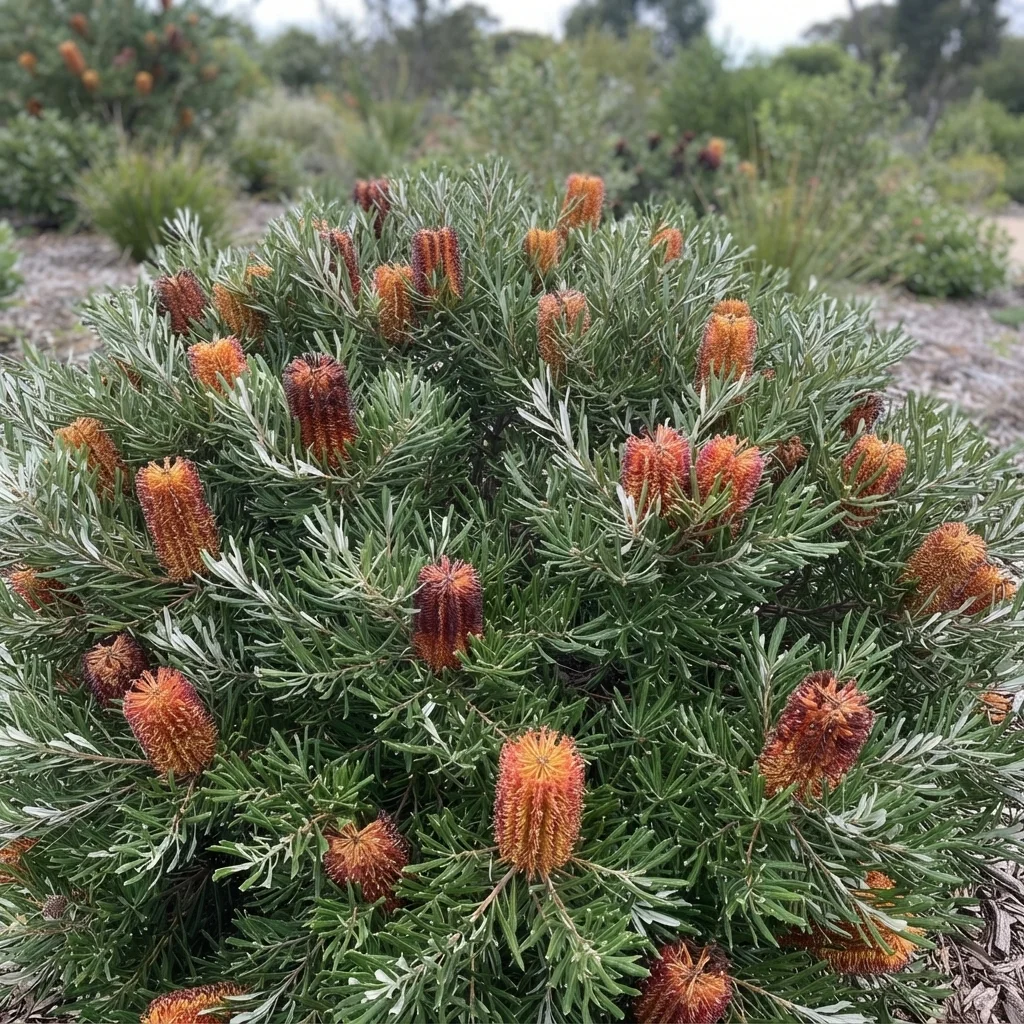
Hairpin Banksia
Banksia spinulosa 'Honeypots'
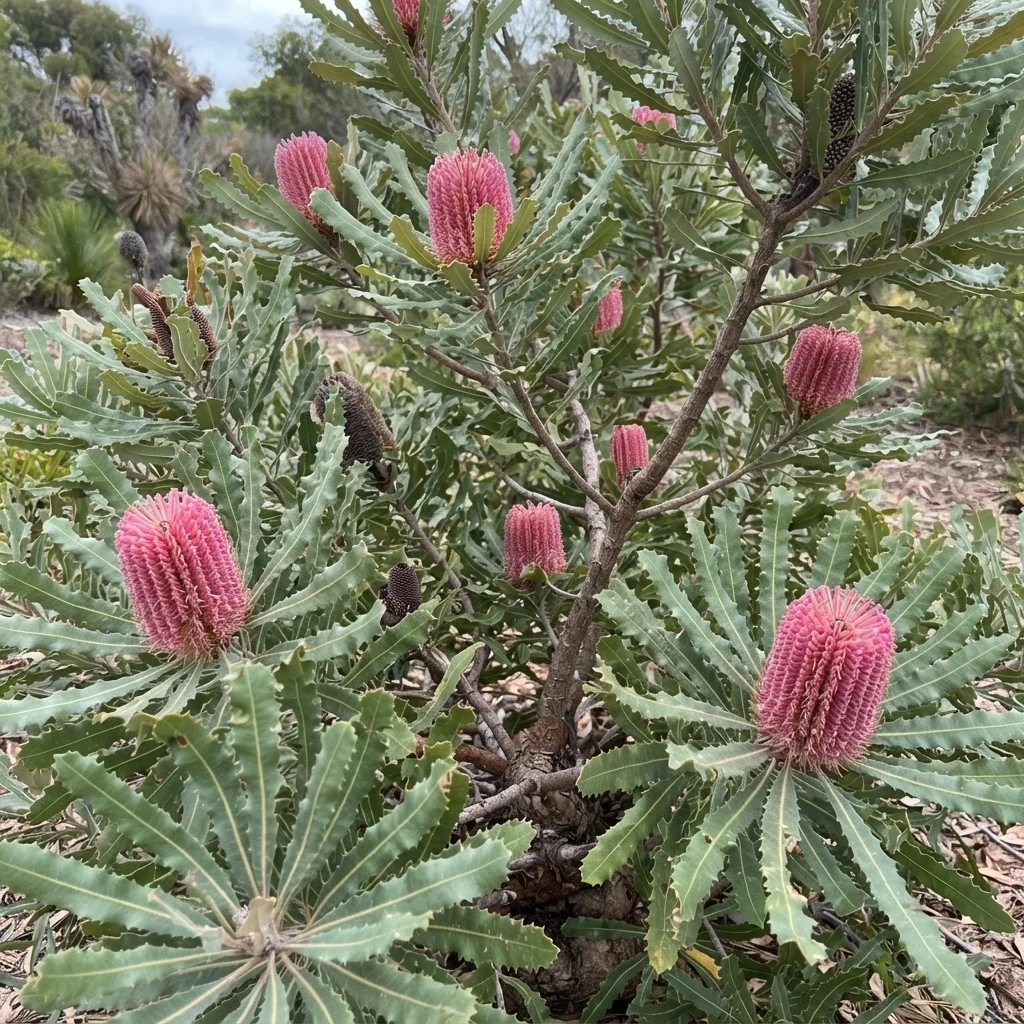
Menzies' Banksia
Banksia menziesii
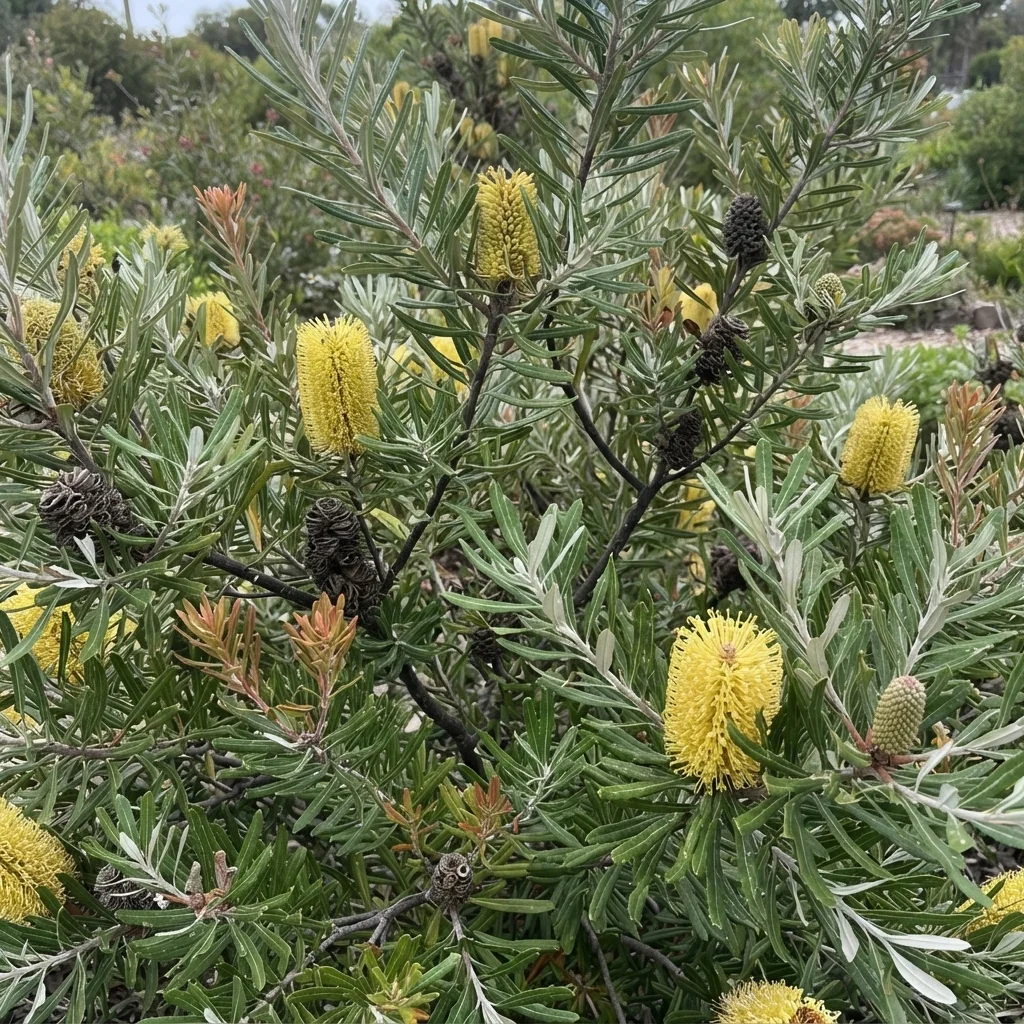
Silver Banksia
Banksia marginata
Keep exploring
Explore the genus
Hardy in your zone?
Grow Prostrate Coast Banksia with confidence
See it in a design of your actual yard, get zone-matched care reminders, and track it season by season in your garden journal.