
Garden hybrid
This is a garden hybrid, bred from more than one wild species, so it has no single species page of its own.
The Story
Plant Bio
The genus Mahonia comprises evergreen shrubs native primarily to eastern Asia and North America, characterized by pinnately compound foliage and clusters of yellow flowers. These plants inhabit woodland understories, requiring protection from intense afternoon sun and relying on well-drained, organic soils to prevent root rot.
'Beijing Beauty' is a compact, upright hybrid cultivar distinguished by its exceptionally narrow, thread-like leaflets that create a fine-textured, architectural silhouette. It produces upright to arching panicles of bright yellow flowers from fall through winter, followed by blue-black berries in spring.
Uses & Benefits:
Bred from more than one wild species, so it has no species page of its own.
Essentials
At a Glance
Plant Type
Shrub
Height
60"
Width
48"
Light
Partial Sun, Shade
Zones
7, 8, 9
Water
Moderate
Humidity
Moderate
Lifespan
Perennial
Native To
China and the Himalayas (parentage)
Toxicity
Toxic if ingested; prickly foliage
Bloom period
Fall – Winter
In flower about 6 months of the year
Planting
How to Grow
- Select a planting site in partial shade to full shade, ensuring protection from harsh afternoon sun.
- Amend the planting area with organic matter to create a rich, well-draining soil profile.
- Dig a hole twice as wide as the root ball and set the plant at the same depth as its container soil line.
- Water deeply at planting and maintain consistent moisture until the root system is fully established.
Pro Tip
Avoid shearing this cultivar into formal shapes, as pruning back into old, leafless wood destroys its natural cane architecture and results in patchy, slow regrowth.
Keep It Thriving
Care Guide
Do
- Plant in well-drained soil to prevent waterlogging and root rot.
- Apply a slow-release balanced fertilizer in spring and summer.
- Wear thick gloves when handling to protect skin from the prickly leaf margins.
Don't
- Do not shear the plant into formal hedges, which ruins its natural architectural form.
- Do not plant in low-lying areas where water pools or drainage is poor.
- Do not cut back hard into old, leafless wood when pruning.
Seasonal Care Calendar
| Task | Jan | Feb | Mar | Apr | May | Jun | Jul | Aug | Sep | Oct | Nov | Dec |
|---|---|---|---|---|---|---|---|---|---|---|---|---|
| Fertilize | ||||||||||||
| Mulch | ||||||||||||
| Pest Check | ||||||||||||
| Prune |
Watch Out For
Pests & Diseases
Common Pests
Common Diseases
In the Garden
Landscape Uses & Companions
Landscape Uses
Companion Plants
Multiply
Propagation Methods
Good to Know
Common Questions
Beijing Beauty Grapeholly questions
What zones can Beijing Beauty Grapeholly grow in?
Beijing Beauty Grapeholly is hardy in USDA Zones 7–9. Inside that range it survives winter in the ground; outside it, grow it as an annual or a container plant you protect.
Is Beijing Beauty Grapeholly deer resistant?
Yes — Beijing Beauty Grapeholly is rated deer-resistant. Deer typically pass it over, though extreme hunger can override any plant's defenses.
When does Beijing Beauty Grapeholly bloom?
Beijing Beauty Grapeholly typically blooms in fall through winter. Exact timing shifts a week or two with your zone — Sow's bloom calendar maps it to your garden.
Does Beijing Beauty Grapeholly need full sun?
Beijing Beauty Grapeholly does best in part shade.
Is Beijing Beauty Grapeholly drought tolerant?
Yes — once established (usually after the first full season), Beijing Beauty Grapeholly handles dry spells with minimal watering. Water deeply its first year to build the root system that makes that possible.
More Mahonia to compare
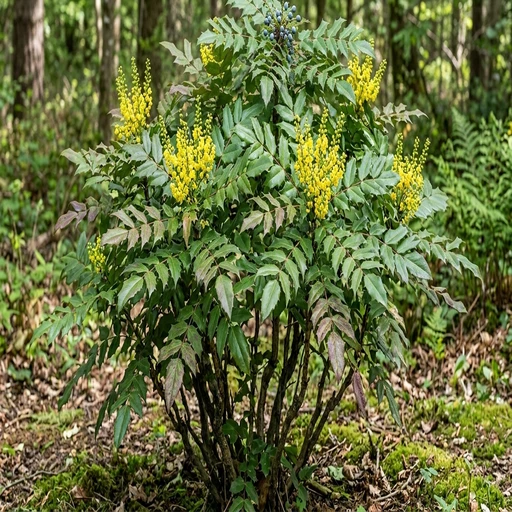
Oregon Grapeholly
Mahonia aquifolium
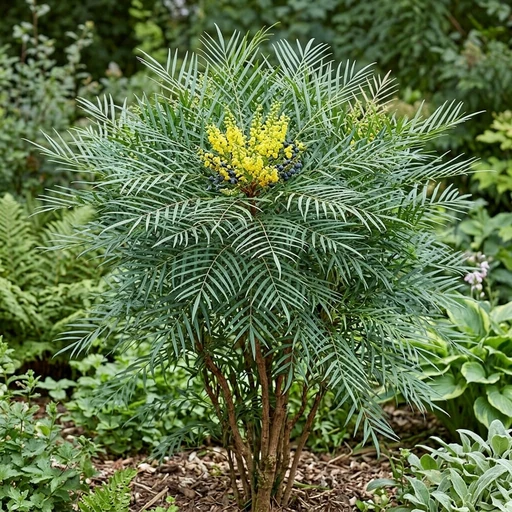
Soft Caress Mahonia
Mahonia eurybracteata 'Soft Caress'
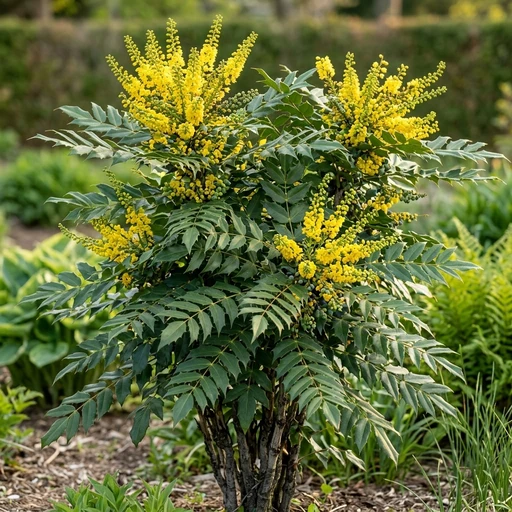
Leatherleaf Mahonia
Mahonia bealei
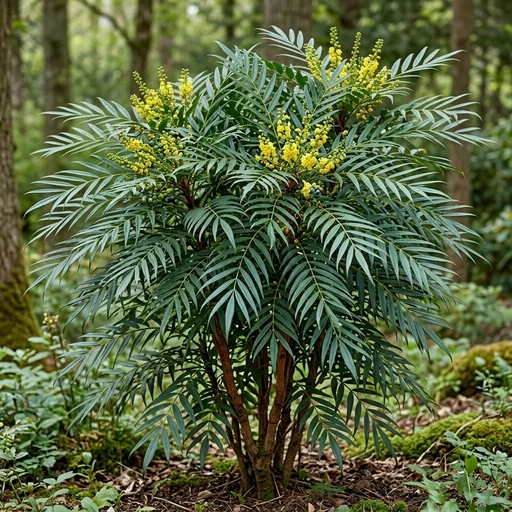
Narihira Mahonia
Mahonia confusa 'Narihira'
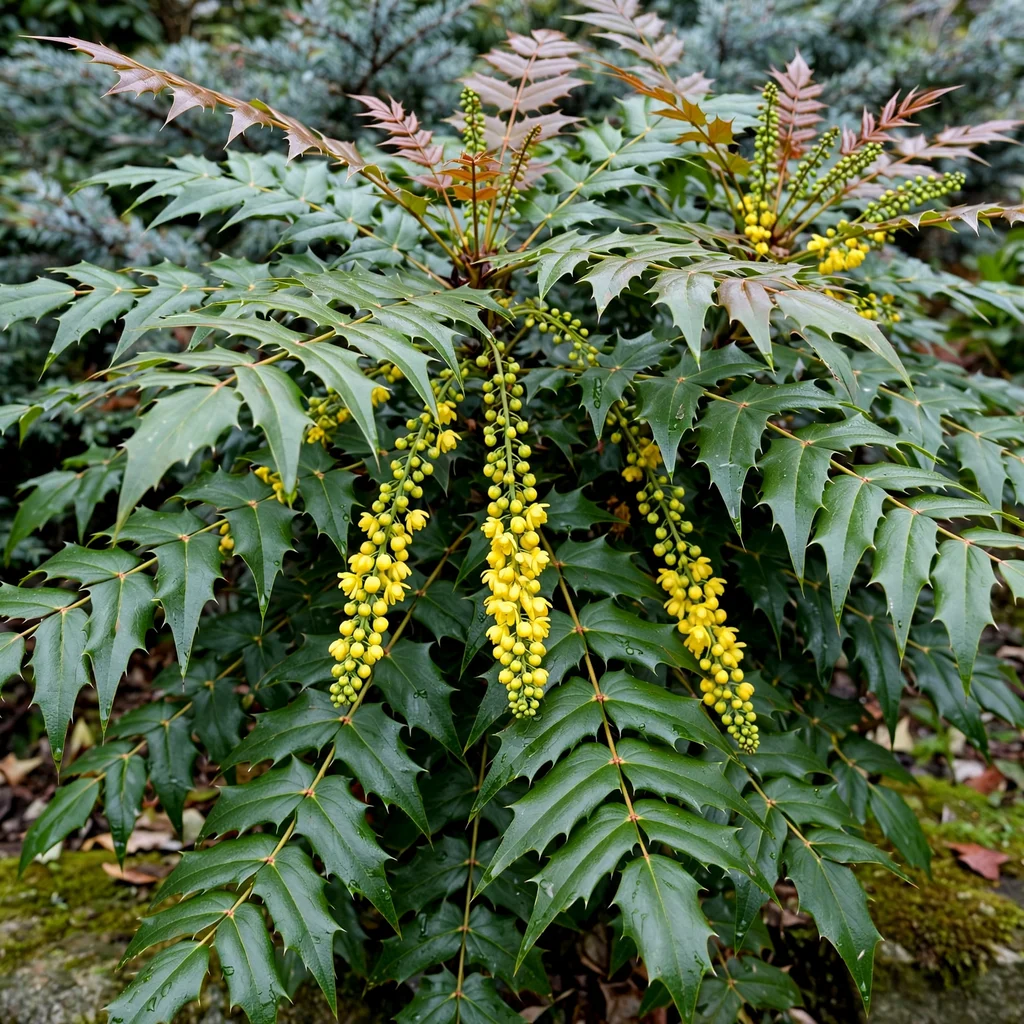
Media Mahonia
Mahonia media
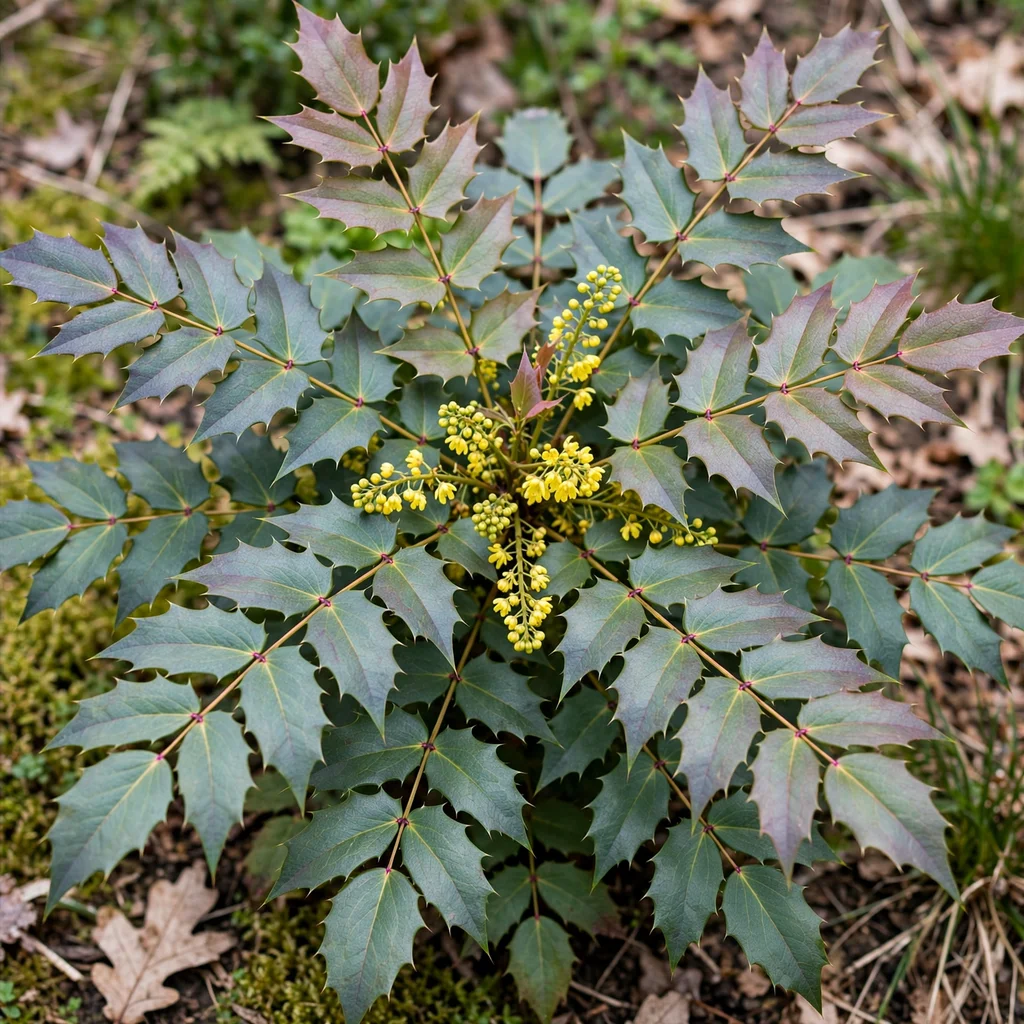
Creeping Oregon-Grape
Mahonia repens
Keep exploring
Explore the genus
Hardy in your zone?
Grow Beijing Beauty Grapeholly with confidence
See it in a design of your actual yard, get zone-matched care reminders, and track it season by season in your garden journal.