The Story
Plant Bio
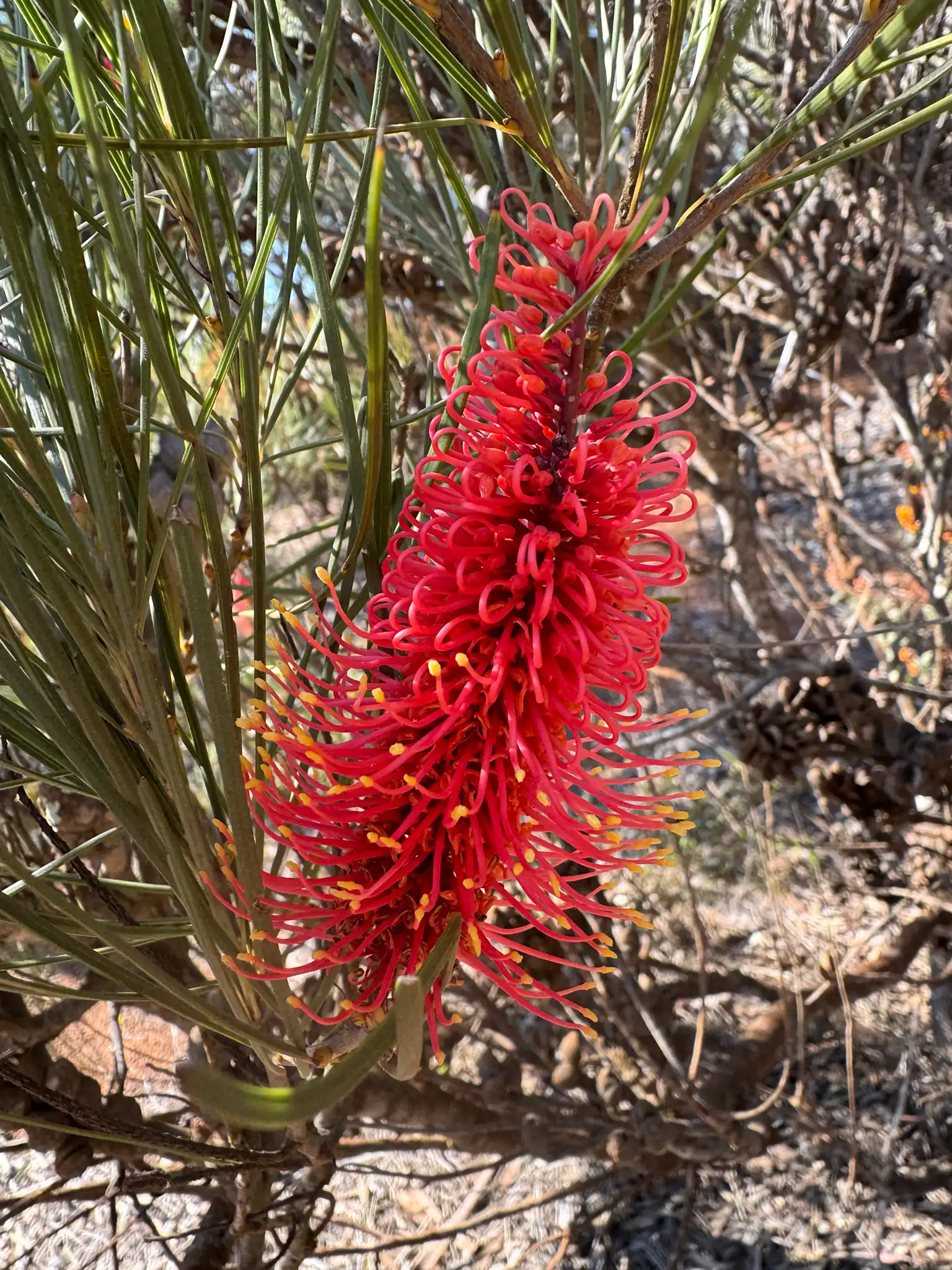
Hakea bucculenta, known as red pokers, is an upright, evergreen shrub native to the sandplains of Western Australia, growing ten to twelve feet tall and wide with a rounded, open-domed crown. The narrow, grey-green leaves are linear and slightly curved, ending in a sharp, weakly pungent tip.
The species is distinguished by its dramatic, cylindrical flower spikes of bright red to orange-red, which emerge directly from the older wood during late winter and spring. Each spike contains hundreds of individual nectar-rich flowers that attract hummingbirds in North American gardens.
Uses & Benefits:
Essentials
At a Glance
Plant Type
Shrub
Height
120"
Width
120"
Light
Full Sun
Zones
9, 10
Water
Low
Humidity
Low to Moderate
Lifespan
15-25 years
Native To
Western Australia
Toxicity
Non-toxic (sharp leaves may cause physical injury)
Bloom period
Late winter – Spring
In flower about 4 months of the year
Planting
How to Grow
- Select a planting site in full sun with sharply draining sandy, sandy loam, or gravelly soil.
- Dig a hole twice as wide as the root ball and of equal depth, ensuring the plant sits slightly high to prevent crown rot.
- Water deeply to settle the soil, then water only when the top few inches of soil are completely dry during the first season.
- Apply a 2-inch layer of coarse organic mulch around the root zone, keeping it several inches away from the main trunk.
- Avoid applying any standard garden fertilizers; use only low-phosphorus native plant formulations if feeding is necessary.
Pro Tip
Prune lightly only after flowering and never cut back into old, leafless wood; this species lacks a lignotuber and cannot resprout from bare stems.
Keep It Thriving
Care Guide
Do
- Plant in a location with exceptional drainage and full sun exposure.
- Prune lightly immediately after flowering to maintain a bushy habit.
- Use strictly low-phosphorus fertilizers formulated for native Proteaceae.
Don't
- Do not prune hard into old, leafless wood as the plant will not resprout.
- Do not overwater or plant in heavy clay soils, which causes rapid root rot.
- Do not allow organic mulch to pile up against the base of the trunk.
Seasonal Care Calendar
| Task | Jan | Feb | Mar | Apr | May | Jun | Jul | Aug | Sep | Oct | Nov | Dec |
|---|---|---|---|---|---|---|---|---|---|---|---|---|
| Fertilize | ||||||||||||
| Mulch | ||||||||||||
| Pest Check | ||||||||||||
| Prune |
Watch Out For
Pests & Diseases
Common Pests
Common Diseases
In the Garden
Landscape Uses & Companions
Landscape Uses
Companion Plants
Multiply
Propagation Methods
Good to Know
Common Questions
Red Pokers questions
What zones can Red Pokers grow in?
Red Pokers is hardy in USDA Zones 9–10. Inside that range it survives winter in the ground; outside it, grow it as an annual or a container plant you protect.
Is Red Pokers deer resistant?
Not reliably. Deer may browse Red Pokers, especially tender spring growth — plan on repellents or fencing where pressure is high.
When does Red Pokers bloom?
Red Pokers typically blooms in late winter through spring. Exact timing shifts a week or two with your zone — Sow's bloom calendar maps it to your garden.
Does Red Pokers need full sun?
Red Pokers does best in full sun (6+ hours).
Is Red Pokers drought tolerant?
Yes — once established (usually after the first full season), Red Pokers handles dry spells with minimal watering. Water deeply its first year to build the root system that makes that possible.
More Hakea to compare
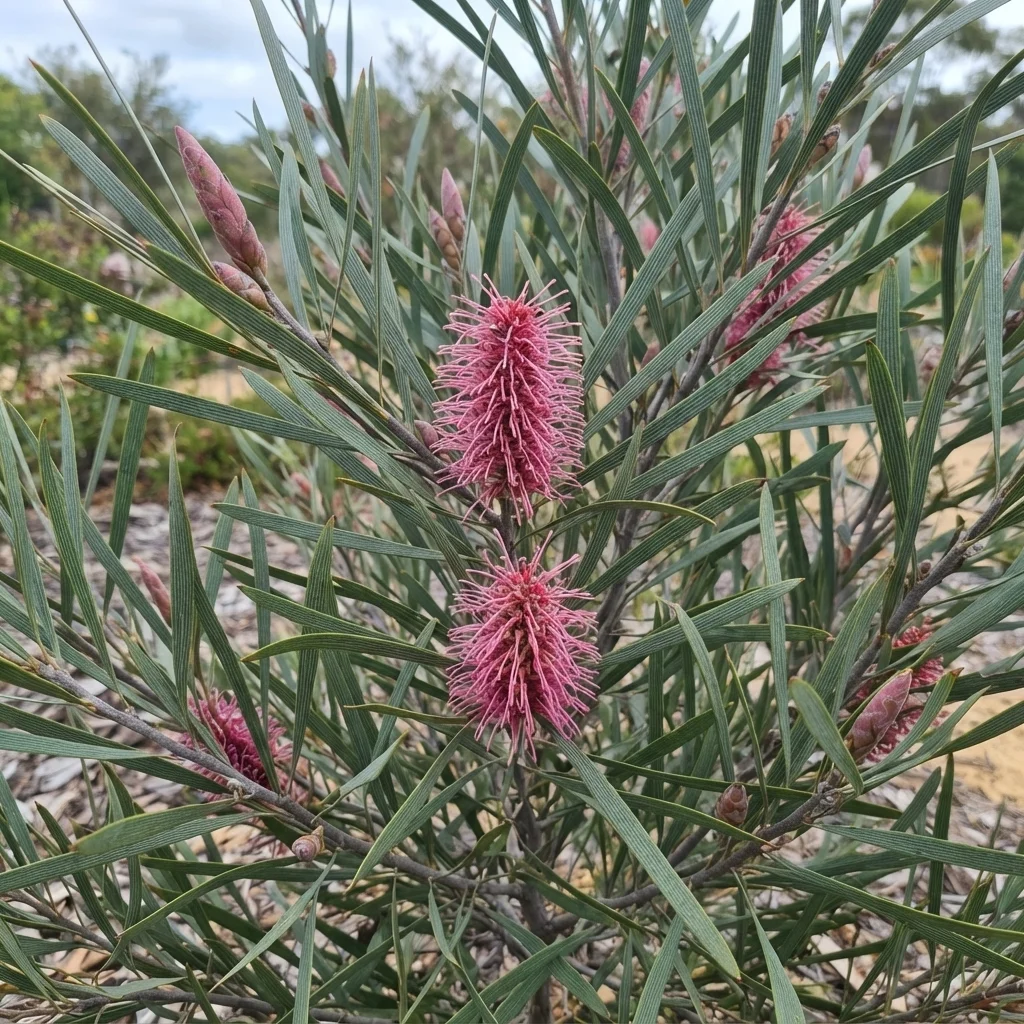
Grass-Leaf Hakea
Hakea francisiana
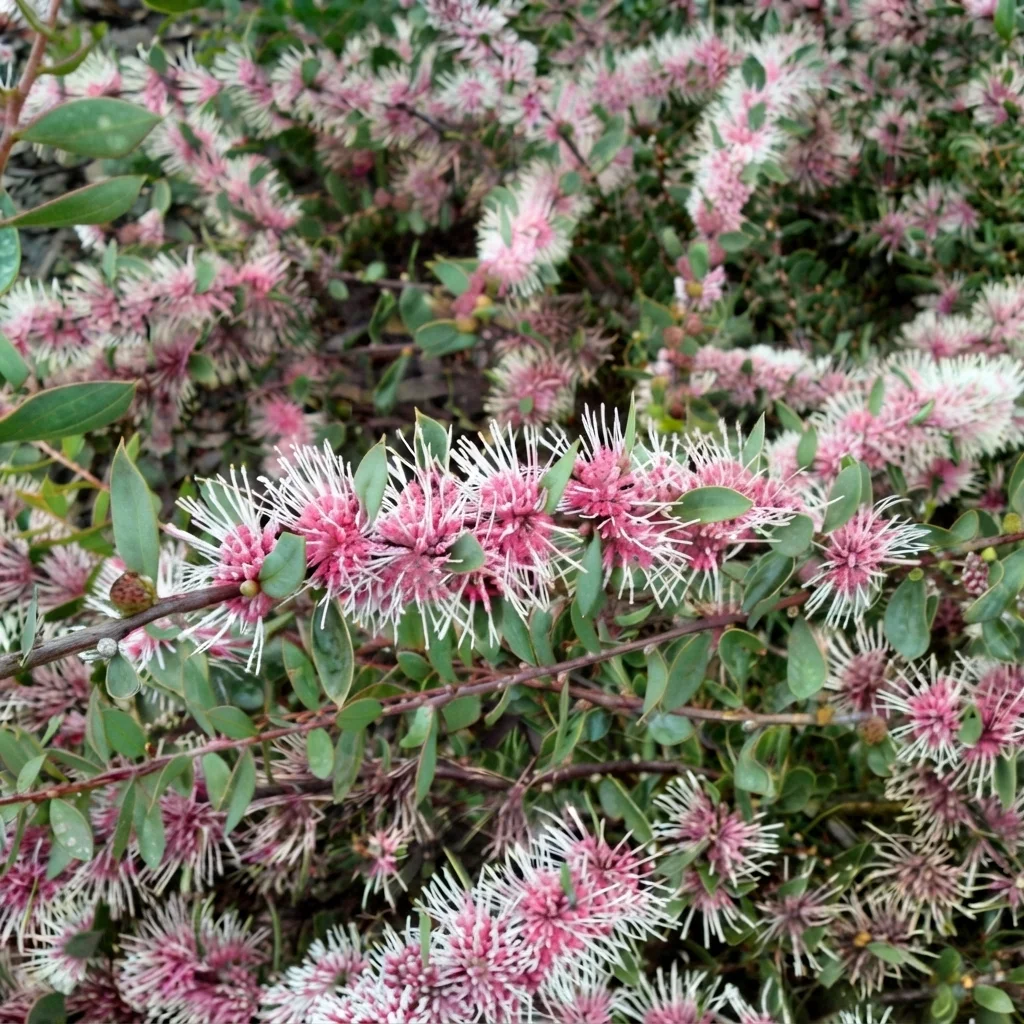
Burrendong Beauty
Hakea x hybrida 'Burrendong Beauty'
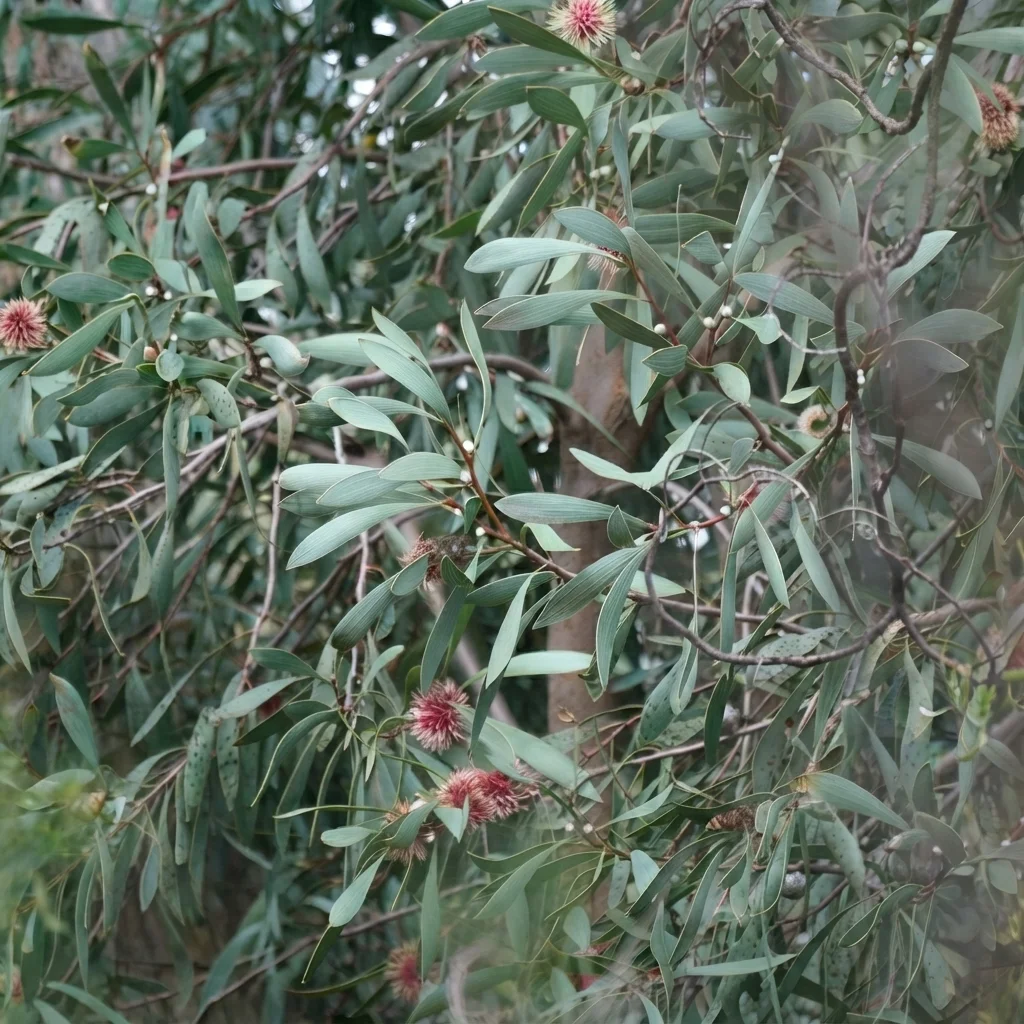
Pincushion Hakea
Hakea laurina
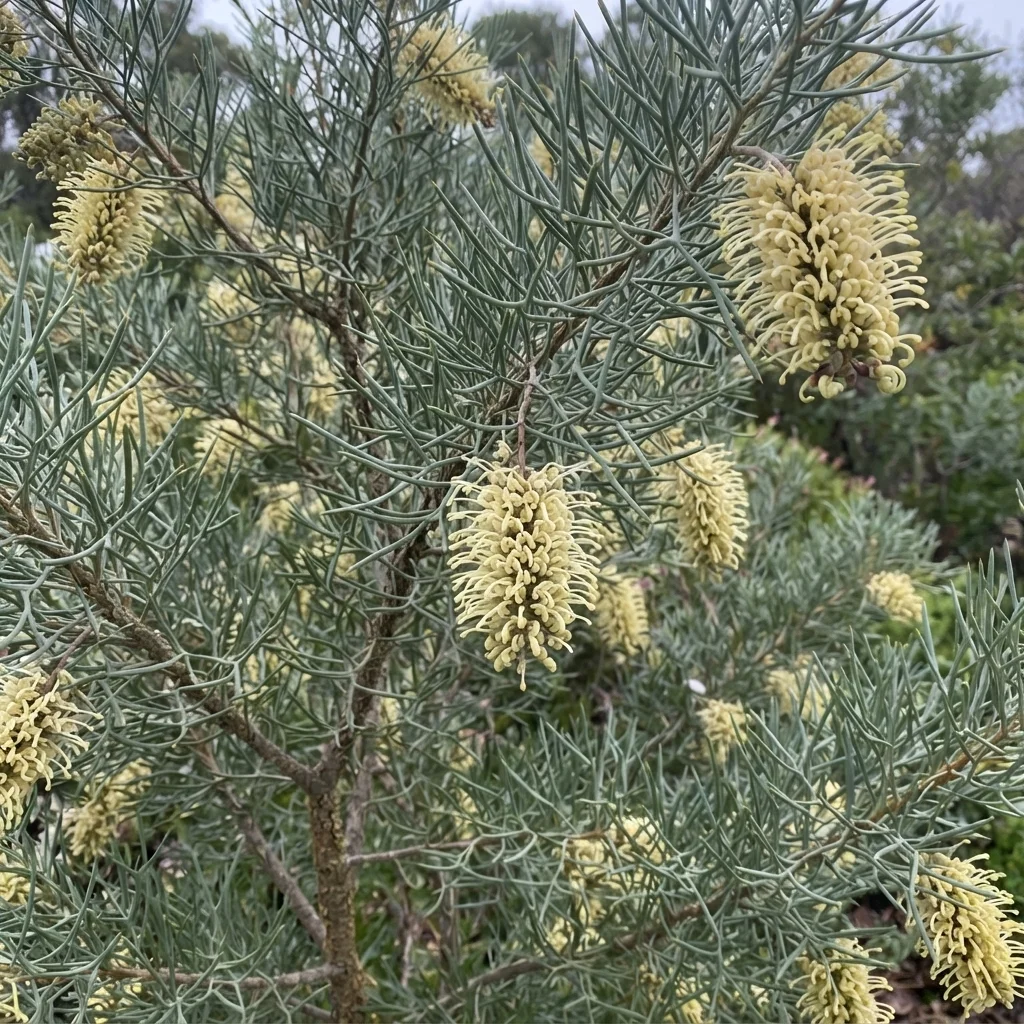
Needlewood
Hakea divaricata
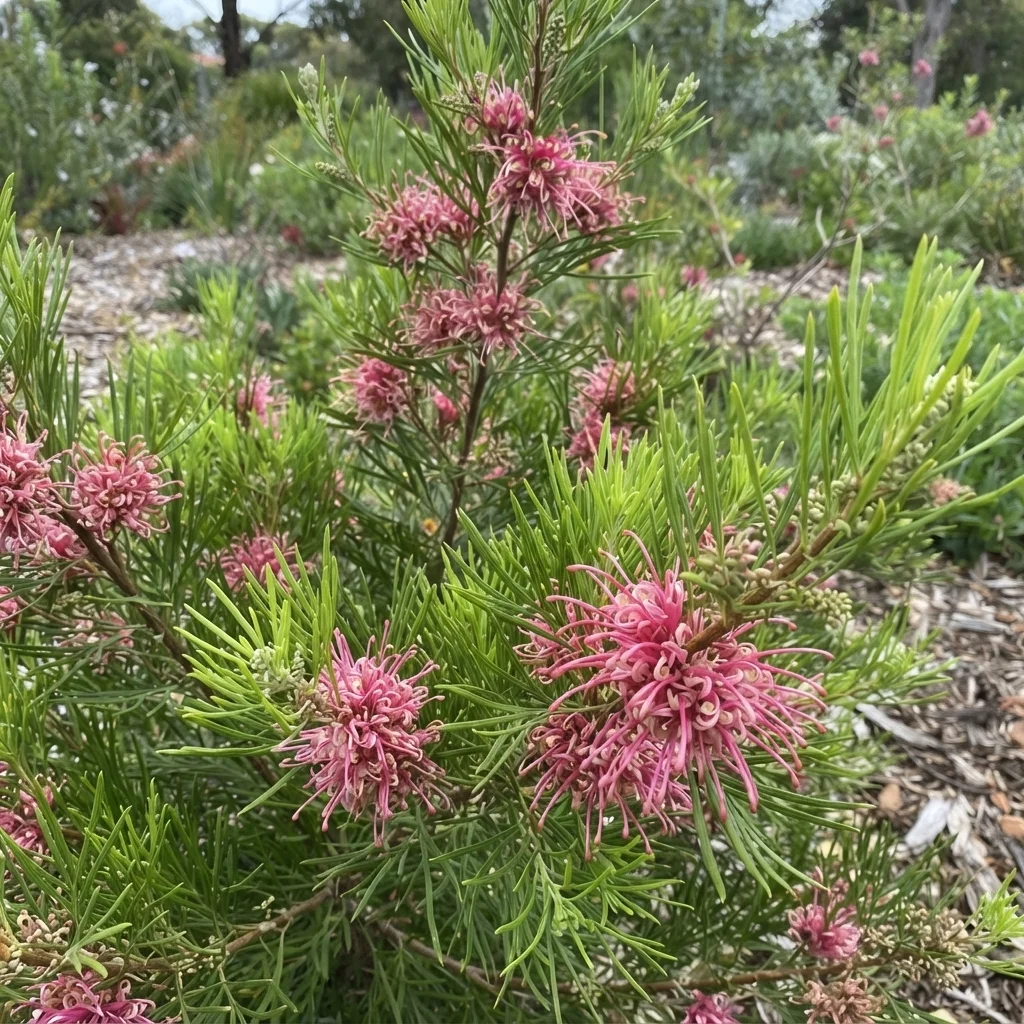
Baker's Hakea
Hakea bakeriana
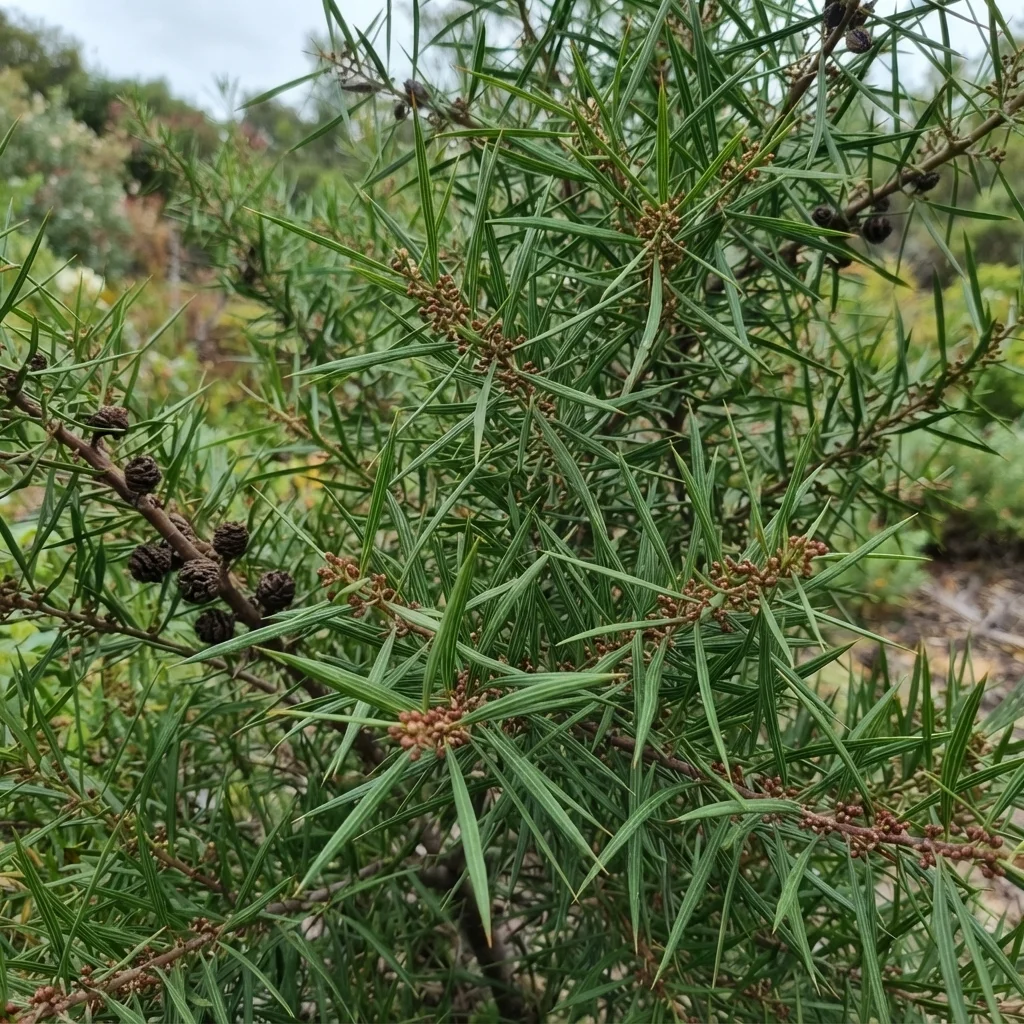
Furze Hakea
Hakea ulicina
Keep exploring
Explore the genus
Hardy in your zone?
Grow Red Pokers with confidence
See it in a design of your actual yard, get zone-matched care reminders, and track it season by season in your garden journal.