The Story
Plant Bio
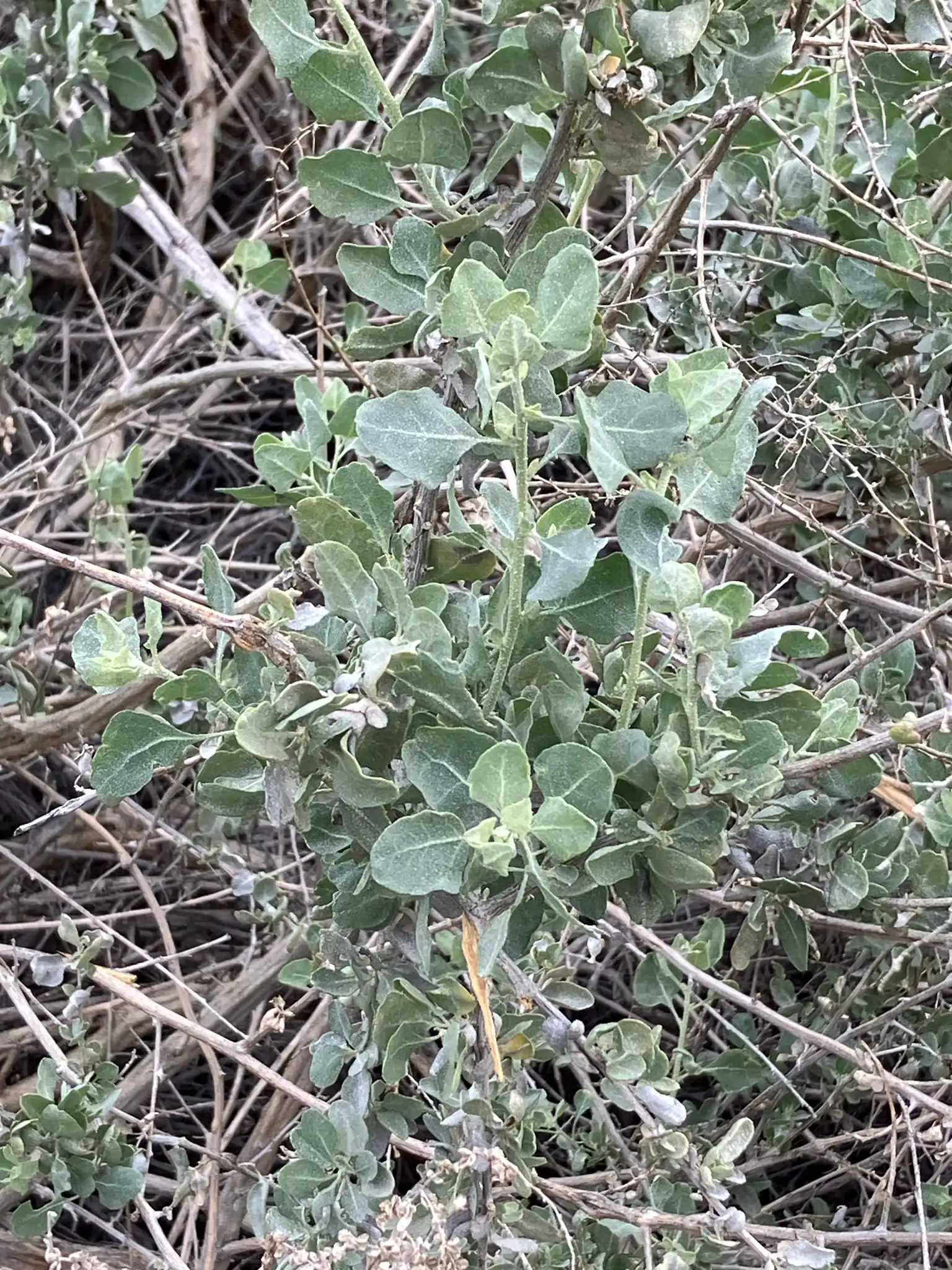
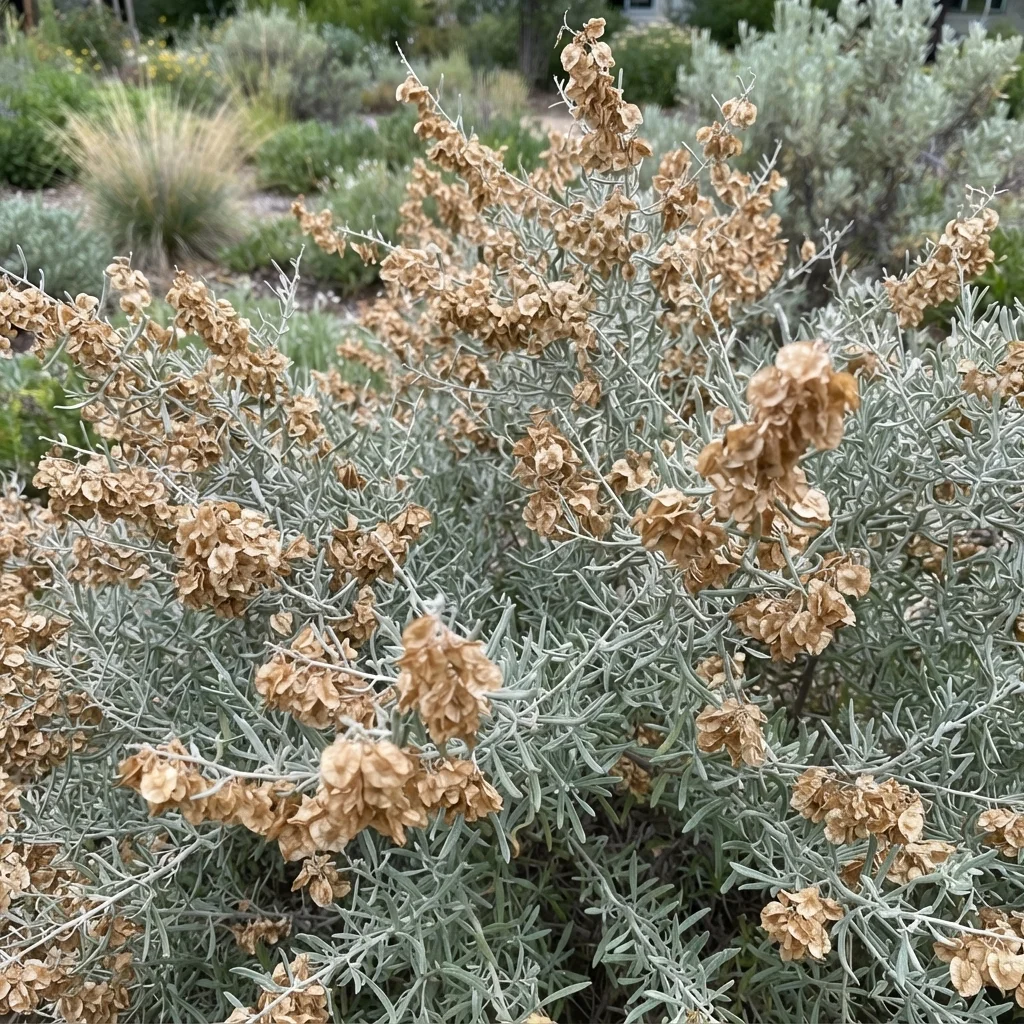
Atriplex lentiformis is a densely branched, evergreen shrub native to the arid regions of southwestern North America. It forms a broad, rounded mound of silvery-gray foliage that provides critical habitat and cover for desert wildlife.
The species is distinguished by its highly salt-tolerant, scaly leaves and brittle, sometimes spiny branch tips that deter heavy browsing. It produces inconspicuous, wind-pollinated greenish flowers on dense terminal clusters from late winter into spring.
Uses & Benefits:
Essentials
At a Glance
Plant Type
Shrub
Height
120"
Width
144"
Light
Full Sun
Zones
8, 9, 10
Water
Low
Humidity
Low
Lifespan
Moderate
Native To
Southwestern North America
Toxicity
Non-toxic
Bloom period
Late winter – Spring
In flower about 4 months of the year
Planting
How to Grow
- Select a planting site in full sun with well-drained soil, avoiding low spots where water collects.
- Dig a hole twice as wide as the root ball but of equal depth to prevent the crown from settling too deep.
- Water deeply immediately after planting to settle the soil, then irrigate sparingly only until the root system establishes.
- Withhold all summer watering and fertilizer after the first year to maintain a compact, healthy growth habit.
Pro Tip
Avoid supplemental summer irrigation and fertilizer once established; excess water and nutrients cause rapid, weak growth, yellowing foliage, and root rot.
Keep It Thriving
Care Guide
Do
- Prune heavily after the flowering and fruiting phase to shape the shrub or rejuvenate old growth.
- Ensure the soil drains rapidly to prevent root rot.
- Soak seeds prior to sowing to wash away natural surface salts that inhibit germination.
Don't
- Do not apply artificial fertilizers, which cause weak, leggy growth and nitrate accumulation.
- Do not overwater, as excess moisture induces chlorosis and fatal root rot.
- Do not plant in shaded locations where the shrub will decline.
Seasonal Care Calendar
| Task | Jan | Feb | Mar | Apr | May | Jun | Jul | Aug | Sep | Oct | Nov | Dec |
|---|---|---|---|---|---|---|---|---|---|---|---|---|
| Pest Check | ||||||||||||
| Plant | ||||||||||||
| Propagate | ||||||||||||
| Prune |
Watch Out For
Pests & Diseases
Common Pests
Common Diseases
In the Garden
Landscape Uses & Companions
Landscape Uses
Multiply
Propagation Methods
Good to Know
Common Questions
Big Saltbush questions
What zones can Big Saltbush grow in?
Big Saltbush is hardy in USDA Zones 8–10. Inside that range it survives winter in the ground; outside it, grow it as an annual or a container plant you protect.
Is Big Saltbush deer resistant?
Not reliably. Deer may browse Big Saltbush, especially tender spring growth — plan on repellents or fencing where pressure is high.
When does Big Saltbush bloom?
Big Saltbush typically blooms in late winter through spring. Exact timing shifts a week or two with your zone — Sow's bloom calendar maps it to your garden.
Does Big Saltbush need full sun?
Big Saltbush does best in full sun (6+ hours).
Is Big Saltbush drought tolerant?
Yes — once established (usually after the first full season), Big Saltbush handles dry spells with minimal watering. Water deeply its first year to build the root system that makes that possible.
More Atriplex to compare
Keep exploring
Explore the genus
Hardy in your zone?
Grow Big Saltbush with confidence
See it in a design of your actual yard, get zone-matched care reminders, and track it season by season in your garden journal.