The Story
Plant Bio
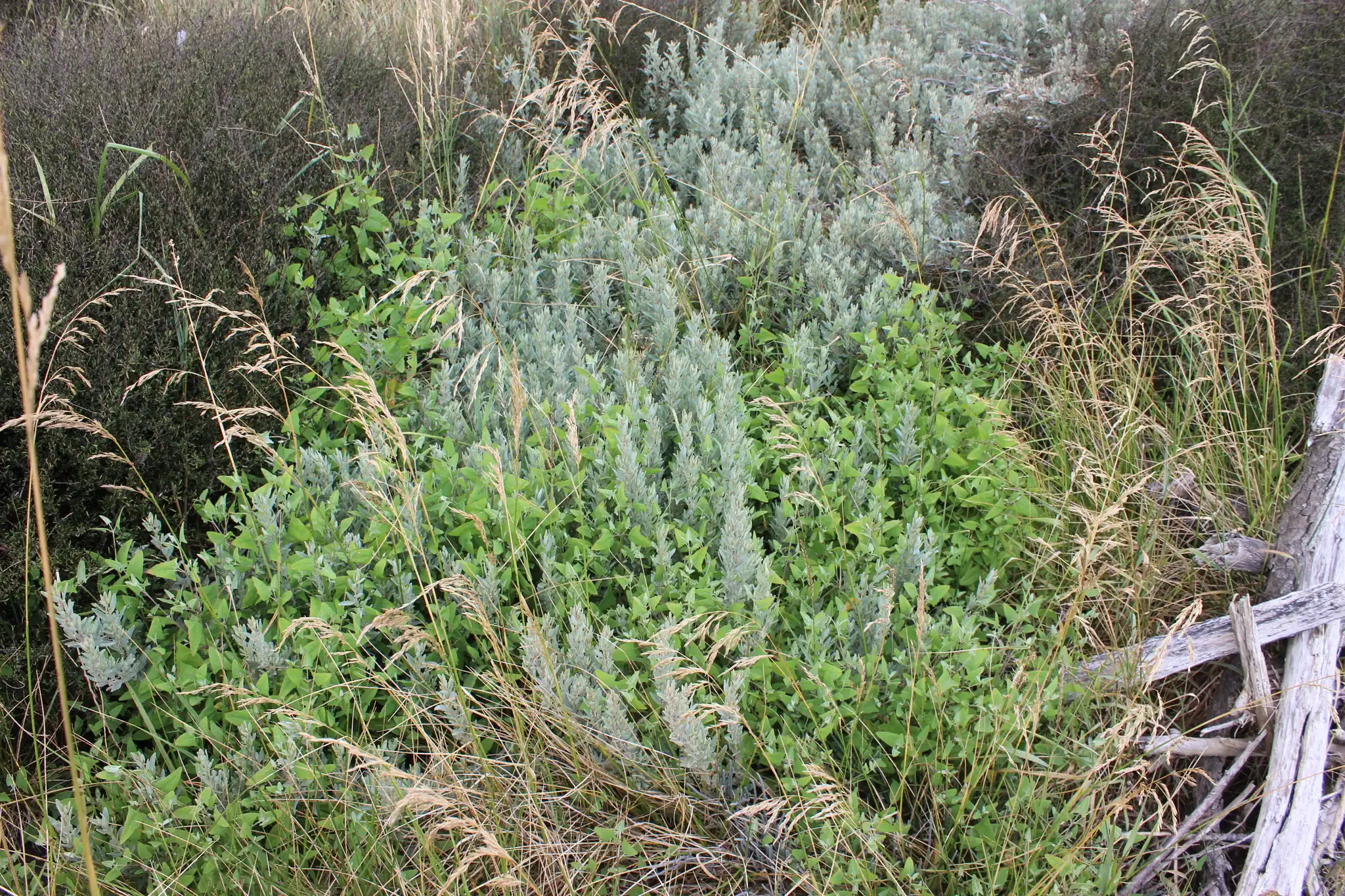
Atriplex cinerea, known as grey saltbush, is a dense, heavily branched evergreen shrub native to coastal Australia that forms a spreading mound of silvery-grey foliage. The leaves are covered in tiny, bladder-like hairs that give the plant its characteristic mealy, light-reflecting appearance and help it conserve moisture in harsh maritime environments.
This species is highly valued for its extreme tolerance to salt spray, wind, and prolonged drought, making it an exceptional choice for stabilizing coastal dunes and exposed seaside gardens. While the wild species grows up to six feet tall, selected cultivars like 'Sea of Blue' offer a prostrate groundcover habit that remains under one foot high.
Uses & Benefits:
Essentials
At a Glance
Plant Type
Shrub
Height
60"
Width
80"
Light
Full Sun
Zones
9, 10
Water
Low
Humidity
Moderate
Lifespan
Perennial
Native To
Australia
Toxicity
Non-toxic
Bloom period
Year round
In flower about 12 months of the year
Planting
How to Grow
- Select a planting site in full sun with highly permeable, sandy or loamy soil.
- Dig a hole twice the width of the root ball but no deeper, ensuring the crown sits level with the surrounding soil.
- Water the plant thoroughly upon installation to settle the soil, then withhold water to allow the substrate to dry completely between waterings.
- Establish a minimal watering schedule, as the plant relies on dry conditions and is highly susceptible to root rot in wet soils.
Pro Tip
Never prune back into old, bare, woody stems; the plant lacks dormant buds on old wood and will fail to regenerate, so limit maintenance to light tip-pruning of active growth.
Keep It Thriving
Care Guide
Do
- Plant in exceptionally well-drained, sandy or loamy soil.
- Provide a full-sun position to maintain dense growth and vibrant silver foliage.
- Apply a light yearly trim in spring or autumn to encourage a compact habit.
Don't
- Do not plant in heavy clay or poorly drained soils where water pools.
- Do not prune hard into old, bare wood, as the plant cannot regenerate from leafless stems.
- Do not overwater or allow the roots to sit in waterlogged conditions.
Seasonal Care Calendar
| Task | Jan | Feb | Mar | Apr | May | Jun | Jul | Aug | Sep | Oct | Nov | Dec |
|---|---|---|---|---|---|---|---|---|---|---|---|---|
| Fertilize | ||||||||||||
| Pest Check | ||||||||||||
| Prune |
Watch Out For
Pests & Diseases
Common Pests
Common Diseases
In the Garden
Landscape Uses & Companions
Landscape Uses
Multiply
Propagation Methods
Good to Know
Common Questions
Grey Saltbush questions
What zones can Grey Saltbush grow in?
Grey Saltbush is hardy in USDA Zones 9–10. Inside that range it survives winter in the ground; outside it, grow it as an annual or a container plant you protect.
When does Grey Saltbush bloom?
Grey Saltbush typically blooms in year round through year round. Exact timing shifts a week or two with your zone — Sow's bloom calendar maps it to your garden.
Does Grey Saltbush need full sun?
Grey Saltbush does best in full sun (6+ hours).
Is Grey Saltbush drought tolerant?
Yes — once established (usually after the first full season), Grey Saltbush handles dry spells with minimal watering. Water deeply its first year to build the root system that makes that possible.
More Atriplex to compare
Keep exploring
Explore the genus
Hardy in your zone?
Grow Grey Saltbush with confidence
See it in a design of your actual yard, get zone-matched care reminders, and track it season by season in your garden journal.