The Story
Plant Bio
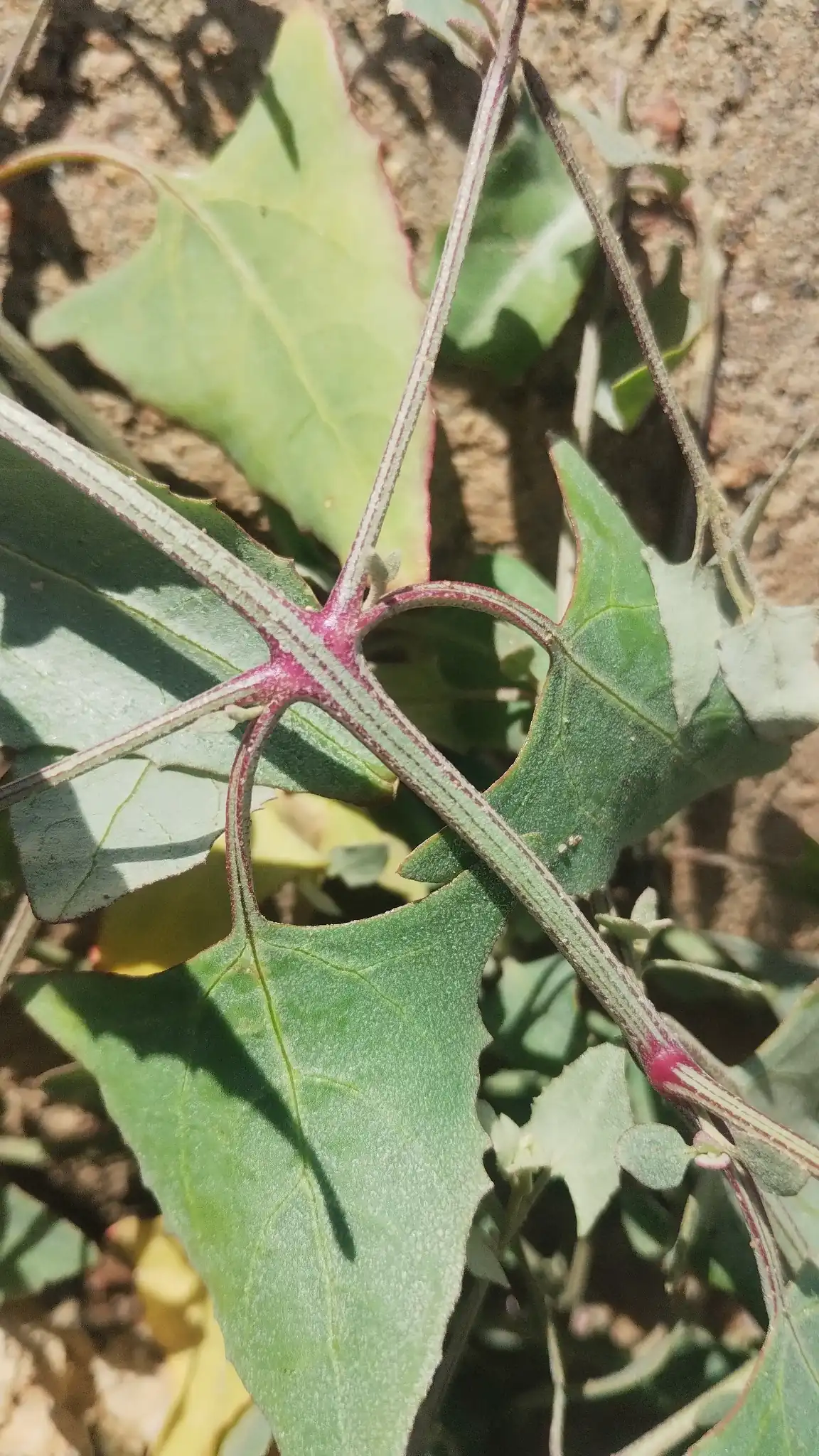
Atriplex prostrata, commonly known as spearscale, is a sprawling annual herb native to Eurasia and North Africa that has naturalized widely in North American coastal marshes and disturbed soils. The plant produces triangular, spear-shaped lower leaves with a distinct grayish-green, mealy texture caused by tiny bladder-like hairs on the foliage.
The species is distinguished by its highly adaptable, prostrate to erect growth habit and its terminal spikes of tiny, petal-less green flowers. Female flowers develop into characteristic triangular, hardened bracts that enclose the seeds, allowing them to survive winter freezes in the soil.
Uses & Benefits:
Essentials
At a Glance
Plant Type
Annual
Height
31"
Width
39"
Light
Full Sun
Zones
4, 5, 6, 7, 8, 9, 10
Water
Moist to wet
Humidity
High
Lifespan
Annual
Native To
Europe, temperate Asia, North Africa
Toxicity
Low (can accumulate nitrates or oxalates in contaminated soils)
Bloom period
Summer – Fall
In flower about 6 months of the year
Planting
How to Grow
- Select a site with full sun and moist, saline, or poorly drained clay or sandy soil.
- Sow seeds directly onto the soil surface in spring, as they require no pre-treatment to germinate.
- Maintain moist soil conditions during the early growth stages to establish the root system.
- Allow the plant to complete its annual cycle and set seed if naturalization is desired.
Pro Tip
To distinguish this species from similar annual oraches, examine the fruiting bracteoles; they are triangular, fused only at the base, and either entire or slightly toothed along the margins.
Keep It Thriving
Care Guide
Do
- Pull or hoe plants manually before late summer if you wish to prevent self-seeding.
- Provide full sun exposure to ensure robust, branching growth.
- Utilize this plant in saline depressions or heavy clay areas where other species fail to grow.
Don't
- Do not apply nitrogen fertilizers, as this species thrives in nutrient-poor soils and can accumulate excess nitrates.
- Do not plant in highly managed ornamental borders where a tidy, non-spreading habit is required.
- Do not attempt to prune or shape the plant, as it is an annual that completes its life cycle within one season.
Seasonal Care Calendar
| Task | Jan | Feb | Mar | Apr | May | Jun | Jul | Aug | Sep | Oct | Nov | Dec |
|---|---|---|---|---|---|---|---|---|---|---|---|---|
| Harvest | ||||||||||||
| Pest Check | ||||||||||||
| Plant | ||||||||||||
| Spring Cleanup |
Watch Out For
Pests & Diseases
Common Pests
Common Diseases
In the Garden
Landscape Uses & Companions
Landscape Uses
Companion Plants
Multiply
Propagation Methods
Good to Know
Common Questions
Spearscale questions
What zones can Spearscale grow in?
Spearscale is hardy in USDA Zones 4–10. Inside that range it survives winter in the ground; outside it, grow it as an annual or a container plant you protect.
When does Spearscale bloom?
Spearscale typically blooms in summer through fall. Exact timing shifts a week or two with your zone — Sow's bloom calendar maps it to your garden.
Does Spearscale need full sun?
Spearscale does best in full sun (6+ hours).
Is Spearscale drought tolerant?
Yes — once established (usually after the first full season), Spearscale handles dry spells with minimal watering. Water deeply its first year to build the root system that makes that possible.
More Atriplex to compare
Keep exploring
Explore the genus
Grow Spearscale with confidence
See it in a design of your actual yard, get zone-matched care reminders, and track it season by season in your garden journal.