The Story
Plant Bio
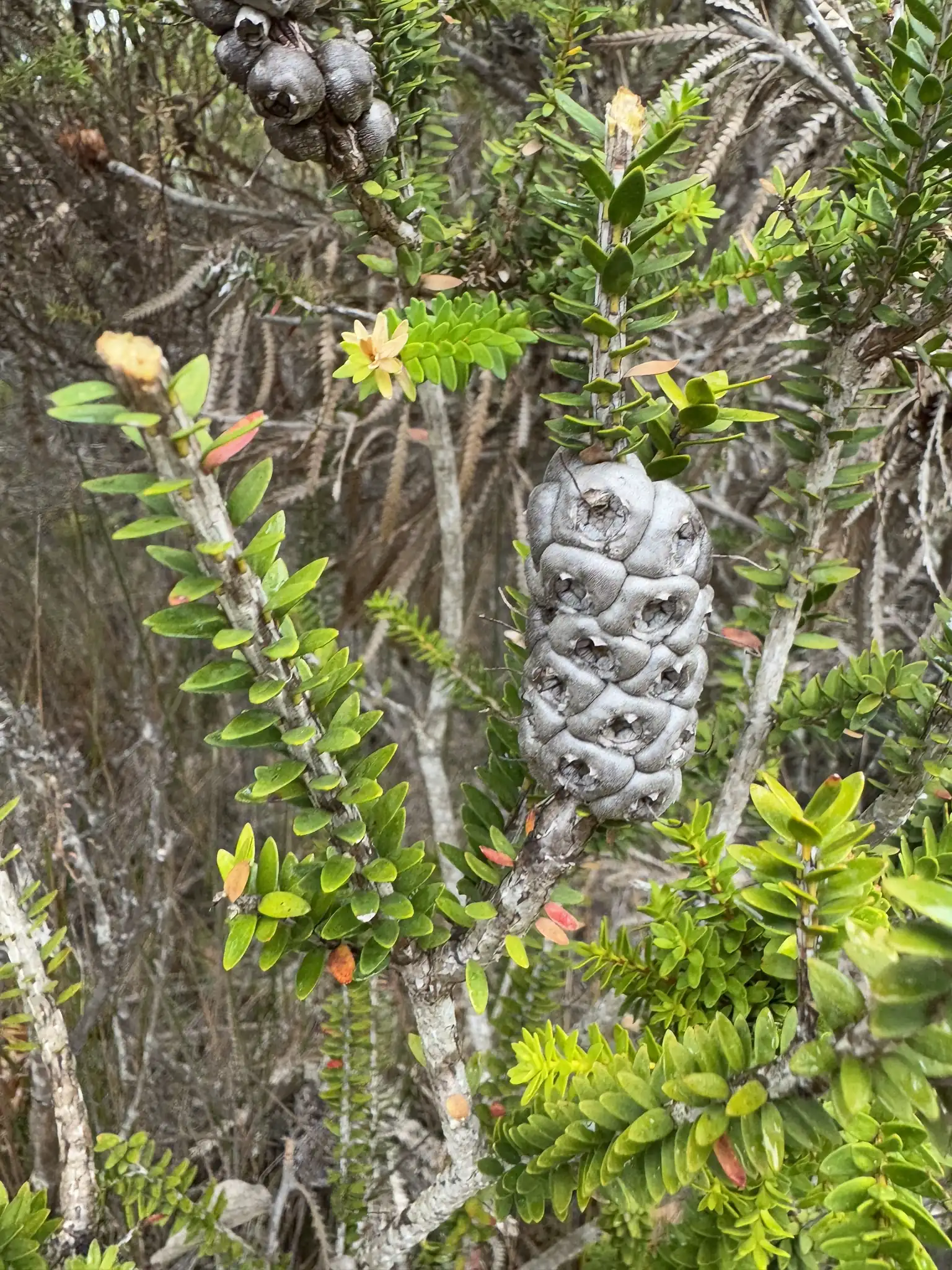
Melaleuca diosmifolia, the green honey myrtle, is an upright, dense evergreen shrub native to coastal Western Australia, growing up to ten feet tall with rigid branching. The small, oval leaves are arranged in alternating pairs along the stems and release aromatic essential oils when bruised.
This species is distinguished by its unusual lime-green to yellowish-green flowers, which form dense, cylindrical bottlebrush clusters up to two inches long at the branch tips. Following pollination, these spikes develop into persistent, woody seed cups that remain tightly clustered along the older wood for years.
Uses & Benefits:
Essentials
At a Glance
Plant Type
Shrub
Height
118"
Width
78"
Light
Full Sun, Partial Sun
Zones
9, 10
Water
Low
Humidity
Medium
Lifespan
Long-lived
Native To
Western Australia
Toxicity
Skin Irritant
Bloom period
Spring – Summer
In flower about 6 months of the year
Planting
How to Grow
- Select a planting site in full sun to partial shade with sandy, gravelly, or well-drained loamy soil.
- Dig a hole twice as wide as the root ball and of equal depth, backfilling without adding heavy organic soil amendments.
- Water deeply immediately after planting and maintain consistent moisture until the root system is established.
- Apply a thick layer of organic mulch around the base, keeping it clear of the main stem to prevent collar rot.
Pro Tip
Unlike many other melaleucas, this species tolerates hard rejuvenation pruning back into old bare wood, though routine light tip-pruning directly after flowering is best to maintain a dense, bushy habit.
Keep It Thriving
Care Guide
Do
- Tip-prune the branch ends immediately after the summer flowering to encourage a dense habit.
- Ensure the soil drains rapidly, especially if planting in clay-based or heavy soils.
- Protect young plants from freezing temperatures below 27°F (-3°C) with frost cloth.
Don't
- Do not over-fertilize, as this species is adapted to nutrient-poor soils and requires little supplemental feeding.
- Do not allow the soil to remain waterlogged, which triggers root rot pathogens.
- Do not prune heavily late in the season, which removes the next year's flower buds.
Seasonal Care Calendar
| Task | Jan | Feb | Mar | Apr | May | Jun | Jul | Aug | Sep | Oct | Nov | Dec |
|---|---|---|---|---|---|---|---|---|---|---|---|---|
| Fertilize | ||||||||||||
| Pest Check | ||||||||||||
| Prune | ||||||||||||
| Winter Prep |
Watch Out For
Pests & Diseases
Common Pests
Common Diseases
In the Garden
Landscape Uses & Companions
Landscape Uses
Companion Plants
Multiply
Propagation Methods
Good to Know
Common Questions
Green Honey Myrtle questions
What zones can Green Honey Myrtle grow in?
Green Honey Myrtle is hardy in USDA Zones 9–10. Inside that range it survives winter in the ground; outside it, grow it as an annual or a container plant you protect.
Is Green Honey Myrtle deer resistant?
Not reliably. Deer may browse Green Honey Myrtle, especially tender spring growth — plan on repellents or fencing where pressure is high.
When does Green Honey Myrtle bloom?
Green Honey Myrtle typically blooms in spring through summer. Exact timing shifts a week or two with your zone — Sow's bloom calendar maps it to your garden.
Does Green Honey Myrtle need full sun?
Green Honey Myrtle does best in full sun to part shade. In hot climates, afternoon shade keeps blooms fresher longer.
Is Green Honey Myrtle drought tolerant?
Yes — once established (usually after the first full season), Green Honey Myrtle handles dry spells with minimal watering. Water deeply its first year to build the root system that makes that possible.
More Melaleuca to compare
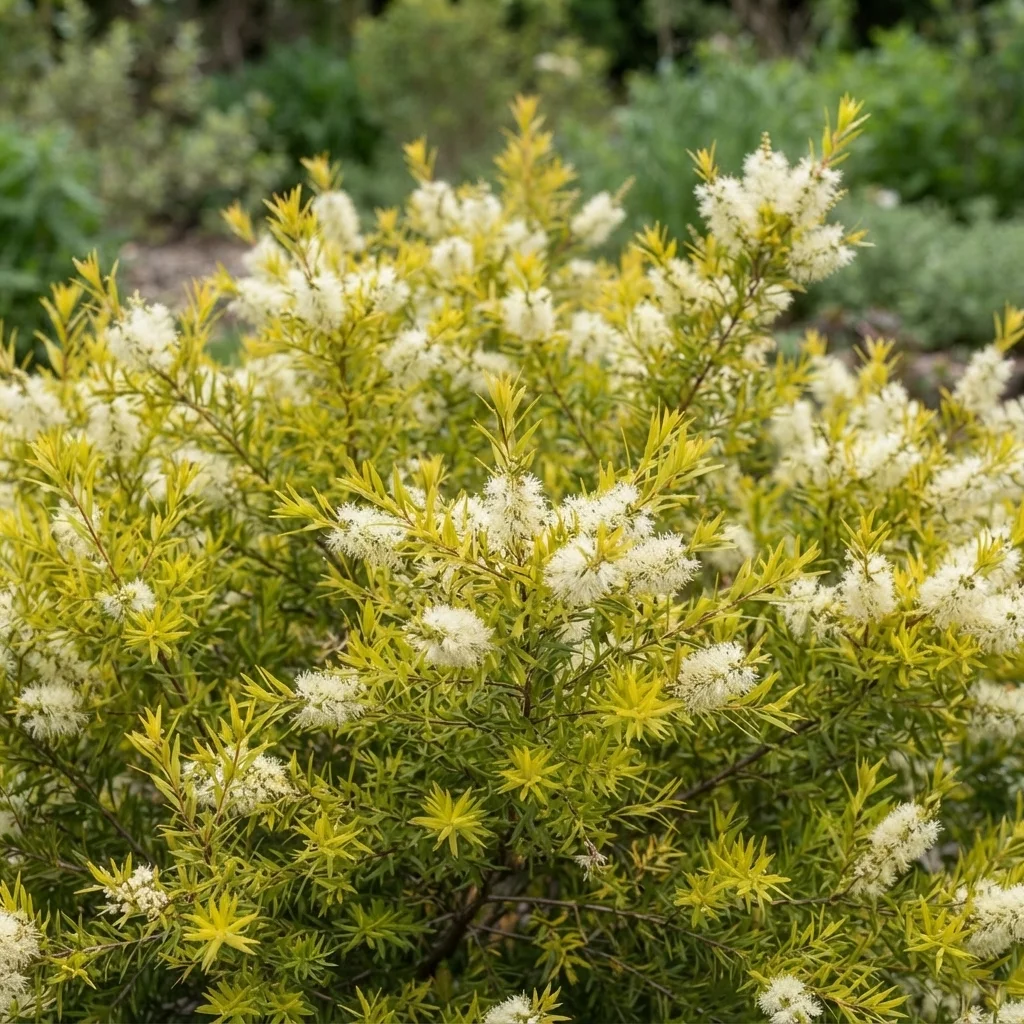
Golden Melaleuca
Melaleuca bracteata 'Golden Gem'
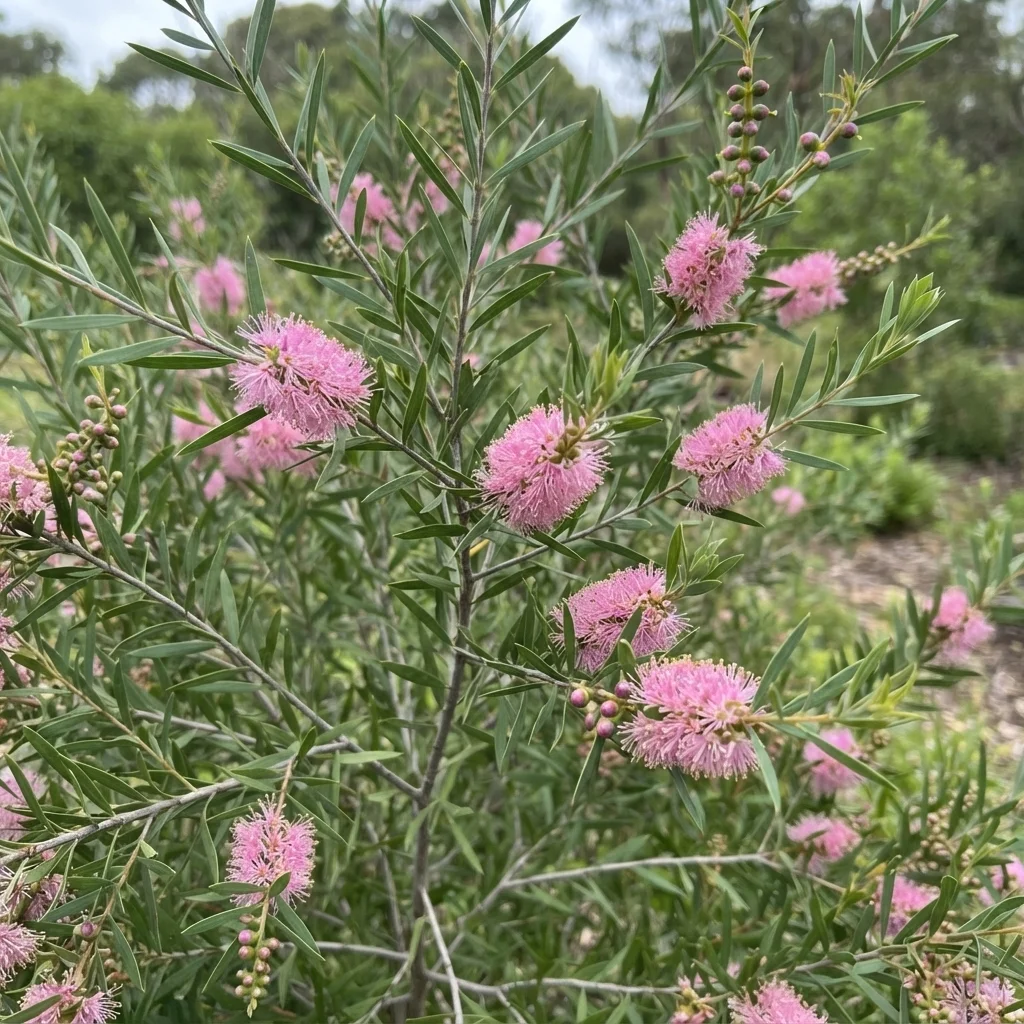
Graceful Honey-myrtle
Melaleuca radula
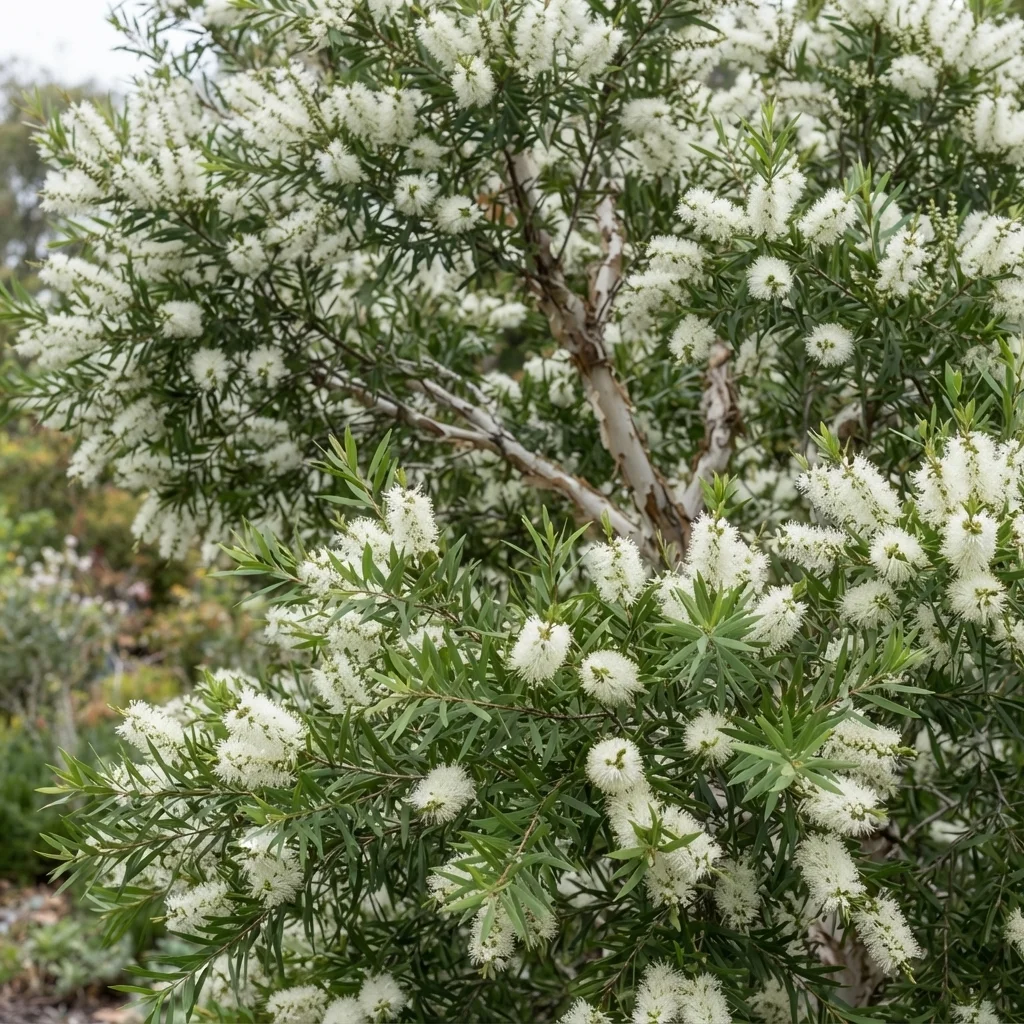
Snow-in-summer
Melaleuca linariifolia
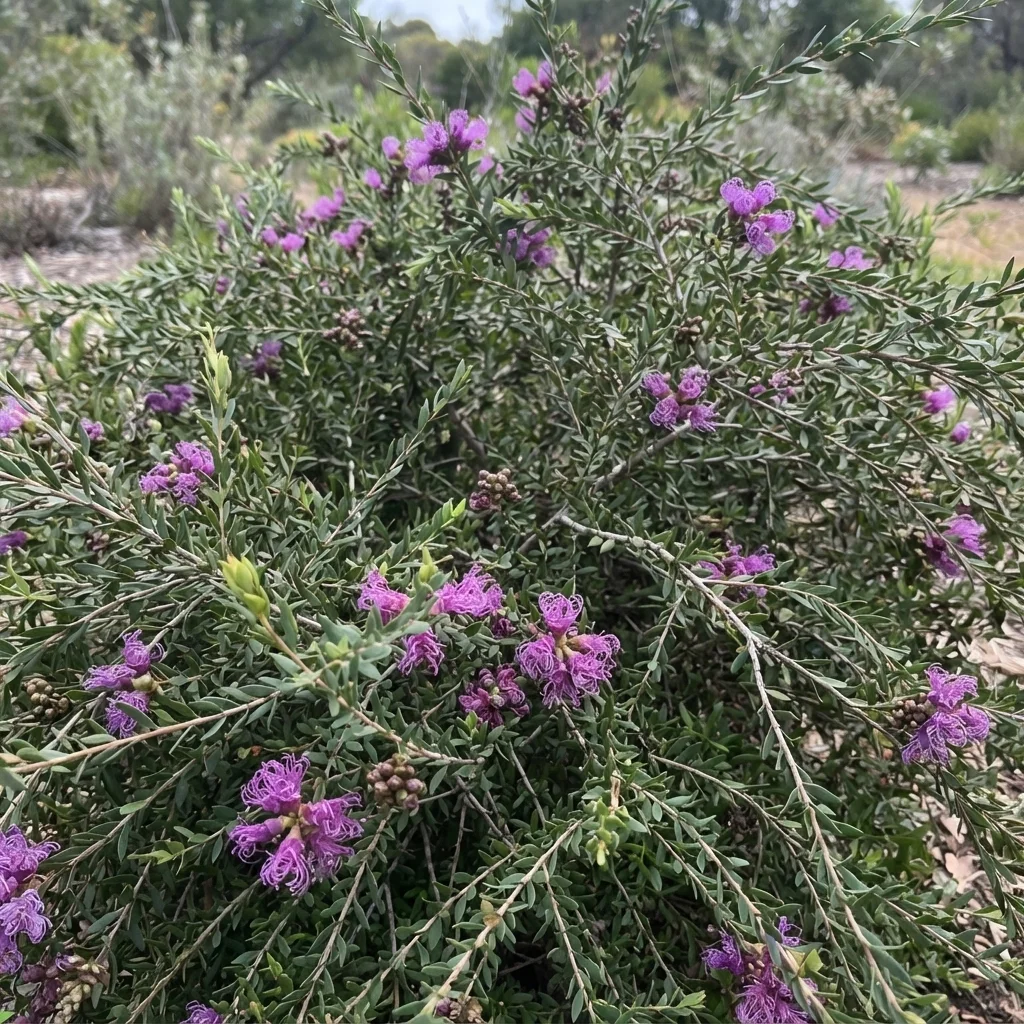
Thymeleaf Melaleuca
Melaleuca thymifolia
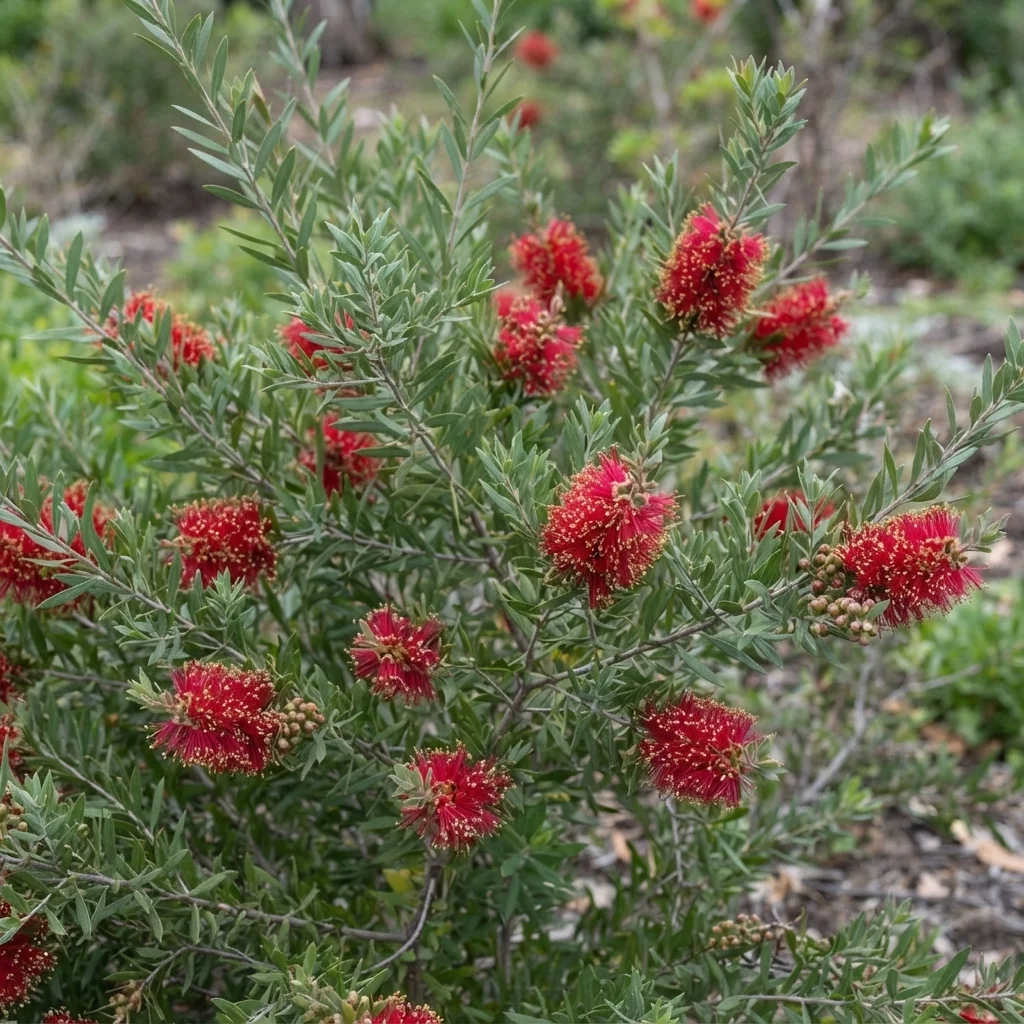
Scarlet Honey Myrtle
Melaleuca fulgens
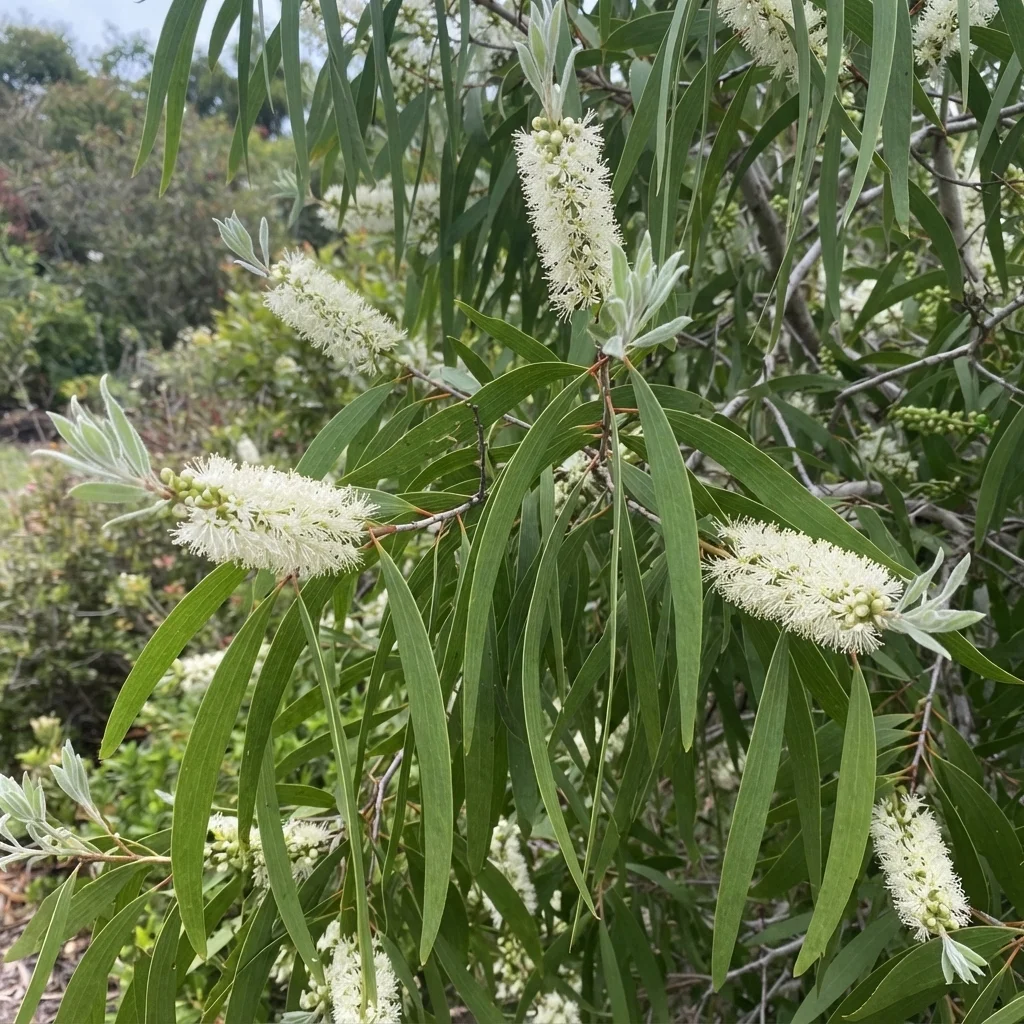
Weeping Paperbark
Melaleuca leucadendra
Keep exploring
Explore the genus
Hardy in your zone?
Grow Green Honey Myrtle with confidence
See it in a design of your actual yard, get zone-matched care reminders, and track it season by season in your garden journal.