
The Story
Plant Bio
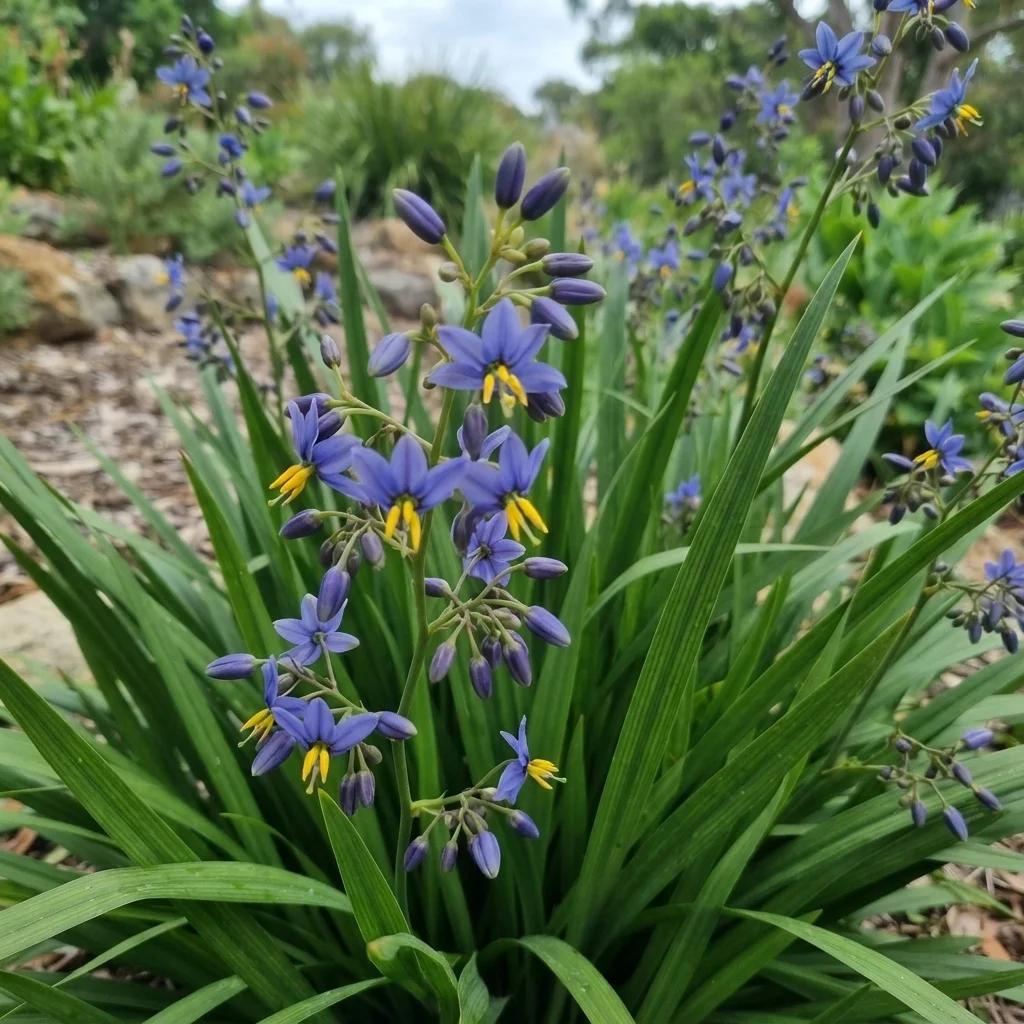
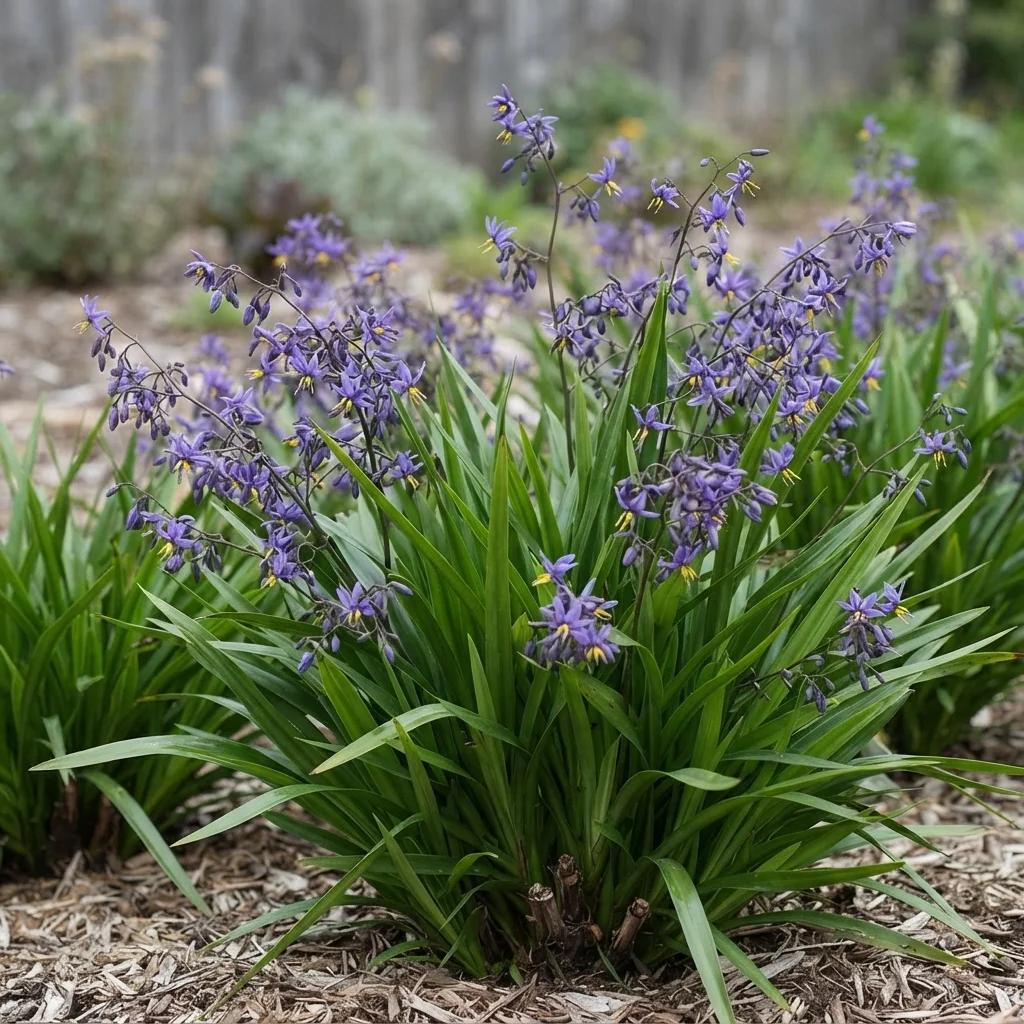
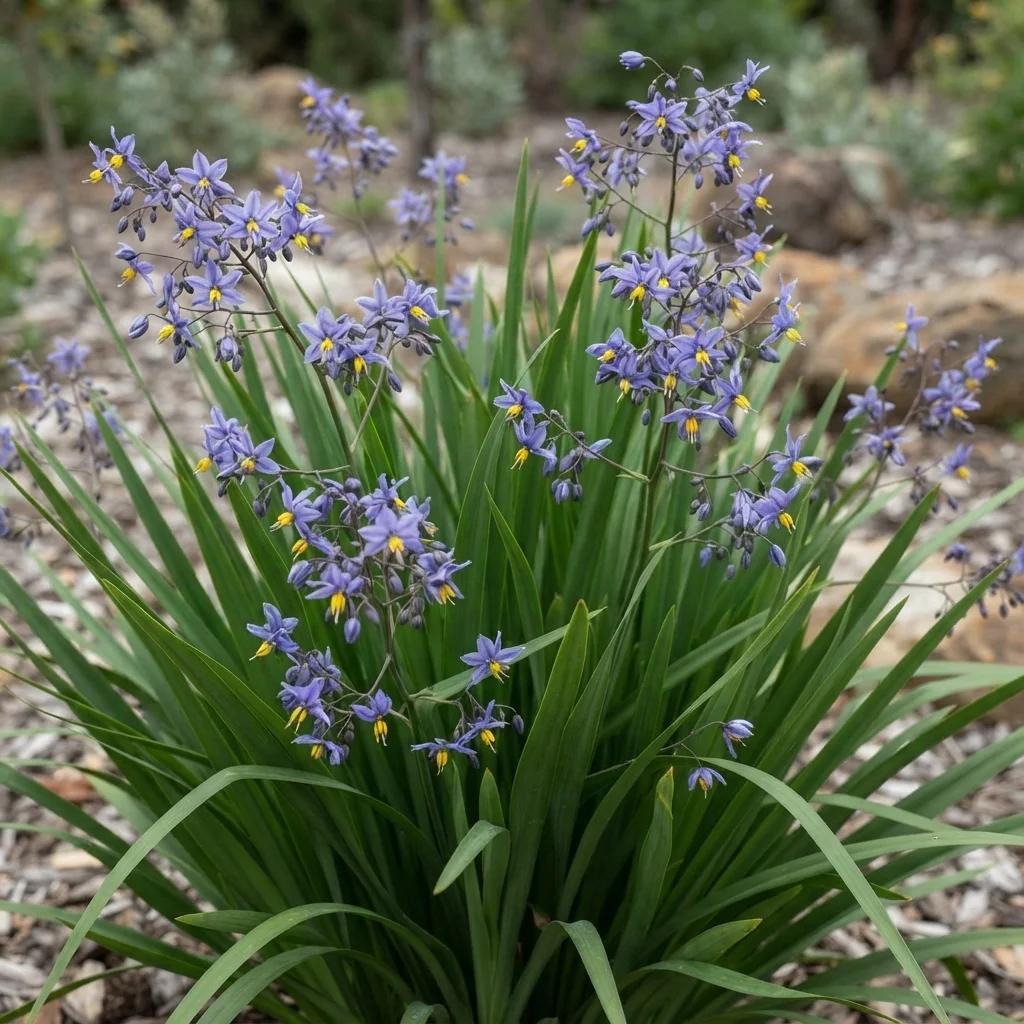
Dianella caerulea is a tufted, evergreen perennial native to eastern Australia, characterized by its clumping habit and strappy, linear foliage. In spring, it produces delicate panicles of blue to violet flowers with prominent yellow stamens, followed by glossy, purple-blue berries in summer.
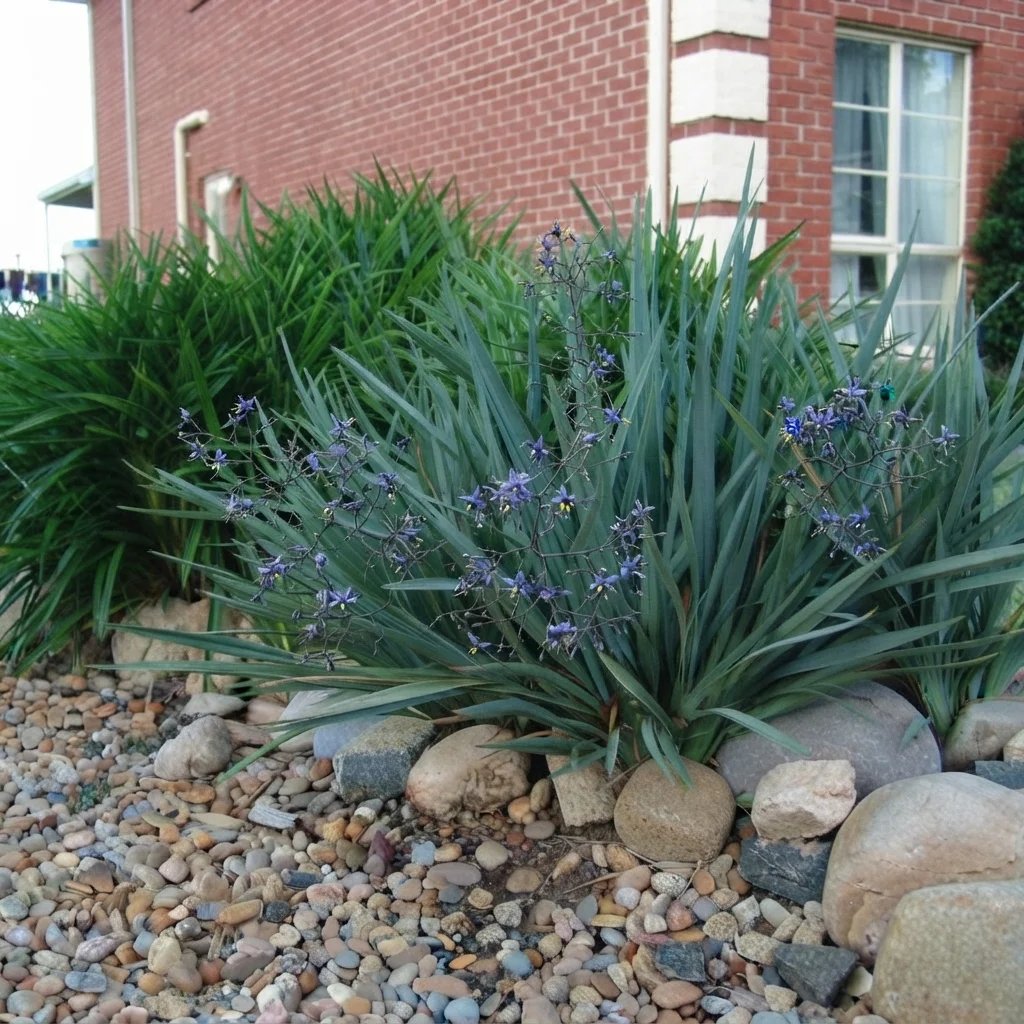
'Cassa Blue' is a compact, dwarf selection distinguished by its stiff, upright growth habit and rich blue-grey foliage that intensifies in color during cold winter conditions. Unlike some wild forms, this cultivar does not spread aggressively via wide underground rhizomes, maintaining a tidy clumping form.
Uses & Benefits:
Essentials
At a Glance
Plant Type
Grass
Height
18"
Width
16"
Light
Full Sun, Partial Sun
Zones
8, 9, 10
Water
Low
Humidity
High
Lifespan
Perennial
Native To
Australia
Toxicity
Toxic if ingested
Bloom period
Spring – Early summer
In flower about 4 months of the year
Planting
How to Grow
- Select a planting site in full sun to partial shade with highly permeable, well-drained soil.
- Dig a hole twice as wide as the root ball and of equal depth, amending heavy soils with coarse sand or planting on a raised mound to prevent waterlogging.
- Gently loosen the outer roots of the container-grown plant and set it in the hole, ensuring the crown sits slightly above the surrounding soil level.
- Water thoroughly at planting and maintain moderate moisture until the root system is established, after which irrigation can be significantly reduced.
Pro Tip
Plant in elevated mounds or slopes when dealing with heavy clay to ensure rapid drainage, and never shear the foliage flat like turfgrass, as the crown cannot regenerate from hacked woody stubble.
Keep It Thriving
Care Guide
Do
- Plant on a slope or raised mound if your garden has heavy clay soil.
- Apply a balanced or native low-phosphorus slow-release fertilizer once in spring.
- Wear gloves when handling or pruning to avoid potential skin irritation from the sap.
Don't
- Do not plant in low-lying, poorly drained areas where water pools after rain.
- Do not shear or scalp the plant flat, as it does not regenerate well from hacked woody stubble.
- Do not allow pets or children to ingest the ornamental blue berries, which contain toxic saponins.
Seasonal Care Calendar
| Task | Jan | Feb | Mar | Apr | May | Jun | Jul | Aug | Sep | Oct | Nov | Dec |
|---|---|---|---|---|---|---|---|---|---|---|---|---|
| Fertilize | ||||||||||||
| Pest Check | ||||||||||||
| Prune | ||||||||||||
| Spring Cleanup |
Watch Out For
Pests & Diseases
Common Pests
Common Diseases
In the Garden
Landscape Uses & Companions
Landscape Uses
Companion Plants
Multiply
Propagation Methods
Good to Know
Common Questions
Blue Flax-Lily questions
What zones can Blue Flax-Lily grow in?
Blue Flax-Lily is hardy in USDA Zones 8–10. Inside that range it survives winter in the ground; outside it, grow it as an annual or a container plant you protect.
Is Blue Flax-Lily deer resistant?
Yes — Blue Flax-Lily is rated deer-resistant. Deer typically pass it over, though extreme hunger can override any plant's defenses.
When does Blue Flax-Lily bloom?
Blue Flax-Lily typically blooms in spring through early summer. Exact timing shifts a week or two with your zone — Sow's bloom calendar maps it to your garden.
Does Blue Flax-Lily need full sun?
Blue Flax-Lily does best in full sun to part shade. In hot climates, afternoon shade keeps blooms fresher longer.
Is Blue Flax-Lily drought tolerant?
Yes — once established (usually after the first full season), Blue Flax-Lily handles dry spells with minimal watering. Water deeply its first year to build the root system that makes that possible.
More Dianella to compare
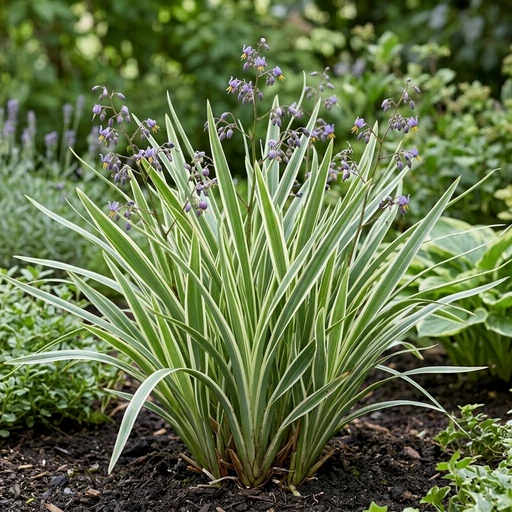
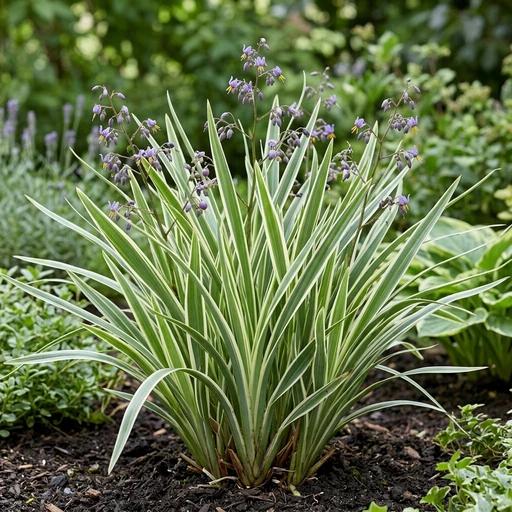
Variegated Flax Lily
Dianella caerulea 'Variegata'
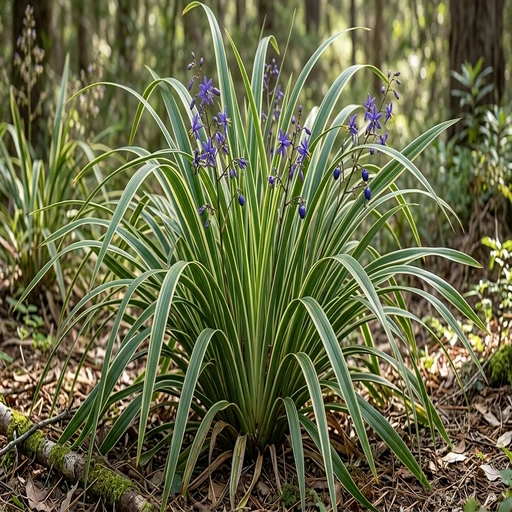
Tasmanian Flax Lily
Dianella tasmanica
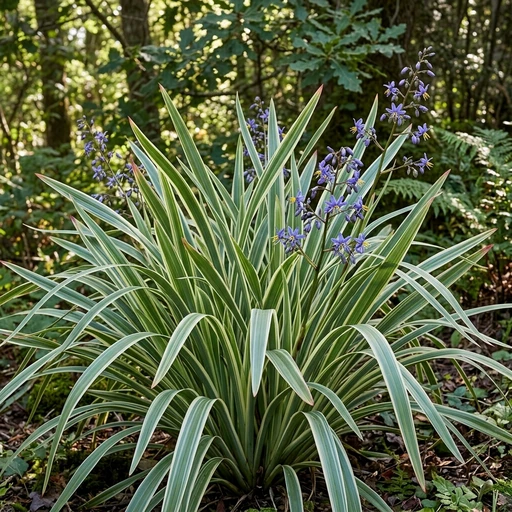
Blueberry Flax Lily
Dianella tasmanica 'Variegata'
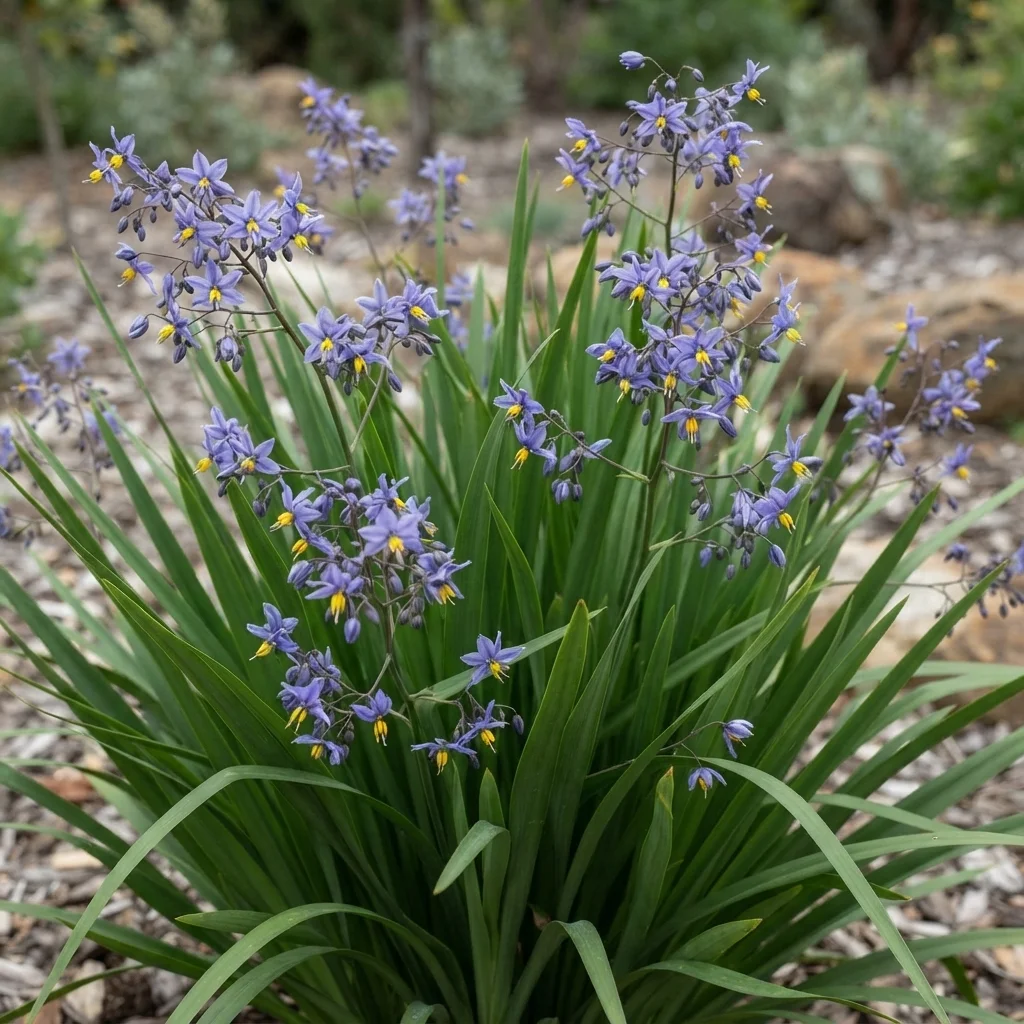
Blue Flax Lily
Dianella caerulea 'King Alfred'
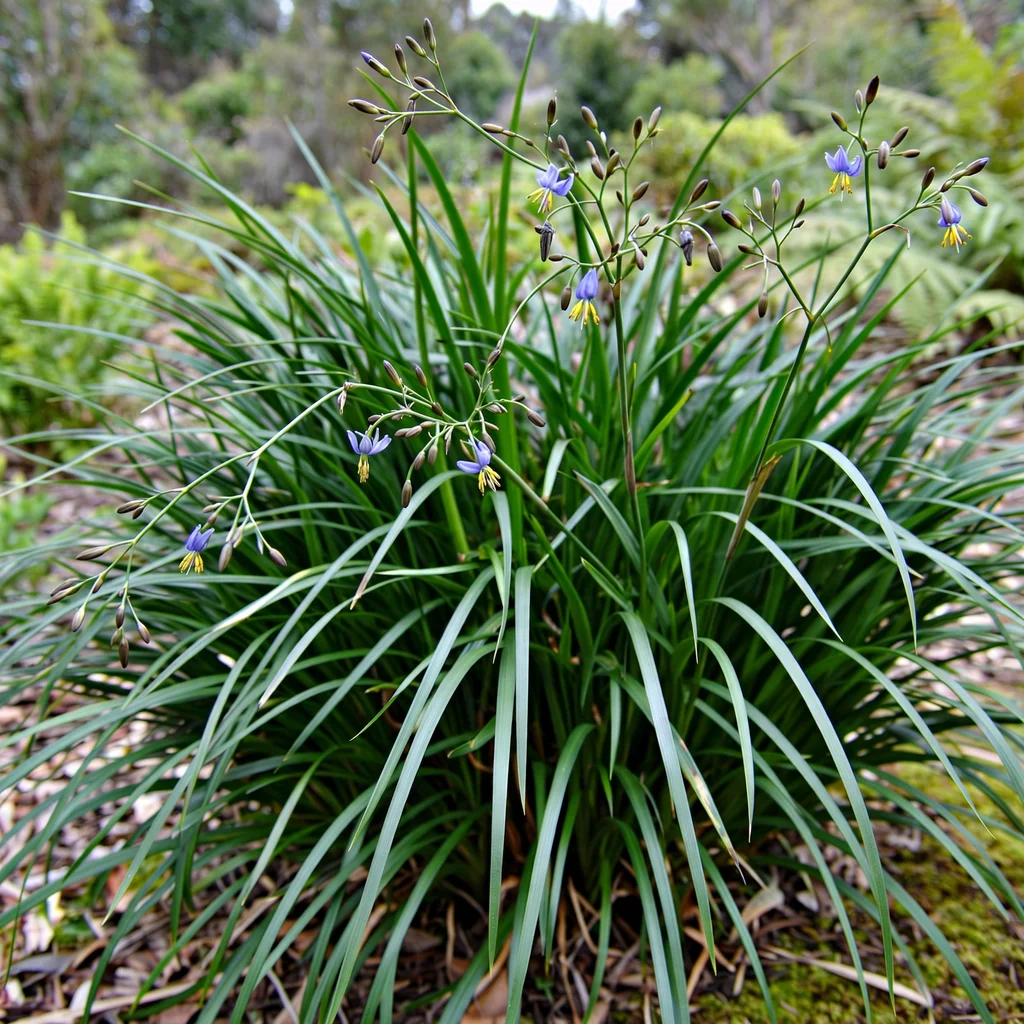
Tasman Flax Lily
Dianella tasmanica 'Emerald Arch'
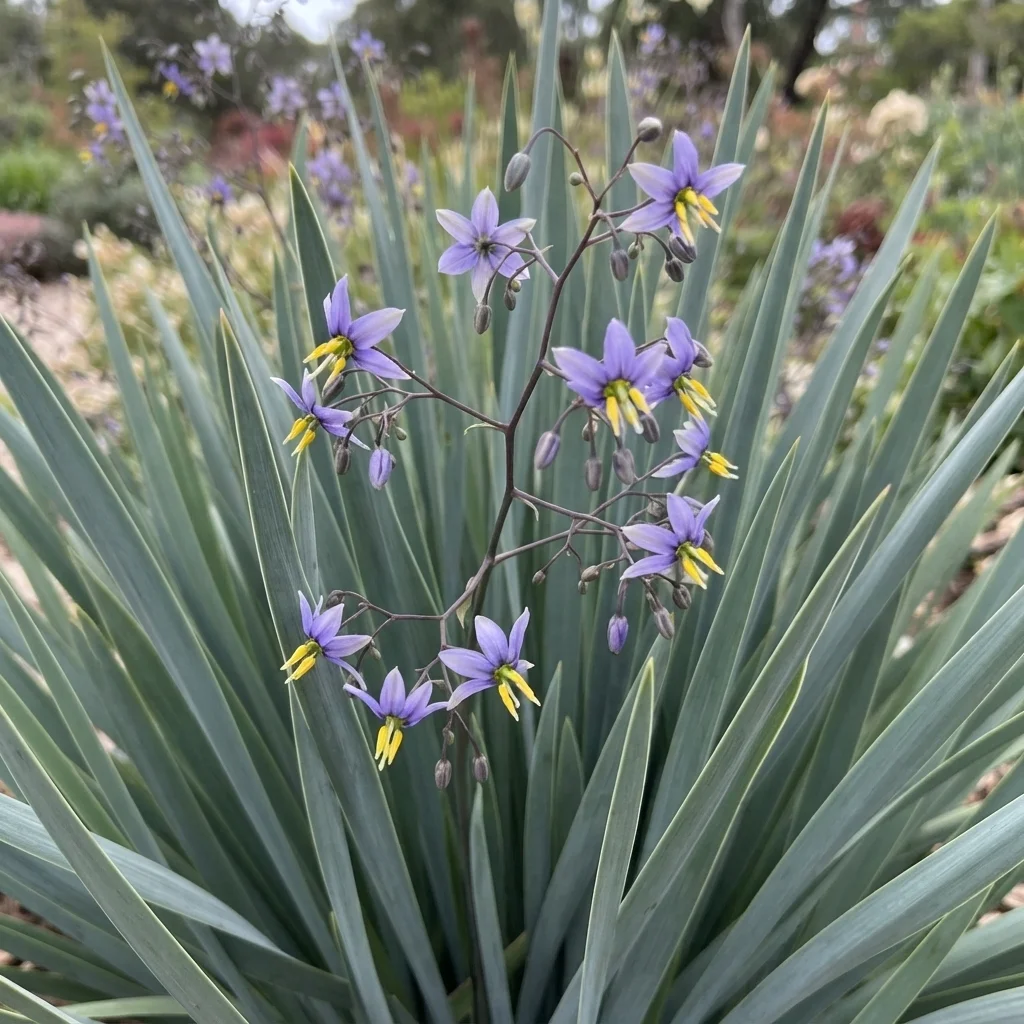
Baby Bliss Flax Lily
Dianella revoluta 'Baby Bliss'
Keep exploring
Explore the genus
Hardy in your zone?
Grow Blue Flax-Lily with confidence
See it in a design of your actual yard, get zone-matched care reminders, and track it season by season in your garden journal.