1 named cultivar
The Story
Plant Bio
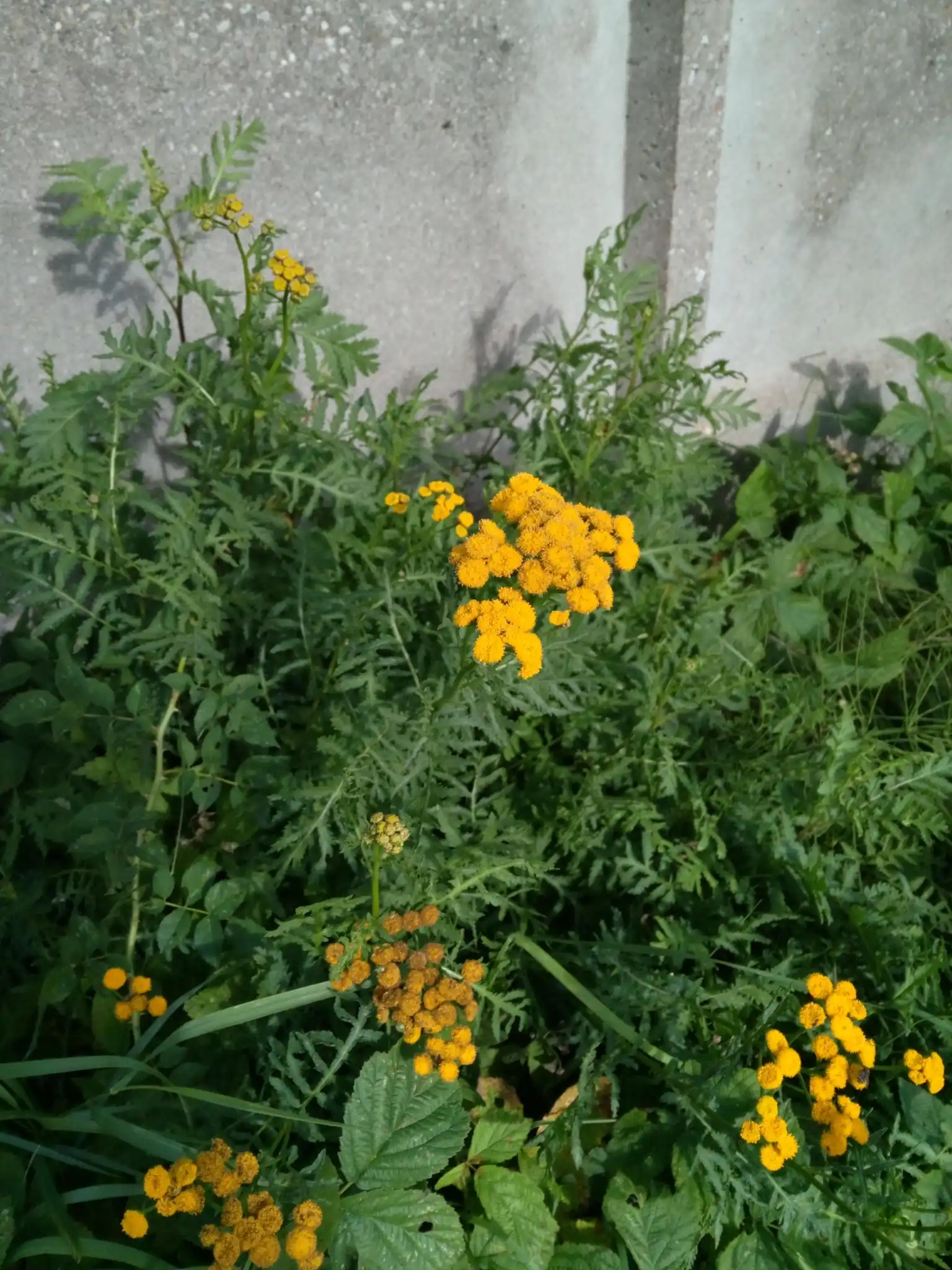
Tanacetum vulgare, common tansy, is an upright clumping perennial from Europe and Asia, one to five feet tall. Finely divided fern-like leaves are strongly aromatic when crushed, and flat-topped clusters of small button-like golden-yellow flowerheads, without ray petals, open from midsummer into autumn.
It contains thujone and is genuinely poisonous — historically used as a medicinal herb and abortifacient, with fatalities recorded from the oil, so nothing about its herbal past makes it safe to ingest. It is also a listed noxious weed across much of the West, spreading by rhizome and by prolific seed, and NCSU rates it high flammability.
Uses & Benefits:
Essentials
At a Glance
Plant Type
Perennial
Height
24"
Width
18"
Light
Full Sun, Partial Sun
Zones
4, 5, 6, 7, 8
Water
Low to moderate
Humidity
Moderate
Lifespan
Perennial
Native To
Europe and Asia
Toxicity
Toxic to people and livestock
Planting
How to Grow
- Check your state noxious weed listing before planting.
- Site it away from pasture and grazing animals.
- Contain the running rhizomes or grow it in a pot.
- Deadhead before seed sets to limit spread.
- Wear gloves; the foliage can irritate skin.
- Never use any part of it internally.
Pro Tip
Its long history as a medicinal herb is not a safety record — thujone poisoning from tansy oil has killed people, and the plant should stay ornamental.
Keep It Thriving
Care Guide
Do
- Check local noxious weed listings ⚠️
- Contain the rhizomes 🚧
- Deadhead before it seeds ✂️
- Wear gloves when handling it 🧤
Don't
- Take any part of it internally ❌
- Plant it near grazing animals ❌
- Let it seed into open country ❌
Seasonal Care Calendar
| Task | Jan | Feb | Mar | Apr | May | Jun | Jul | Aug | Sep | Oct | Nov | Dec |
|---|---|---|---|---|---|---|---|---|---|---|---|---|
| Contain | ||||||||||||
| Deadhead |
Watch Out For
Pests & Diseases
Common Pests
Common Diseases
In the Garden
Landscape Uses & Companions
Landscape Uses
Companion Plants
Multiply
Propagation Methods
Good to Know
Common Questions
Common Tansy questions
What zones can Common Tansy grow in?
Common Tansy is hardy in USDA Zones 4–8. Inside that range it survives winter in the ground; outside it, grow it as an annual or a container plant you protect.
Is Common Tansy deer resistant?
Yes — Common Tansy is rated deer-resistant. Deer typically pass it over, though extreme hunger can override any plant's defenses.
When does Common Tansy bloom?
Common Tansy typically blooms in mid-summer through late summer. Exact timing shifts a week or two with your zone — Sow's bloom calendar maps it to your garden.
Does Common Tansy need full sun?
Common Tansy does best in full sun to part shade. In hot climates, afternoon shade keeps blooms fresher longer.
Is Common Tansy drought tolerant?
Yes — once established (usually after the first full season), Common Tansy handles dry spells with minimal watering. Water deeply its first year to build the root system that makes that possible.
More Tanacetum to compare
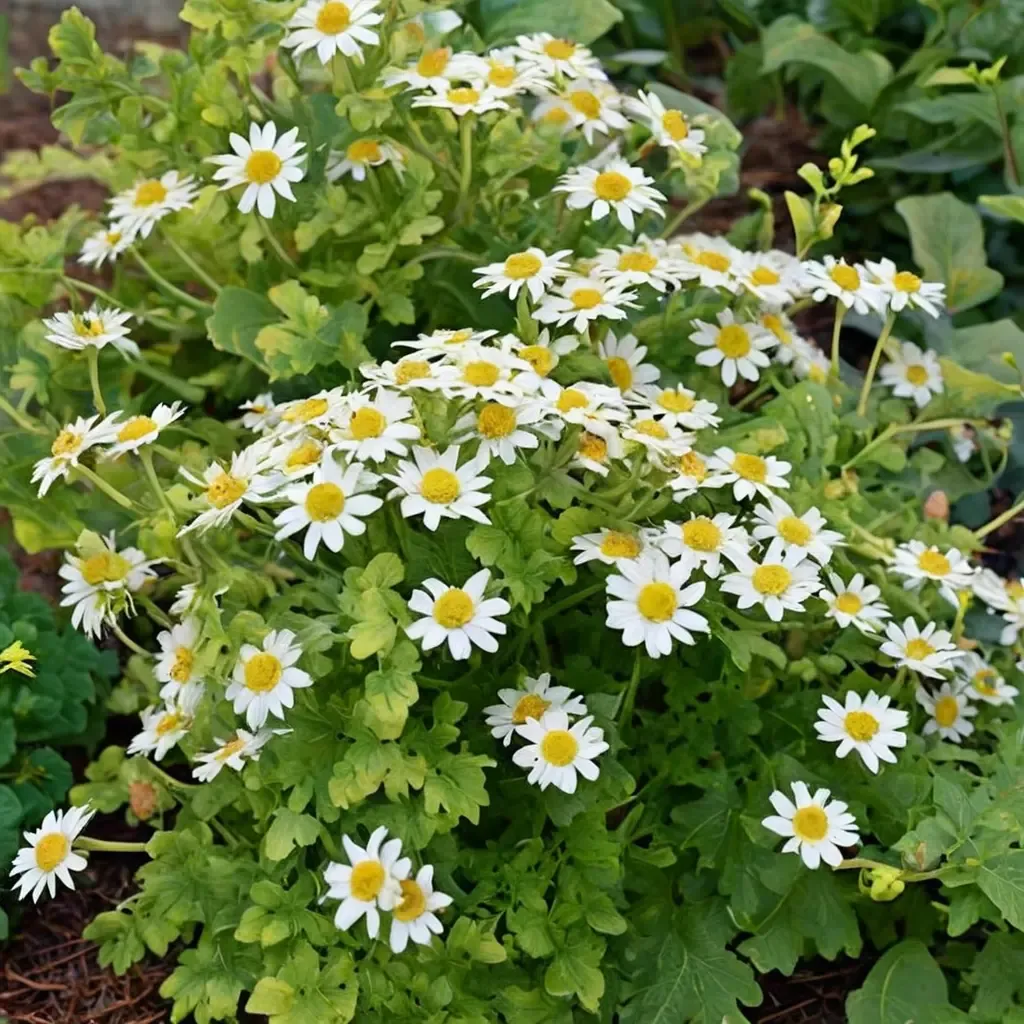
Golden Feverfew
Tanacetum parthenium 'Aureum'
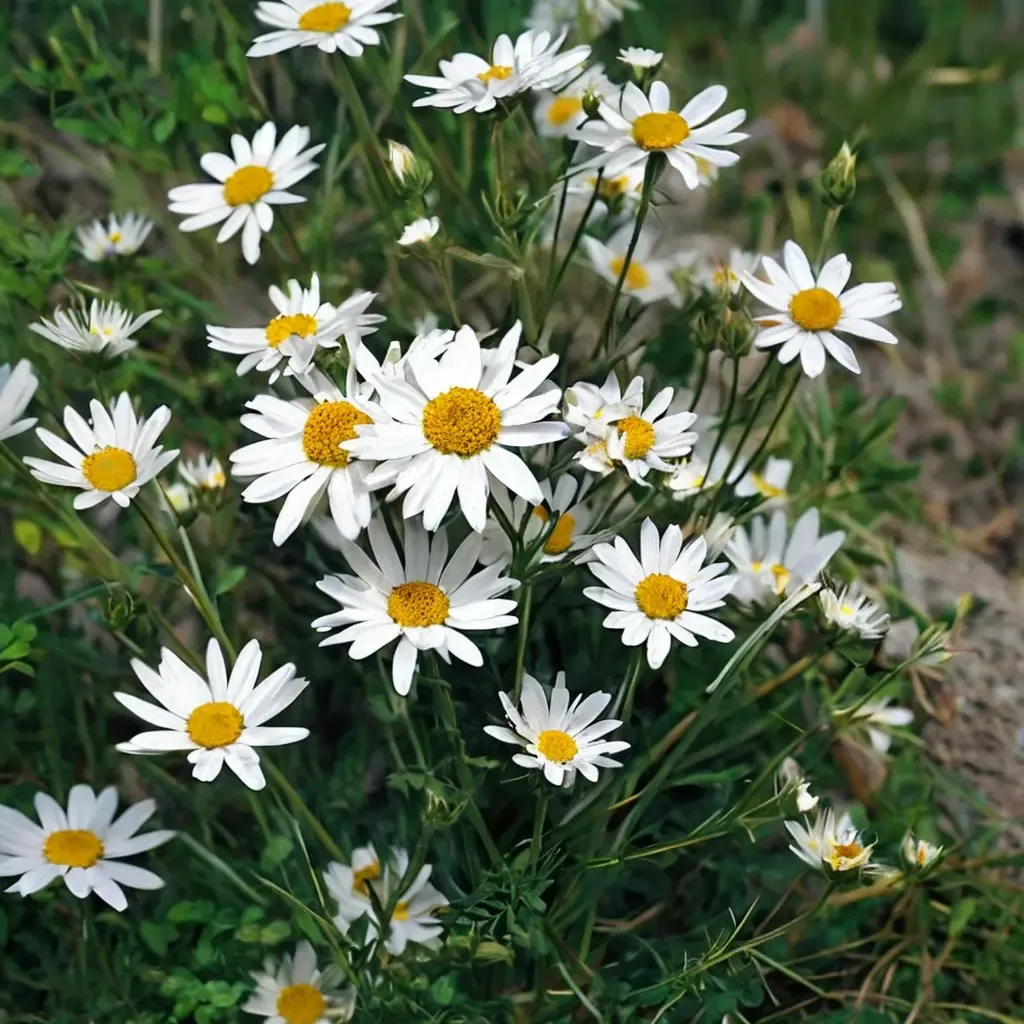
Scentless Feverfew
Tanacetum corymbosum
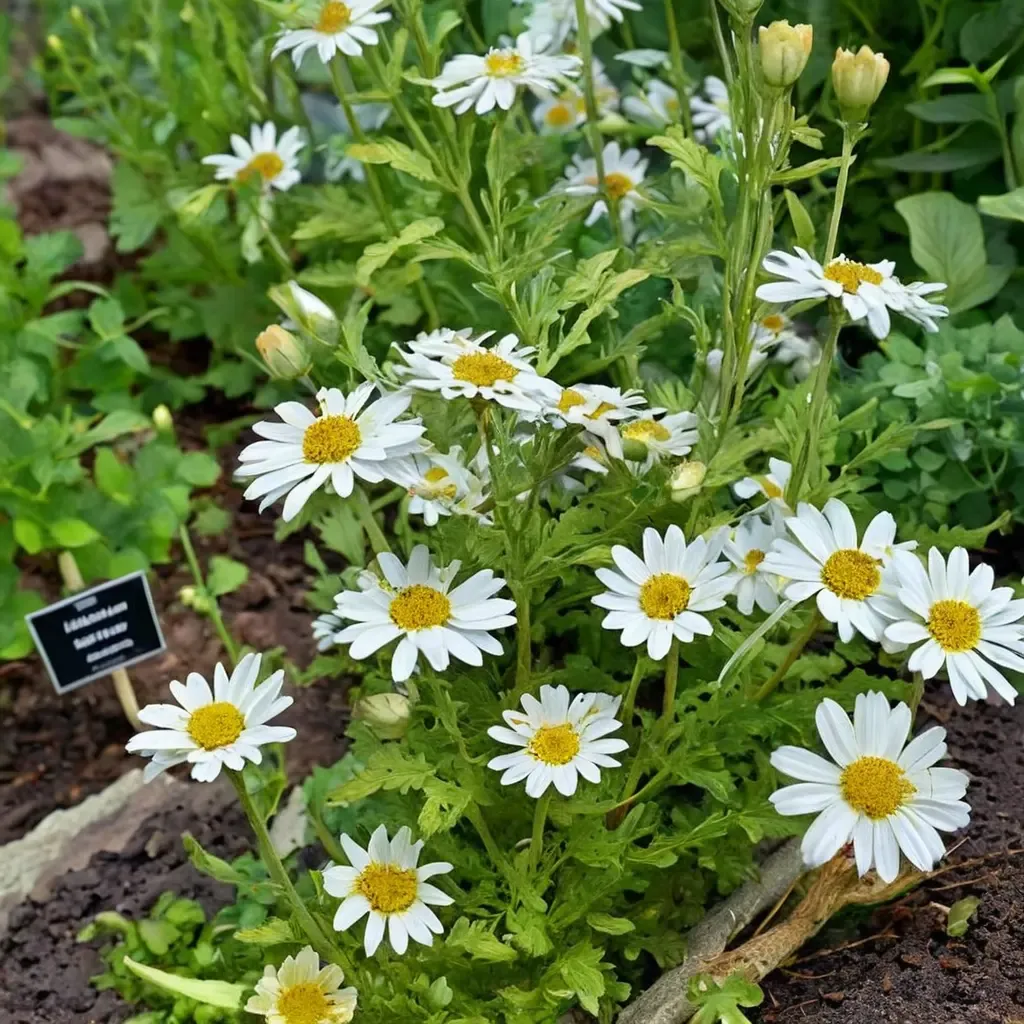
Feverfew
Tanacetum parthenium
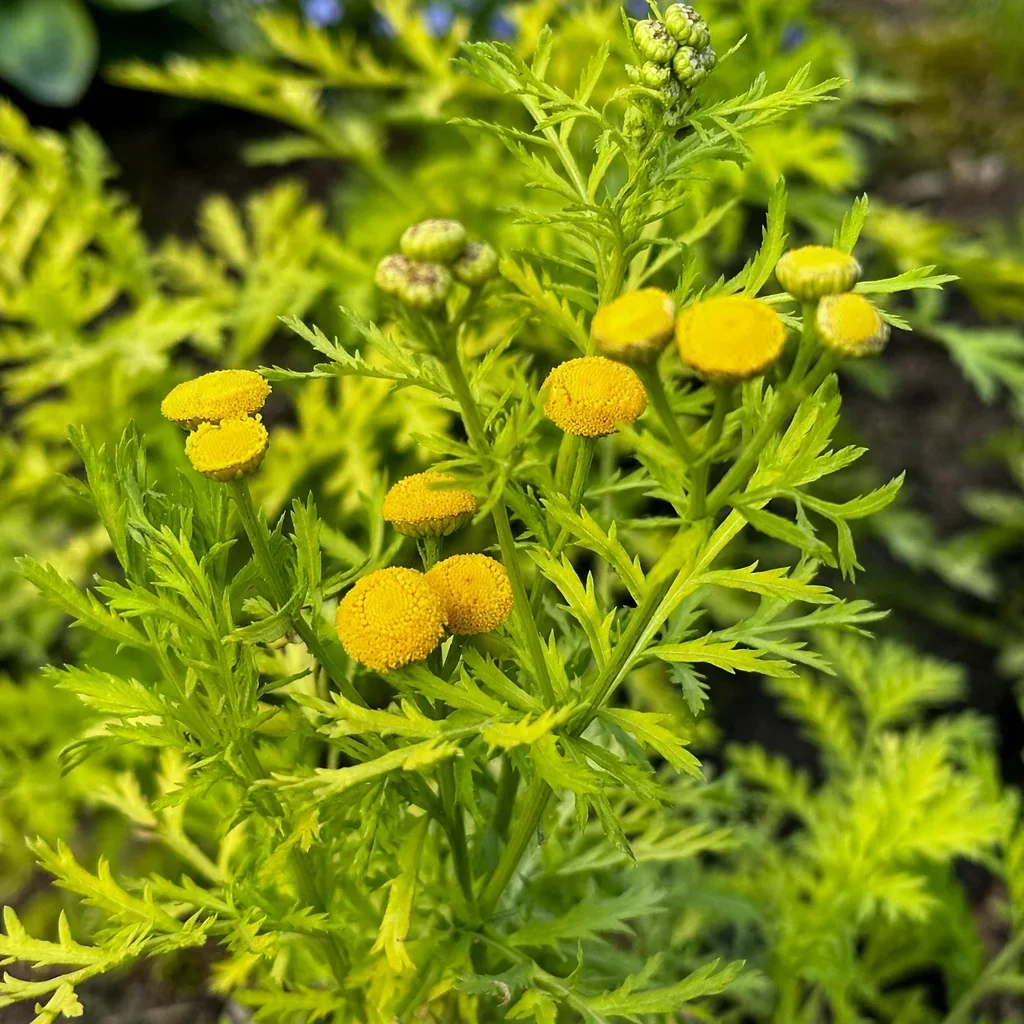
Golden Tansy
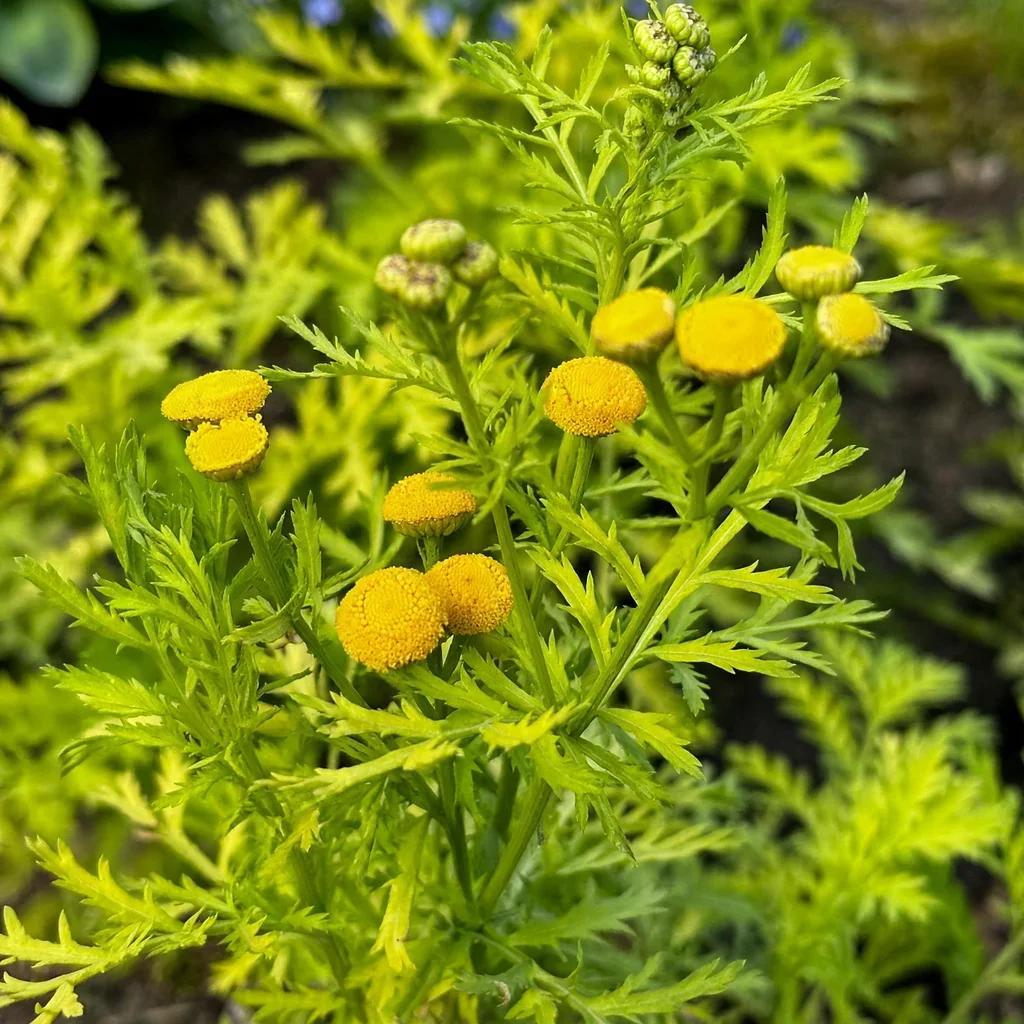
Tanacetum vulgare 'Isla Gold'
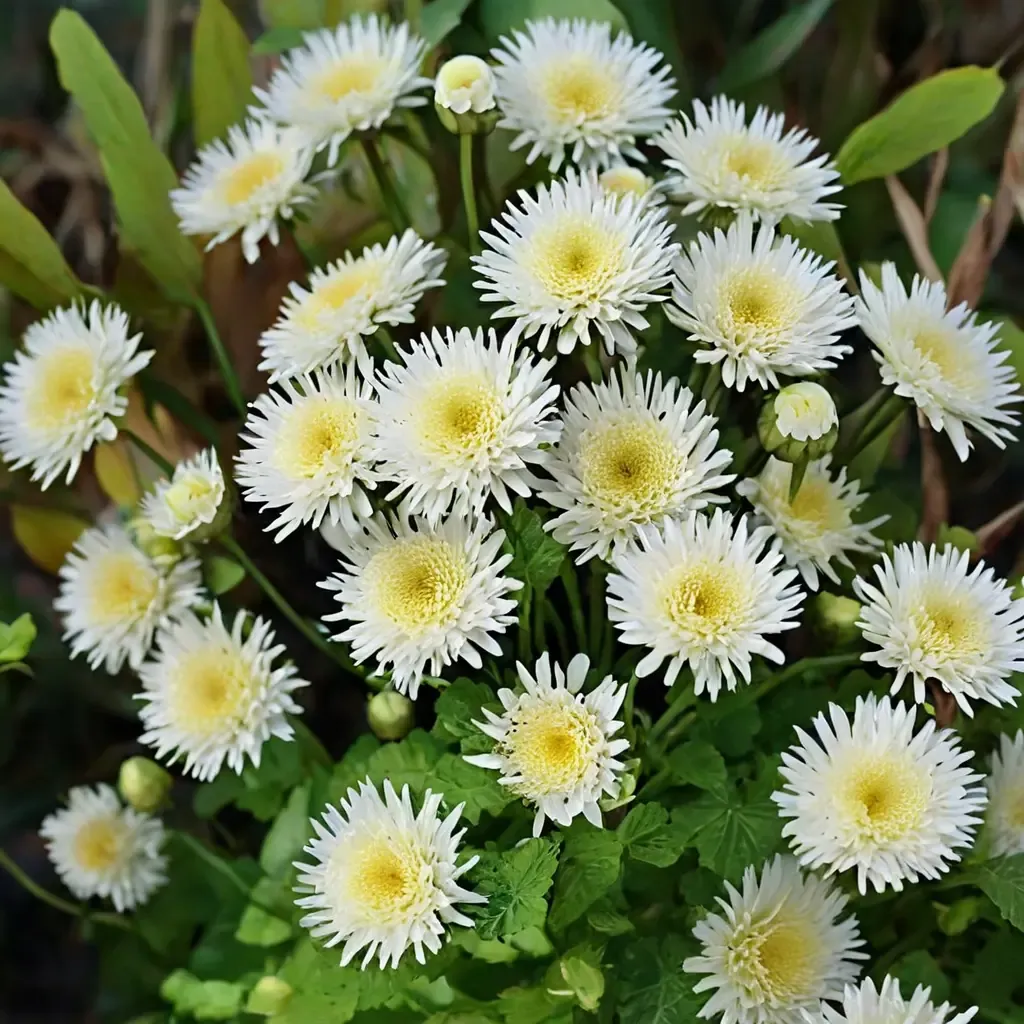
Selma Star Feverfew
Tanacetum parthenium 'Selma Star'
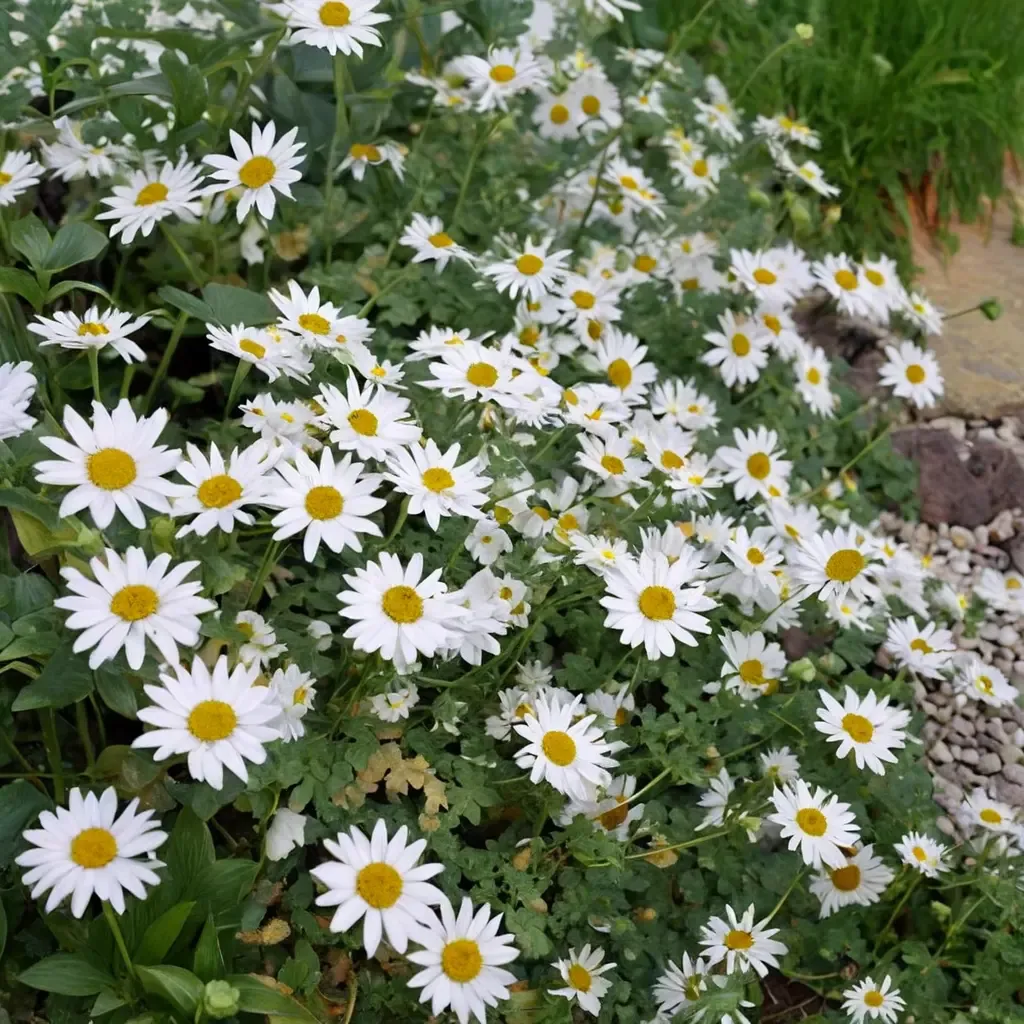
Silver Tansy
Tanacetum niveum
Keep exploring
Explore the genus
Hardy in your zone?
Grow Common Tansy with confidence
See it in a design of your actual yard, get zone-matched care reminders, and track it season by season in your garden journal.