
The Story
Plant Bio
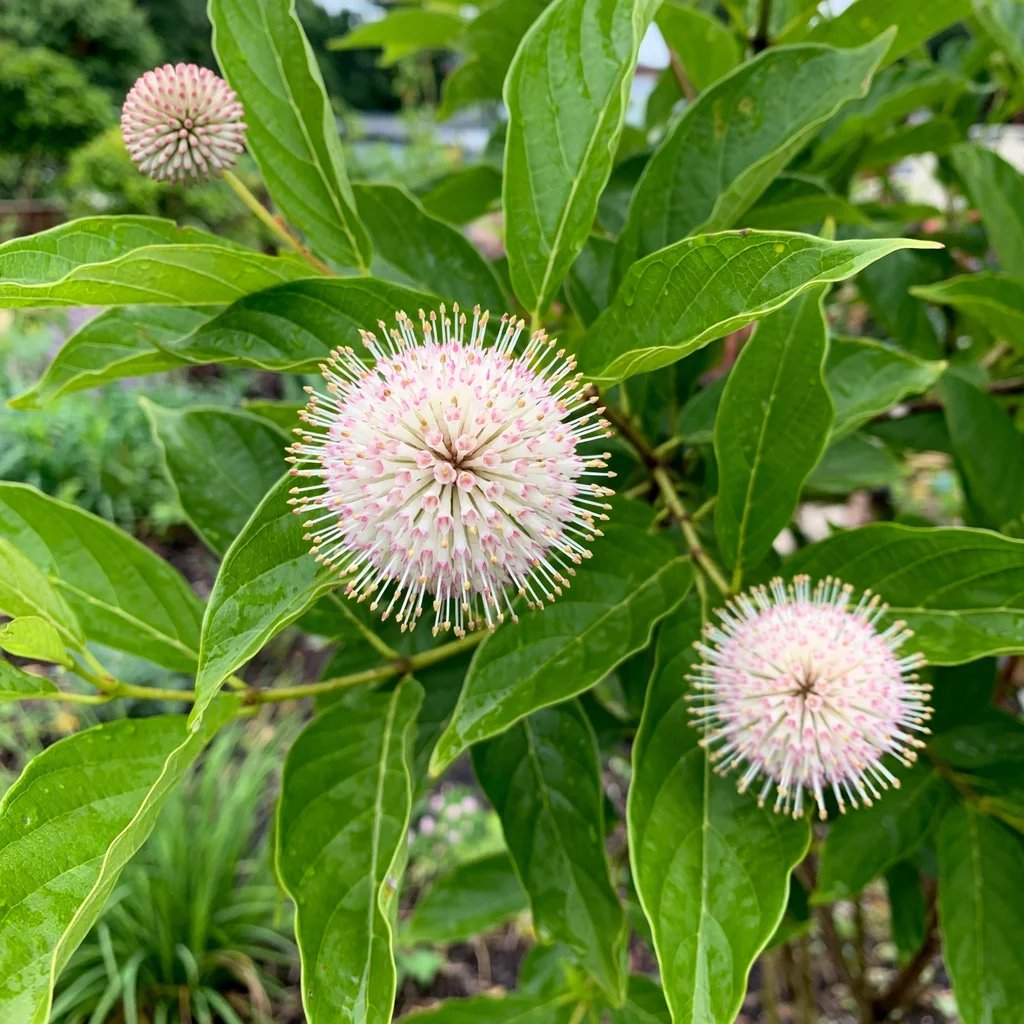
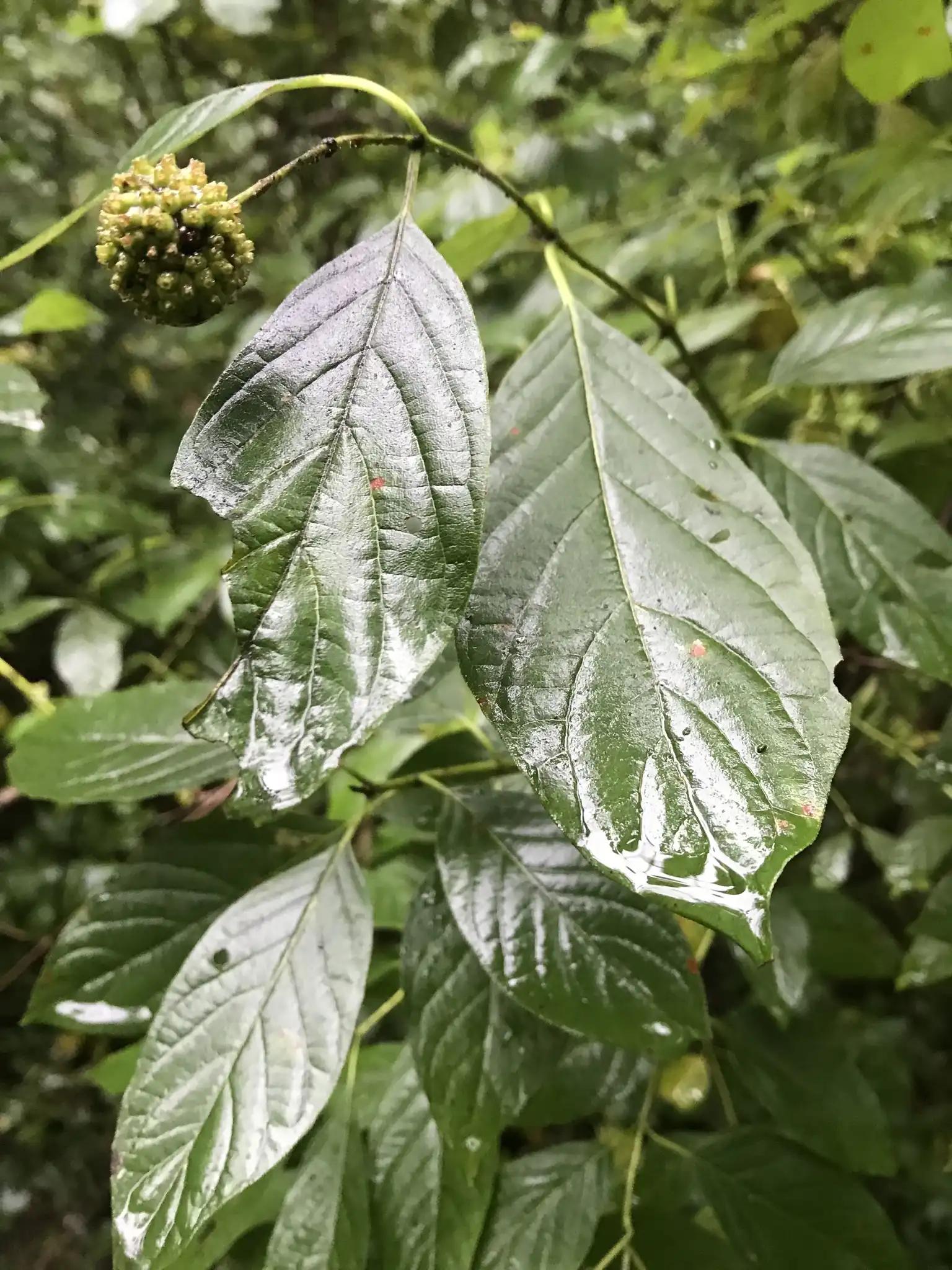
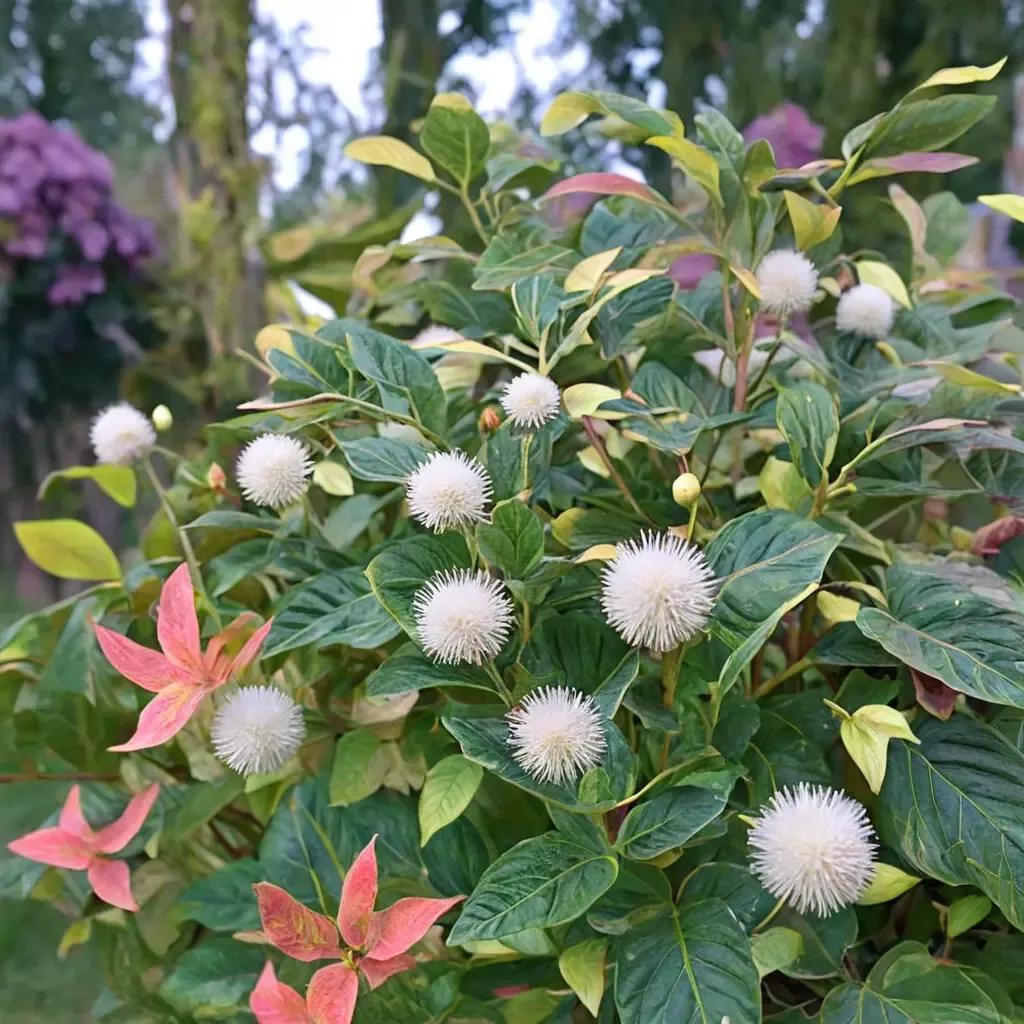
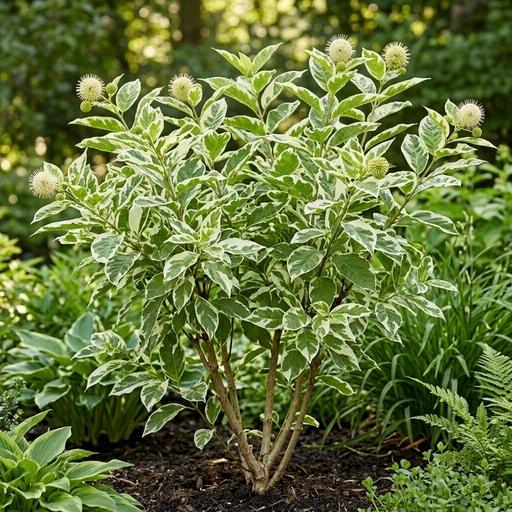
Cephalanthus occidentalis is a deciduous, multi-stemmed North American shrub that thrives in wet soils, riverbanks, and boggy ground. It produces distinct spherical flower heads composed of tiny tubular blossoms with long projecting styles that bloom through midsummer.
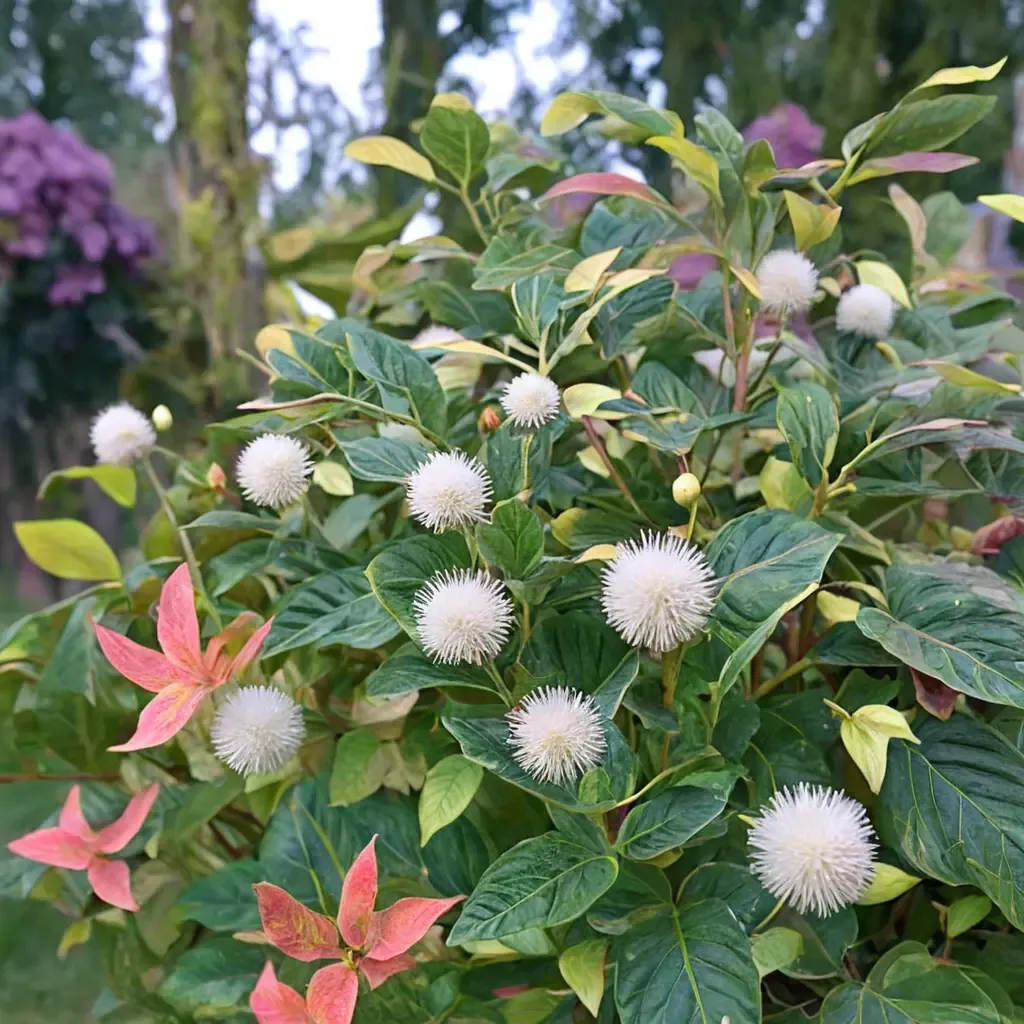
'Sputnik' is selected for its shell-pink to pinkish-white floral globes that resemble small satellites held above glossy green leaves. The musky-sweet flowers attract a wide array of butterflies, bees, and hummingbirds, followed by seed heads that feed winter waterfowl.
Uses & Benefits:
Essentials
At a Glance
Plant Type
Shrub
Height
144"
Width
144"
Light
Full Sun, Partial Sun
Zones
4, 5, 6, 7, 8, 9, 10
Water
High
Humidity
High
Lifespan
Perennial
Native To
North America
Toxicity
Toxic if ingested
Bloom period
Summer – Late summer
In flower about 3 months of the year
Planting
How to Grow
- Select a planting site in full sun or light shade that receives abundant moisture, standing water, or runoff.
- Dig a hole twice as wide as the root ball and set the plant so the crown sits level with or slightly below the surrounding soil line.
- Backfill with native soil enriched with organic matter, firming gently around the root system.
- Water thoroughly at planting and ensure the soil remains consistently moist to saturated throughout the growing season.
Pro Tip
Plant directly into standing water, rain garden basins, or rich boggy soils; standard dry garden borders cause severe drought stress and premature foliage drop.
Keep It Thriving
Care Guide
Do
- Keep soil continuously wet or saturated, especially during hot summer periods.
- Prune back hard every few winters if you wish to maintain a compact, rejuvenated form.
- Plant in full sun to maximize flower production and dense branching.
Don't
- Do not allow soil to dry out completely, as drought damages foliage and stunts growth.
- Do not cut back into old, leafless wood that lacks visible vegetative buds.
- Do not plant in dry hillside borders or unwatered containers.
Seasonal Care Calendar
| Task | Jan | Feb | Mar | Apr | May | Jun | Jul | Aug | Sep | Oct | Nov | Dec |
|---|---|---|---|---|---|---|---|---|---|---|---|---|
| Fertilize | ||||||||||||
| Mulch | ||||||||||||
| Pest Check | ||||||||||||
| Prune |
Watch Out For
Pests & Diseases
Common Pests
Common Diseases
In the Garden
Landscape Uses & Companions
Landscape Uses
Companion Plants
Multiply
Propagation Methods
Good to Know
Common Questions
Buttonbush questions
What zones can Buttonbush grow in?
Buttonbush is hardy in USDA Zones 4–10. Inside that range it survives winter in the ground; outside it, grow it as an annual or a container plant you protect.
Is Buttonbush deer resistant?
Yes — Buttonbush is rated deer-resistant. Deer typically pass it over, though extreme hunger can override any plant's defenses.
When does Buttonbush bloom?
Buttonbush typically blooms in summer through late summer. Exact timing shifts a week or two with your zone — Sow's bloom calendar maps it to your garden.
Does Buttonbush need full sun?
Buttonbush does best in full sun to part shade. In hot climates, afternoon shade keeps blooms fresher longer.
More Cephalanthus to compare
Keep exploring
Explore the genus
Grow Buttonbush with confidence
See it in a design of your actual yard, get zone-matched care reminders, and track it season by season in your garden journal.