

The Story
Plant Bio
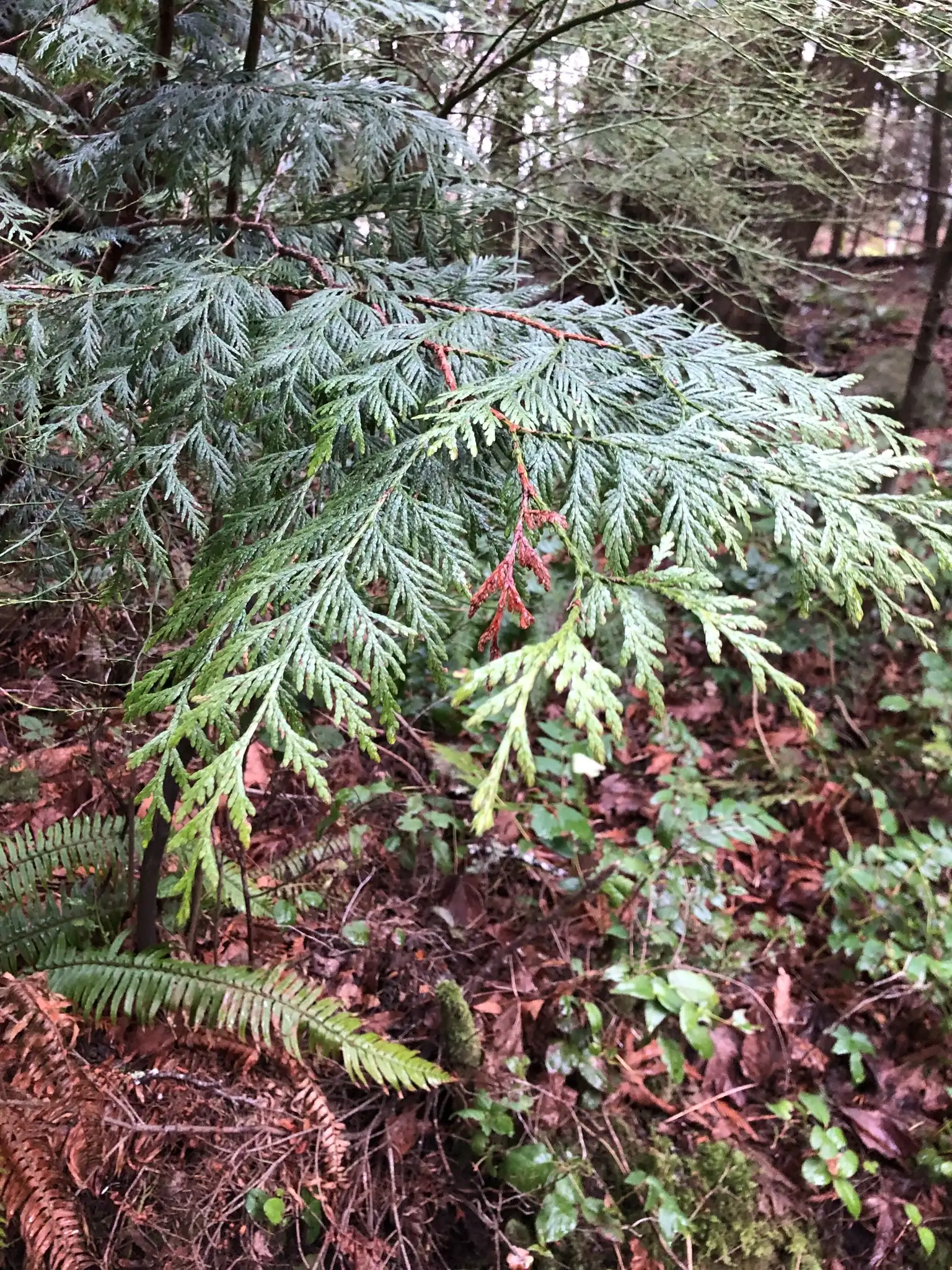
Thuja plicata, western redcedar, is a large needled evergreen conifer native to Alaska, western Canada and the Pacific Northwest. In gardens it makes a dense columnar to pyramidal tree of about 50 to 70 ft with a 15 to 25 ft spread. Flattened fans of scale-like foliage are glossy green above, marked white beneath, and aromatic when crushed.
The thick grey to reddish-brown bark peels away in long fibrous strips, and the timber beneath is famously rot-resistant. It holds foliage right to the ground when grown in the open, which is why it makes a far better tall screen than a limbed-up conifer, and it tolerates occasionally wet ground.
Uses & Benefits:
Essentials
At a Glance
Plant Type
Tree
Height
720"
Width
240"
Light
Full Sun, Partial Sun
Zones
5, 6, 7, 8
Water
Medium to high; dislikes summer drought
Humidity
Prefers humid air; resents hot dry wind
Lifespan
Very long-lived; centuries in the wild
Native To
Alaska, western Canada and the Pacific Northwest
Toxicity
No significant toxicity reported; foliage is not for eating
Planting
How to Grow
- Pick a site in full sun to light shade with room for a 20 ft spread.
- Test drainage; it accepts occasional wetness but not standing water.
- Plant in autumn or early spring into acid to neutral soil.
- Set the root ball level with grade and backfill without amendment.
- Water deeply once a week through the first two growing seasons.
- Mulch a wide ring to keep the shallow roots cool and moist.
Pro Tip
It roots shallowly and browns from the inside out in drought, so a wide mulch ring matters more than deep watering.
Keep It Thriving
Care Guide
Do
- Give it space to reach full width rather than shearing it hard 🌲
- Water through summer drought, especially east of its native range 💧
- Keep the soil acid to neutral and rich in organic matter 🍂
- Shelter young plants from drying winter wind 🌬️
Don't
- Do not plant it in alkaline, thin or compacted soil ❌
- Do not cut back into bare old wood; it will not resprout ❌
- Do not plant it close to a wall or path expecting a narrow tree ❌
Seasonal Care Calendar
| Task | Jan | Feb | Mar | Apr | May | Jun | Jul | Aug | Sep | Oct | Nov | Dec |
|---|---|---|---|---|---|---|---|---|---|---|---|---|
| Inspect And Mulch |
Watch Out For
Pests & Diseases
Common Pests
Common Diseases
In the Garden
Landscape Uses & Companions
Landscape Uses
Multiply
Propagation Methods
Good to Know
Common Questions
Western Red Cedar questions
What zones can Western Red Cedar grow in?
Western Red Cedar is hardy in USDA Zones 5–8. Inside that range it survives winter in the ground; outside it, grow it as an annual or a container plant you protect.
Is Western Red Cedar deer resistant?
Yes — Western Red Cedar is rated deer-resistant. Deer typically pass it over, though extreme hunger can override any plant's defenses.
When does Western Red Cedar bloom?
Western Red Cedar typically blooms in non-flowering; cones instead through late spring. Exact timing shifts a week or two with your zone — Sow's bloom calendar maps it to your garden.
Does Western Red Cedar need full sun?
Western Red Cedar does best in full sun to part shade. In hot climates, afternoon shade keeps blooms fresher longer.
More Thuja to compare
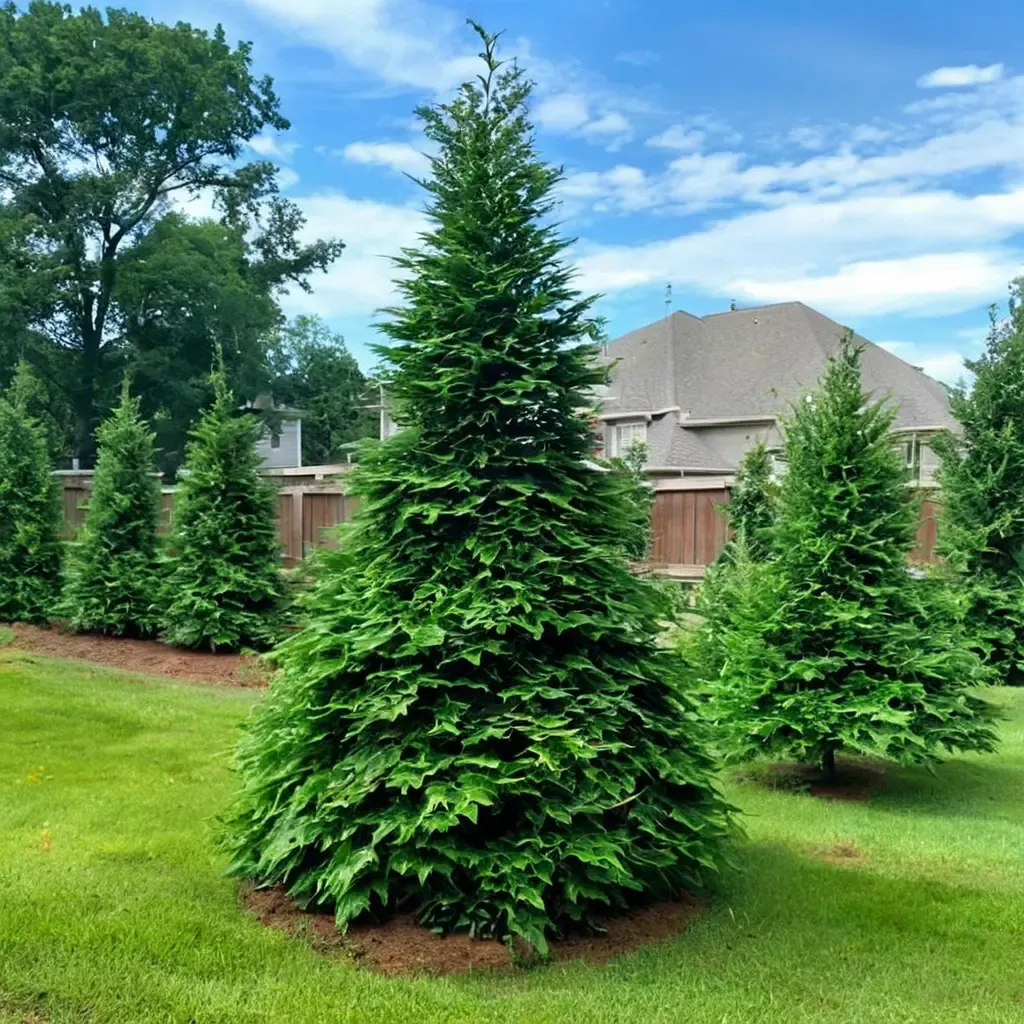
Green Giant Arborvitae
Thuja occidentalis 'Green Giant'
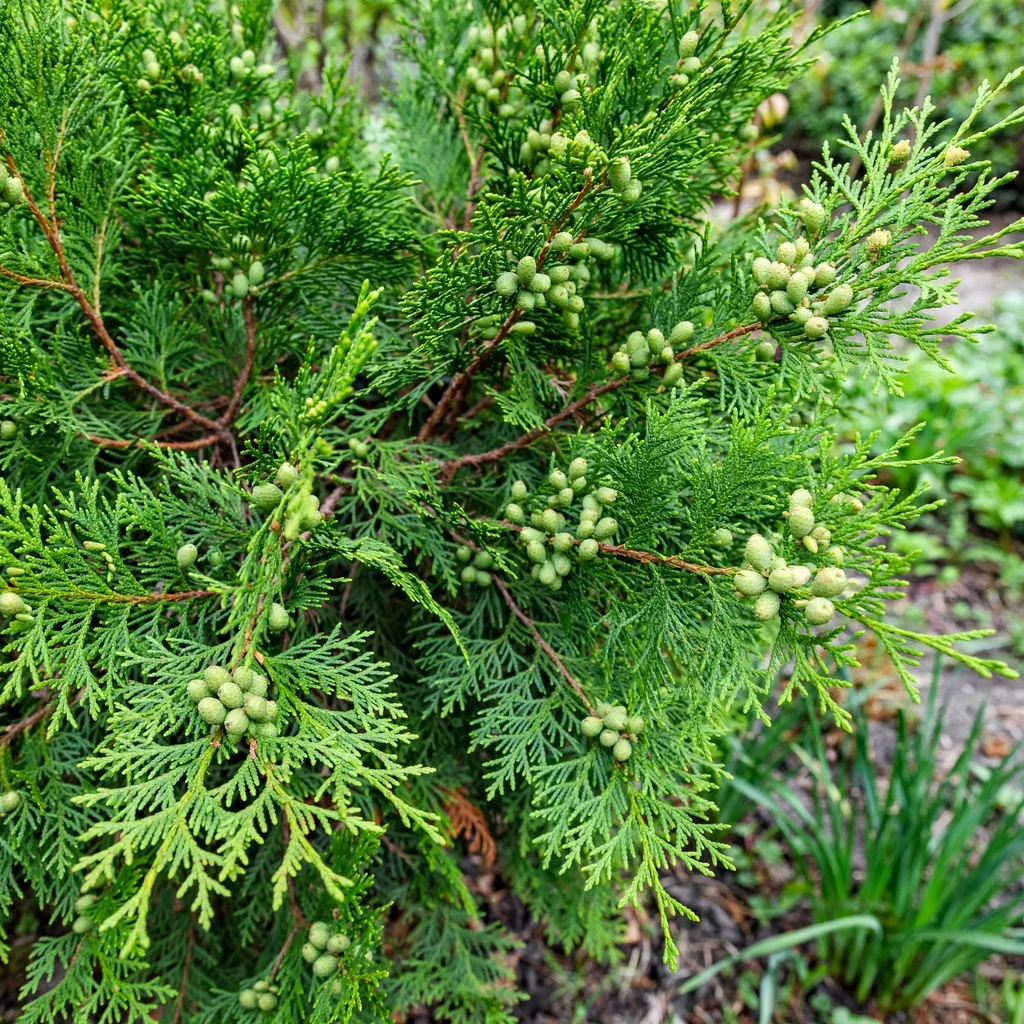
Emerald Green Arborvitae
Thuja occidentalis 'Emerald Green'
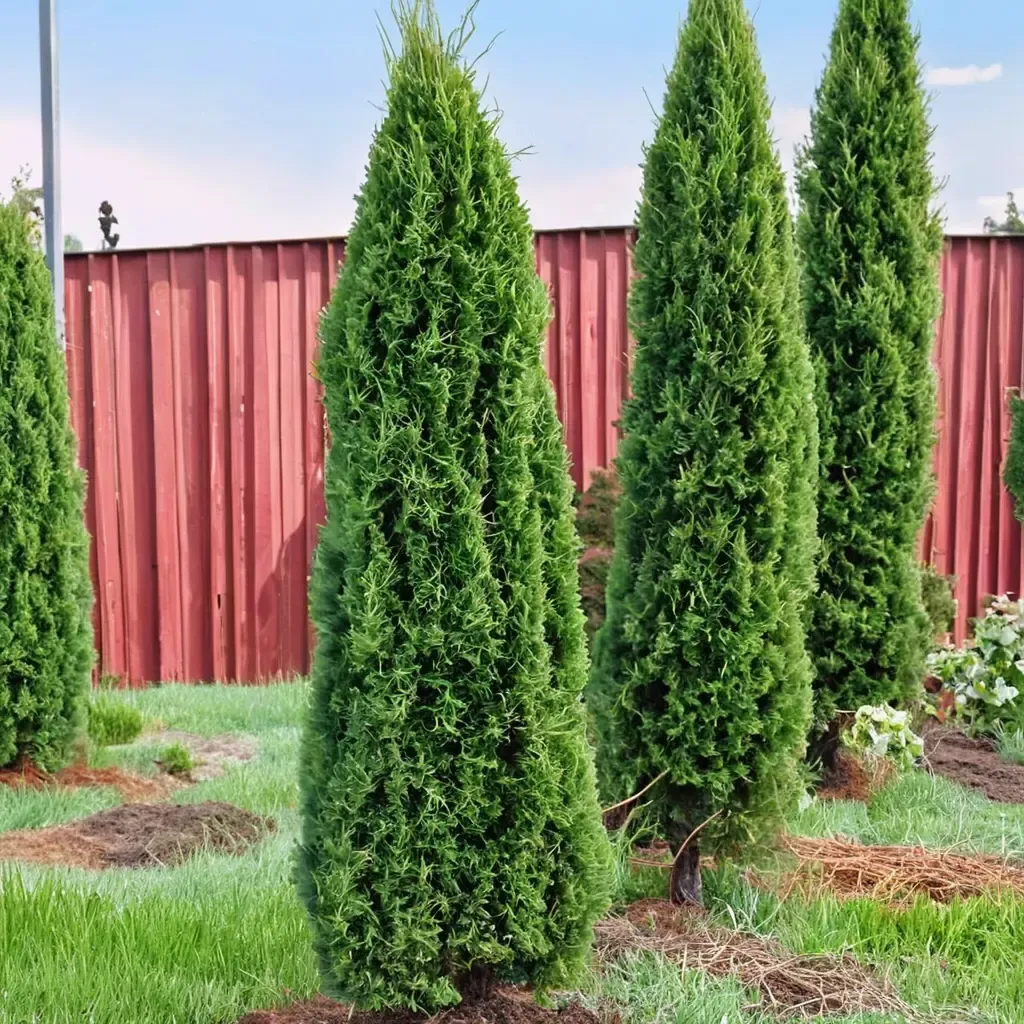
Degroot's Spire Arborvitae
Thuja occidentalis 'Degroot'
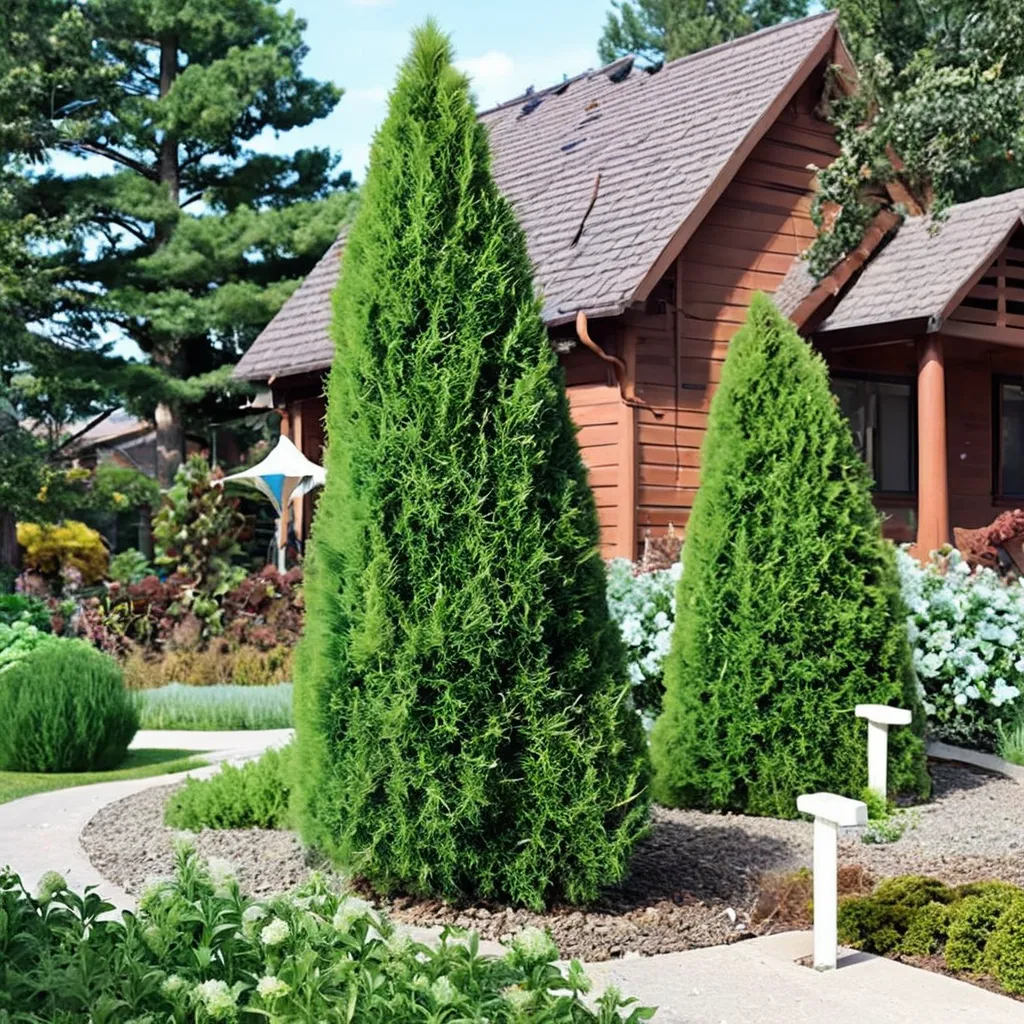
Smaragd Emerald Arborvitae
Thuja occidentalis 'Smaragd Emerald'
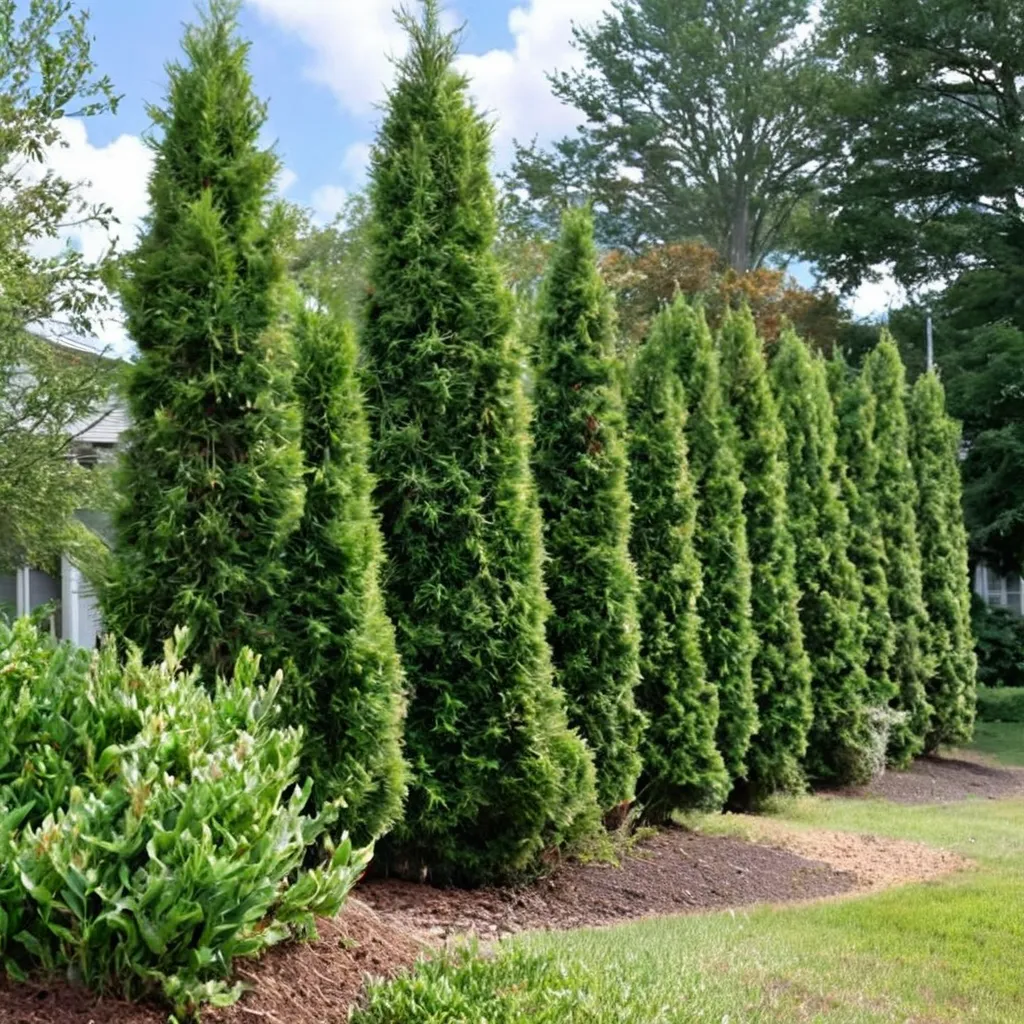
American Pillar Arborvitae
Thuja occidentalis 'American Pillar'
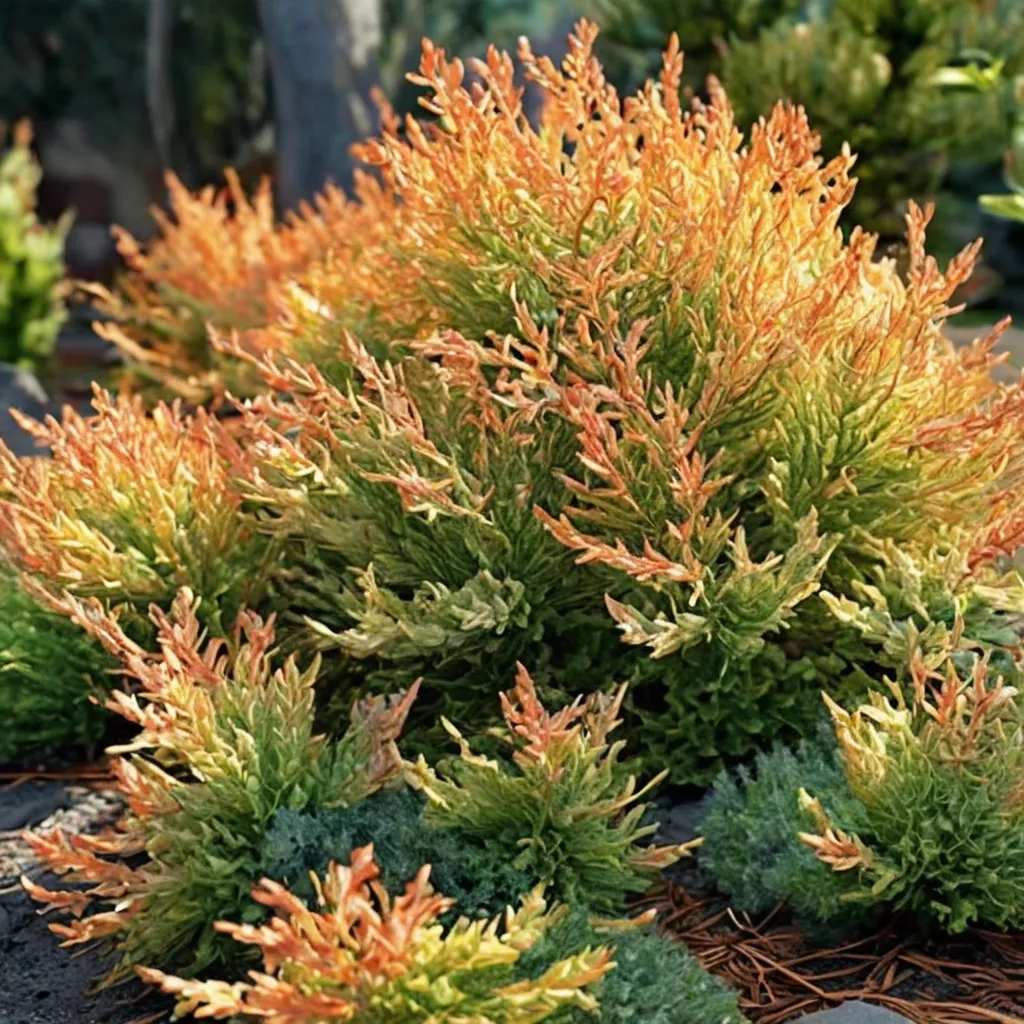
Fire Chief Arborvitae
Thuja occidentalis 'Fire Chief'
Keep exploring
Explore the genus
Hardy in your zone?
Grow Western Red Cedar with confidence
See it in a design of your actual yard, get zone-matched care reminders, and track it season by season in your garden journal.