The Story
Plant Bio
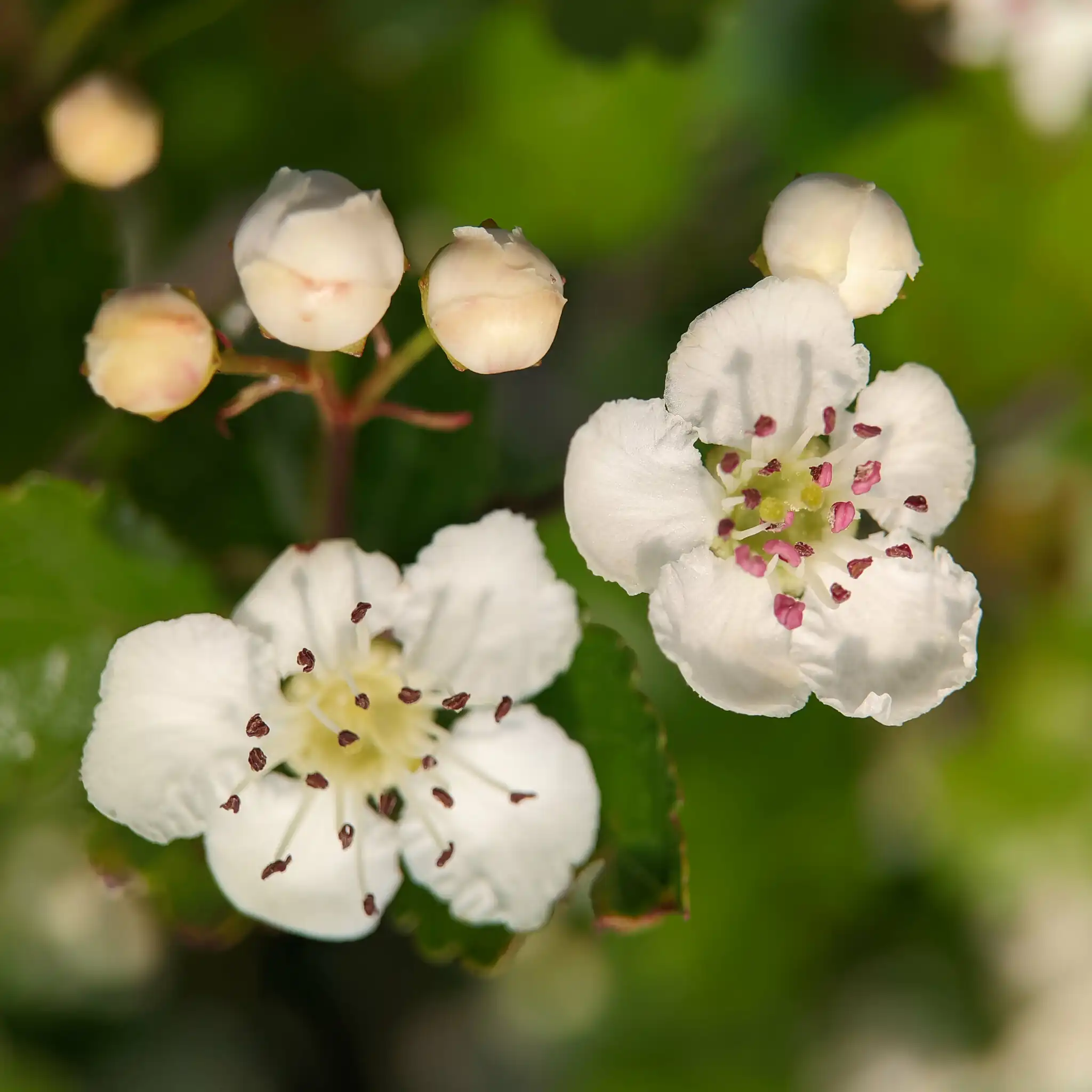
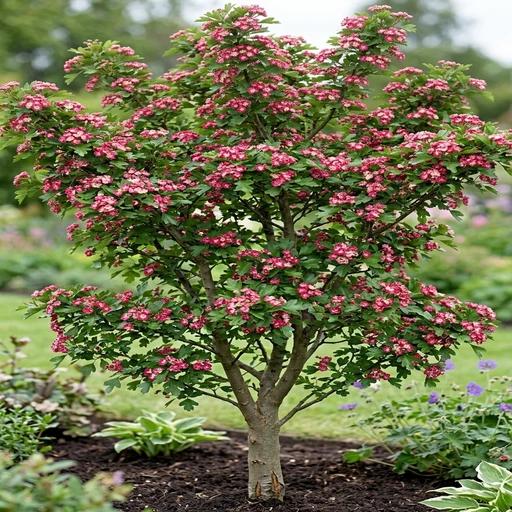
Crataegus laevigata, the English or midland hawthorn, is a small European tree fifteen to twenty feet high and as wide, with a dense rounded head on thorny branches. Clusters of white flowers open in April and May, followed by small red haws that persist into autumn. The lobed leaves are glossy and dark, and the thorns are substantial.
It is among the more disease-prone small trees, and cedar-apple rust and fungal leaf spot regularly strip the foliage in hot humid summers, leaving a half-bare tree by August. Where those conditions apply, plant a rust-resistant green hawthorn such as Crataegus viridis instead, which gives the same flowers, fruit and scale with far fewer problems.
Uses & Benefits:
Essentials
At a Glance
Plant Type
Tree
Height
210"
Width
210"
Light
Full Sun
Zones
5, 6, 7, 8
Water
Medium
Humidity
Average
Lifespan
Perennial
Native To
Europe
Toxicity
Fruit edible; branches carry sharp thorns
Planting
How to Grow
- Plant in autumn or early spring in full sun.
- Choose moist but well-drained soil.
- Site it away from junipers, which host cedar-apple rust.
- Water through the first two seasons while establishing.
- Prune in winter to keep the crown open and airy.
- Clear and remove fallen diseased leaves each autumn.
Pro Tip
Cedar-apple rust needs a juniper to complete its cycle, so distance from junipers does more for the foliage than any spray.
Keep It Thriving
Care Guide
Do
- Plant it in full sun with free air movement ☀️
- Keep it well away from junipers 🌲
- Clear fallen diseased leaves each autumn 🍂
- Prune in winter to keep the crown open ✂️
Don't
- Plant it in a hot, humid summer climate ❌
- Site it beside a path where the thorns catch ❌
- Leave infected leaf litter under the tree ❌
Seasonal Care Calendar
| Task | Jan | Feb | Mar | Apr | May | Jun | Jul | Aug | Sep | Oct | Nov | Dec |
|---|---|---|---|---|---|---|---|---|---|---|---|---|
| Clear | ||||||||||||
| Prune |
Watch Out For
Pests & Diseases
Common Pests
Common Diseases
In the Garden
Landscape Uses & Companions
Landscape Uses
Companion Plants
Multiply
Propagation Methods
Good to Know
Common Questions
English Hawthorn questions
What zones can English Hawthorn grow in?
English Hawthorn is hardy in USDA Zones 5–8. Inside that range it survives winter in the ground; outside it, grow it as an annual or a container plant you protect.
Is English Hawthorn deer resistant?
Yes — English Hawthorn is rated deer-resistant. Deer typically pass it over, though extreme hunger can override any plant's defenses.
When does English Hawthorn bloom?
English Hawthorn typically blooms in mid to late spring through late spring. Exact timing shifts a week or two with your zone — Sow's bloom calendar maps it to your garden.
Does English Hawthorn need full sun?
English Hawthorn does best in full sun (6+ hours).
More Crataegus to compare
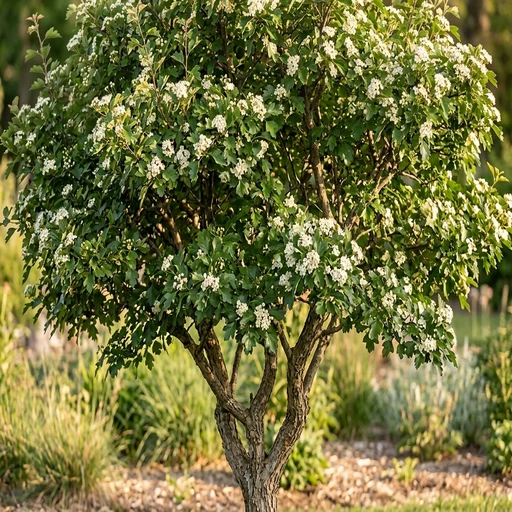
Washington Hawthorn
Crataegus phaenopyrum
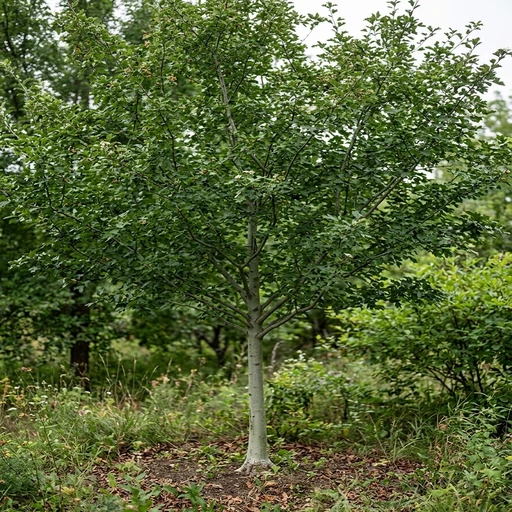
Winter King Hawthorn
Crataegus viridis 'Winter King'
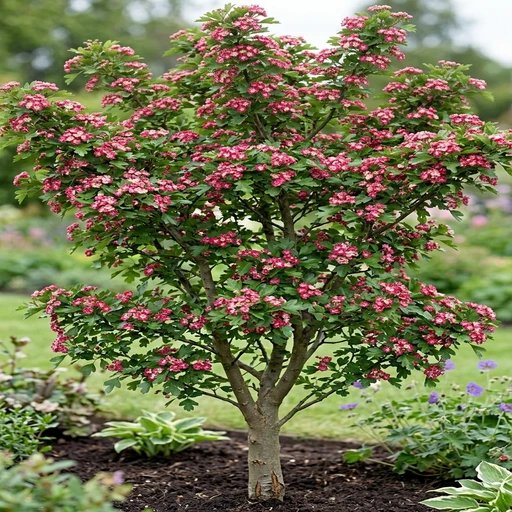
Crimson Cloud English Hawthorn
Crataegus laevigata 'Crimson Cloud'
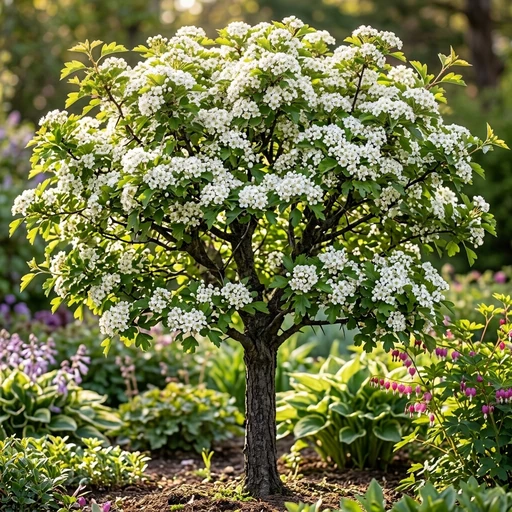
Crusader Hawthorn
Crataegus crus-galli 'Cruzam'
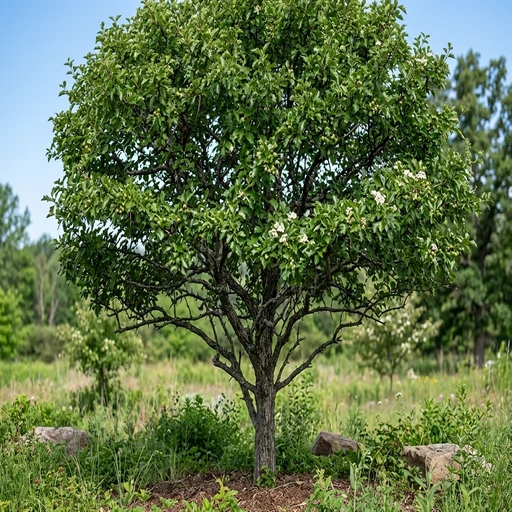
Cockspur Hawthorn
Crataegus crus-galli
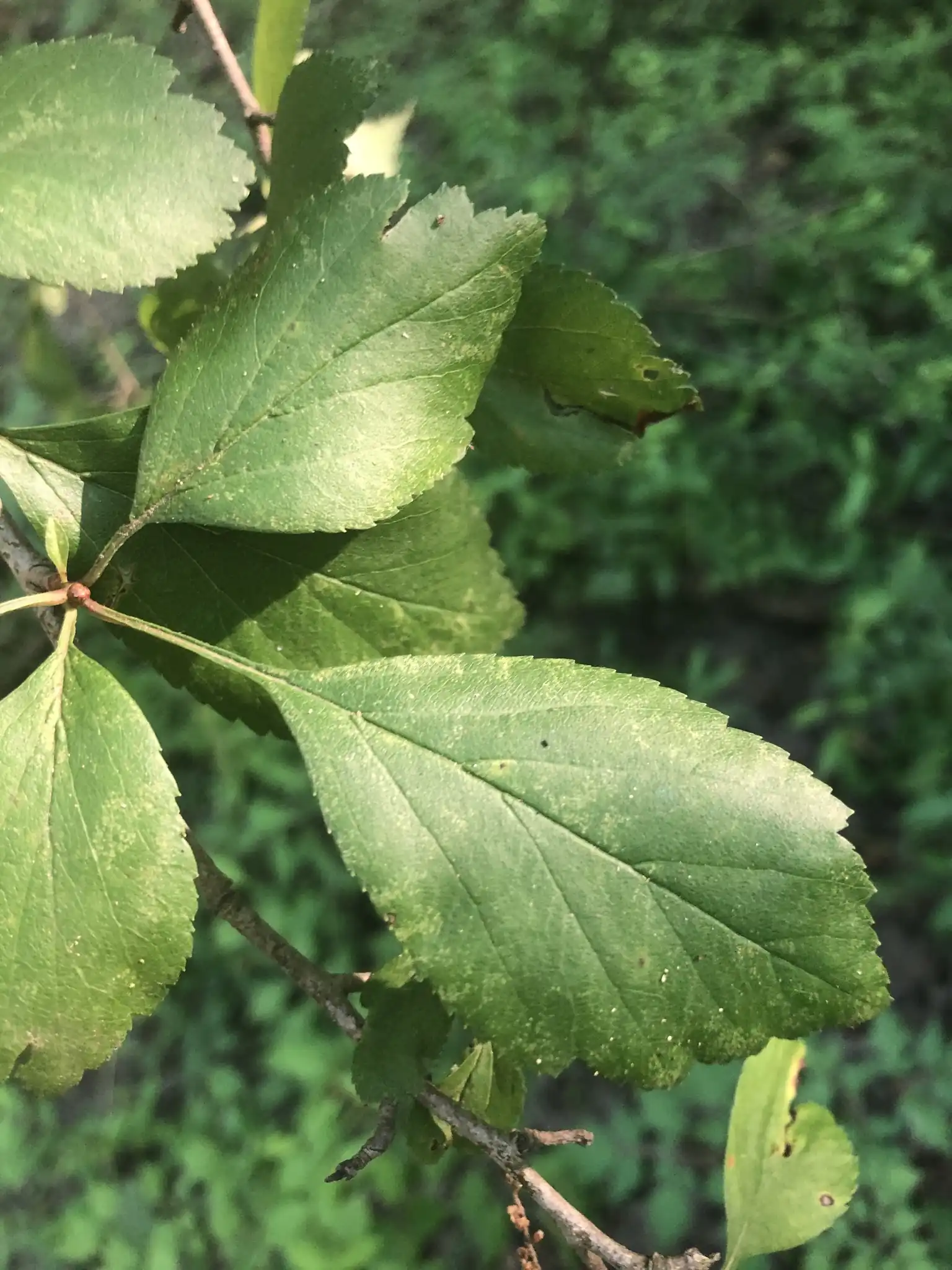
Hawthorn
Crataegus viridis
Keep exploring
Explore the genus
Hardy in your zone?
Grow English Hawthorn with confidence
See it in a design of your actual yard, get zone-matched care reminders, and track it season by season in your garden journal.