The Story
Plant Bio
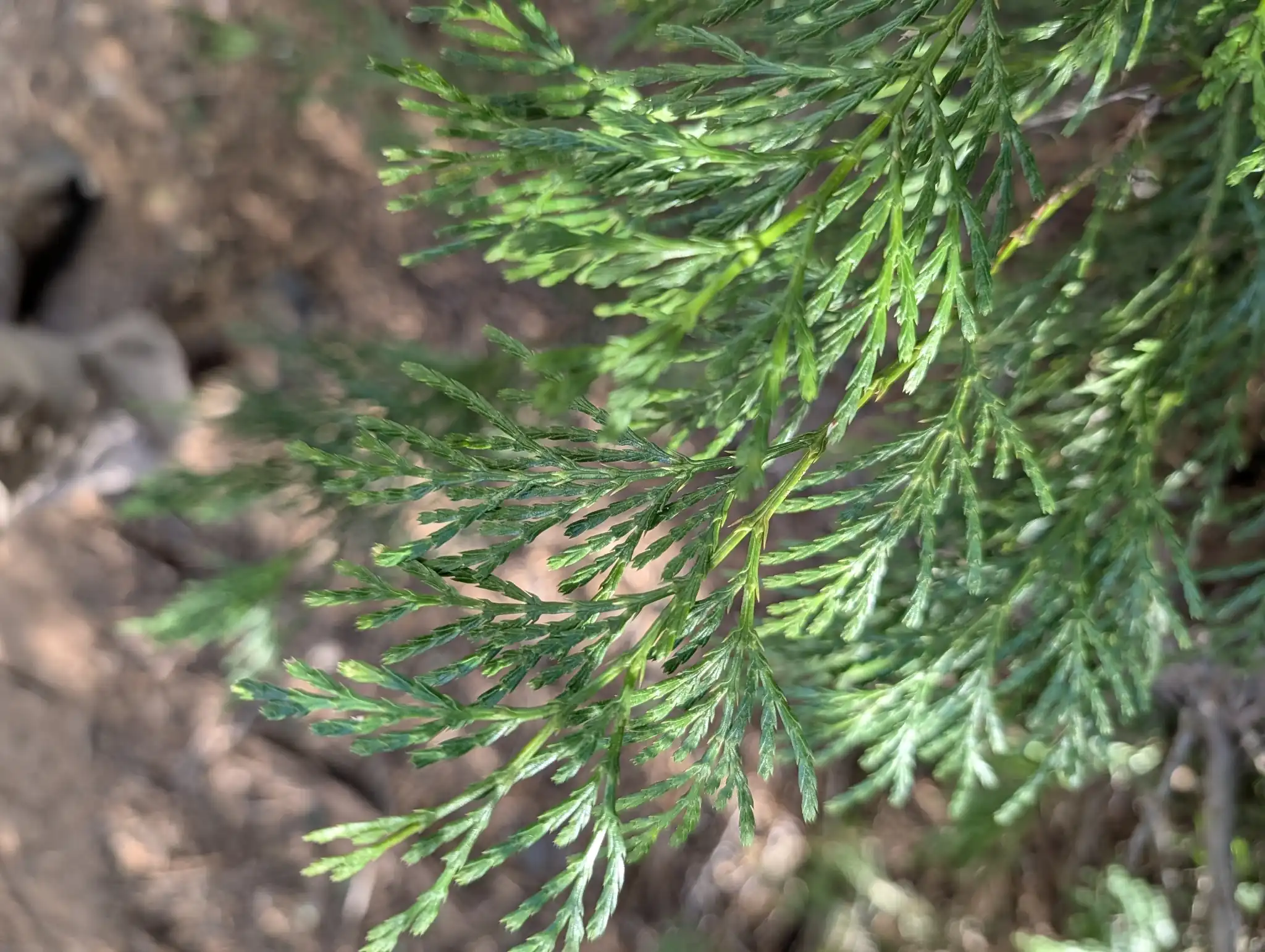
Calocedrus decurrens, commonly known as incense cedar, is an evergreen conifer native to western North America, forming a narrow columnar silhouette in youth that broadens into a tall architectural pyramid. Its rich dark green scale-like leaves grow in flattened fern-like sprays and release a strong resinous aroma when crushed.
Small, solitary yellow pollen cones appear at the branch tips in spring, followed by duckbill-shaped seed cones that mature in late summer. The reddish-brown furrowed bark and dense foliage make it an exceptionally resilient screen or formal specimen tree across varied soil types.
Uses & Benefits:
Essentials
At a Glance
Plant Type
Tree
Height
591"
Width
236"
Light
Full Sun, Partial Sun
Zones
5, 6, 7, 8
Water
Low to Medium
Humidity
Tolerant
Lifespan
Perennial
Native To
Western North America
Toxicity
Non-toxic
Bloom period
Spring – Summer
In flower about 6 months of the year
Planting
How to Grow
- Select a planting location in full sun to partial shade with deep, well-draining soil.
- Dig a hole twice as wide as the root ball and equal in depth, ensuring the root crown sits level with the surrounding grade.
- Backfill with the native soil, settle with water to eliminate air pockets, and apply a three-inch layer of organic mulch around the base without touching the trunk.
- Water regularly during the first two growing seasons to establish a deep root system before reducing irrigation frequency.
Pro Tip
Never prune past the leafy green growth into bare wood, as this species cannot regenerate new shoots from old leafless branches.
Keep It Thriving
Care Guide
Do
- Water young trees regularly during their first two seasons.
- Plant in well-drained soil to avoid root rot.
- Mulch around the base to preserve soil moisture and regulate ground temperature.
Don't
- Do not prune back hard into old, bare wood.
- Do not allow young seedlings to dry out completely during summer heat.
- Do not plant in soggy or poorly drained sites prone to standing water.
Seasonal Care Calendar
| Task | Jan | Feb | Mar | Apr | May | Jun | Jul | Aug | Sep | Oct | Nov | Dec |
|---|---|---|---|---|---|---|---|---|---|---|---|---|
| Mulch | ||||||||||||
| Pest Check | ||||||||||||
| Plant | ||||||||||||
| Prune |
Watch Out For
Pests & Diseases
Common Pests
Common Diseases
In the Garden
Landscape Uses & Companions
Landscape Uses
Companion Plants
Multiply
Propagation Methods
Good to Know
Common Questions
Incense Cedar questions
What zones can Incense Cedar grow in?
Incense Cedar is hardy in USDA Zones 5–8. Inside that range it survives winter in the ground; outside it, grow it as an annual or a container plant you protect.
When does Incense Cedar bloom?
Incense Cedar typically blooms in spring through summer. Exact timing shifts a week or two with your zone — Sow's bloom calendar maps it to your garden.
Does Incense Cedar need full sun?
Incense Cedar does best in full sun to part shade. In hot climates, afternoon shade keeps blooms fresher longer.
Is Incense Cedar drought tolerant?
Yes — once established (usually after the first full season), Incense Cedar handles dry spells with minimal watering. Water deeply its first year to build the root system that makes that possible.
Keep exploring
Explore the genus
Hardy in your zone?
Grow Incense Cedar with confidence
See it in a design of your actual yard, get zone-matched care reminders, and track it season by season in your garden journal.