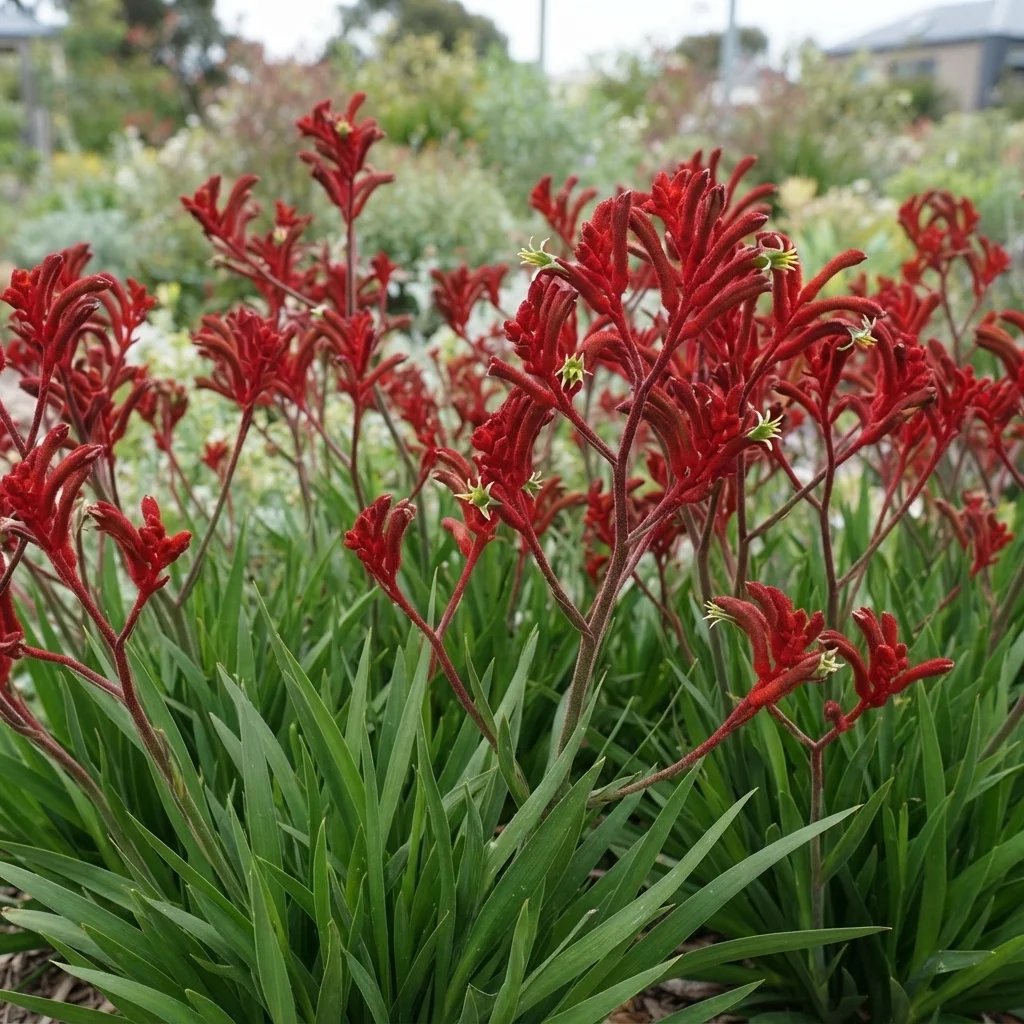
Garden hybrid
This is a garden hybrid, bred from more than one wild species, so it has no single species page of its own.
5 other cultivars



The Story
Plant Bio
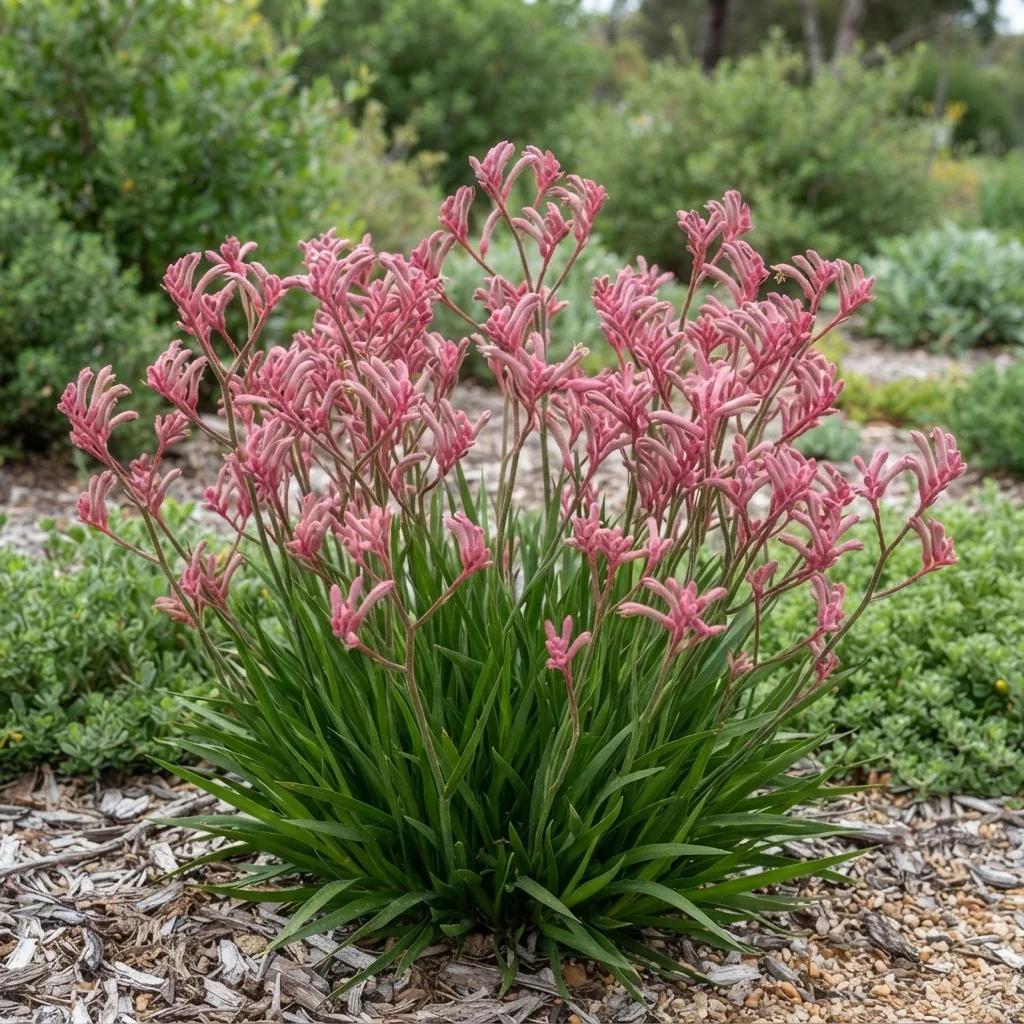
Anigozanthos is a genus of evergreen, rhizomatous perennials endemic to southwestern Western Australia, characterized by basal rosettes of strap-like leaves and woolly, tubular flowers. The unique, fuzzy perianths resemble animal paws and are adapted for bird pollination, opening at the tips to expose the stamens.
'Big Red' is a robust interspecific hybrid that produces tall, branched flower spikes reaching up to six feet above a three-foot clump of dark green foliage. The flowers are a rich tomato-red, covered in dense, velvet-like hairs that retain their intense color from late spring through mid-summer.
Uses & Benefits:
Bred from more than one wild species, so it has no species page of its own.
Essentials
At a Glance
Plant Type
Perennial
Height
72"
Width
36"
Light
Full Sun, Partial Sun
Zones
9, 10
Water
Low to Moderate
Humidity
Low to Moderate
Lifespan
Perennial
Native To
Australia
Toxicity
Non-toxic (microscopic hairs may cause skin irritation)
Bloom period
Late spring – Summer
In flower about 4 months of the year
Planting
How to Grow
- Select a planting site in full sun with sandy, loamy, or gritty soil that provides exceptional drainage.
- Dig a hole twice the width of the root ball and plant the rhizome so the crown sits level with the surrounding soil surface.
- Water deeply at the base to settle the soil, then allow the top few inches to dry completely before watering again.
- Apply a low-phosphorus, slow-release native plant fertilizer once in spring to support flower development without burning the roots.
Pro Tip
Individual fan leaves flower only once and naturally die back; cut spent flower stems and their associated fans cleanly to the base rather than trimming the tips, which prevents fungal buildup without injuring emerging secondary growth.
Keep It Thriving
Care Guide
Do
- Cut spent flower stems back to ground level immediately after flowering finishes.
- Provide excellent air circulation and space plants to prevent humidity buildup around the foliage.
- Water at the soil level to keep the leaves dry and minimize fungal infections.
Don't
- Do not use standard garden fertilizers containing high levels of phosphorus.
- Do not overwater during the winter dormancy period when the plant's metabolic activity slows.
- Do not prune into old, leafless woody tissue at the base of the clump.
Seasonal Care Calendar
| Task | Jan | Feb | Mar | Apr | May | Jun | Jul | Aug | Sep | Oct | Nov | Dec |
|---|---|---|---|---|---|---|---|---|---|---|---|---|
| Deadhead | ||||||||||||
| Fertilize | ||||||||||||
| Pest Check | ||||||||||||
| Prune |
Watch Out For
Pests & Diseases
Common Pests
Common Diseases
In the Garden
Landscape Uses & Companions
Landscape Uses
Multiply
Propagation Methods
Good to Know
Common Questions
Large Red Kangaroo Paw questions
What zones can Large Red Kangaroo Paw grow in?
Large Red Kangaroo Paw is hardy in USDA Zones 9–10. Inside that range it survives winter in the ground; outside it, grow it as an annual or a container plant you protect.
Is Large Red Kangaroo Paw deer resistant?
Yes — Large Red Kangaroo Paw is rated deer-resistant. Deer typically pass it over, though extreme hunger can override any plant's defenses.
When does Large Red Kangaroo Paw bloom?
Large Red Kangaroo Paw typically blooms in late spring through summer. Exact timing shifts a week or two with your zone — Sow's bloom calendar maps it to your garden.
Does Large Red Kangaroo Paw need full sun?
Large Red Kangaroo Paw does best in full sun to part shade. In hot climates, afternoon shade keeps blooms fresher longer.
Is Large Red Kangaroo Paw drought tolerant?
Yes — once established (usually after the first full season), Large Red Kangaroo Paw handles dry spells with minimal watering. Water deeply its first year to build the root system that makes that possible.
More Anigozanthos to compare
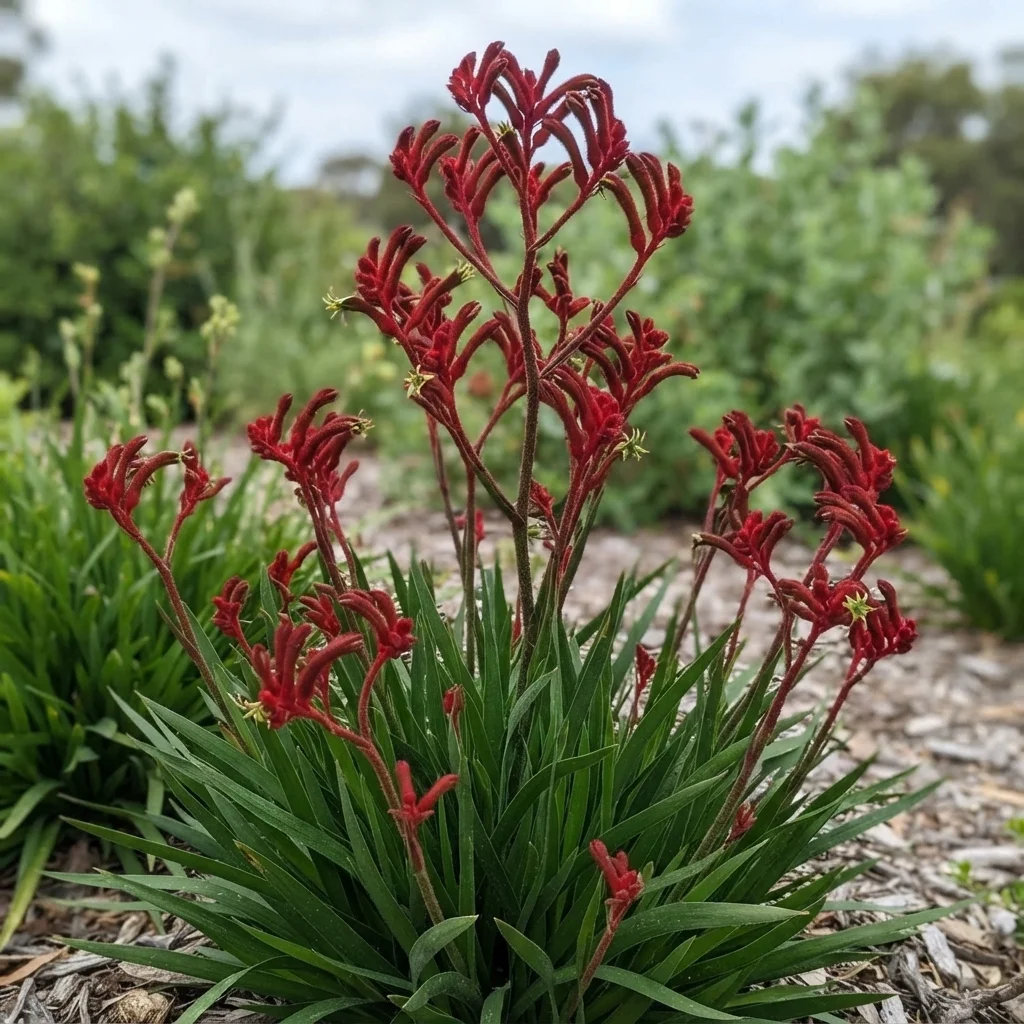
Kangaroo Paw
Anigozanthos hybrid 'Ruby Velvet'
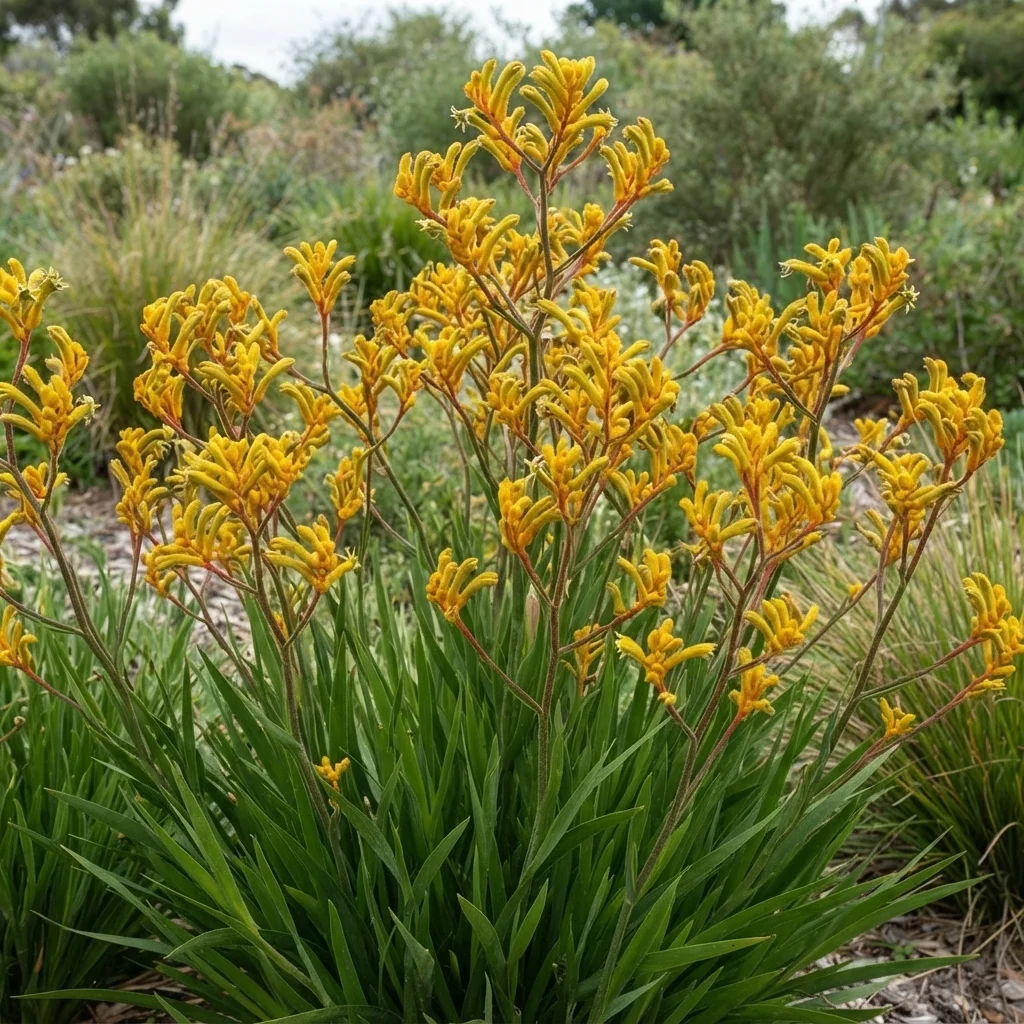
Bush Gold Kangaroo Paw
Anigozanthos x hybrida 'Bush Gold'
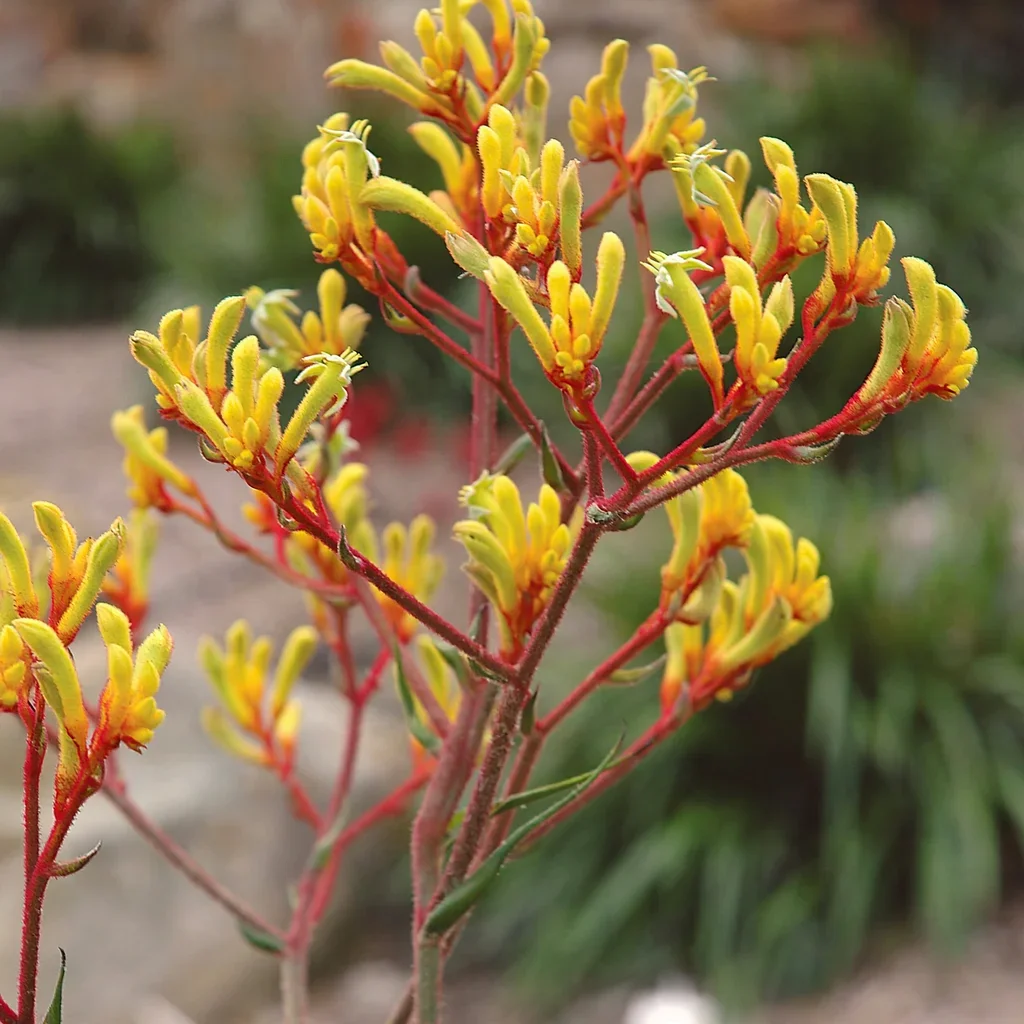
Harmony Kangaroo Paw
Anigozanthos manglesii 'Harmony'
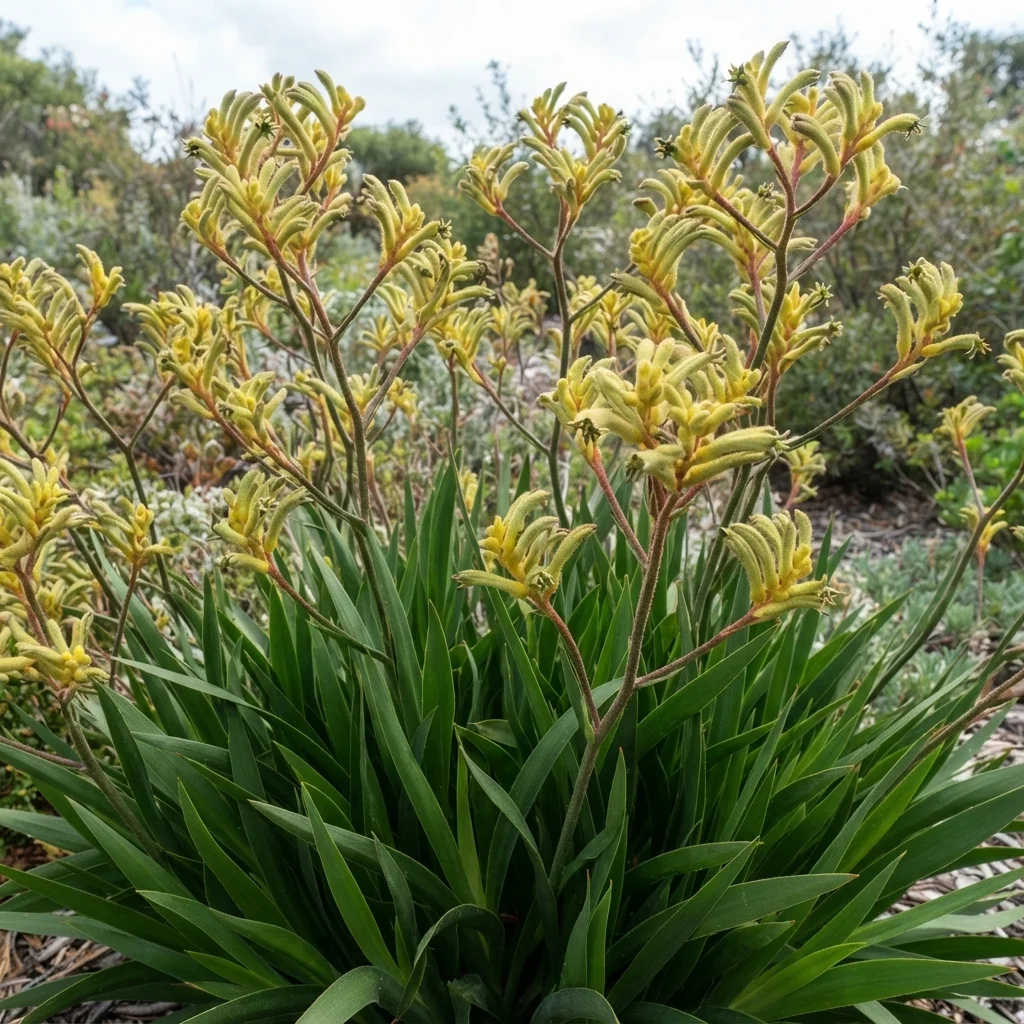
Tall Kangaroo Paw
Anigozanthos flavidus
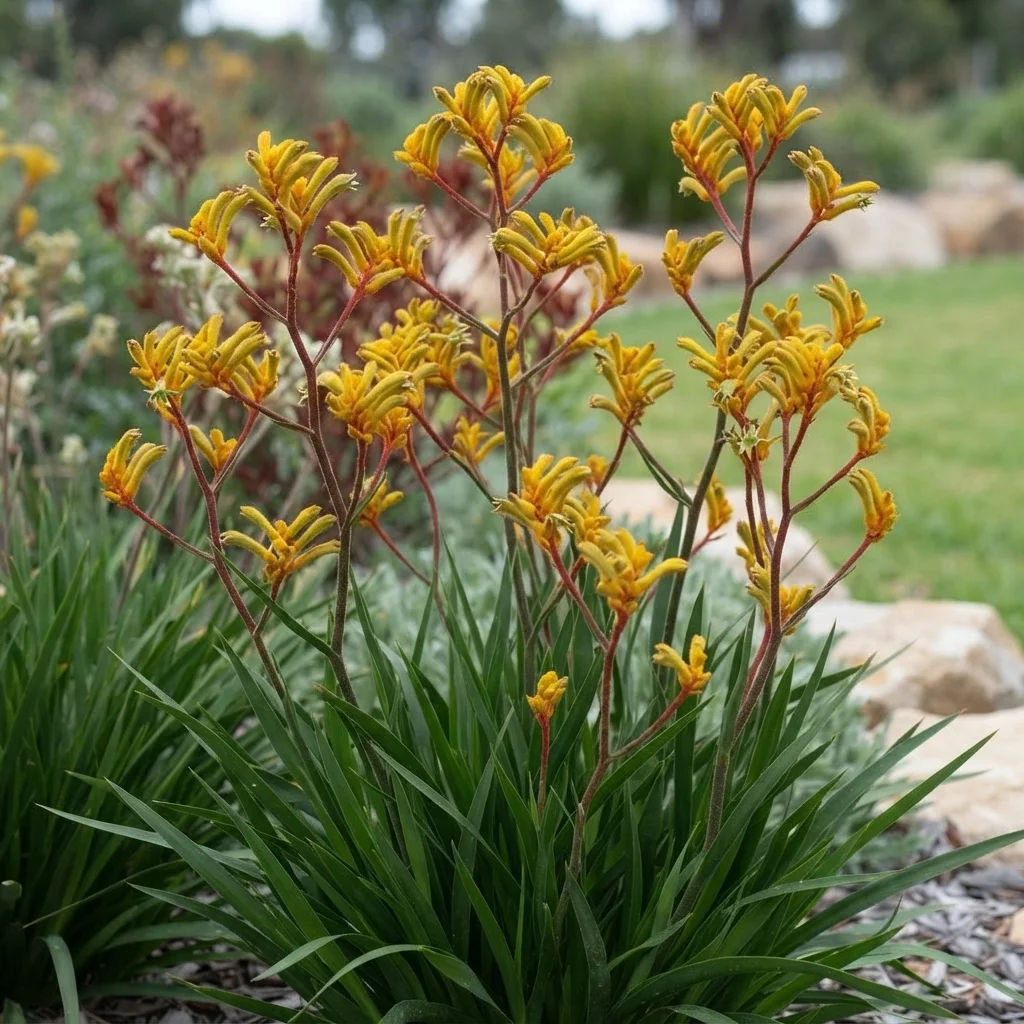
Gold Velvet Kangaroo Paw
Anigozanthos hybrid 'Gold Velvet'
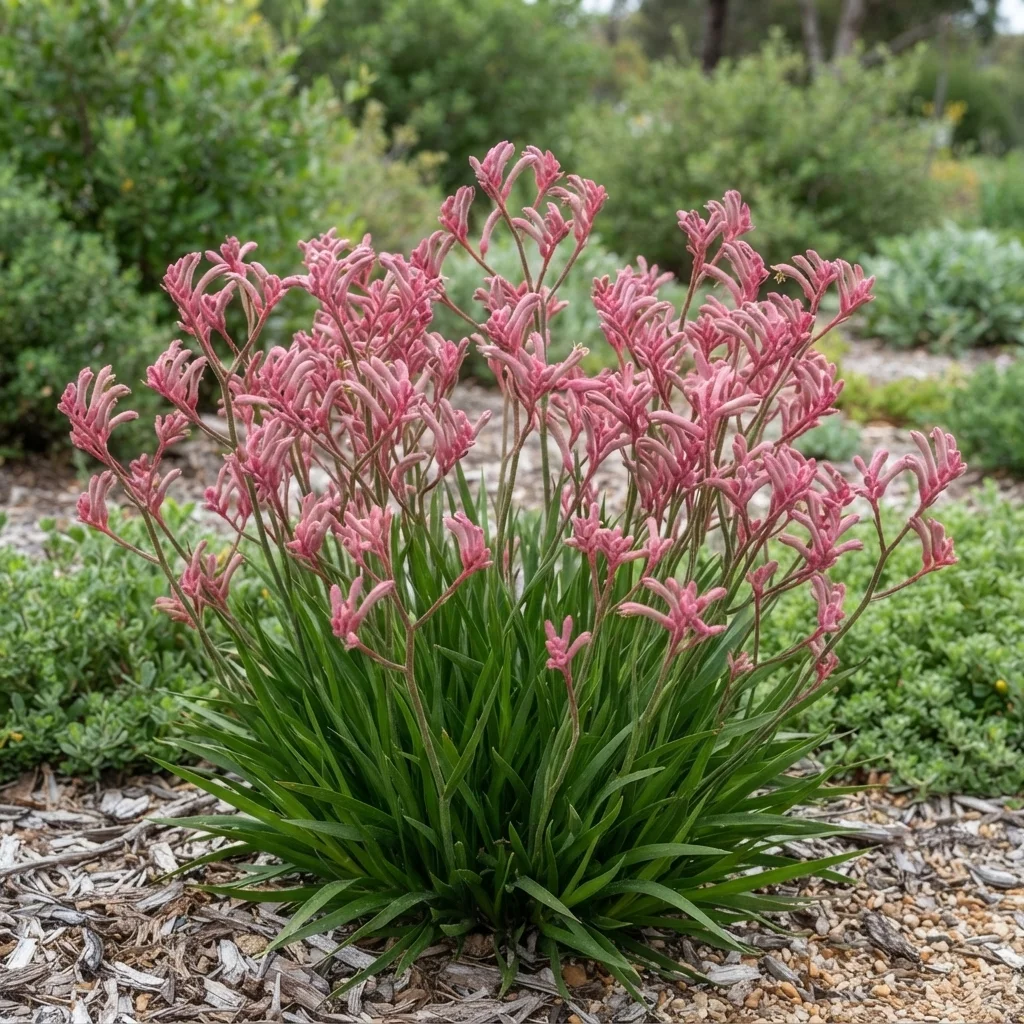
Kangaroo Paw 'Bush Pearl'
Anigozanthos x hybrida 'Bush Pearl'
Keep exploring
Explore the genus
Hardy in your zone?
Grow Large Red Kangaroo Paw with confidence
See it in a design of your actual yard, get zone-matched care reminders, and track it season by season in your garden journal.