

The Story
Plant Bio
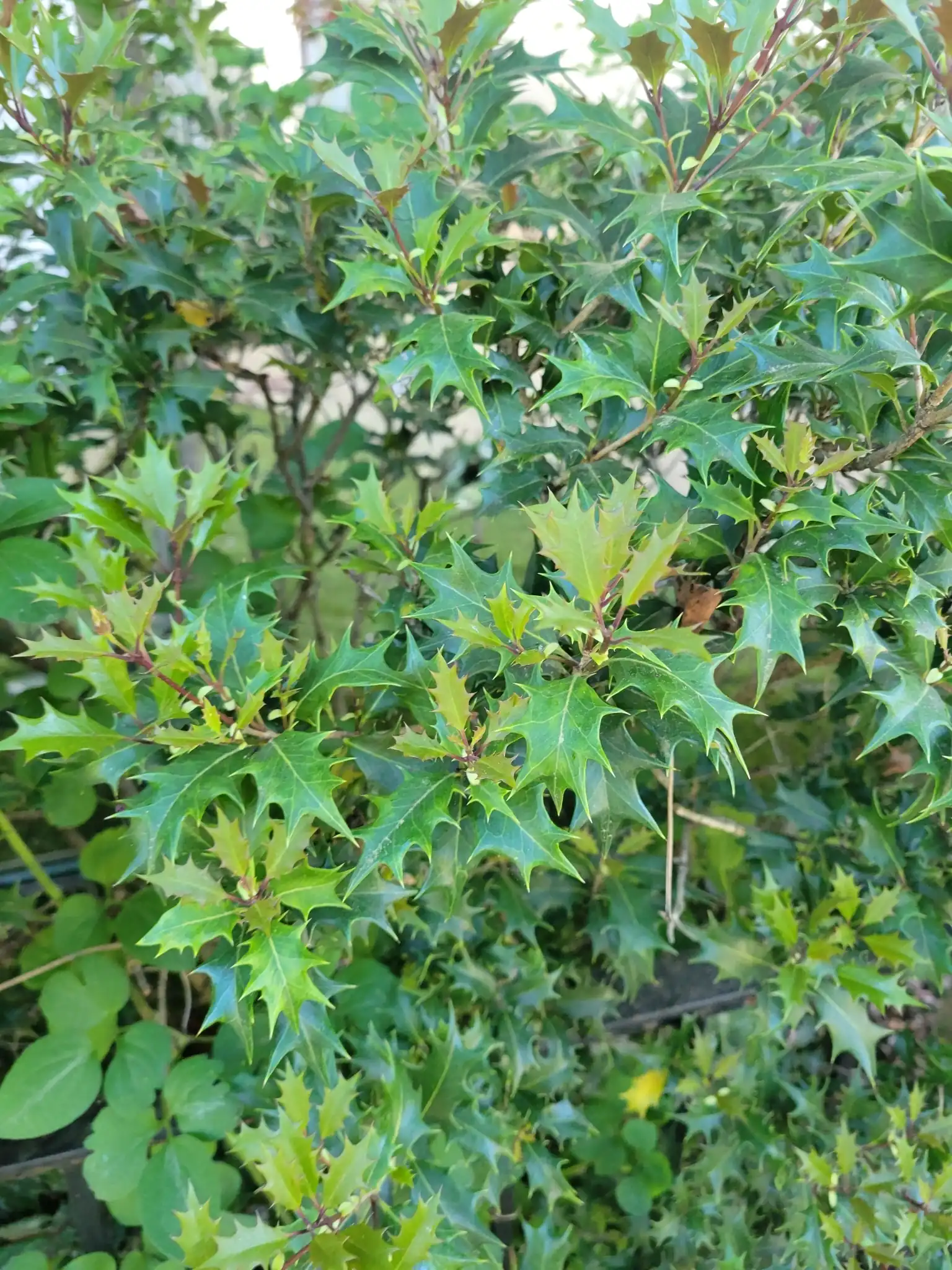
Osmanthus heterophyllus, holly tea olive, is a dense broadleaf evergreen shrub or small tree native to South Korea, Japan and Taiwan, reaching eight to twenty feet. Its glossy spined leaves look convincingly like holly, but they are held in opposite pairs rather than alternately — the reliable way to tell the two apart at a glance.
Small white tubular flowers open in autumn and are intensely fragrant, carrying apricot-like scent well across a garden despite being almost invisible among the foliage. Juvenile growth is heavily spined while mature growth is often nearly smooth, so the same plant can feel quite different at the top and bottom.
Uses & Benefits:
Essentials
At a Glance
Plant Type
Shrub
Height
168"
Width
162"
Light
Full Sun, Partial Sun
Zones
6, 7, 8, 9
Water
Moderate
Humidity
Moderate
Lifespan
Perennial
Native To
South Korea, Japan and Taiwan
Toxicity
Non-toxic
Planting
How to Grow
- Plant in spring or autumn in moist, well-drained soil.
- Choose full sun to partial shade.
- Allow the full width unless buying a compact selection.
- Water through the first two seasons.
- Prune after flowering to shape if needed.
- Site it near a path or door to catch the autumn scent.
Pro Tip
Plant it where you walk in autumn — the flowers are almost invisible, and the scent is the entire reason to grow it.
Keep It Thriving
Care Guide
Do
- Site it near a path or doorway for the scent 🌸
- Plant in well-drained soil 🌱
- Prune after flowering ✂️
- Use it as an evergreen screen 🌳
Don't
- Plant it in a back corner where the scent is wasted ❌
- Confuse it with true holly ❌
- Shear it hard into old wood ❌
Seasonal Care Calendar
| Task | Jan | Feb | Mar | Apr | May | Jun | Jul | Aug | Sep | Oct | Nov | Dec |
|---|---|---|---|---|---|---|---|---|---|---|---|---|
| Monitor | ||||||||||||
| Prune |
Watch Out For
Pests & Diseases
Common Pests
Common Diseases
In the Garden
Landscape Uses & Companions
Landscape Uses
Companion Plants
Multiply
Propagation Methods
Good to Know
Common Questions
Holly Osmanthus questions
What zones can Holly Osmanthus grow in?
Holly Osmanthus is hardy in USDA Zones 6–9. Inside that range it survives winter in the ground; outside it, grow it as an annual or a container plant you protect.
Is Holly Osmanthus deer resistant?
Yes — Holly Osmanthus is rated deer-resistant. Deer typically pass it over, though extreme hunger can override any plant's defenses.
When does Holly Osmanthus bloom?
Holly Osmanthus typically blooms in fall through late fall. Exact timing shifts a week or two with your zone — Sow's bloom calendar maps it to your garden.
Does Holly Osmanthus need full sun?
Holly Osmanthus does best in full sun to part shade. In hot climates, afternoon shade keeps blooms fresher longer.
Is Holly Osmanthus drought tolerant?
Yes — once established (usually after the first full season), Holly Osmanthus handles dry spells with minimal watering. Water deeply its first year to build the root system that makes that possible.
More Osmanthus to compare
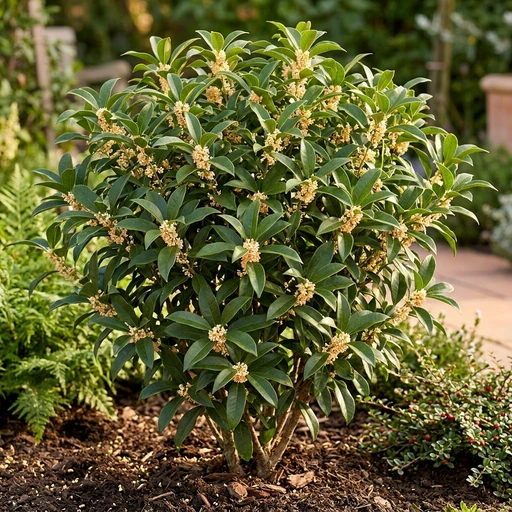
Fragrant Tea Olive
Osmanthus fragrans
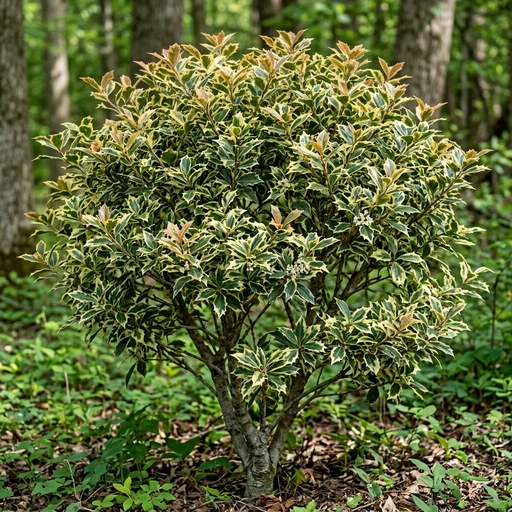
Goshiki False Holly
Osmanthus heterophyllus 'Goshiki'
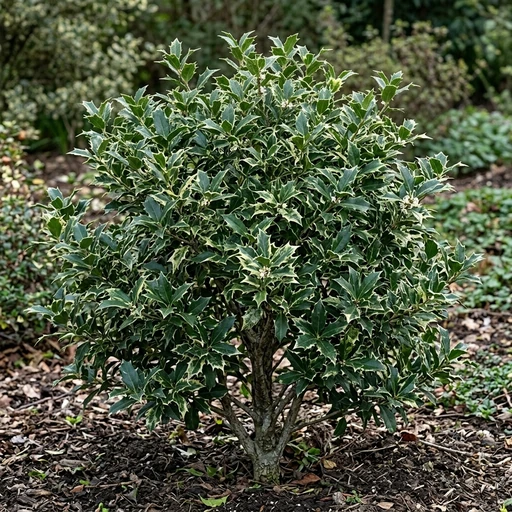
Gulftide Osmanthus
Osmanthus heterophyllus 'Gulftide'
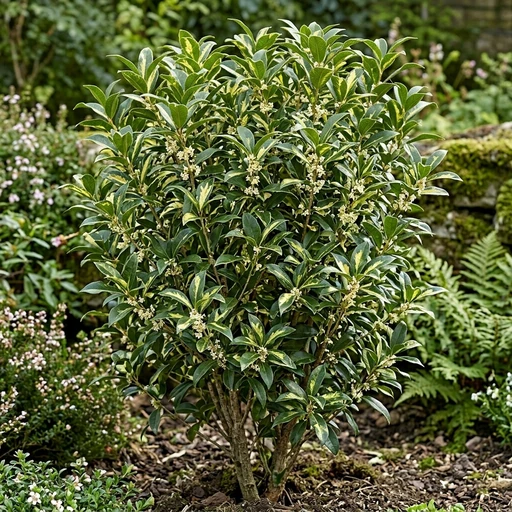
Fruitland's Fortune's Osmanthus
Osmanthus fortunei 'Fruitlandii'
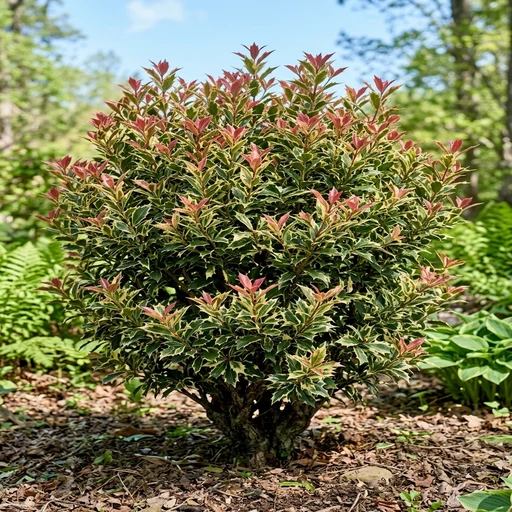
Party Lights Osmanthus
Osmanthus heterophyllus 'Party Lights'
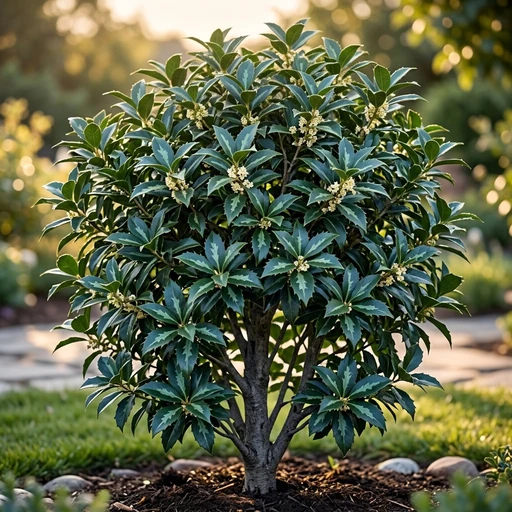
Fortune's Osmanthus
Osmanthus fortunei
Keep exploring
Explore the genus
Hardy in your zone?
Grow Holly Osmanthus with confidence
See it in a design of your actual yard, get zone-matched care reminders, and track it season by season in your garden journal.