The Story
Plant Bio
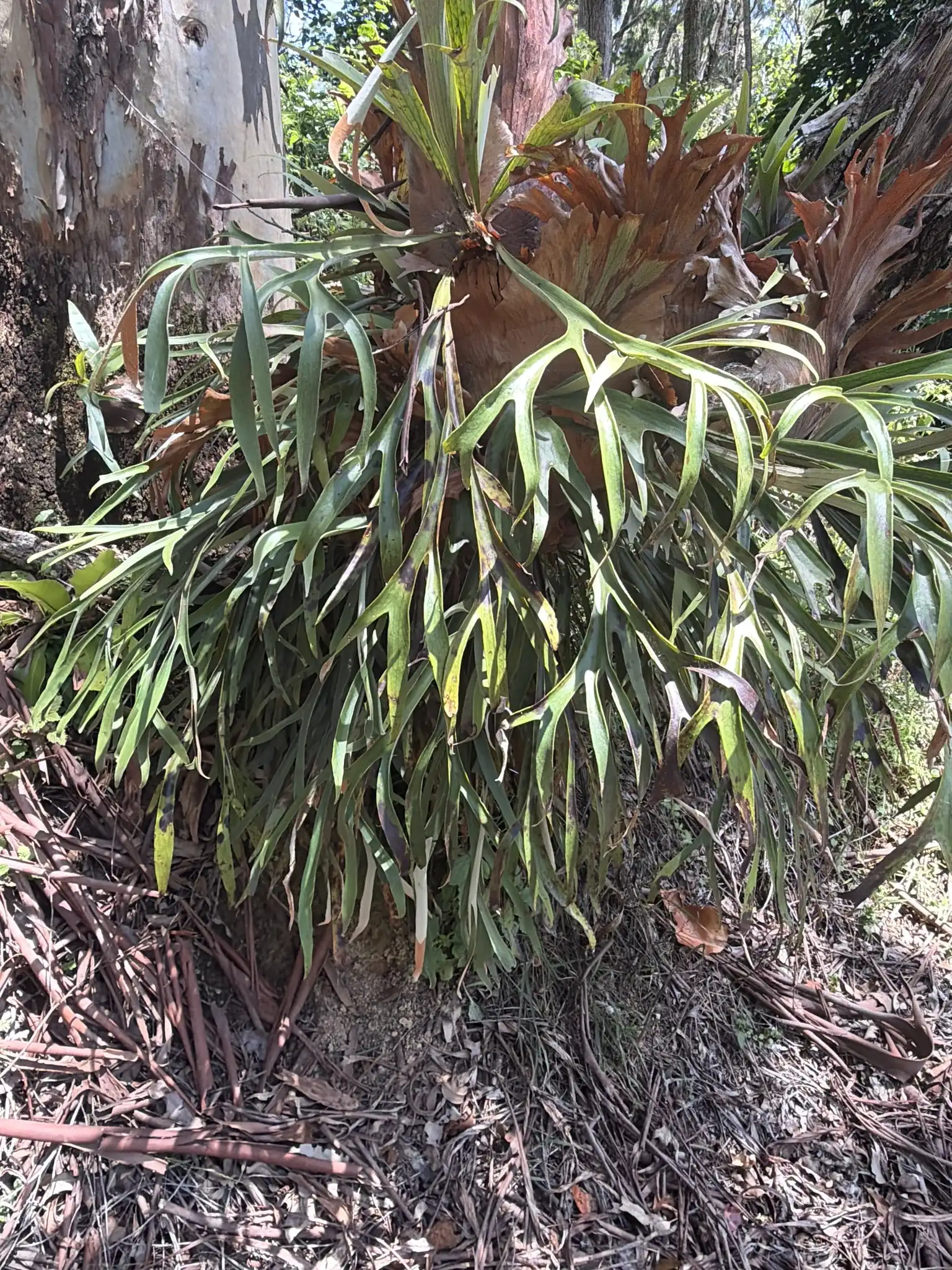
Platycerium bifurcatum is an epiphytic perennial fern native to the rainforests of New Guinea and eastern Australia. It features dimorphic fronds, consisting of flat, rounded sterile shield fronds that anchor the plant to its host, and arching, strap-like fertile fronds that fork into antler-like segments.
This species is highly resilient and naturally forms large, multi-headed colonies as basal offsets develop around the plant's perimeter. New growth is distinguished by a dense covering of fine, protective, whitish-stellate hairs that help conserve moisture.
Uses & Benefits:
Essentials
At a Glance
Plant Type
Fern
Height
35"
Width
39"
Light
Partial Sun, Shade
Zones
9, 10
Water
Moderate
Humidity
High
Lifespan
Perennial
Native To
Oceania and Asia
Toxicity
Non-toxic
Marketplace
Where to Buy
Shipping costs Year-round shipping Free shipping
Planting
How to Grow
- Mount the fern onto a wooden board or cork slab using monofilament line or wire, packing damp sphagnum moss around the root ball.
- Hang the mount in a location that receives bright, filtered light but is completely shielded from direct midday sun.
- Water by thoroughly soaking the entire mount and moss backing, allowing it to dry out slightly before watering again.
- Apply a highly diluted, balanced liquid fertilizer behind the shield fronds every four to six weeks during the active spring and summer growth period.
Pro Tip
Never remove the brown, papery sterile shield fronds at the base; they are structurally vital, capturing moisture and decaying organic matter to nourish the root system.
Keep It Thriving
Care Guide
Do
- Keep the mounting media or basket mix highly coarse and fast-draining.
- Allow the moss or mounting medium to dry out slightly between waterings.
- Maintain high humidity around the plant using regular misting in dry environments.
Don't
- Never prune or peel away the brown, dry sterile shield fronds.
- Never allow water to pool or sit in the central crown of the plant.
- Do not expose the plant to direct, scorching afternoon sunlight.
Seasonal Care Calendar
| Task | Jan | Feb | Mar | Apr | May | Jun | Jul | Aug | Sep | Oct | Nov | Dec |
|---|---|---|---|---|---|---|---|---|---|---|---|---|
| Fertilize | ||||||||||||
| Pest Check | ||||||||||||
| Prune | ||||||||||||
| Winter Prep |
Watch Out For
Pests & Diseases
Common Pests
Common Diseases
In the Garden
Landscape Uses & Companions
Landscape Uses
Companion Plants
Multiply
Propagation Methods
Good to Know
Common Questions
Elkhorn Fern questions
What zones can Elkhorn Fern grow in?
Elkhorn Fern is hardy in USDA Zones 9–10. Inside that range it survives winter in the ground; outside it, grow it as an annual or a container plant you protect.
Is Elkhorn Fern deer resistant?
Yes — Elkhorn Fern is rated deer-resistant. Deer typically pass it over, though extreme hunger can override any plant's defenses.
Does Elkhorn Fern need full sun?
Elkhorn Fern does best in part shade.
Is Elkhorn Fern drought tolerant?
Yes — once established (usually after the first full season), Elkhorn Fern handles dry spells with minimal watering. Water deeply its first year to build the root system that makes that possible.
Keep exploring
Explore the genus
Hardy in your zone?
Grow Elkhorn Fern with confidence
See it in a design of your actual yard, get zone-matched care reminders, and track it season by season in your garden journal.