
The Story
Plant Bio
Coreopsis major is an upright, clump-forming herbaceous perennial native to dry open woods and pinelands across the eastern United States. It produces yellow daisy-like flower heads four to five centimeters wide atop creeping rhizomatous root systems.
The foliage is opposite but deeply divided into three lance-shaped leaflets, creating a distinct whorled appearance of six leaves per stem node. Leaves vary from downy to nearly smooth and emerge bright green in spring.
Uses & Benefits:
Essentials
At a Glance
Plant Type
Perennial
Height
35"
Width
24"
Light
Full Sun, Partial Sun
Zones
5, 6, 7, 8, 9
Water
Low
Humidity
Moderate
Lifespan
Perennial
Native To
Southeastern United States
Toxicity
Non-toxic
Bloom period
Summer – Early fall
In flower about 4 months of the year
Planting
How to Grow
- Select a planting site in full sun to partial shade with well-drained sandy, loamy, or clay soil.
- Space plants 18 to 24 inches apart to accommodate spreading rhizomatous stems.
- Water thoroughly at planting, then restrict supplemental watering to extended dry periods once established.
- Cut dead stems to ground level in late winter before spring growth begins.
Pro Tip
Shear plants back lightly after the primary summer flush to induce repeat flowering and keep clumps compact.
Keep It Thriving
Care Guide
Do
- Plant in well-drained soil to prevent root crown decay
- Prune stems back after the main bloom flush to prompt new flowers
- Divide rhizomes in early spring to propagate new plants
Don't
- Do not apply excess nitrogen fertilizer, which produces weak and floppy stems
- Do not plant in heavy, waterlogged soils during winter
- Do not over-water once established
Seasonal Care Calendar
| Task | Jan | Feb | Mar | Apr | May | Jun | Jul | Aug | Sep | Oct | Nov | Dec |
|---|---|---|---|---|---|---|---|---|---|---|---|---|
| Deadhead | ||||||||||||
| Divide | ||||||||||||
| Mulch | ||||||||||||
| Prune |
Watch Out For
Pests & Diseases
Common Pests
Common Diseases
In the Garden
Landscape Uses & Companions
Landscape Uses
Multiply
Propagation Methods
Good to Know
Common Questions
Greater Tickseed questions
What zones can Greater Tickseed grow in?
Greater Tickseed is hardy in USDA Zones 5–9. Inside that range it survives winter in the ground; outside it, grow it as an annual or a container plant you protect.
Is Greater Tickseed deer resistant?
Not reliably. Deer may browse Greater Tickseed, especially tender spring growth — plan on repellents or fencing where pressure is high.
When does Greater Tickseed bloom?
Greater Tickseed typically blooms in summer through early fall. Exact timing shifts a week or two with your zone — Sow's bloom calendar maps it to your garden.
Does Greater Tickseed need full sun?
Greater Tickseed does best in full sun to part shade. In hot climates, afternoon shade keeps blooms fresher longer.
Is Greater Tickseed drought tolerant?
Yes — once established (usually after the first full season), Greater Tickseed handles dry spells with minimal watering. Water deeply its first year to build the root system that makes that possible.
More Coreopsis to compare
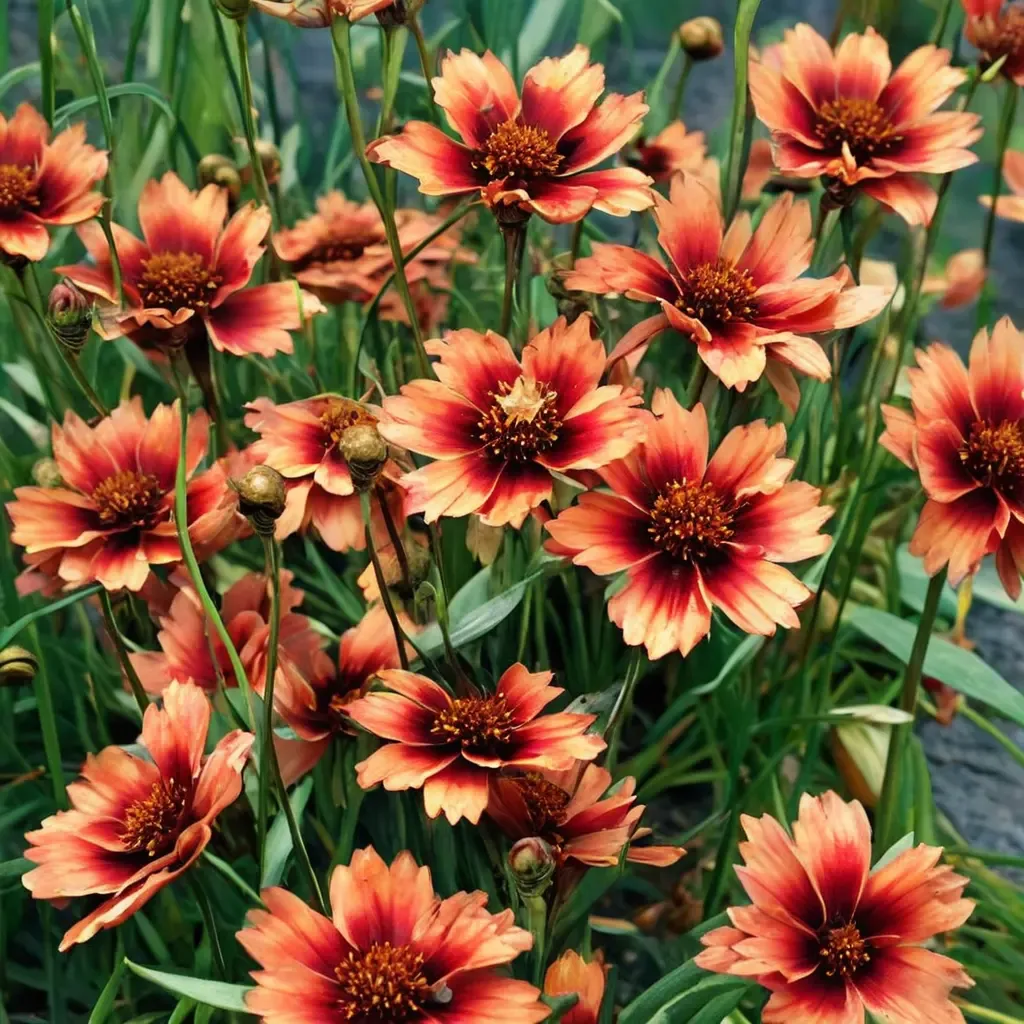
Plains Coreopsis
Coreopsis tinctoria 'Desert Coral'
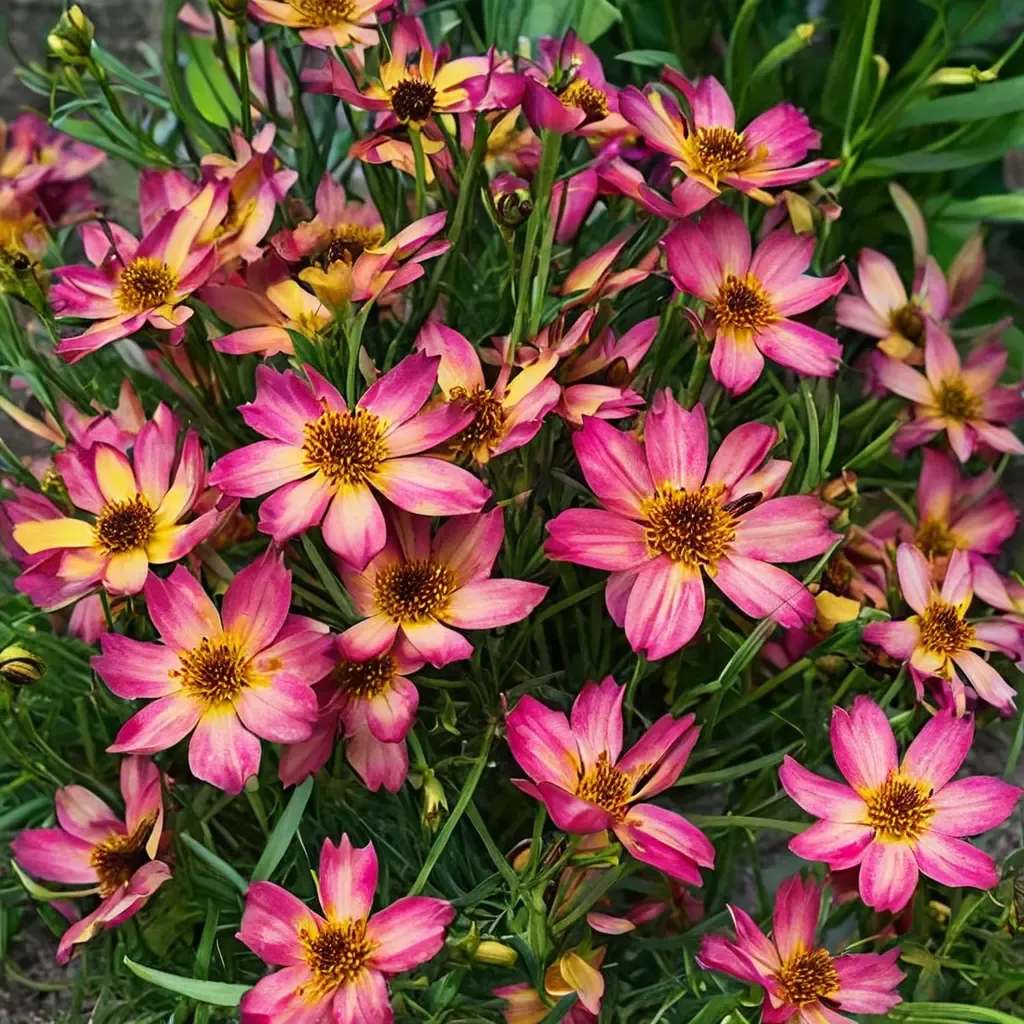
Tickseed 'Sweet Tart'
Coreopsis tinctoria 'Sweet Tart'
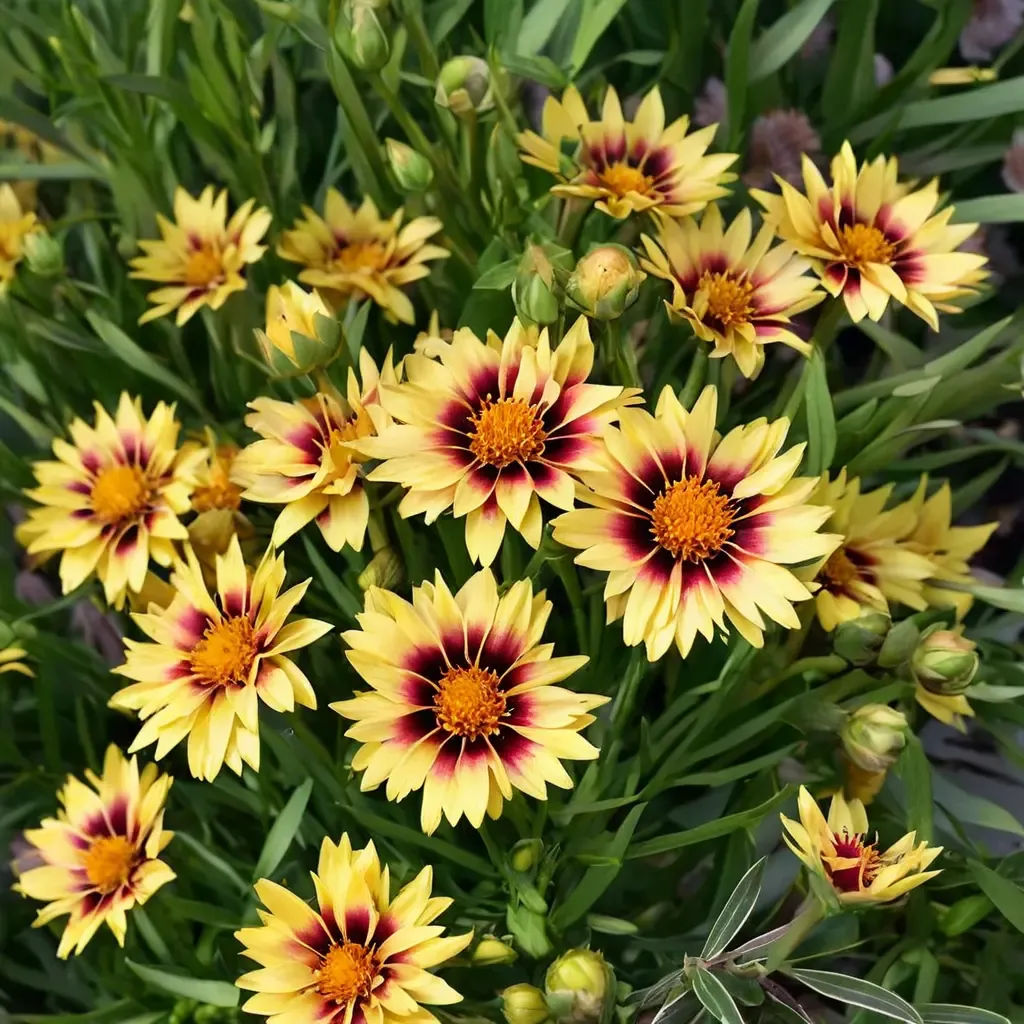
Enchanted Eve Li'l Bang Tickseed
Coreopsis grandiflora 'Enchanted Eve Li'l Bang'
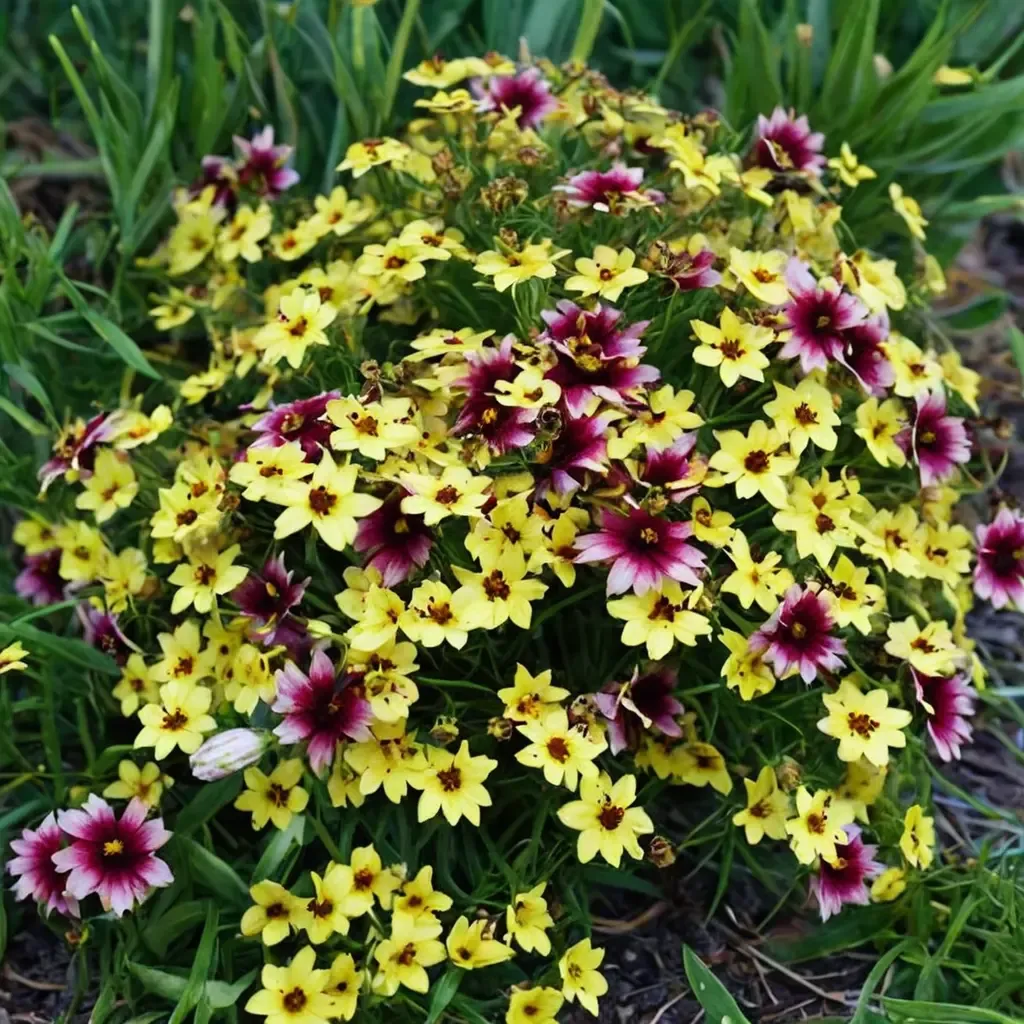
Sassy Saffron Tickseed
Coreopsis grandiflora 'Sassy Saffron'
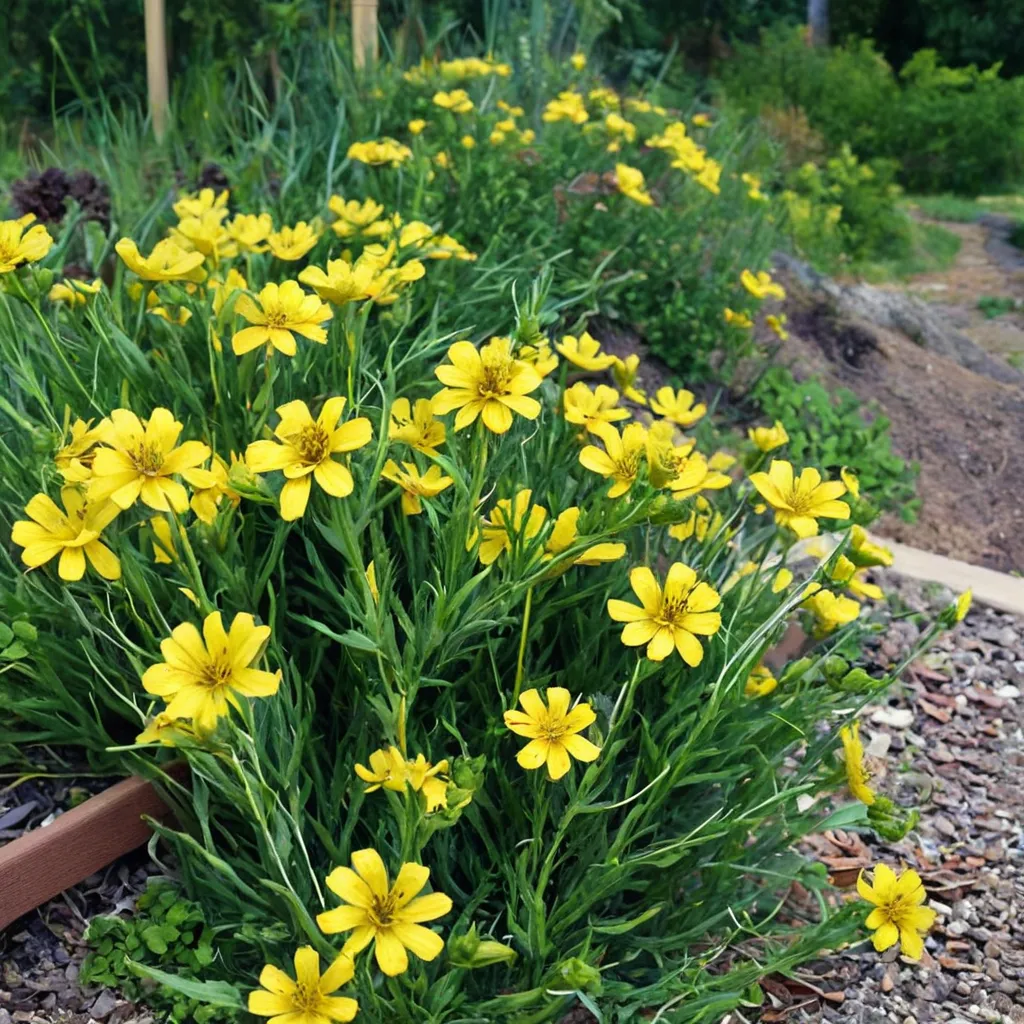
Prairie Coreopsis
Coreopsis palmata
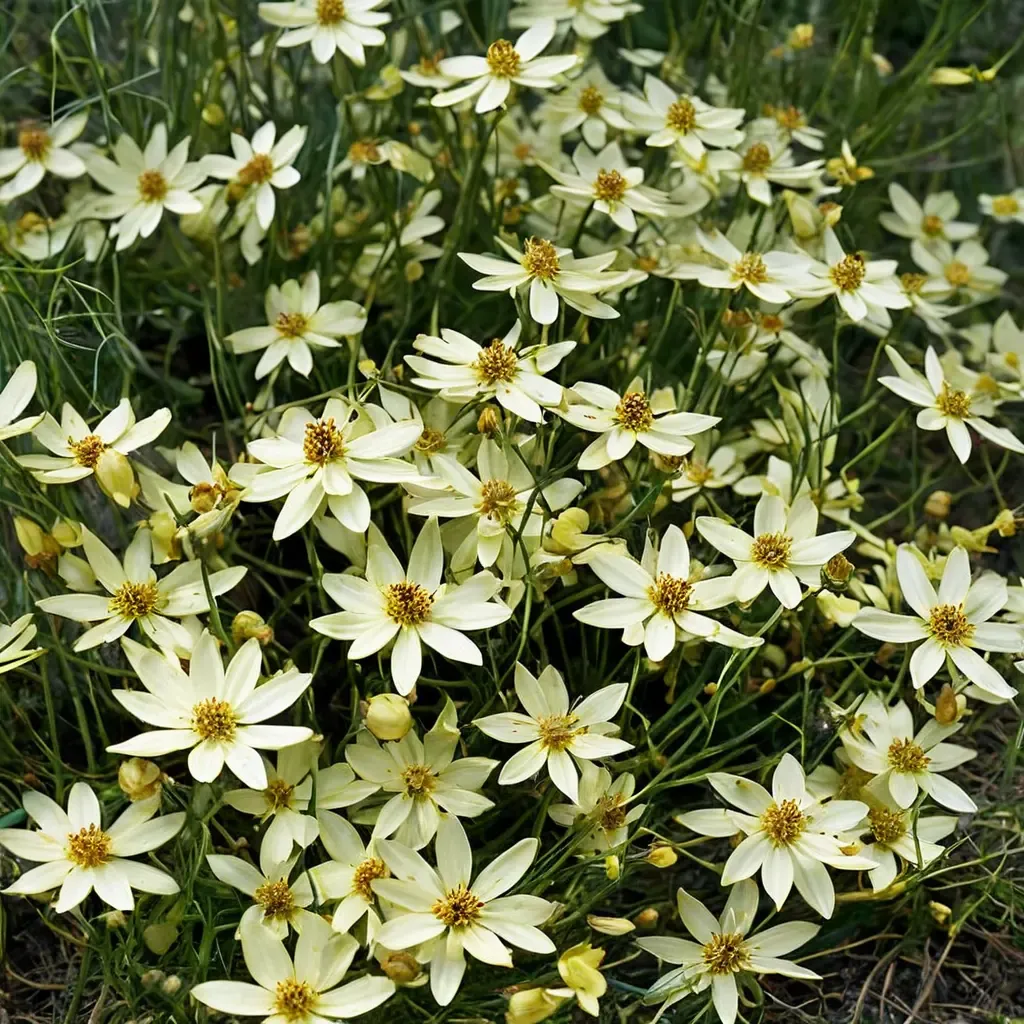
Moonbeam Tickseed
Coreopsis verticillata 'Moonbeam'
Keep exploring
Explore the genus
Hardy in your zone?
Grow Greater Tickseed with confidence
See it in a design of your actual yard, get zone-matched care reminders, and track it season by season in your garden journal.