
The Story
Plant Bio
Elaeagnus angustifolia is a deciduous, large multi-stemmed shrub or small tree with a loose, open habit and thorny, ashy-brown branches covered in silvery scales. The alternate, lanceolate leaves feature dull pale green upper surfaces and densely scaled, silvery-white undersides that produce a distinctive shimmering effect.
Small, fragrant, trumpet-shaped flowers emerge in spring, showing silver on the exterior and yellow within the leaf axils. The plant hosts Frankia bacteria in root nodules to fix its own atmospheric nitrogen, enabling vigorous growth in sterile, nutrient-poor soils.
Uses & Benefits:
Essentials
At a Glance
Plant Type
Shrub
Height
240"
Width
354"
Light
Full Sun, Partial Sun
Zones
4, 5, 6, 7
Water
Low
Humidity
Low
Lifespan
Multi-decade
Native To
Europe and Asia
Toxicity
Non-toxic but has sharp thorns
Bloom period
Spring – Early summer
In flower about 4 months of the year
Planting
How to Grow
- Select a planting site in full sun to maximize foliage density and the intensity of the silvery leaf color.
- Plant in well-drained soil, though the shrub tolerates poor, sandy, or heavy clay substrates across a wide pH range.
- Water regularly during the first growing season to establish a deep root system.
- Withhold nitrogen fertilizers entirely, as the plant's root nodules naturally fix atmospheric nitrogen.
- Prune in late winter to remove root suckers and maintain a single-trunk or multi-stemmed form.
Pro Tip
Avoid pruning into old, leafless wood lacking dormant buds, as this prevents regrowth; instead, limit annual pruning to late winter to manage suckers and shape the canopy without triggering excessive epicormic shoots.
Keep It Thriving
Care Guide
Do
- Grow in full sun to ensure dense, silvery foliage.
- Ensure the soil drains thoroughly to prevent root rot.
- Prune root suckers annually in late winter to control the plant's spread.
Don't
- Do not apply nitrogen fertilizers, which are unnecessary and can disrupt the plant's nitrogen-fixing nodules.
- Do not prune heavily into old, bare wood that lacks visible dormant buds.
- Do not plant in highly humid summer climates where the species performs poorly.
Seasonal Care Calendar
| Task | Jan | Feb | Mar | Apr | May | Jun | Jul | Aug | Sep | Oct | Nov | Dec |
|---|---|---|---|---|---|---|---|---|---|---|---|---|
| Pest Check | ||||||||||||
| Propagate | ||||||||||||
| Prune | ||||||||||||
| Spring Cleanup |
Watch Out For
Pests & Diseases
Common Pests
Common Diseases
In the Garden
Landscape Uses & Companions
Landscape Uses
Companion Plants
Multiply
Propagation Methods
Good to Know
Common Questions
Russian Olive questions
What zones can Russian Olive grow in?
Russian Olive is hardy in USDA Zones 4–7. Inside that range it survives winter in the ground; outside it, grow it as an annual or a container plant you protect.
Is Russian Olive deer resistant?
Not reliably. Deer may browse Russian Olive, especially tender spring growth — plan on repellents or fencing where pressure is high.
When does Russian Olive bloom?
Russian Olive typically blooms in spring through early summer. Exact timing shifts a week or two with your zone — Sow's bloom calendar maps it to your garden.
Does Russian Olive need full sun?
Russian Olive does best in full sun to part shade. In hot climates, afternoon shade keeps blooms fresher longer.
Is Russian Olive drought tolerant?
Yes — once established (usually after the first full season), Russian Olive handles dry spells with minimal watering. Water deeply its first year to build the root system that makes that possible.
More Elaeagnus to compare
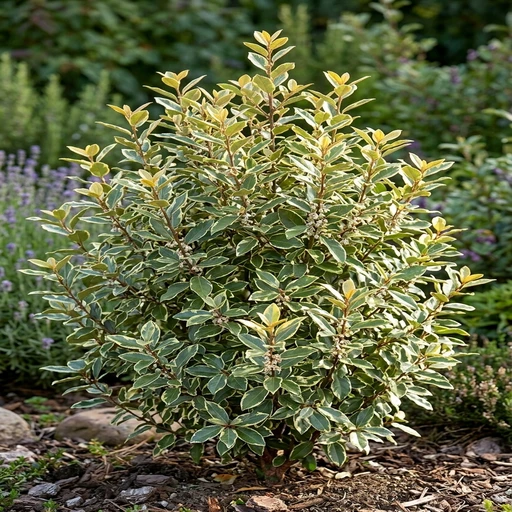
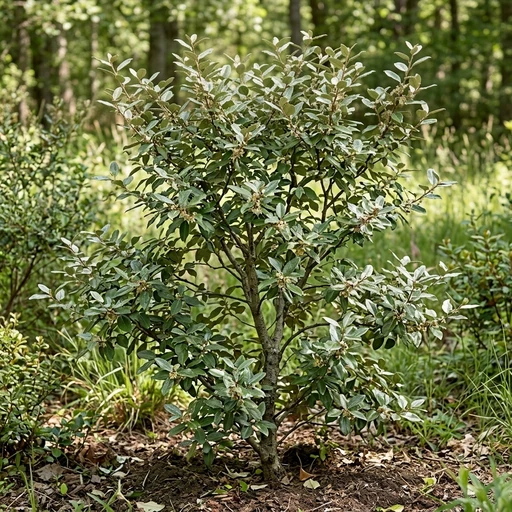
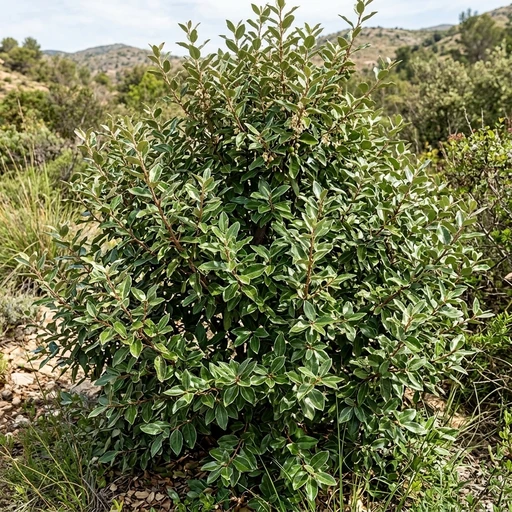
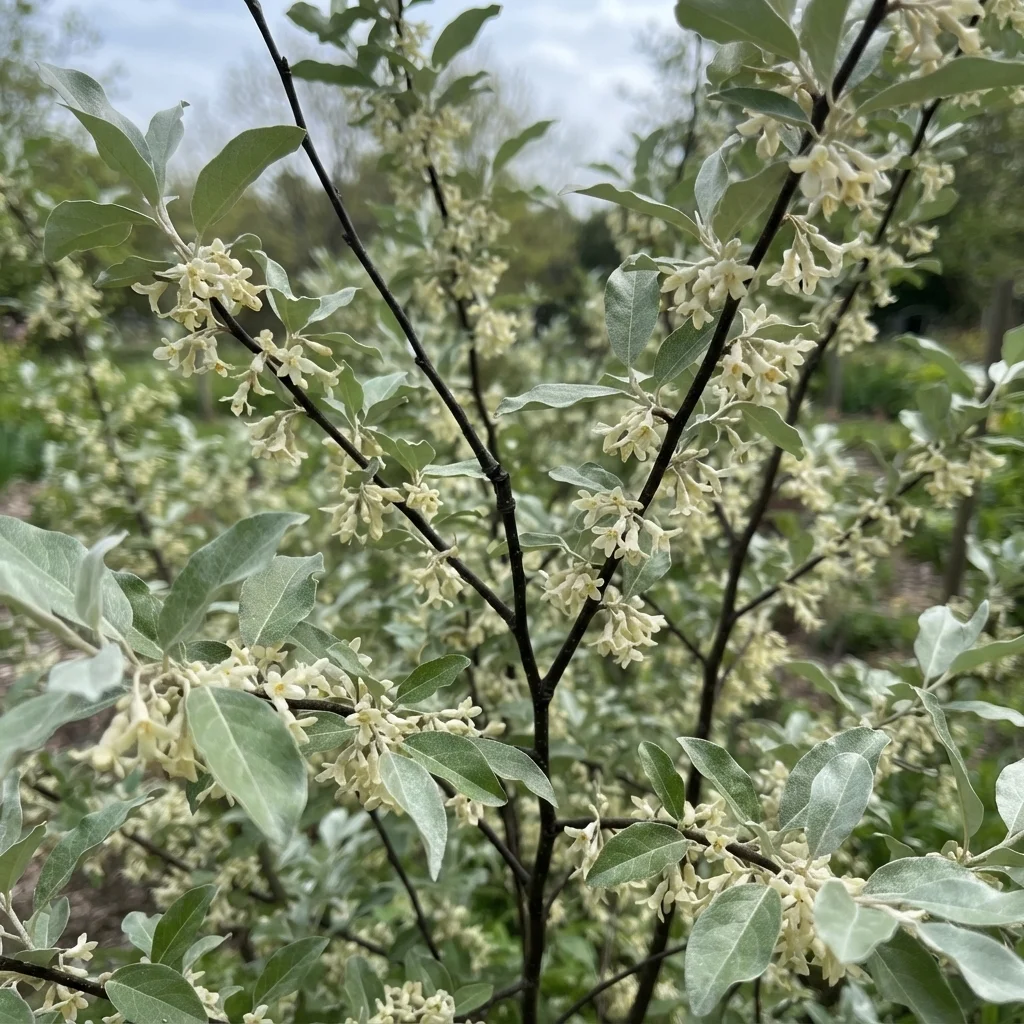
Keep exploring
Explore the genus
Hardy in your zone?
Grow Russian Olive with confidence
See it in a design of your actual yard, get zone-matched care reminders, and track it season by season in your garden journal.