The Story
Plant Bio
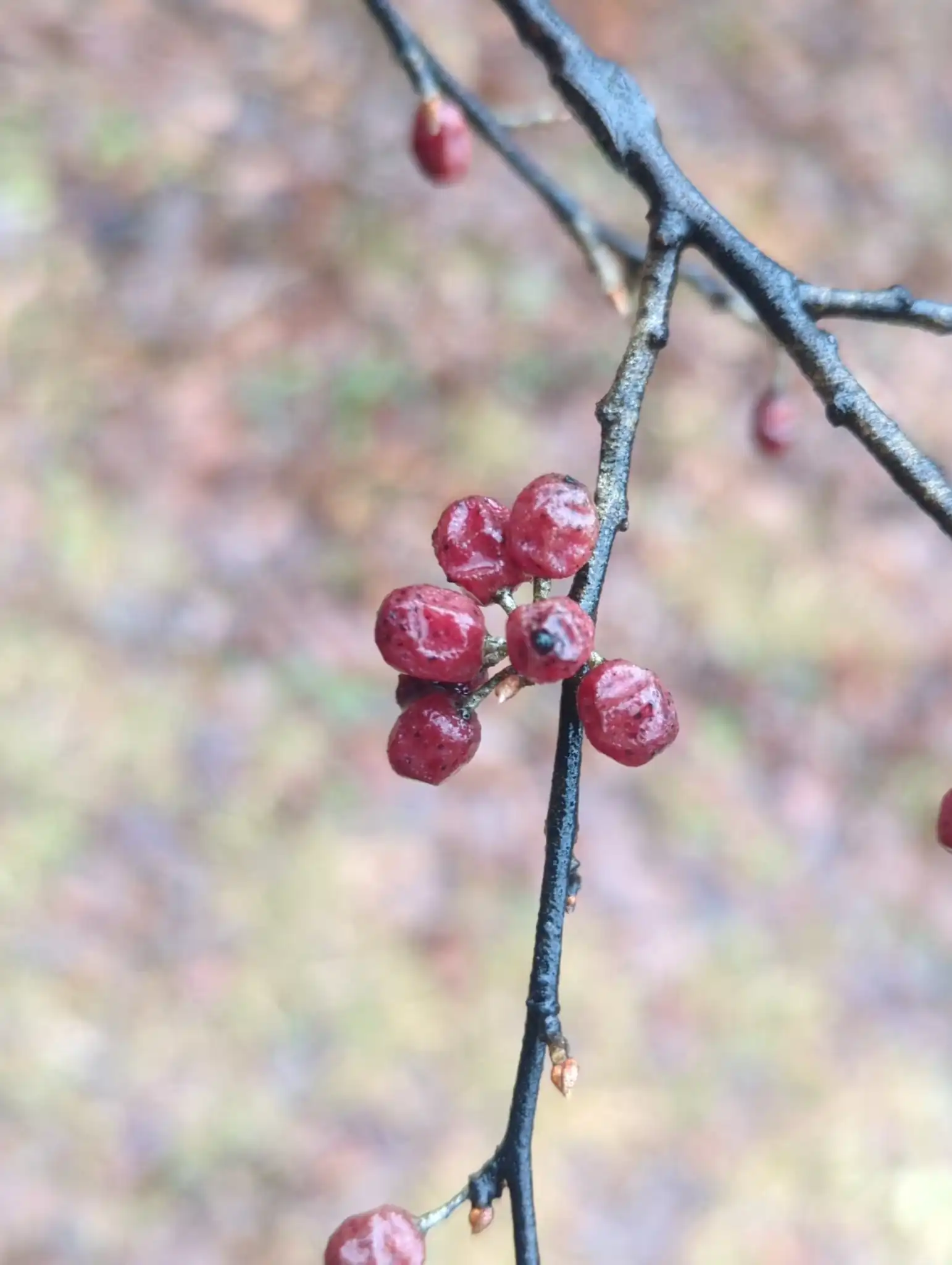
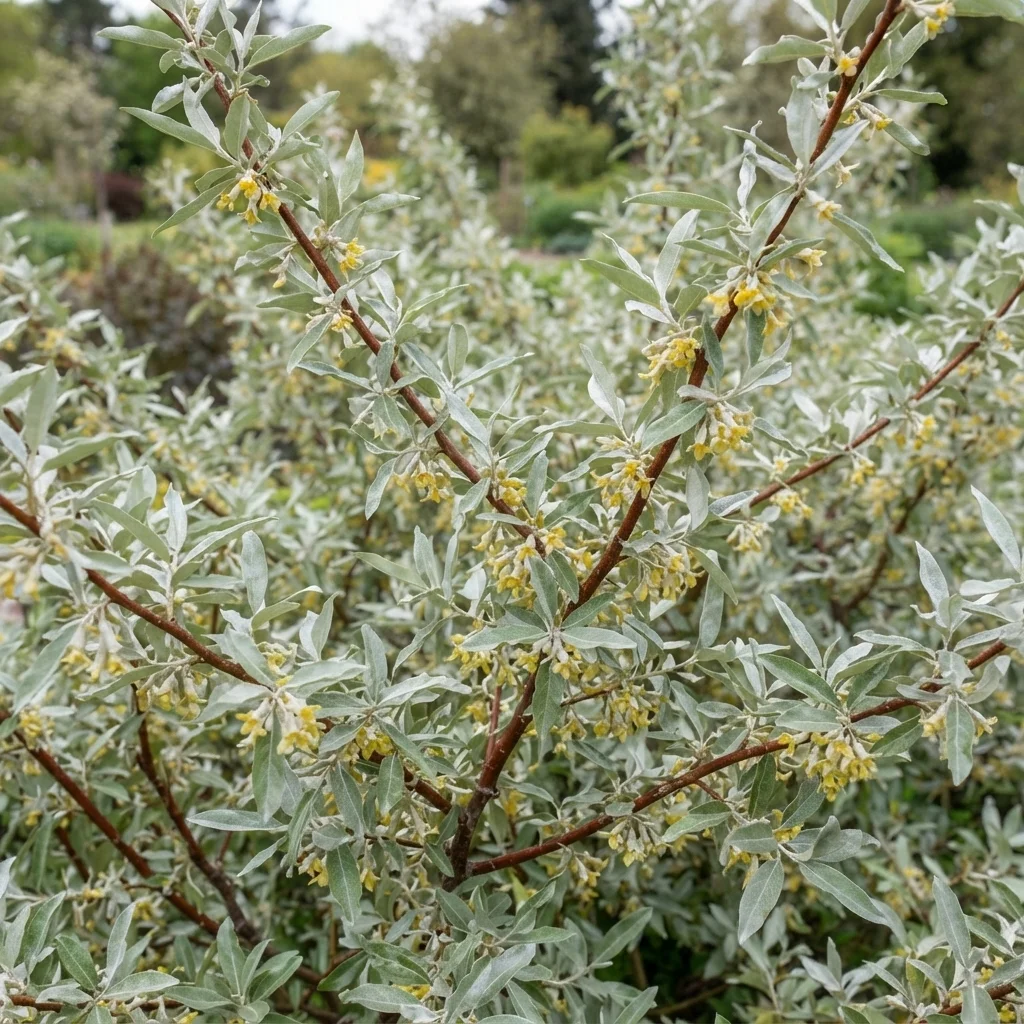
Elaeagnus umbellata, the autumn olive, is a vigorous, deciduous shrub native to Asia, characterized by its spreading, multi-stemmed habit and young branches covered in distinctive silvery scales. The alternate, simple leaves are dull green on their upper surfaces and intensely silver beneath, creating a shimmering effect in the wind.
Small, tubular flowers of creamy white to pale yellow open in the leaf axils from spring to early summer, releasing a heavy fragrance that attracts diverse pollinators. These are followed by abundant red, lycopene-rich berries that are highly attractive to birds but also drive its aggressive, invasive spread across North American ecosystems.
Uses & Benefits:
Essentials
At a Glance
Plant Type
Shrub
Height
236"
Width
354"
Light
Full Sun, Partial Sun
Zones
4, 5, 6, 7, 8
Water
Low to moderate
Humidity
Moderate to high
Lifespan
Perennial
Native To
Asia (Himalayas, China, Japan, Korea)
Toxicity
Non-toxic
Bloom period
Spring – Early summer
In flower about 4 months of the year
Planting
How to Grow
- Select a site with full sun to partial shade and well-drained soil, avoiding areas prone to standing water.
- Plant container-grown or bare-root specimens in spring, digging a hole twice the width of the root ball and setting the crown level with the soil surface.
- Water deeply during the first growing season to establish a deep root system; once established, the plant is highly drought-tolerant.
- Prune selectively after fruiting to remove dead or crossing branches, avoiding hard shearing into old, leafless wood.
Pro Tip
Avoid applying nitrogen fertilizers, as the root system hosts nitrogen-fixing nodules that allow the plant to thrive in highly infertile soils; supplemental feeding only fuels excessive, invasive vegetative growth.
Keep It Thriving
Care Guide
Do
- Grow in poor, infertile soils where its nitrogen-fixing roots can improve soil structure without fueling excessive weediness.
- Prune immediately after fruiting if size control is necessary.
- Monitor local environmental lists to ensure the species is not a declared noxious weed in your county.
Don't
- Do not apply nitrogen-heavy fertilizers, which trigger rapid, unmanageable vegetative growth.
- Do not plant near natural woodlands, prairies, or waterways where birds will disperse seeds and establish invasive thickets.
- Do not plant in poorly drained or waterlogged soils, which quickly induces root rot.
Seasonal Care Calendar
| Task | Jan | Feb | Mar | Apr | May | Jun | Jul | Aug | Sep | Oct | Nov | Dec |
|---|---|---|---|---|---|---|---|---|---|---|---|---|
| Pest Check | ||||||||||||
| Plant | ||||||||||||
| Propagate | ||||||||||||
| Prune |
Watch Out For
Pests & Diseases
Common Pests
Common Diseases
In the Garden
Landscape Uses & Companions
Landscape Uses
Companion Plants
Multiply
Propagation Methods
Good to Know
Common Questions
Autumn Olive questions
What zones can Autumn Olive grow in?
Autumn Olive is hardy in USDA Zones 4–8. Inside that range it survives winter in the ground; outside it, grow it as an annual or a container plant you protect.
Is Autumn Olive deer resistant?
Not reliably. Deer may browse Autumn Olive, especially tender spring growth — plan on repellents or fencing where pressure is high.
When does Autumn Olive bloom?
Autumn Olive typically blooms in spring through early summer. Exact timing shifts a week or two with your zone — Sow's bloom calendar maps it to your garden.
Does Autumn Olive need full sun?
Autumn Olive does best in full sun to part shade. In hot climates, afternoon shade keeps blooms fresher longer.
Is Autumn Olive drought tolerant?
Yes — once established (usually after the first full season), Autumn Olive handles dry spells with minimal watering. Water deeply its first year to build the root system that makes that possible.
More Elaeagnus to compare
Keep exploring
Explore the genus
Hardy in your zone?
Grow Autumn Olive with confidence
See it in a design of your actual yard, get zone-matched care reminders, and track it season by season in your garden journal.