Species
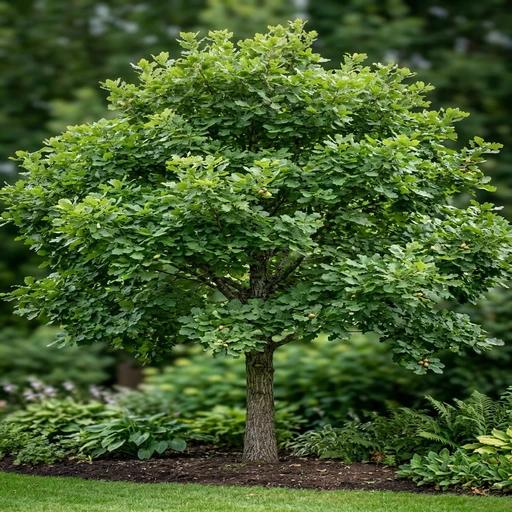 Quercus roburEnglish Oak
1 other cultivar

The Story
Plant Bio
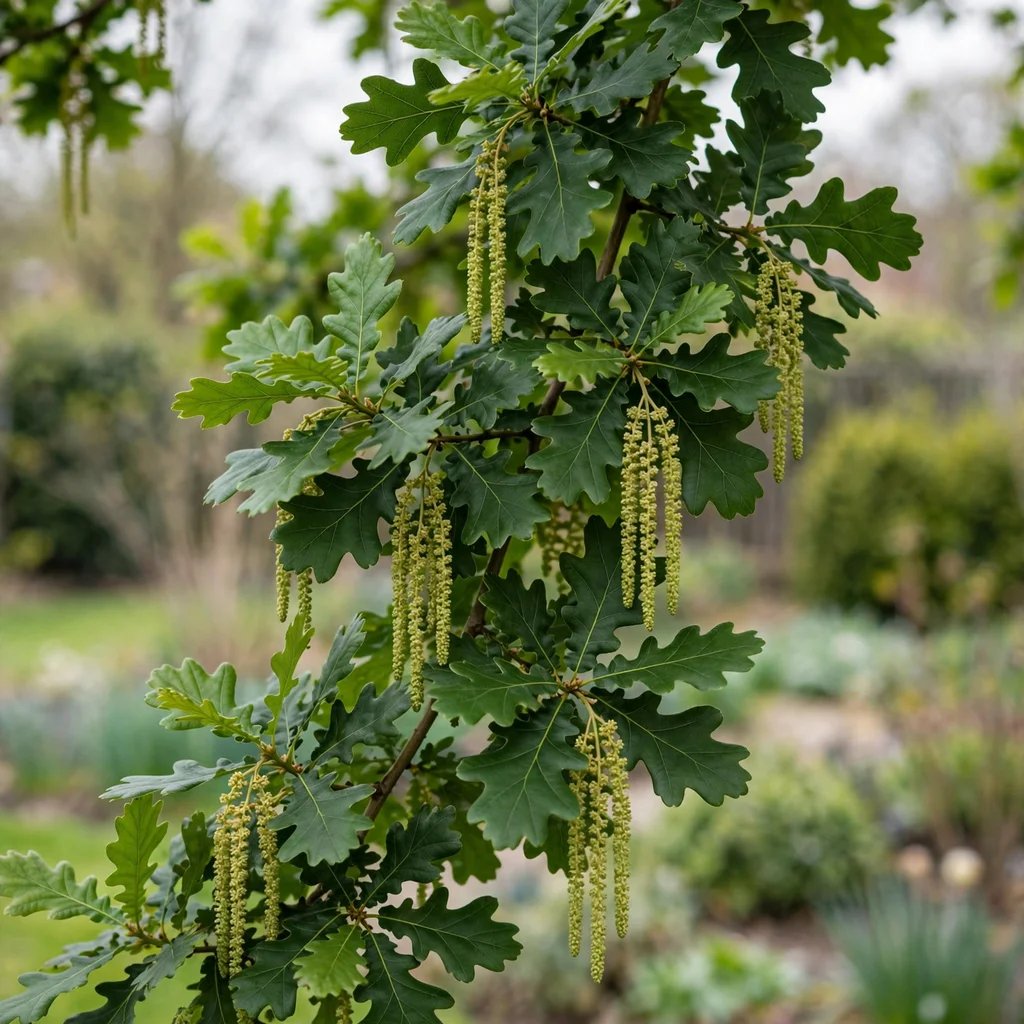
Quercus robur, the English oak, is a long-lived deciduous tree native to Europe and western Asia that typically develops a broad, spreading canopy under optimal conditions. The species is highly adaptable to varied soil textures and pH levels, producing deeply lobed dark green leaves and acorns that provide significant wildlife value.
'Fastigiata' is a narrow, columnar selection featuring upright branches that rise at sharp angles closely appressed to the main trunk. The dense foliage turns yellowish-brown in fall and exhibits marcescence, retaining its dead brown leaves through much of the winter.
Uses & Benefits:
Essentials
At a Glance
Plant Type
Tree
Height
720"
Width
240"
Light
Full Sun
Zones
4, 5, 6, 7, 8
Water
Medium
Humidity
Moderate
Lifespan
Long
Native To
Europe, Western Asia
Toxicity
Low
Bloom period
Mid-spring
In flower about 1 month of the year
Planting
How to Grow
- Select a planting site in full sun with deep, well-drained soil to accommodate the deep taproot.
- Dig a hole twice as wide as the root ball and of equal depth, ensuring the graft union remains above the soil line.
- Backfill with native soil, firm gently to remove air pockets, and water deeply to settle the roots.
- Apply a three-inch layer of organic mulch around the base, keeping it several inches away from the trunk to prevent decay.
Pro Tip
Propagate this cultivar exclusively through grafting or budding; growing 'Fastigiata' from acorns results in high genetic variability, yielding broad, spreading trees rather than the signature columnar form.
Keep It Thriving
Care Guide
Do
- Water deeply and regularly during the first two growing seasons to establish a deep root system.
- Prune in late winter while the tree is dormant to remove dead, damaged, or crossing branches.
- Plant in full sun to maximize canopy density and minimize the risk of fungal diseases.
Don't
- Do not prune the tree during spring or summer, as open wounds during this period increase susceptibility to oak wilt.
- Do not over-fertilize established trees, which can cause excessive, weak vegetative growth.
- Do not allow soil to become waterlogged, as the root system dislikes prolonged saturated conditions.
Seasonal Care Calendar
| Task | Jan | Feb | Mar | Apr | May | Jun | Jul | Aug | Sep | Oct | Nov | Dec |
|---|---|---|---|---|---|---|---|---|---|---|---|---|
| Mulch | ||||||||||||
| Pest Check | ||||||||||||
| Prune |
Watch Out For
Pests & Diseases
Common Pests
Common Diseases
In the Garden
Landscape Uses & Companions
Landscape Uses
Companion Plants
Multiply
Propagation Methods
Good to Know
Common Questions
Upright English Oak questions
What zones can Upright English Oak grow in?
Upright English Oak is hardy in USDA Zones 4–8. Inside that range it survives winter in the ground; outside it, grow it as an annual or a container plant you protect.
Is Upright English Oak deer resistant?
Not reliably. Deer may browse Upright English Oak, especially tender spring growth — plan on repellents or fencing where pressure is high.
When does Upright English Oak bloom?
Upright English Oak typically blooms in mid-spring through mid-spring. Exact timing shifts a week or two with your zone — Sow's bloom calendar maps it to your garden.
Does Upright English Oak need full sun?
Upright English Oak does best in full sun (6+ hours).
Is Upright English Oak drought tolerant?
Yes — once established (usually after the first full season), Upright English Oak handles dry spells with minimal watering. Water deeply its first year to build the root system that makes that possible.
More Quercus to compare
White Oak
Quercus alba
Black Oak
Quercus velutina
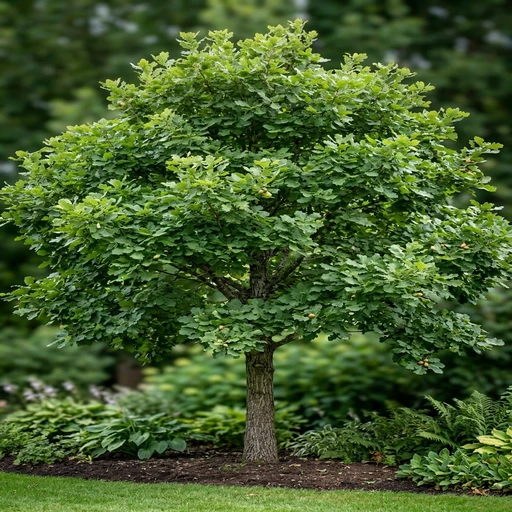
English Oak
Quercus robur
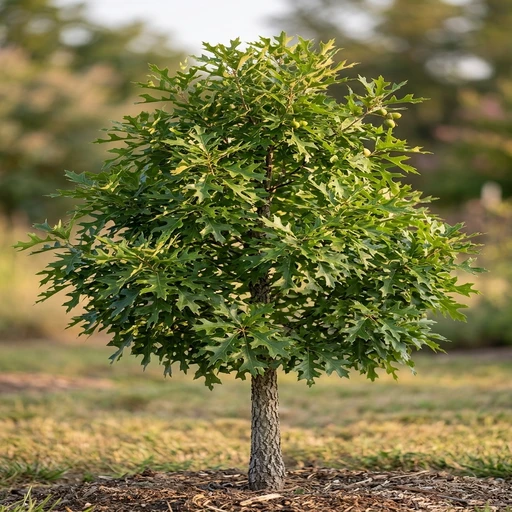
Nuttall Oak
Quercus texana
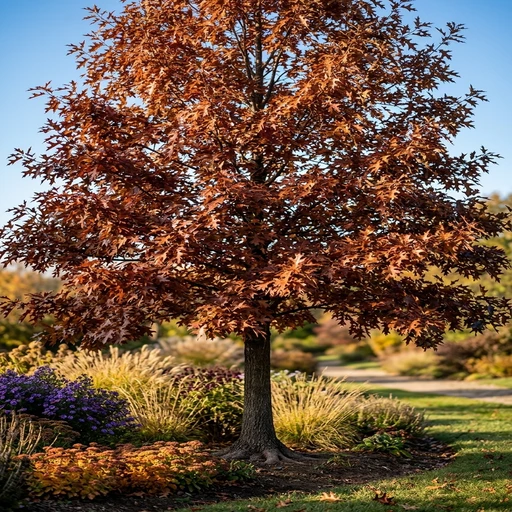
Pin Oak
Quercus palustris
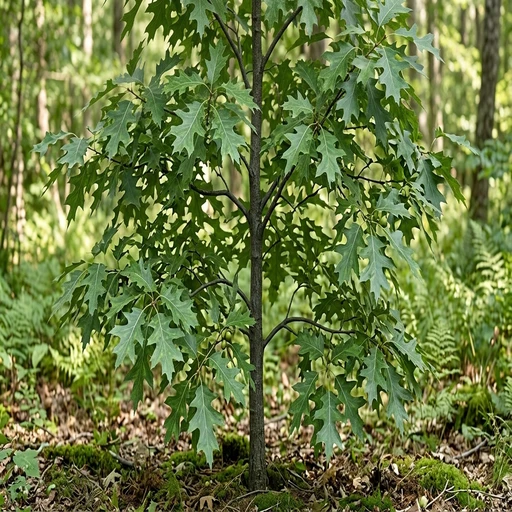
Scarlet Oak
Quercus coccinea
Keep exploring
Explore the genus
Hardy in your zone?
Grow Upright English Oak with confidence
See it in a design of your actual yard, get zone-matched care reminders, and track it season by season in your garden journal.