Garden hybrid
This is a garden hybrid, bred from more than one wild species, so it has no single species page of its own.
3 other cultivars

The Story
Plant Bio
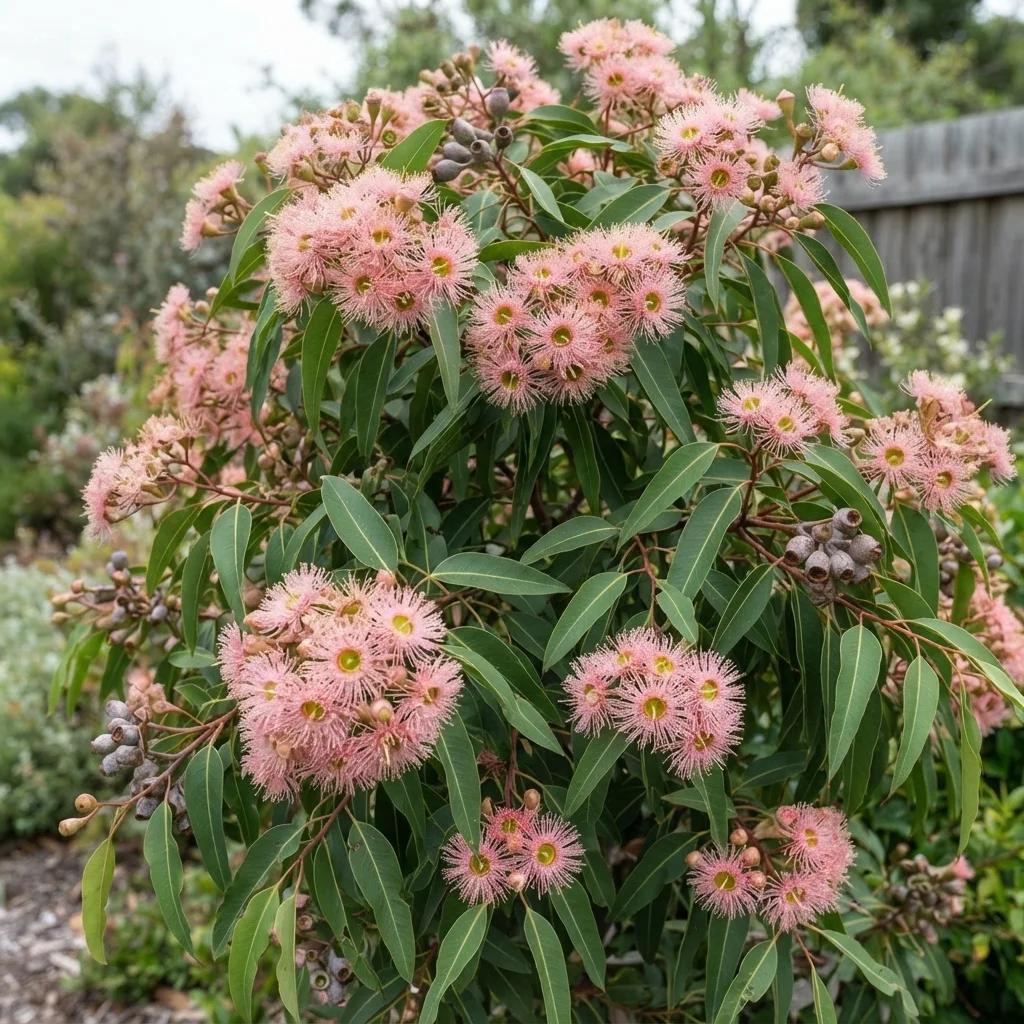
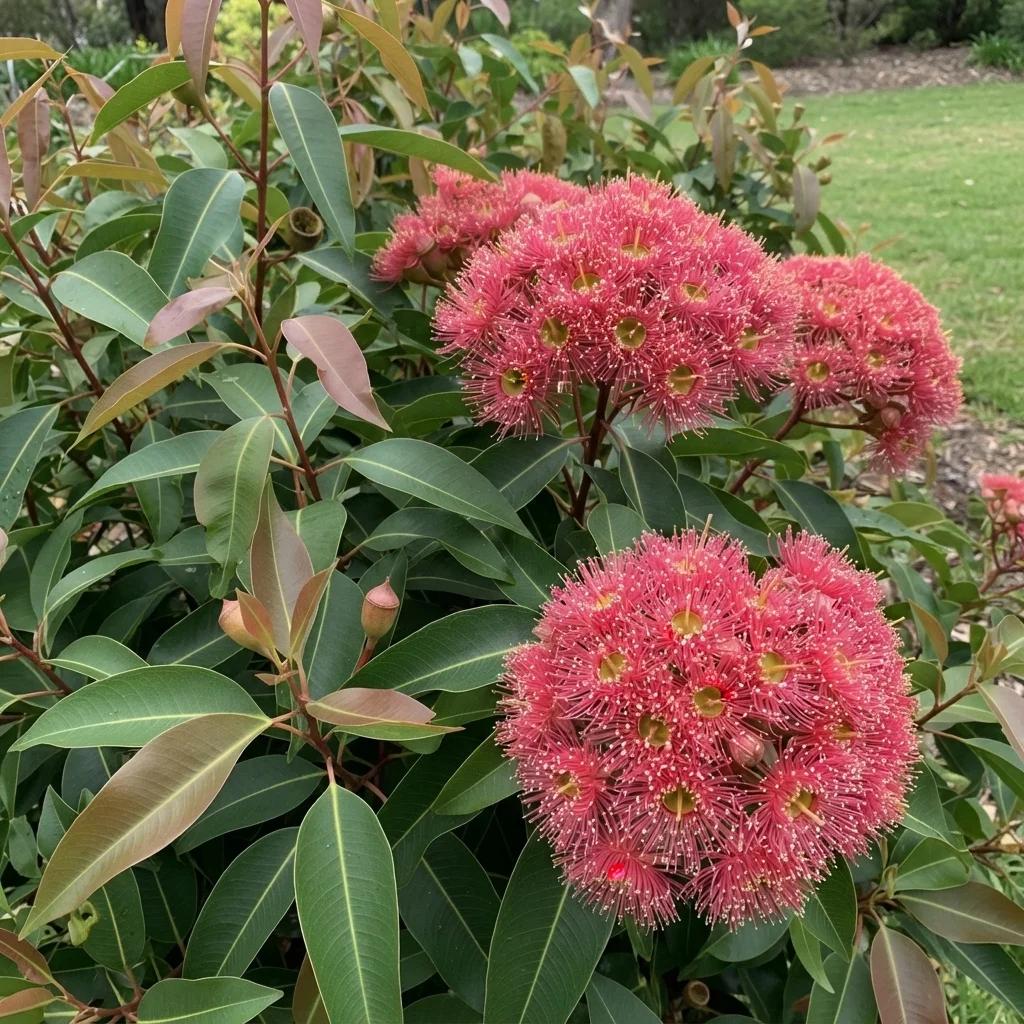
Corymbia ficifolia, formerly classified under Eucalyptus, is a small evergreen tree native to a highly restricted coastal strip of Western Australia. It is celebrated for its dense, rounded canopy of leathery, dark green leaves and spectacular summer display of vibrant, filament-heavy blossoms clustered at the branch tips.
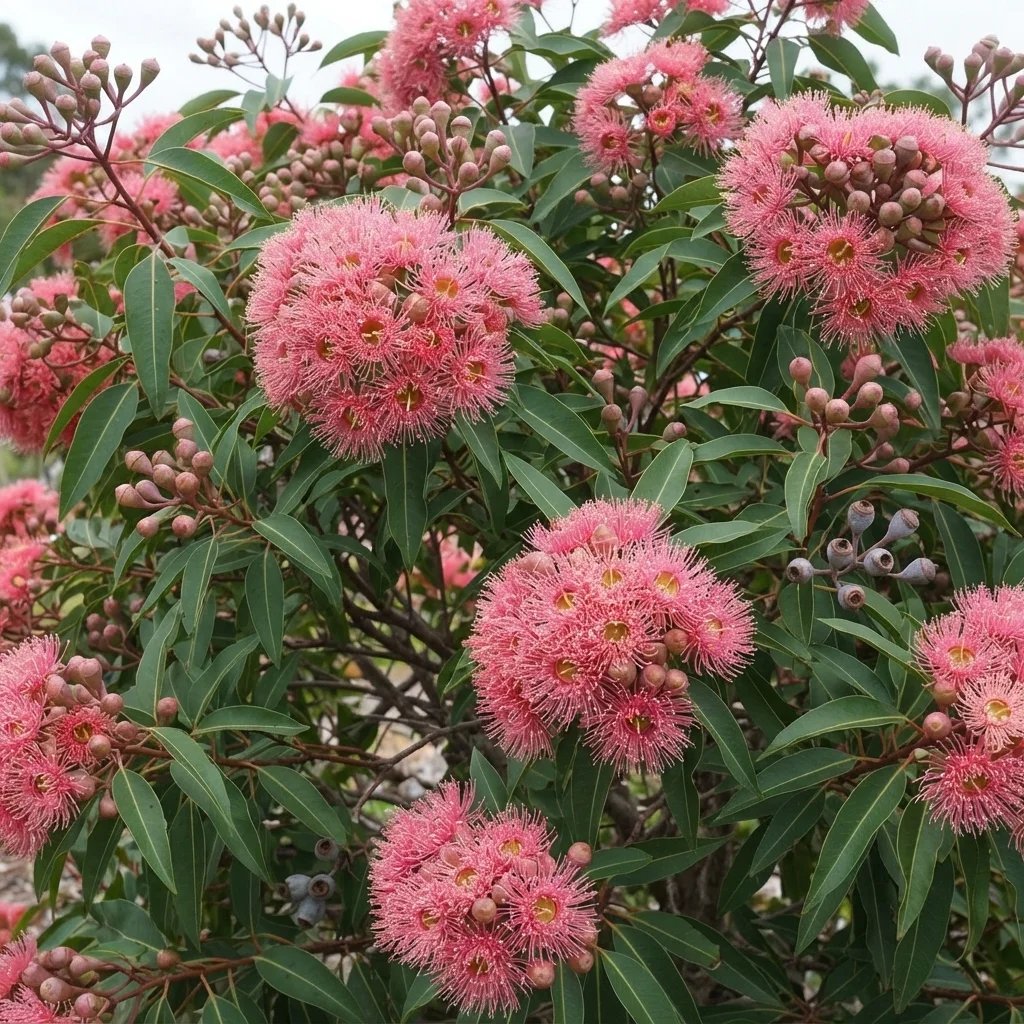
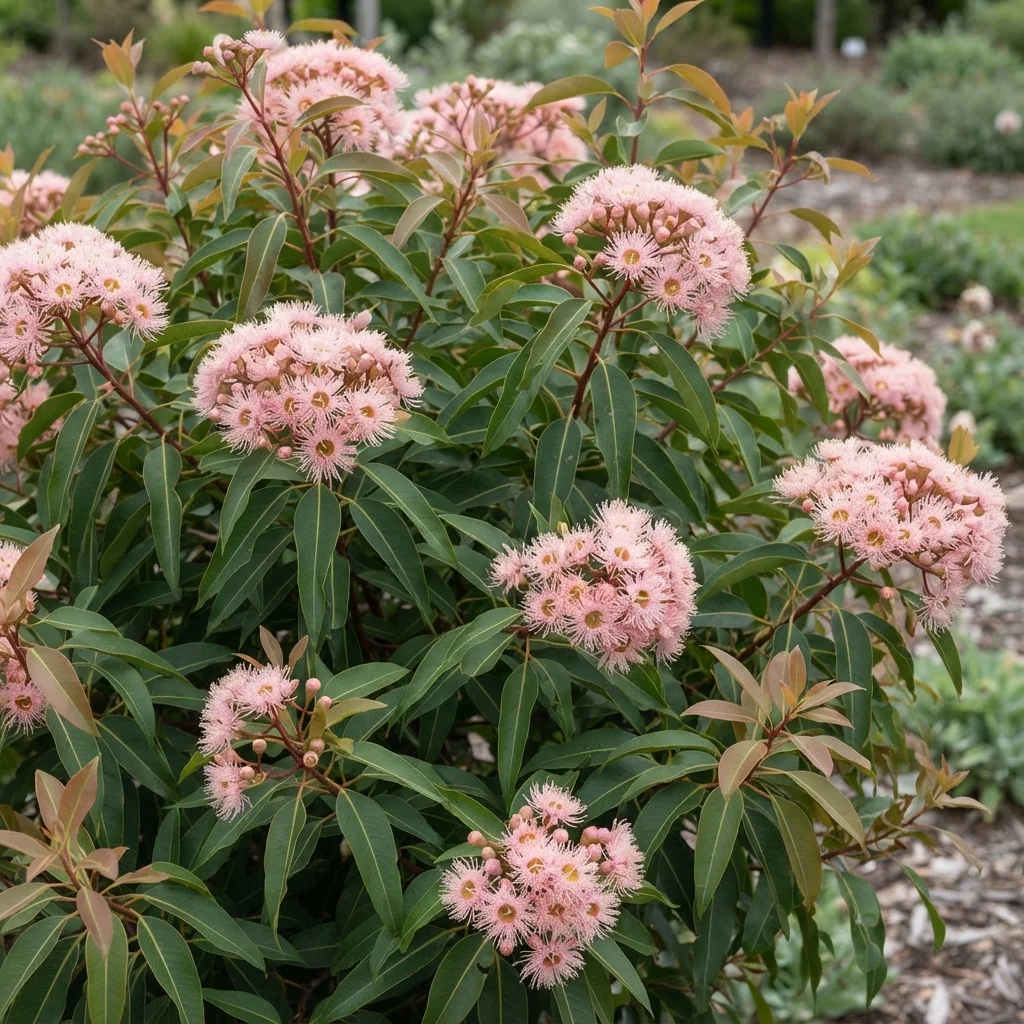
'Calypso' is a compact, grafted selection distinguished by its dense, neatly rounded habit and profuse terminal clusters of deep salmon-pink to coral-pink flowers. The blossoms emerge from distinct pink operculum caps on red stems, followed by large, urn-shaped woody seed capsules.
Uses & Benefits:
Bred from more than one wild species, so it has no species page of its own.
Essentials
At a Glance
Plant Type
Tree
Height
196"
Width
157"
Light
Full Sun
Zones
9, 10
Water
Low
Humidity
Moderate
Lifespan
Long-lived
Native To
Australia
Toxicity
Non-toxic
Bloom period
Summer
In flower about 3 months of the year
Planting
How to Grow
- Select a planting site in full sun with exceptionally well-drained soil, such as sandy loam or free-draining light clay.
- Dig a hole twice as wide as the root ball but no deeper, ensuring the graft union remains well above the final soil level.
- Backfill with native soil without adding organic amendments, and water thoroughly to settle the soil around the roots.
- Apply a thick layer of organic mulch around the base, keeping it several inches away from the trunk to prevent rot.
Pro Tip
Never bury the graft union when planting, as burying it below the soil line triggers scion rejection or aggressive rootstock suckering. Prune only by light tip-pruning when young; cutting back into old, leafless wood prevents bud regeneration.
Keep It Thriving
Care Guide
Do
- Water deeply but infrequently during the first two growing seasons to establish a deep root system.
- Use a low-phosphorus fertilizer formulated for native plants if soil nutrients are deficient.
- Protect young trees from severe frost using burlap or frost cloth during cold snaps.
Don't
- Do not plant the tree too deep or allow soil and mulch to pile up against the graft union.
- Do not prune heavily into old, bare wood, as the plant lacks epicormic buds to regenerate from old timber.
- Do not over-water or plant in heavy, poorly drained clay soils, which rapidly induces Phytophthora root rot.
Seasonal Care Calendar
| Task | Jan | Feb | Mar | Apr | May | Jun | Jul | Aug | Sep | Oct | Nov | Dec |
|---|---|---|---|---|---|---|---|---|---|---|---|---|
| Fertilize | ||||||||||||
| Mulch | ||||||||||||
| Pest Check | ||||||||||||
| Prune |
Watch Out For
Pests & Diseases
Common Pests
Common Diseases
In the Garden
Landscape Uses & Companions
Landscape Uses
Companion Plants
Multiply
Propagation Methods
Good to Know
Common Questions
Calypso Flowering Gum questions
What zones can Calypso Flowering Gum grow in?
Calypso Flowering Gum is hardy in USDA Zones 9–10. Inside that range it survives winter in the ground; outside it, grow it as an annual or a container plant you protect.
When does Calypso Flowering Gum bloom?
Calypso Flowering Gum typically blooms in summer through summer. Exact timing shifts a week or two with your zone — Sow's bloom calendar maps it to your garden.
Does Calypso Flowering Gum need full sun?
Calypso Flowering Gum does best in full sun (6+ hours).
Is Calypso Flowering Gum drought tolerant?
Yes — once established (usually after the first full season), Calypso Flowering Gum handles dry spells with minimal watering. Water deeply its first year to build the root system that makes that possible.
More Corymbia to compare
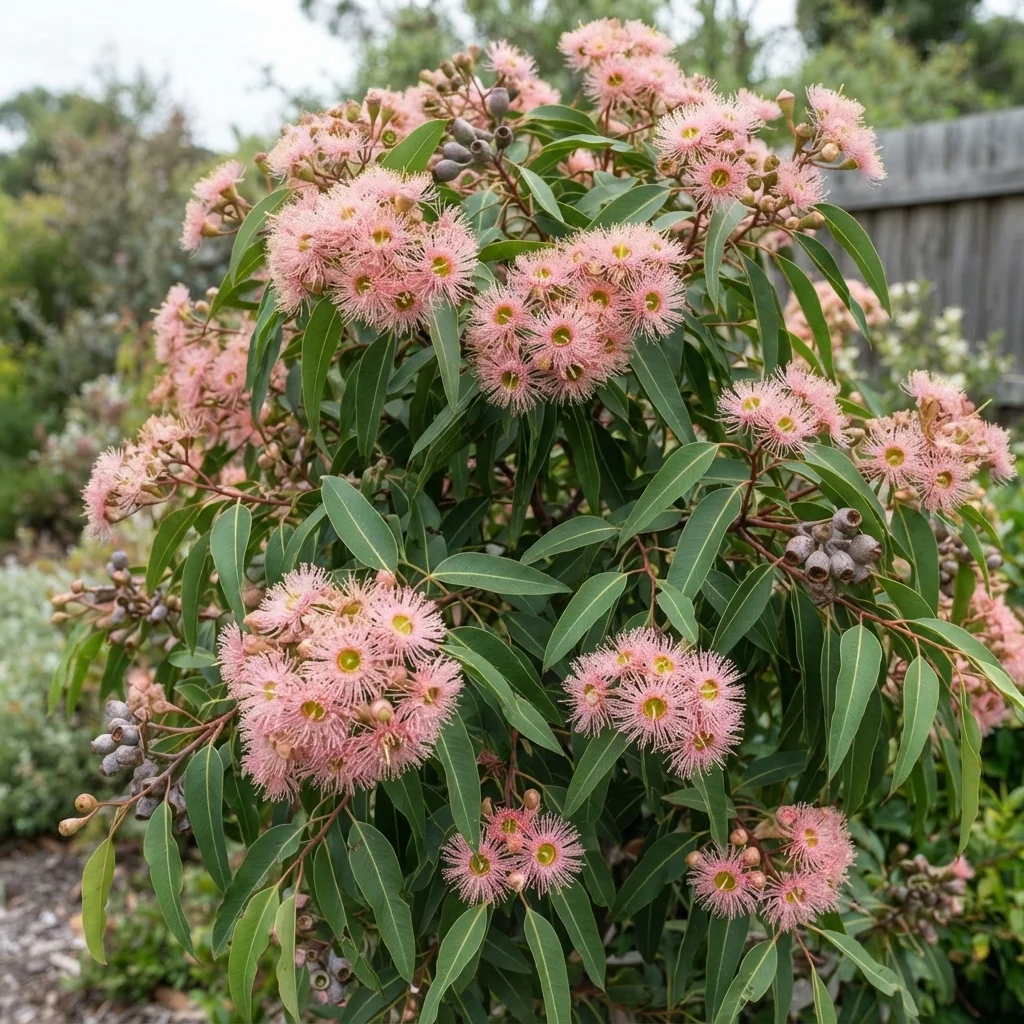
Summer Beauty Flowering Gum
Corymbia x hybrida 'Summer Beauty'
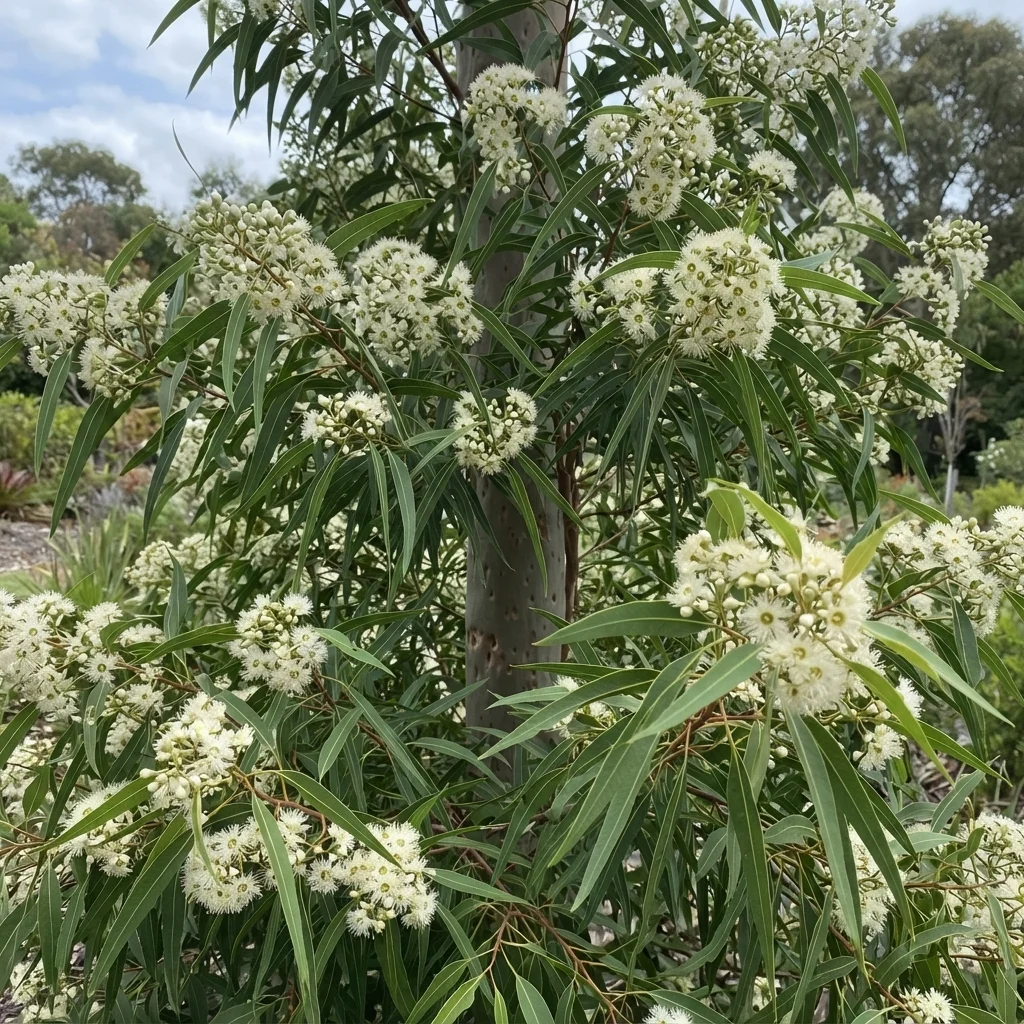
Lemon-scented Gum
Corymbia citriodora
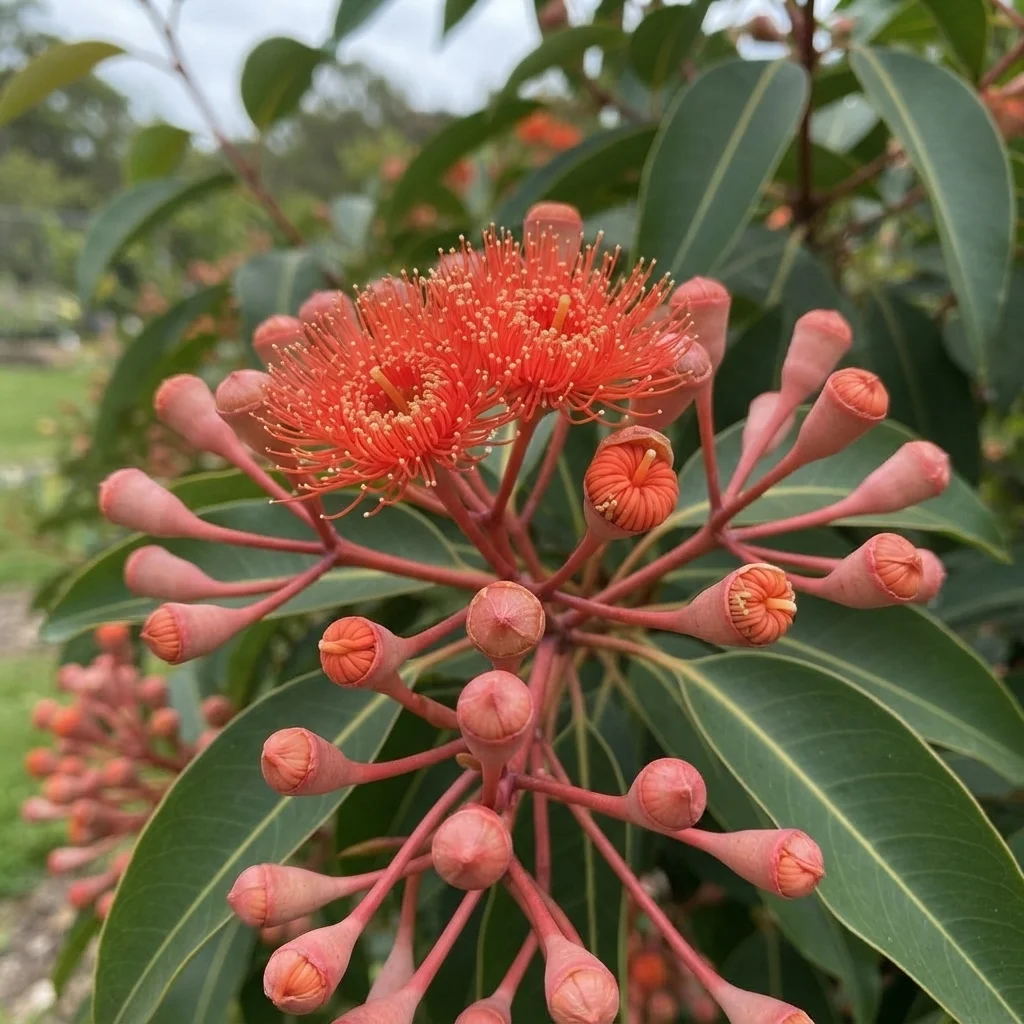
Baby Orange Flowering Gum
Corymbia ficifolia 'Baby Orange'
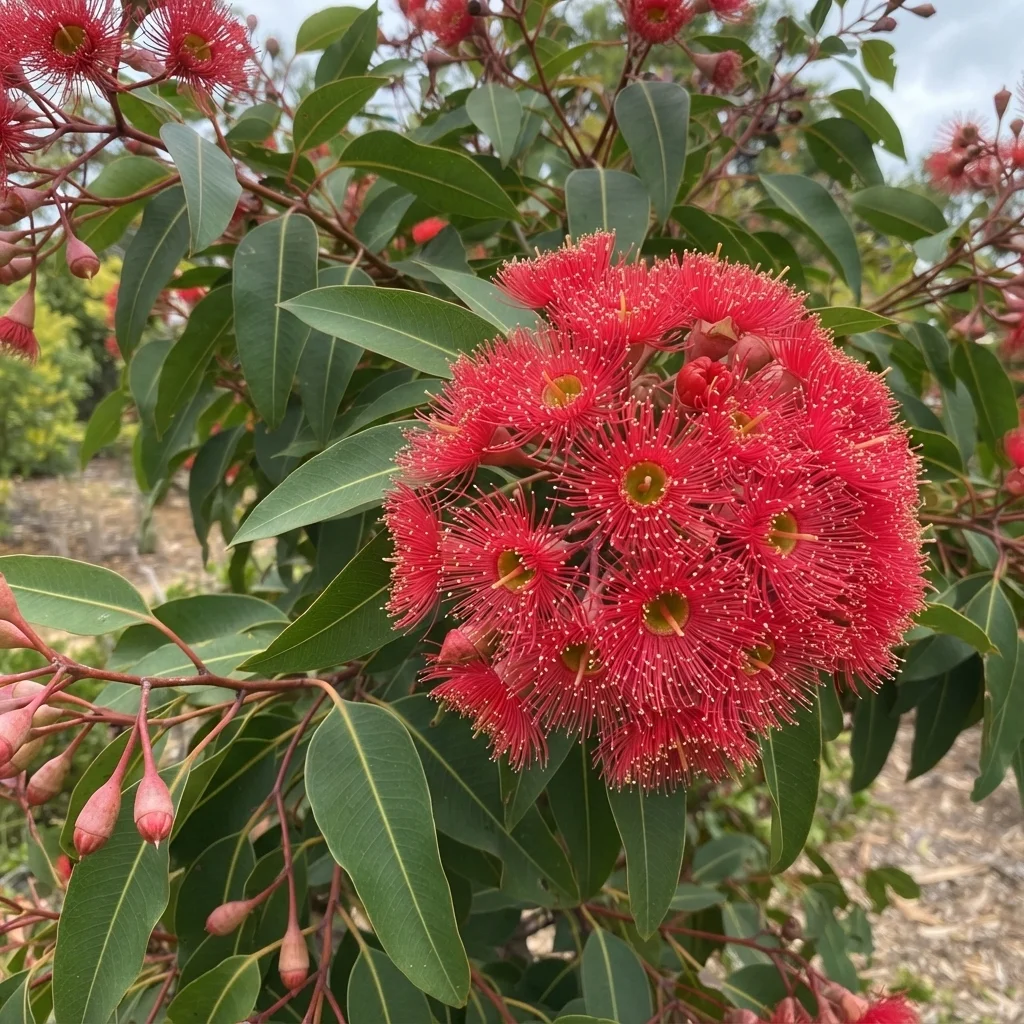
Red Flowering Gum
Corymbia ficifolia
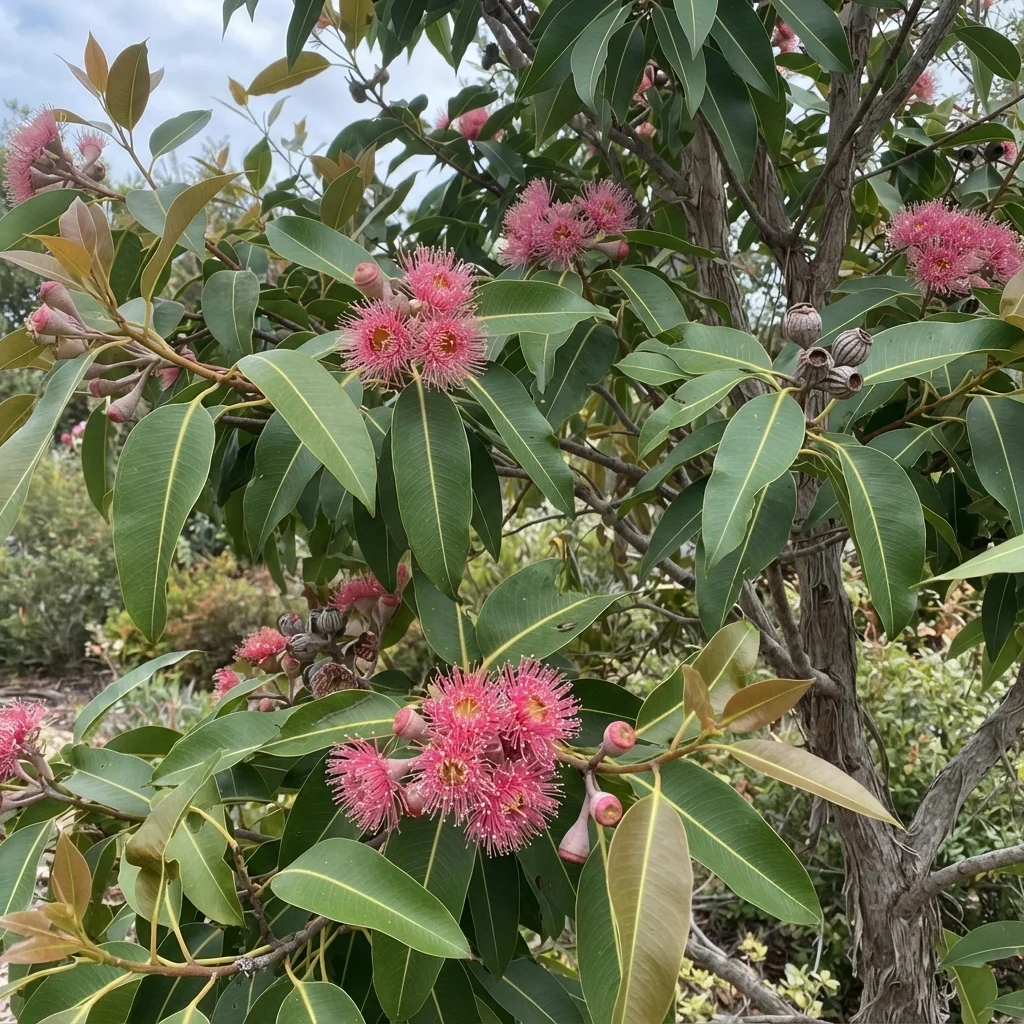
Swamp Bloodwood
Corymbia ptychocarpa
Red-flowering Gum
Corymbia ficifolia 'Fairy Floss'
Keep exploring
Explore the genus
Hardy in your zone?
Grow Calypso Flowering Gum with confidence
See it in a design of your actual yard, get zone-matched care reminders, and track it season by season in your garden journal.