The Story
Plant Bio
Corymbia ptychocarpa is an evergreen tree native to northwestern Australia, characterized by a crooked young habit that matures into an open, spreading crown with weeping branchlets. The trunk is covered in thick, rough, brownish bark with a distinct tessellated texture.
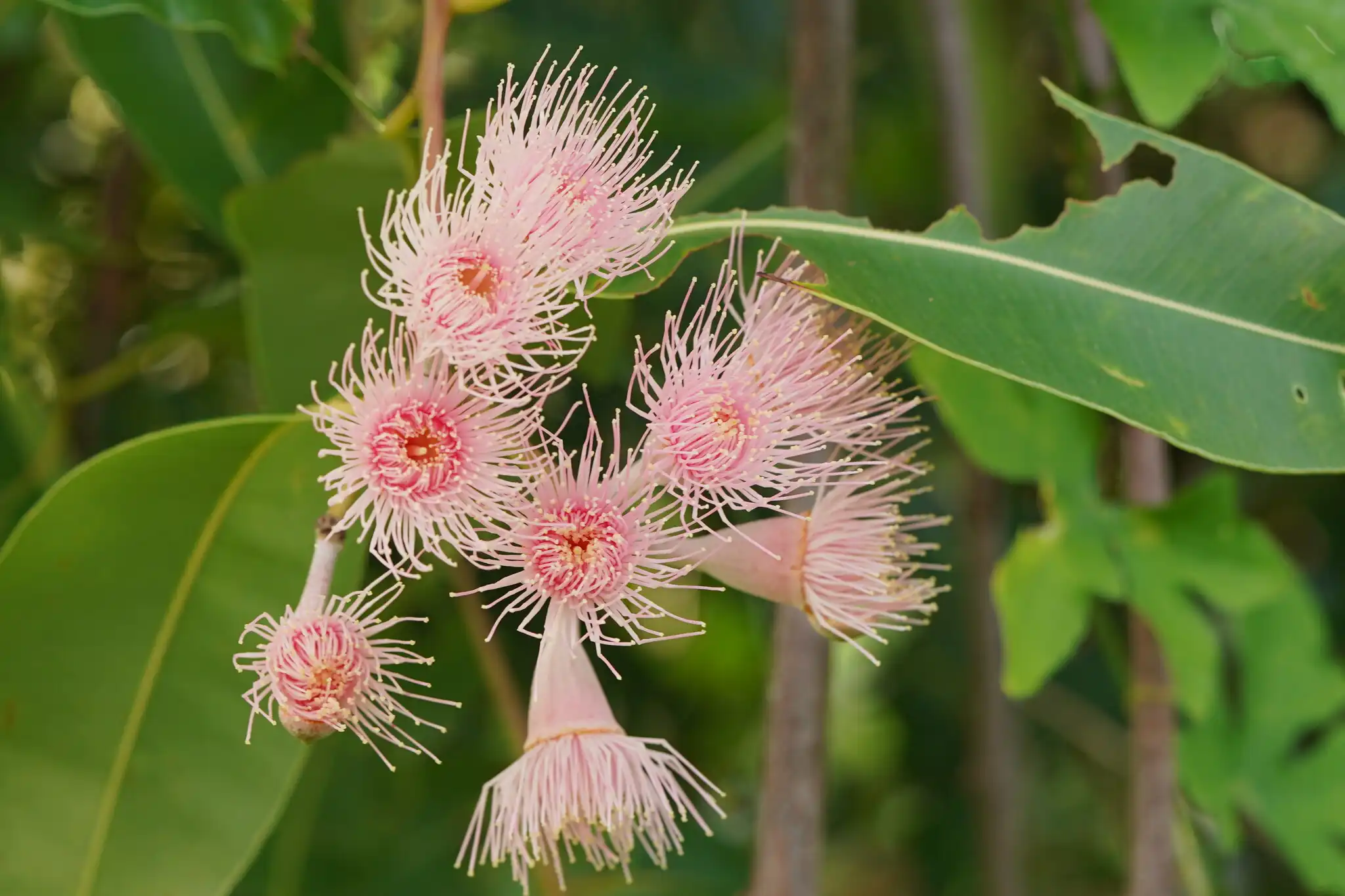
This species features large, leathery, lance-shaped adult leaves with a contrasting pale yellow midrib and a paler underside. Terminal branched clusters of heavily ribbed buds open into dense, nectar-rich flowers that are predominantly pink but can range to deep red.
Uses & Benefits:
Essentials
At a Glance
Plant Type
Tree
Height
472"
Width
315"
Light
Full Sun
Zones
10
Water
Moderate
Humidity
High
Lifespan
Long
Native To
Australia
Toxicity
Non-toxic
Bloom period
Summer – Fall
In flower about 6 months of the year
Planting
How to Grow
- Select a planting site in full sun with sandy loam or well-draining alluvial soil.
- Dig a hole twice the width of the root ball and of equal depth, ensuring the graft union remains above the soil line.
- Water deeply during the establishment phase, then transition to moderate watering while allowing the topsoil to dry between applications.
- Apply a low-phosphorus fertilizer formulated for native Australian plants during the active spring growing season.
Pro Tip
Avoid planting this species in boggy garden depressions; despite its common name, it requires excellent soil drainage to prevent root rot.
Keep It Thriving
Care Guide
Do
- Grow in well-drained sandy or loamy soils to prevent waterlogging.
- Protect young trees from frost and freezing temperatures below 32 degrees Fahrenheit.
- Use low-phosphorus fertilizers to avoid root toxicity.
Don't
- Do not plant in heavy clay or poorly draining boggy areas.
- Do not prune heavily into old, leafless wood as the tree fails to resprout from bare timber.
- Do not over-fertilize, which leads to weak structural growth and root damage.
Seasonal Care Calendar
| Task | Jan | Feb | Mar | Apr | May | Jun | Jul | Aug | Sep | Oct | Nov | Dec |
|---|---|---|---|---|---|---|---|---|---|---|---|---|
| Fertilize | ||||||||||||
| Mulch | ||||||||||||
| Pest Check | ||||||||||||
| Prune |
Watch Out For
Pests & Diseases
Common Pests
Common Diseases
In the Garden
Landscape Uses & Companions
Landscape Uses
Companion Plants
Multiply
Propagation Methods
Good to Know
Common Questions
Swamp Bloodwood questions
What zones can Swamp Bloodwood grow in?
Swamp Bloodwood is hardy in USDA Zone 10. Inside that range it survives winter in the ground; outside it, grow it as an annual or a container plant you protect.
When does Swamp Bloodwood bloom?
Swamp Bloodwood typically blooms in summer through fall. Exact timing shifts a week or two with your zone — Sow's bloom calendar maps it to your garden.
Does Swamp Bloodwood need full sun?
Swamp Bloodwood does best in full sun (6+ hours).
Is Swamp Bloodwood drought tolerant?
Yes — once established (usually after the first full season), Swamp Bloodwood handles dry spells with minimal watering. Water deeply its first year to build the root system that makes that possible.
More Corymbia to compare
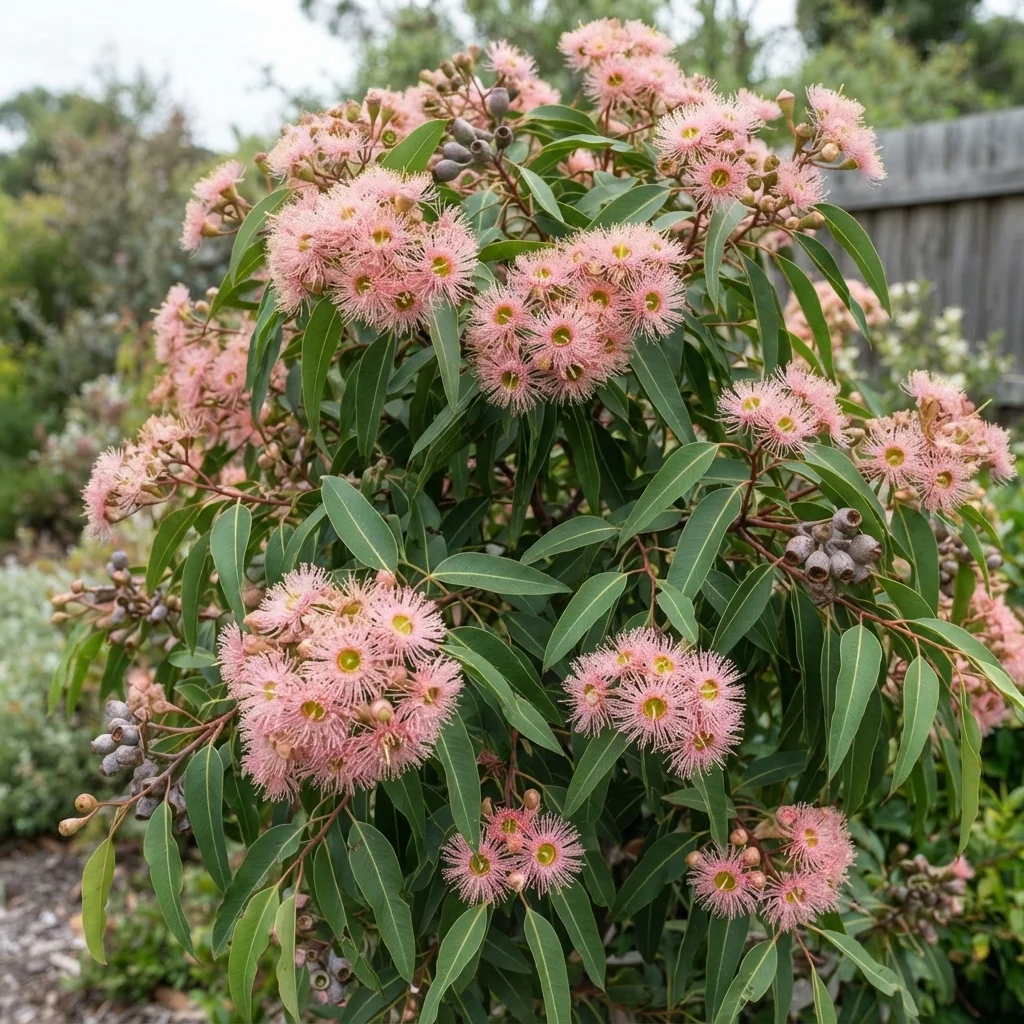
Summer Beauty Flowering Gum
Corymbia x hybrida 'Summer Beauty'
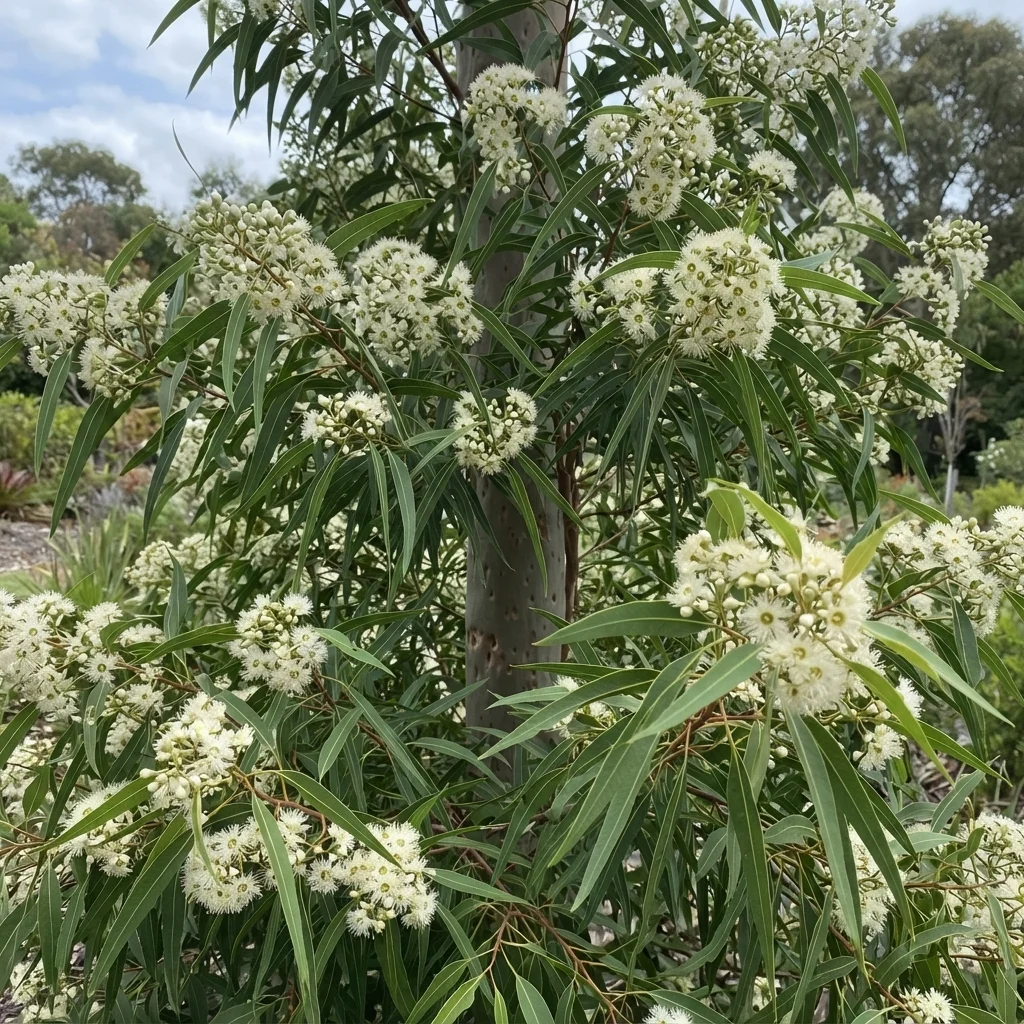
Lemon-scented Gum
Corymbia citriodora
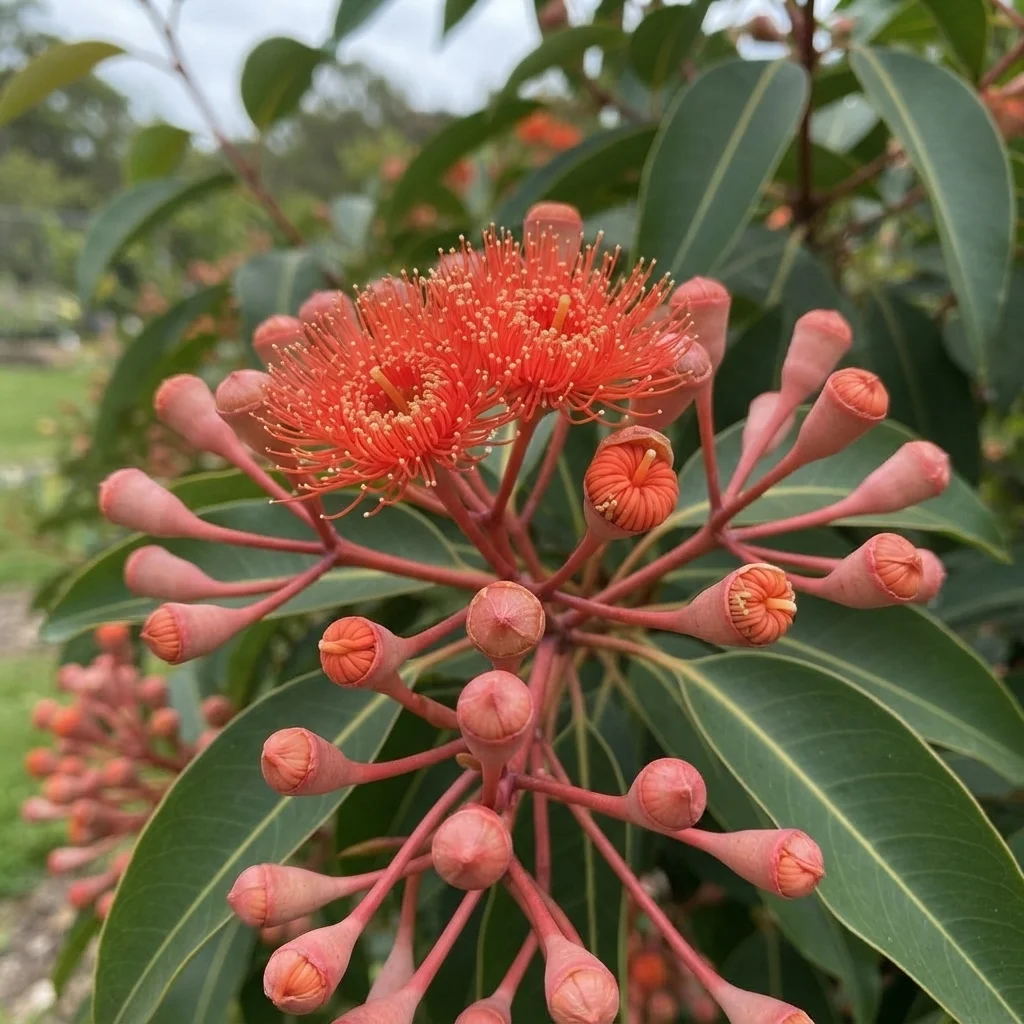
Baby Orange Flowering Gum
Corymbia ficifolia 'Baby Orange'
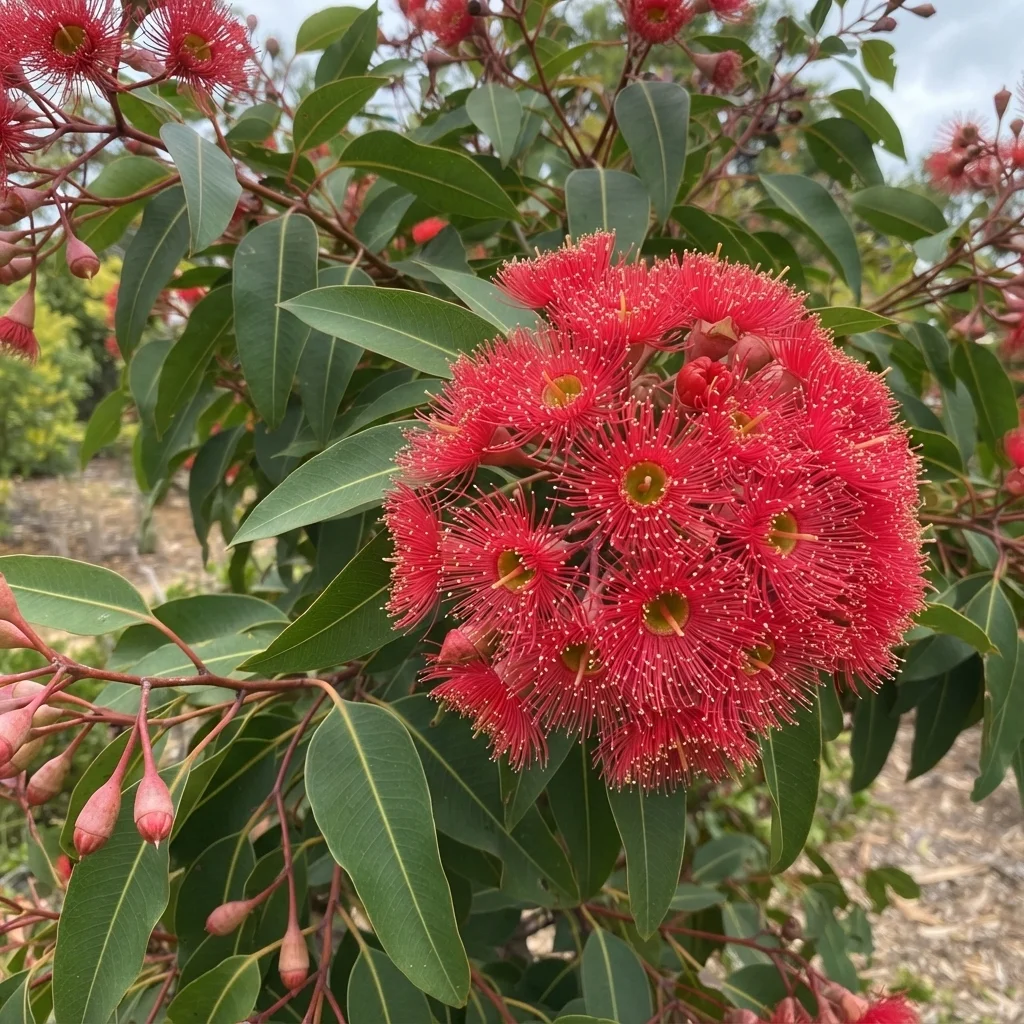
Red Flowering Gum
Corymbia ficifolia
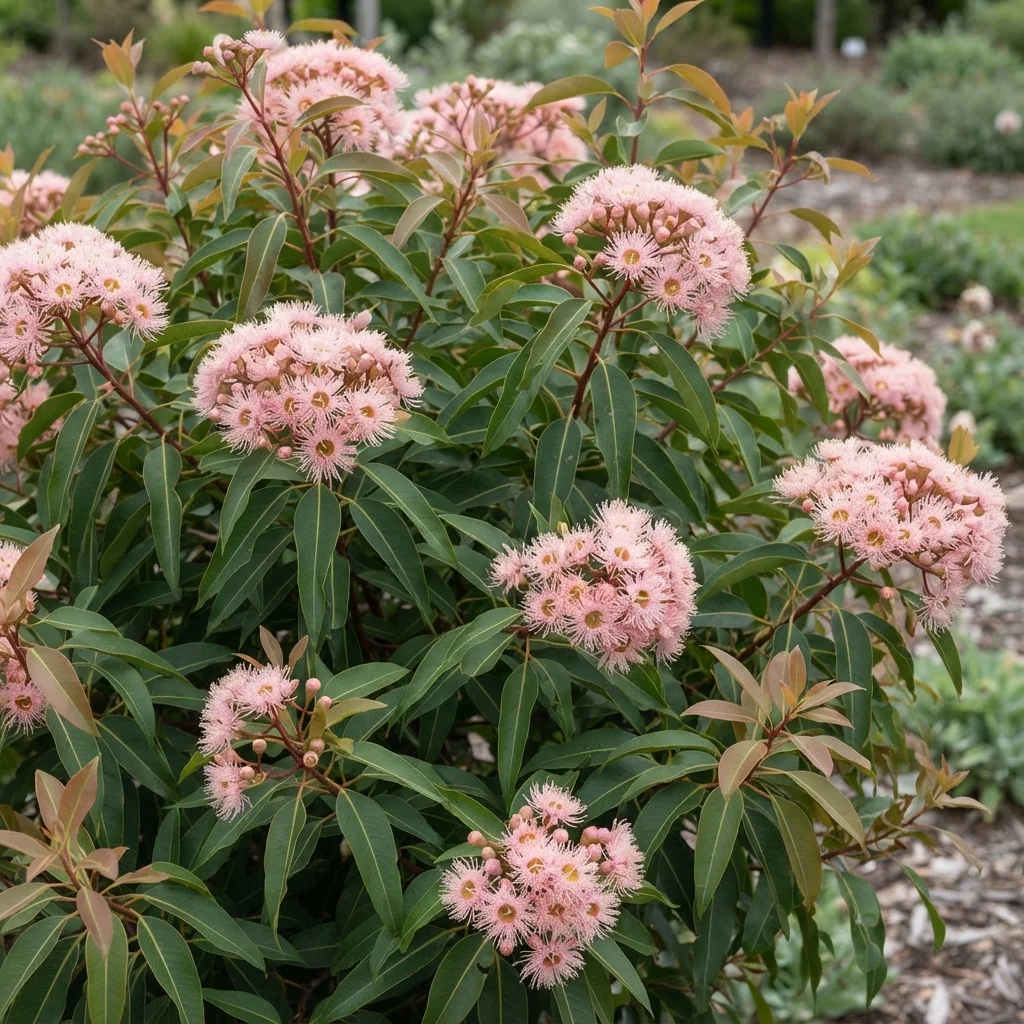
Red-flowering Gum
Corymbia ficifolia 'Fairy Floss'
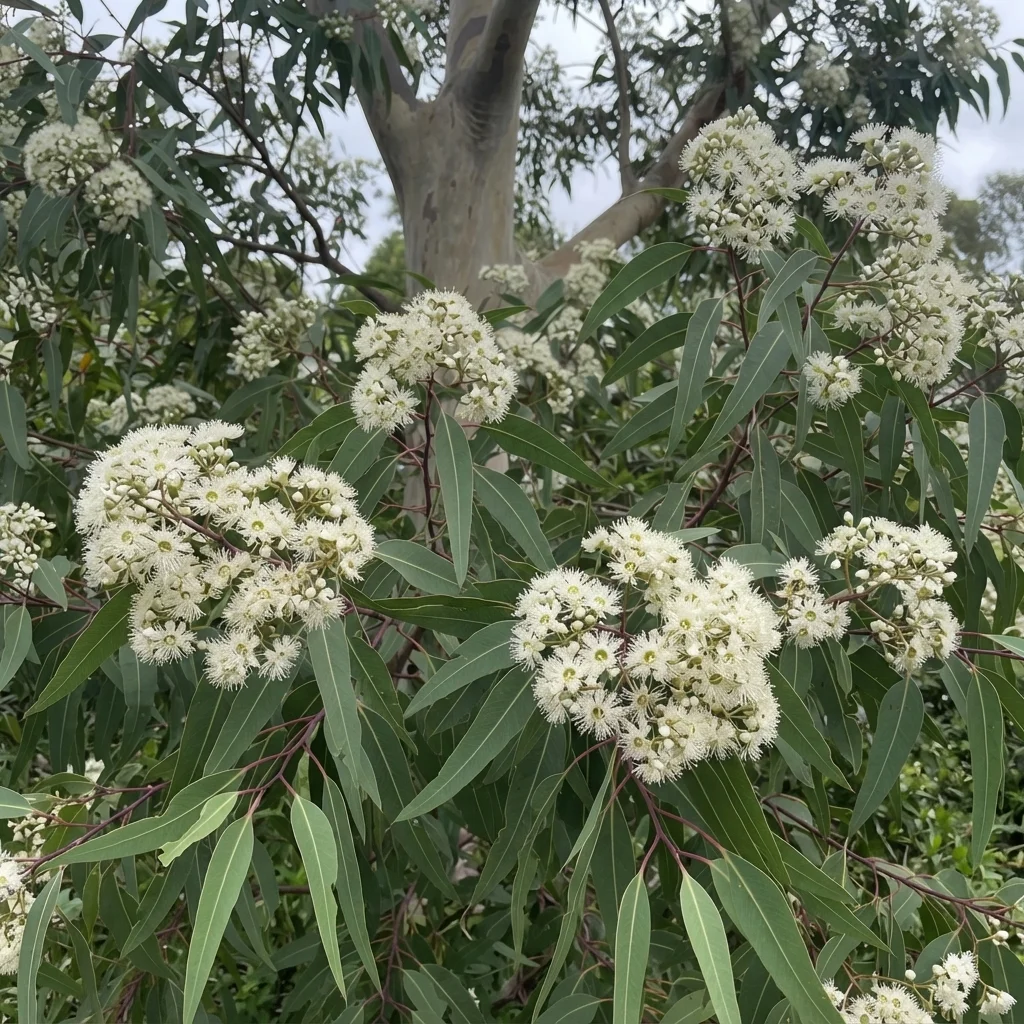
Spotted Gum
Corymbia maculata
Keep exploring
Explore the genus
Hardy in your zone?
Grow Swamp Bloodwood with confidence
See it in a design of your actual yard, get zone-matched care reminders, and track it season by season in your garden journal.