The Story
Plant Bio
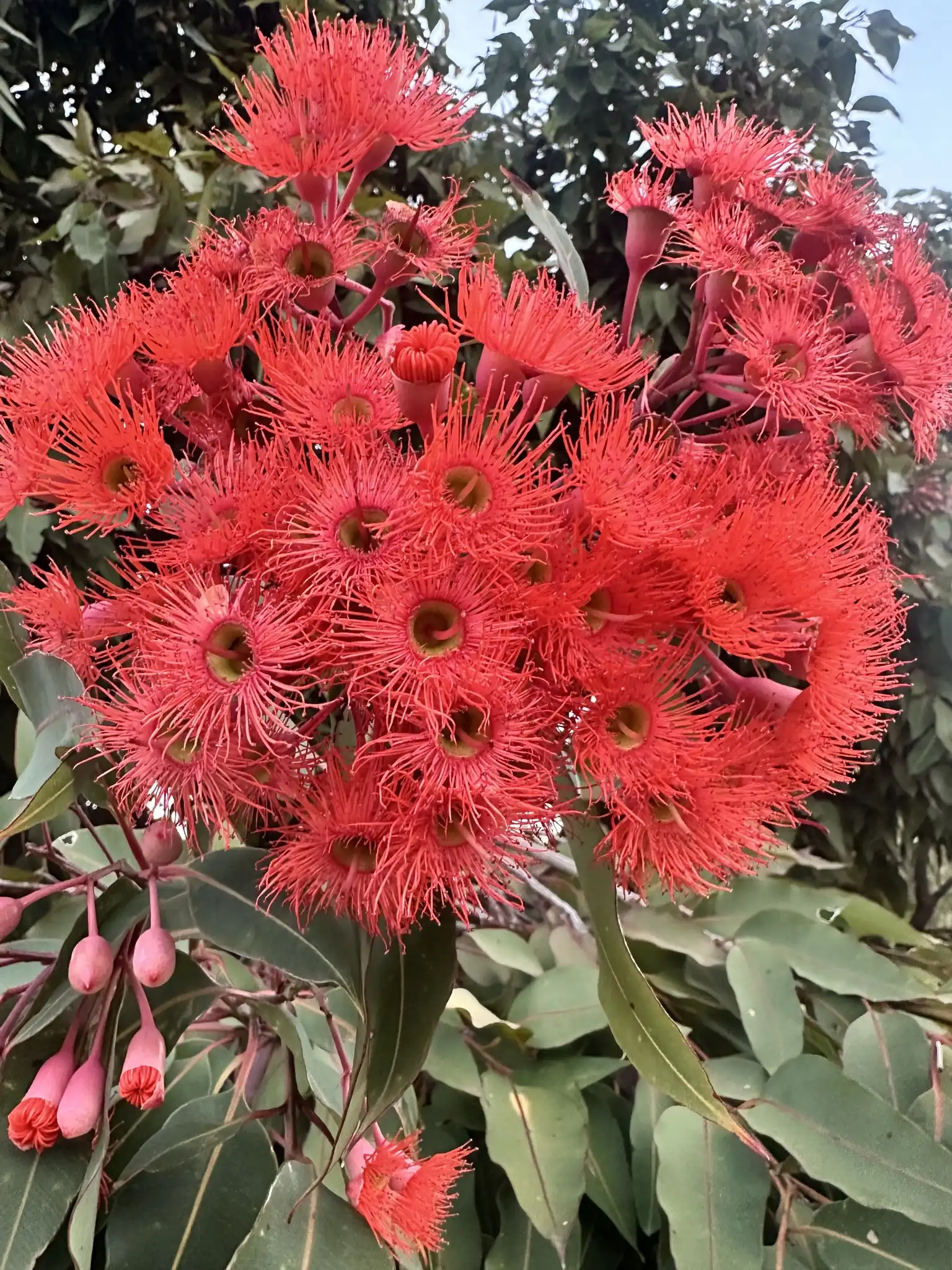
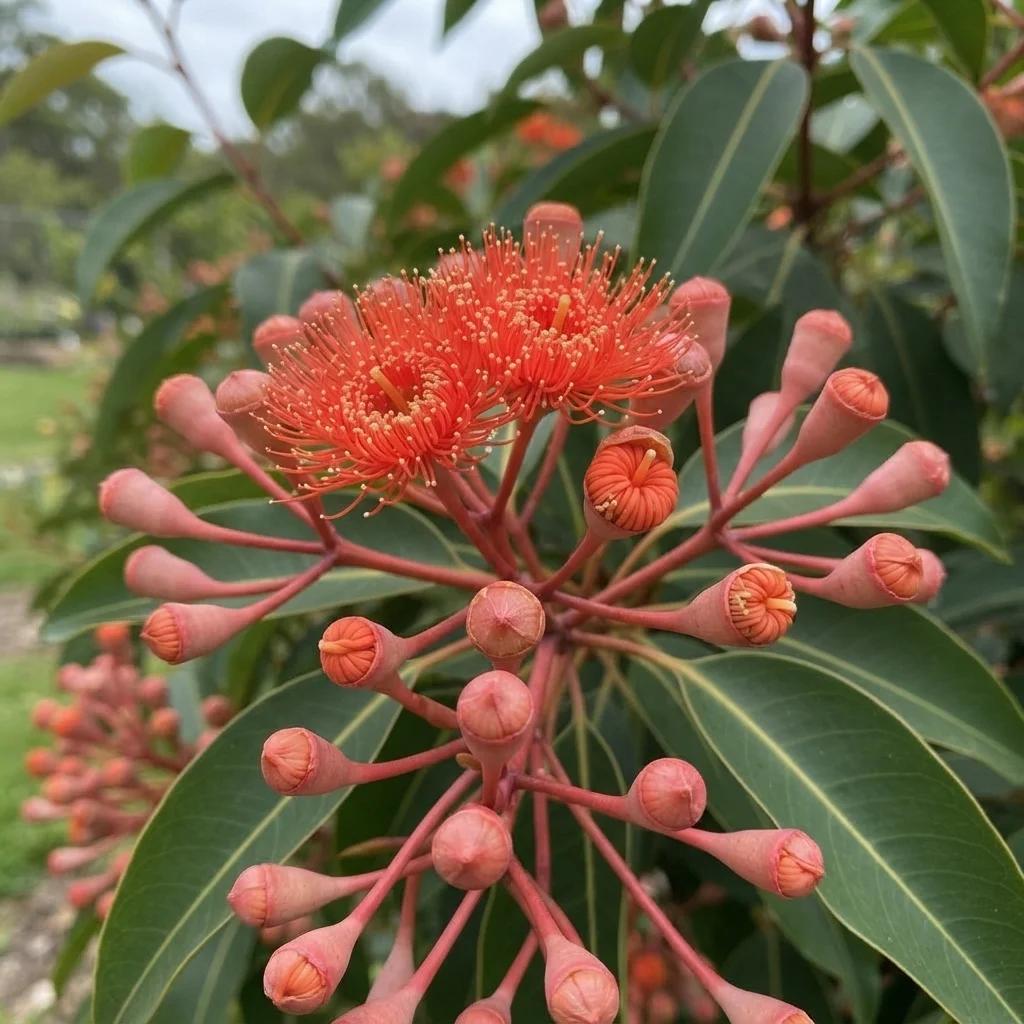
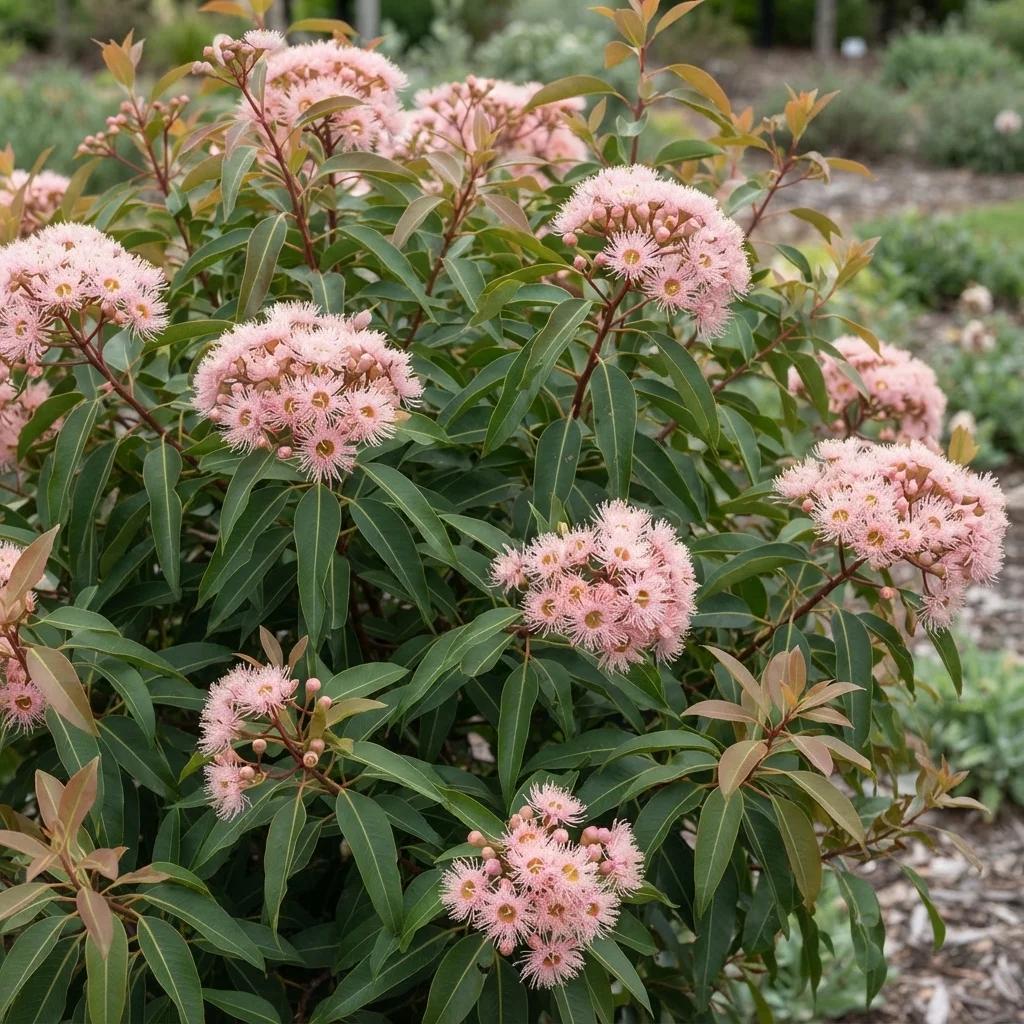
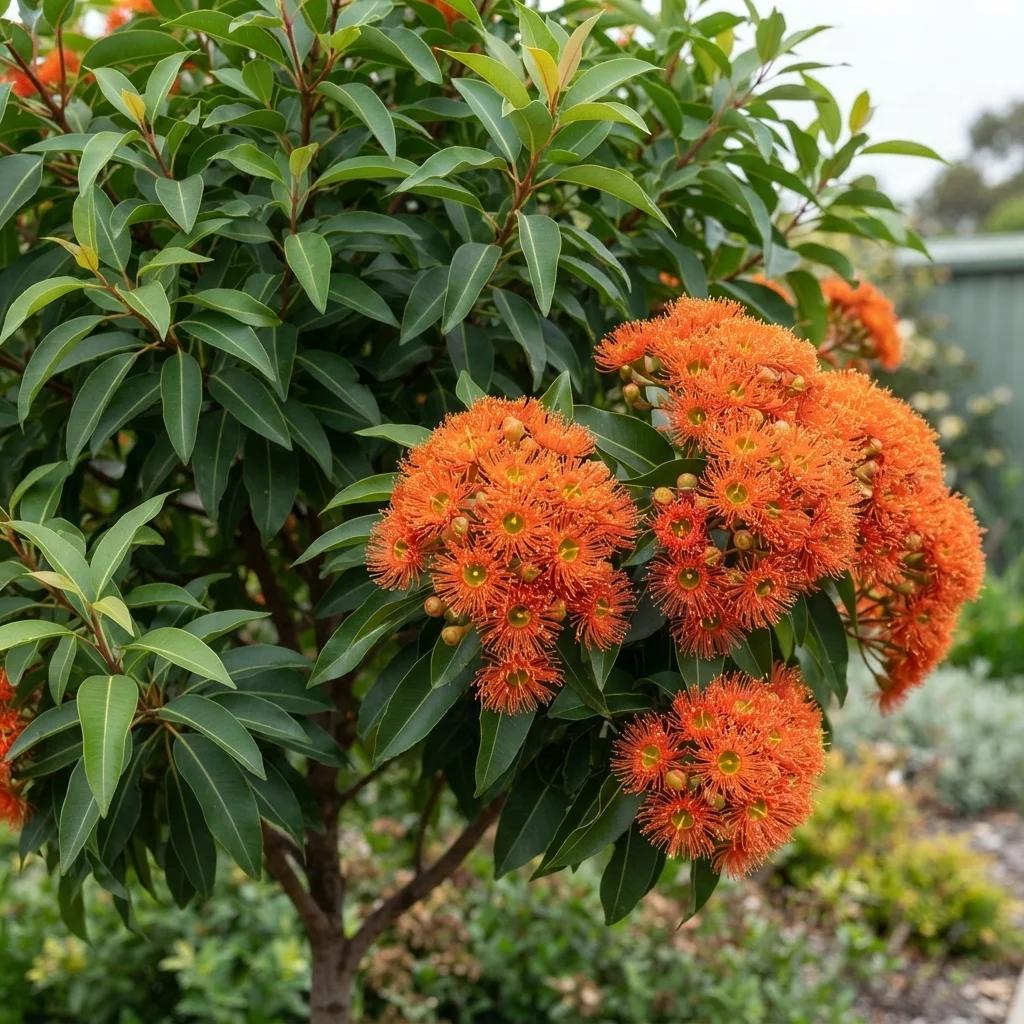
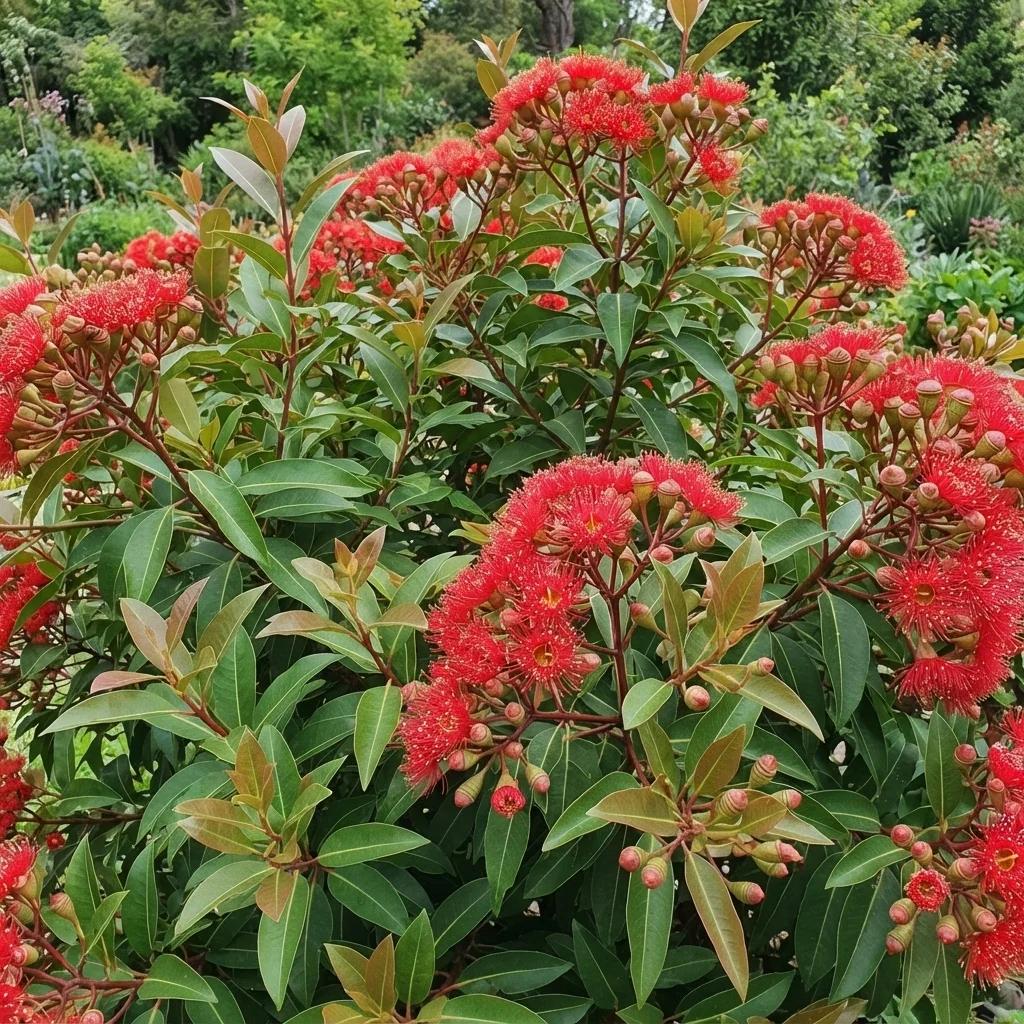
Corymbia ficifolia, the red flowering gum, is an evergreen Australian tree reaching fifteen to fifty feet in height, characterized by a dense, rounded canopy and rough, fibrous bark. The thick, dark green adult leaves provide a heavy backdrop for the massive terminal clusters of bright red, orange, or pink flowers that cover the outer canopy during summer.
While wild-type trees display variable flower colors from seed, named selections are grafted onto robust rootstocks to guarantee predictable, intense coloration and improved soil adaptability. The showy, nectar-rich blooms lack true petals, relying instead on dense, colorful stamens that draw hummingbirds throughout the blooming season.
Uses & Benefits:
Essentials
At a Glance
Plant Type
Tree
Height
590"
Width
393"
Light
Full Sun
Zones
9, 10
Water
Low
Humidity
Low
Lifespan
Long-lived
Native To
Western Australia
Toxicity
Non-toxic
Marketplace
Where to Buy
Shipping costs Year-round shipping Free shipping
Planting
How to Grow
- Select a planting site in full sun with sandy loam, gravelly loam, or exceptionally well-drained soil.
- Dig a hole twice as wide as the root ball but no deeper, ensuring the graft union remains above the final soil level.
- Water deeply to settle the soil, then establish a strict watering schedule that allows the soil to dry completely between waterings.
- Apply a low-phosphorus, slow-release fertilizer formulated for native plants once annually after flowering.
Pro Tip
Always plant grafted specimens with the graft union positioned clearly above the soil line, and avoid planting in heavy clay soils where poor drainage triggers fatal Phytophthora root rot.
Keep It Thriving
Care Guide
Do
- Ensure the soil drains rapidly to prevent root rot.
- Protect young trees from hard frosts below 28°F (-2°C).
- Prune lightly immediately after flowering to maintain shape.
Don't
- Do not prune heavily into old, leafless wood as it will fail to shoot back.
- Do not use standard high-phosphorus fertilizers.
- Do not overwater or plant in heavy, waterlogged clay.
Seasonal Care Calendar
| Task | Jan | Feb | Mar | Apr | May | Jun | Jul | Aug | Sep | Oct | Nov | Dec |
|---|---|---|---|---|---|---|---|---|---|---|---|---|
| Fertilize | ||||||||||||
| Pest Check | ||||||||||||
| Prune | ||||||||||||
| Winter Prep |
Watch Out For
Pests & Diseases
Common Pests
Common Diseases
In the Garden
Landscape Uses & Companions
Landscape Uses
Companion Plants
Multiply
Propagation Methods
Good to Know
Common Questions
Red Flowering Gum questions
What zones can Red Flowering Gum grow in?
Red Flowering Gum is hardy in USDA Zones 9–10. Inside that range it survives winter in the ground; outside it, grow it as an annual or a container plant you protect.
When does Red Flowering Gum bloom?
Red Flowering Gum typically blooms in summer through fall. Exact timing shifts a week or two with your zone — Sow's bloom calendar maps it to your garden.
Does Red Flowering Gum need full sun?
Red Flowering Gum does best in full sun (6+ hours).
Is Red Flowering Gum drought tolerant?
Yes — once established (usually after the first full season), Red Flowering Gum handles dry spells with minimal watering. Water deeply its first year to build the root system that makes that possible.
More Corymbia to compare
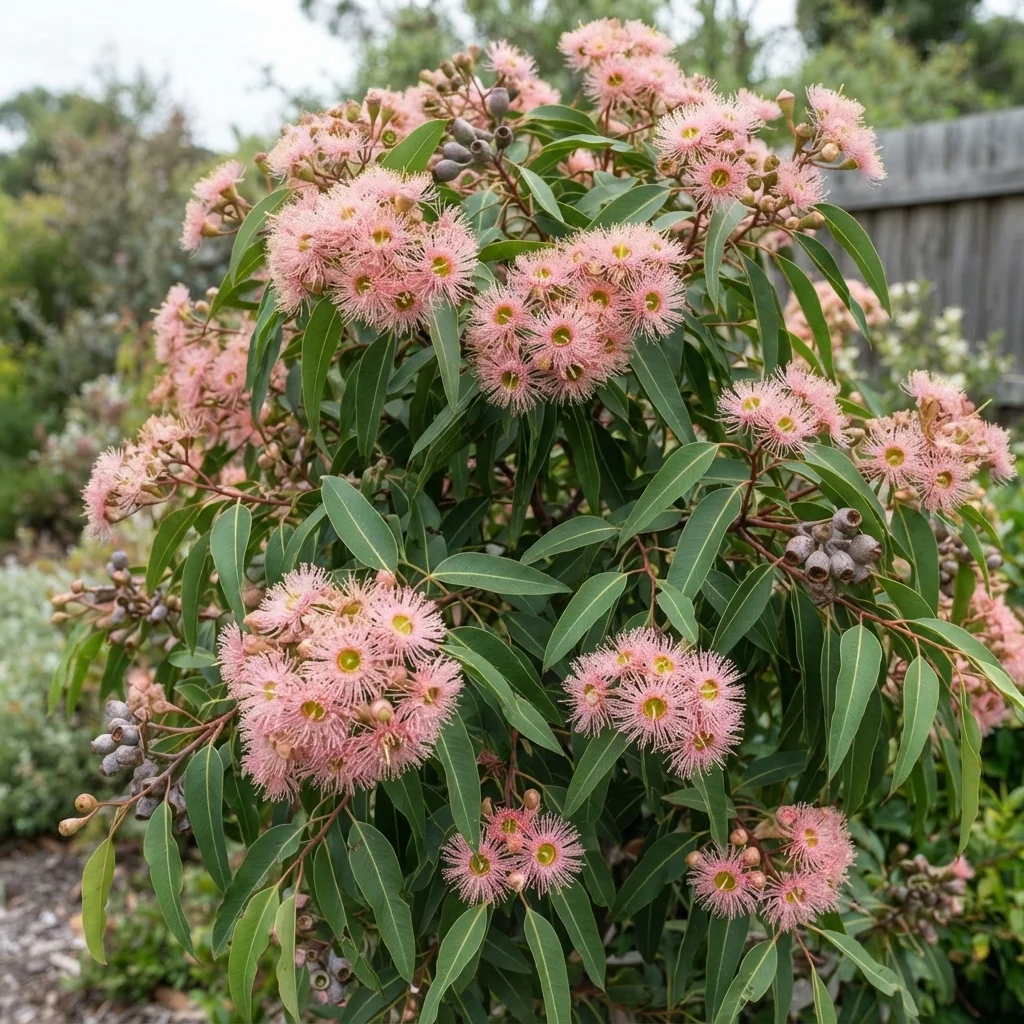
Summer Beauty Flowering Gum
Corymbia x hybrida 'Summer Beauty'
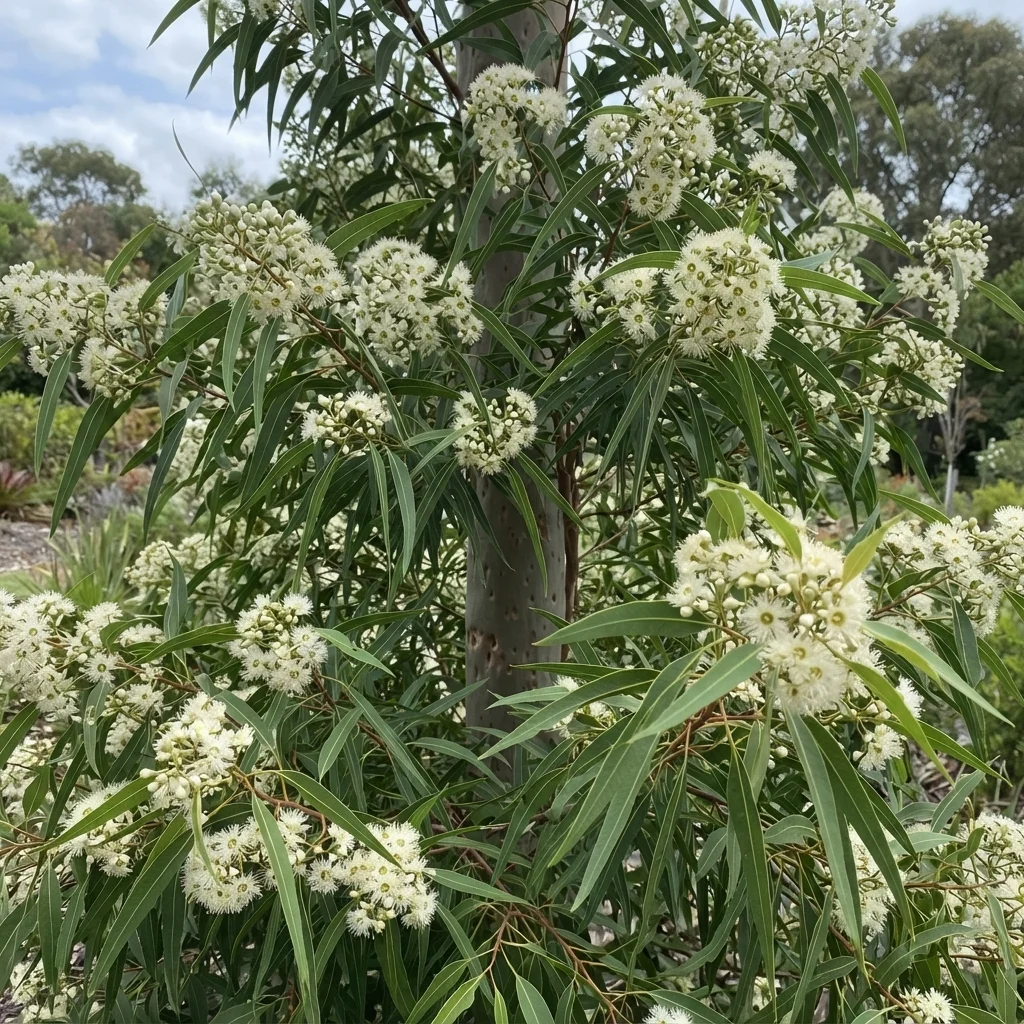
Lemon-scented Gum
Corymbia citriodora
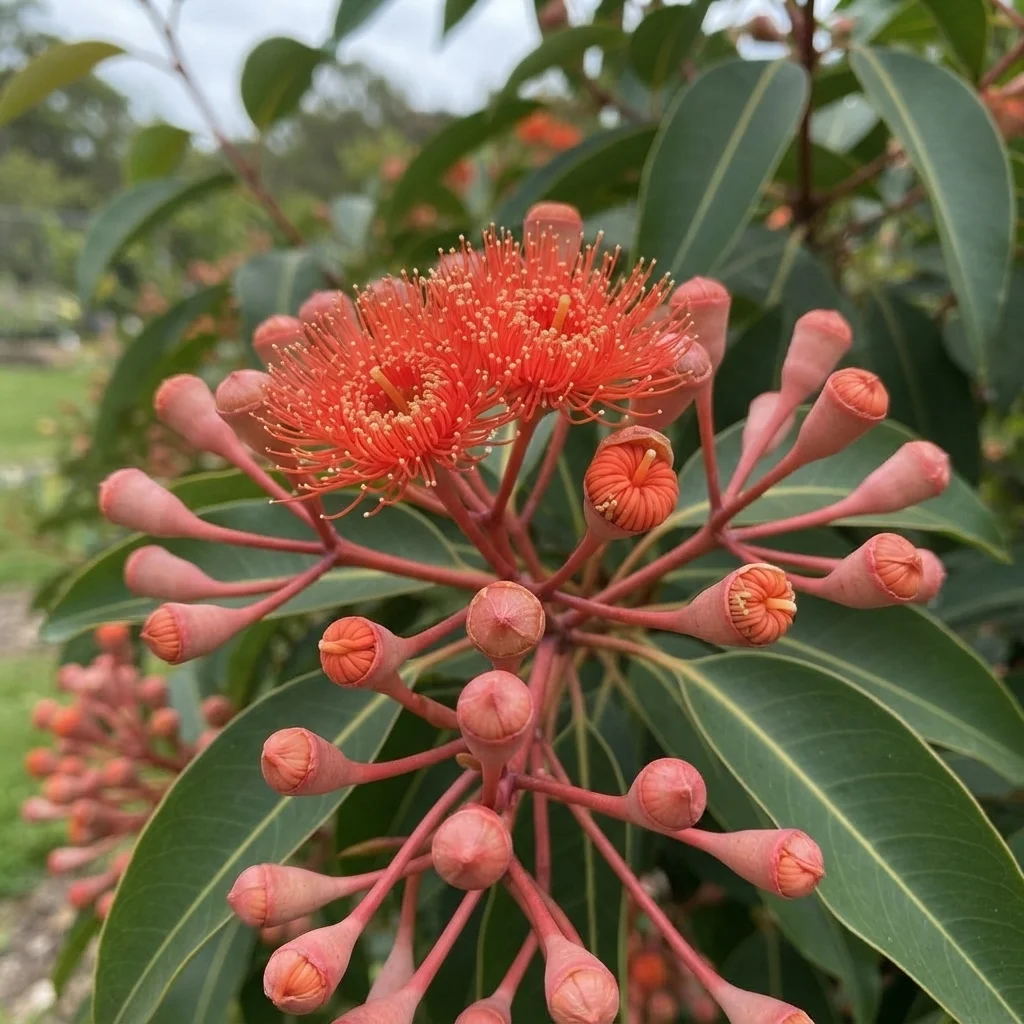
Baby Orange Flowering Gum
Corymbia ficifolia 'Baby Orange'
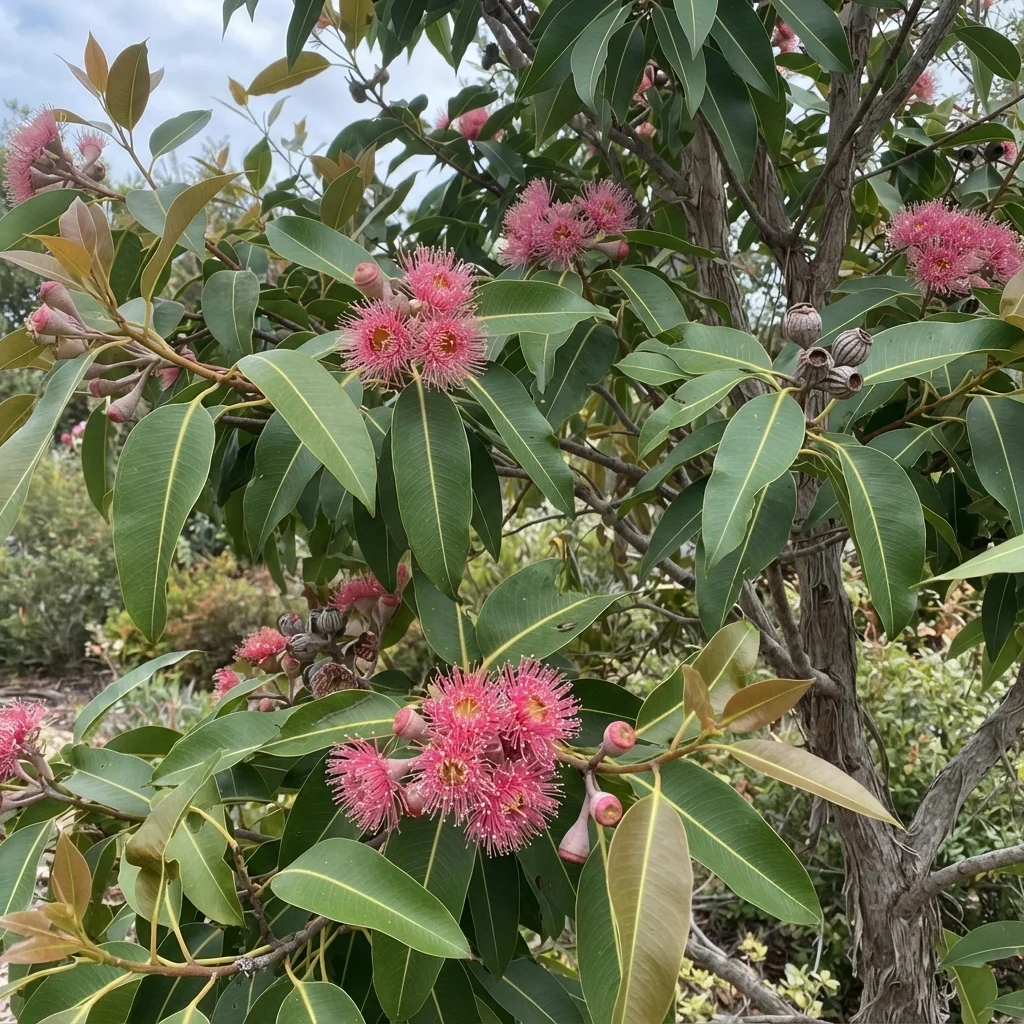
Swamp Bloodwood
Corymbia ptychocarpa
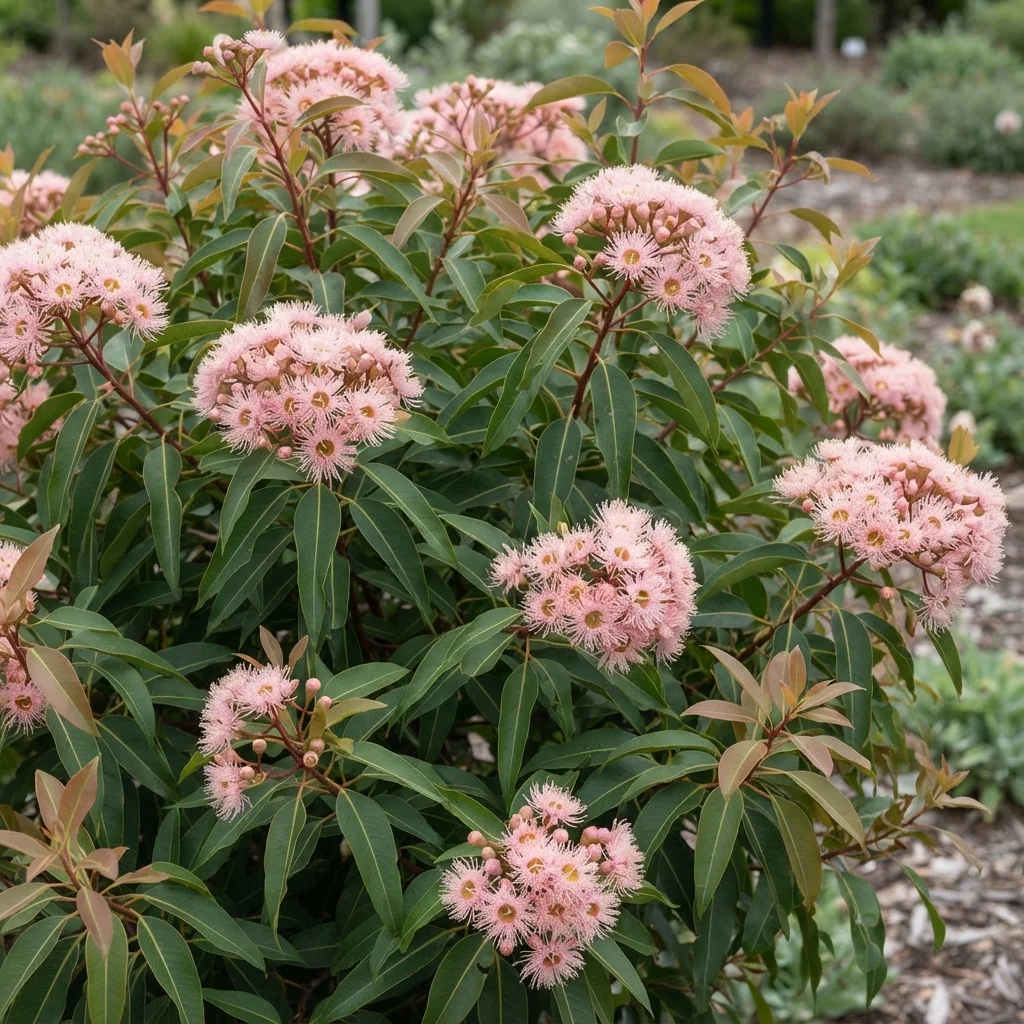
Red-flowering Gum
Corymbia ficifolia 'Fairy Floss'
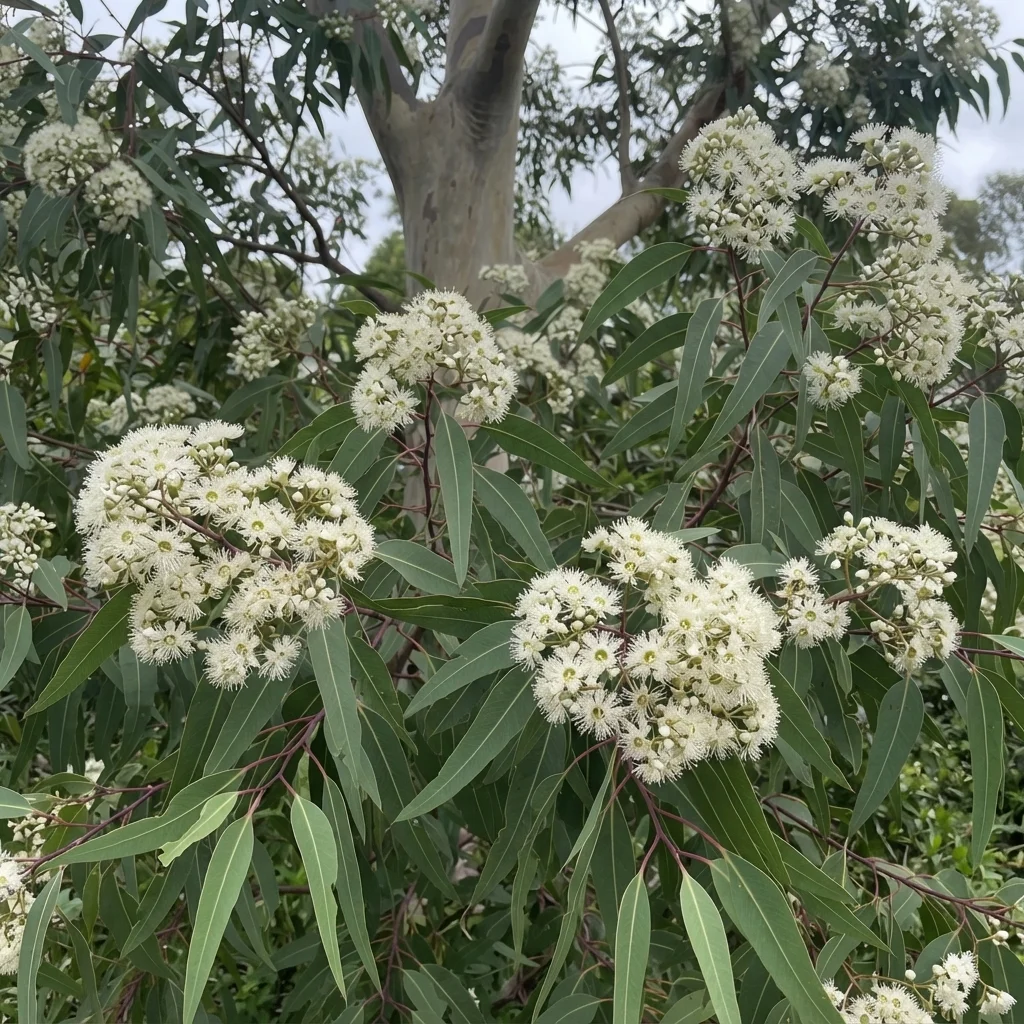
Spotted Gum
Corymbia maculata
Keep exploring
Explore the genus
Hardy in your zone?
Grow Red Flowering Gum with confidence
See it in a design of your actual yard, get zone-matched care reminders, and track it season by season in your garden journal.