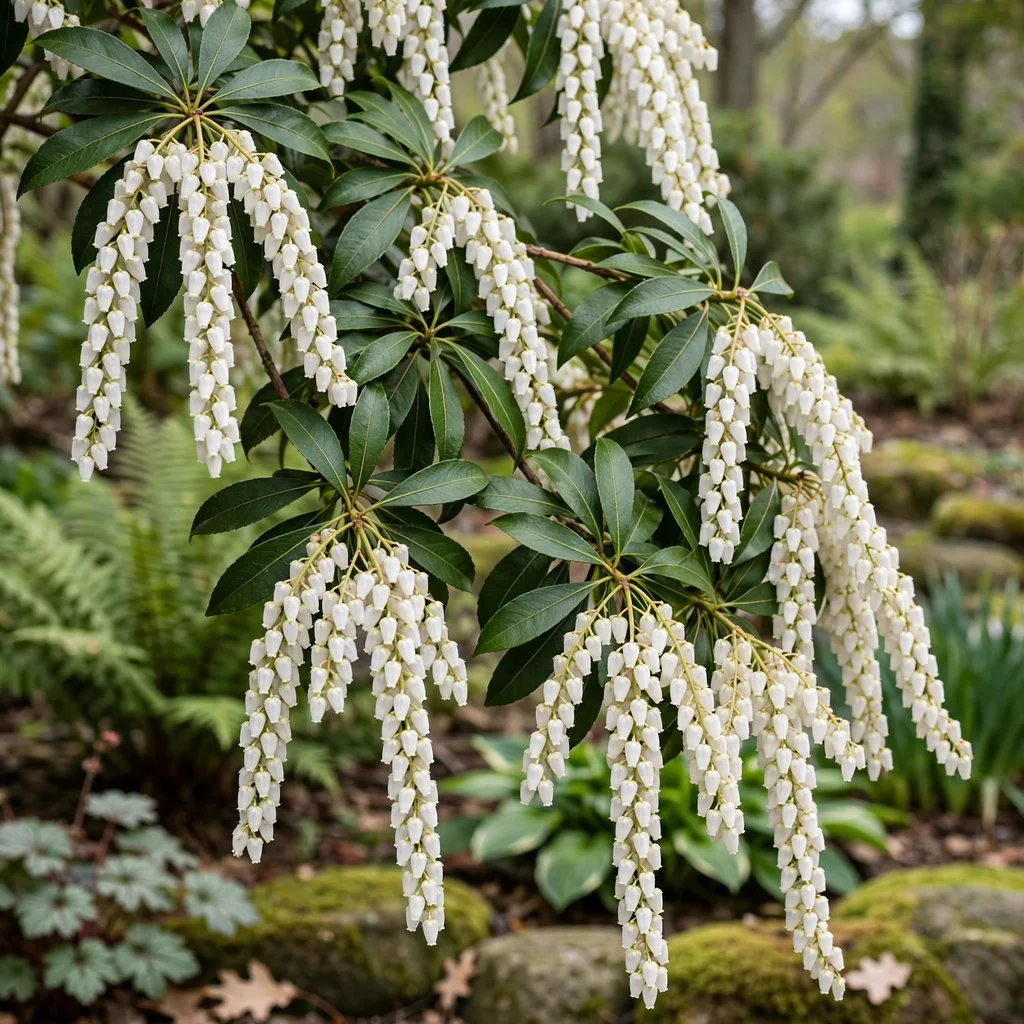
Species
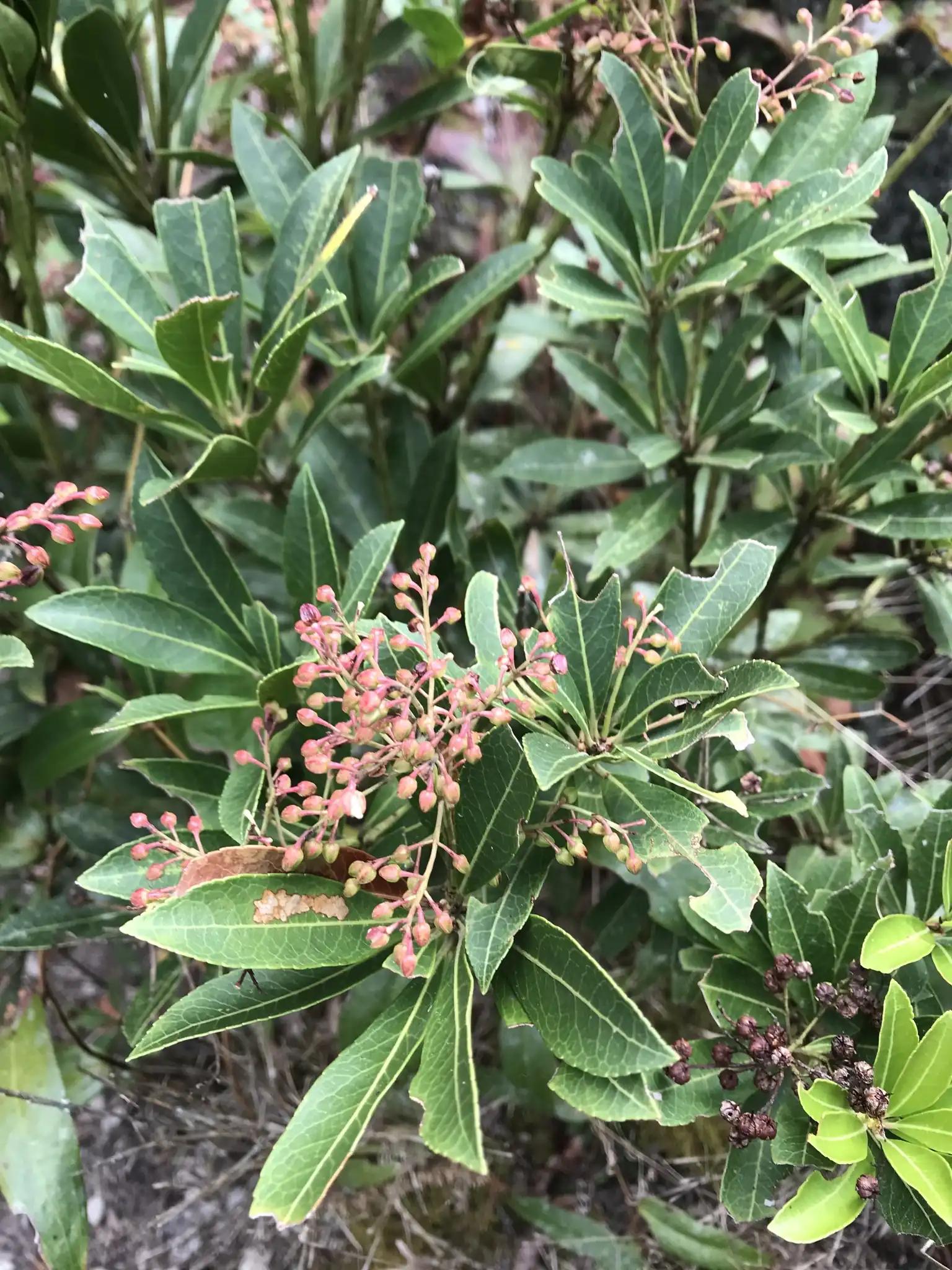 Pieris japonicaJapanese Pieris
12 other cultivars
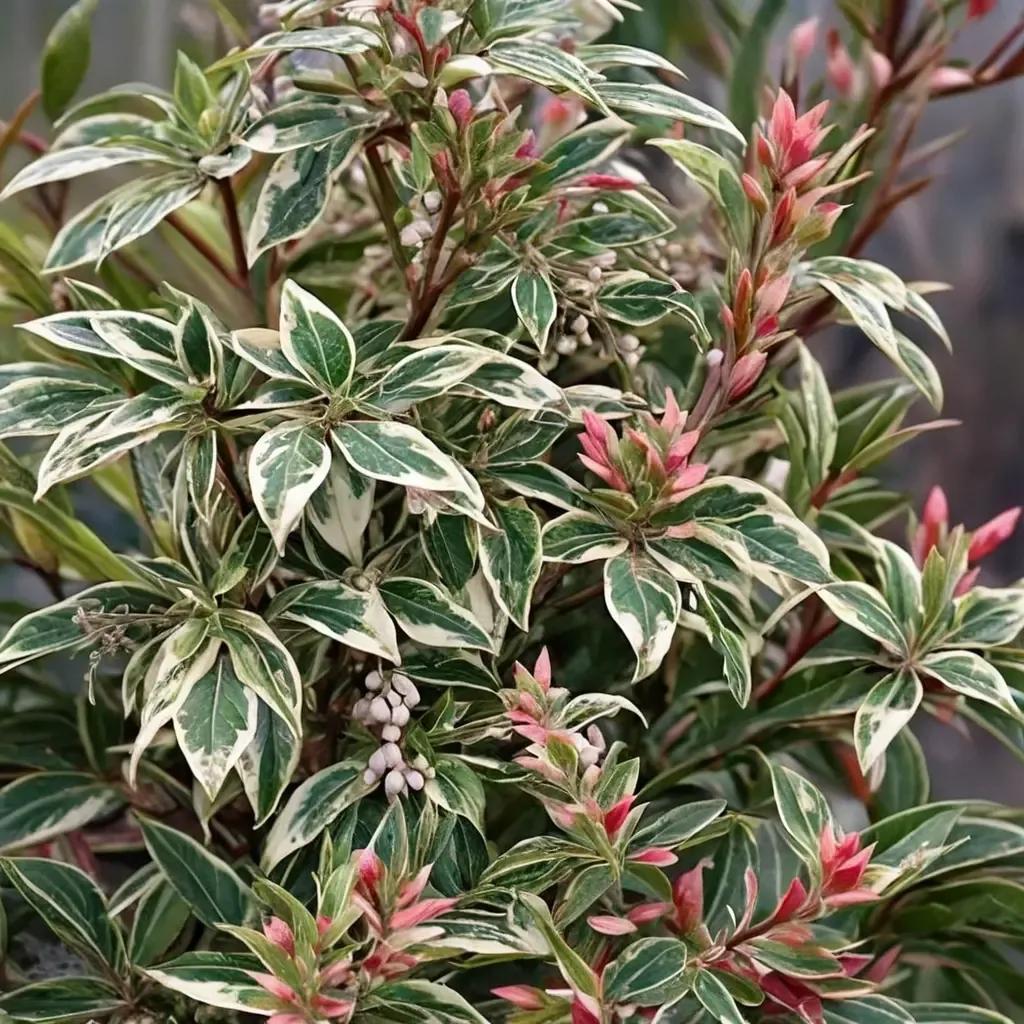 ‘Little Heath’Little Heath Pieris Japanese Pieris
 ‘Flaming Silver’Flaming Silver Pieris Japanese Pieris
 ‘Mountain Fire’Mountain Fire Andromeda
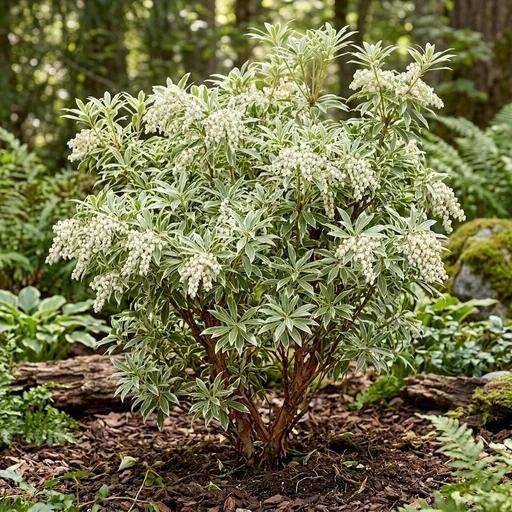 ‘Mountain Snow’Mountain Snow Pieris
 ‘Cavatine’Cavatine Lily-of-the-Valley Bush
 ‘Scarlet O’Scarlet O'Hara Japanese Andromeda
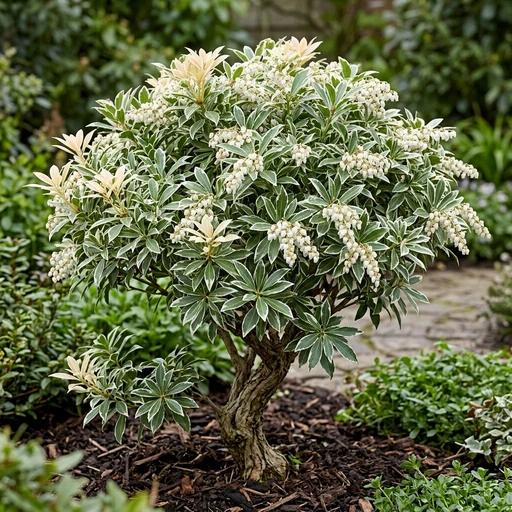 ‘Purity’Purity Japanese Andromeda
 ‘Dorothy Wycoff’Dorothy Wycoff Japanese Andromeda
 ‘Katsura’Katsura Japanese Pieris
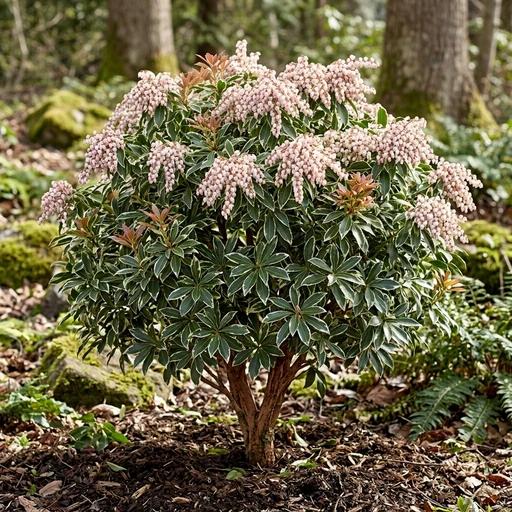 ‘Brouwer's Beauty’Brouwer's Beauty Andromeda
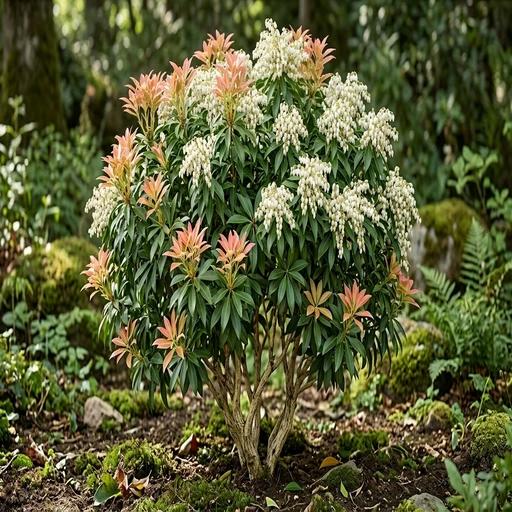 ‘Compacta’Compact Japanese Pieris
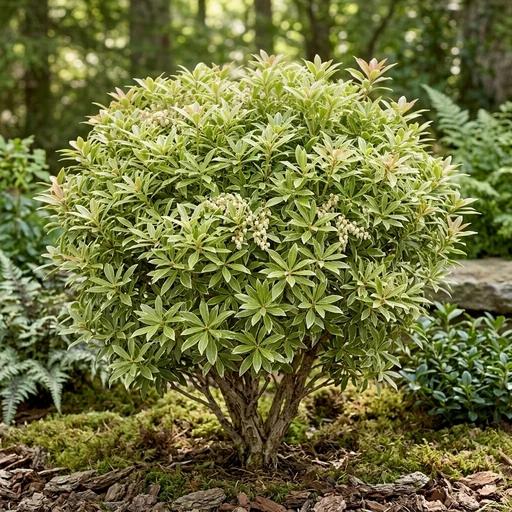 ‘Prelude’Prelude Andromeda
The Story
Plant Bio
Pieris japonica is a broadleaf evergreen shrub native to East Asia, valued for its dense, upright habit and glossy, leathery foliage clustered at the branch tips. In early spring, the plant produces abundant, urn-shaped flowers that hang in long, pendulous clusters resembling lily-of-the-valley blooms.
'Dodd's Pearl Falls' is an unpatented seed selection raised by the Dodd family, distinguished by its exceptionally long, cascading white flower panicles. The pure white blossoms drape heavily over the dark green foliage in a dramatic, fountain-like display.
Uses & Benefits:
Essentials
At a Glance
Plant Type
Shrub
Height
96"
Width
60"
Light
Partial Sun, Shade
Zones
5, 6, 7, 8, 9
Water
Regular
Humidity
Moderate
Lifespan
Long-lived
Native To
East Asia
Toxicity
Highly toxic to humans and animals
Bloom period
Early spring – Mid-spring
In flower about 2 months of the year
Planting
How to Grow
- Select a planting site with partial to full shade, completely sheltered from harsh afternoon sun and strong winds.
- Amend the soil with abundant organic matter to achieve a highly acidic pH between 4.5 and 6.0.
- Dig a shallow, wide hole and position the root ball slightly above the surrounding soil line to ensure excellent drainage.
- Apply a thick layer of pine bark or pine needle mulch to keep the shallow root zone cool and consistently moist.
Pro Tip
Plant in highly acidic, organically rich soil with exceptional drainage, and never prune back into old, leafless wood as bare stems fail to sprout new growth.
Keep It Thriving
Care Guide
Do
- Do maintain a consistent layer of acidic mulch to protect the shallow root system.
- Do water regularly during dry summer spells to prevent drought stress.
- Do plant in exceptionally well-drained, porous soil to prevent root rot.
Don't
- Don't plant in heavy, compacted clay or alkaline soils.
- Don't shear or cut back into old, bare wood that lacks active leaves.
- Don't apply heavy, high-phosphorus chemical fertilizers.
Seasonal Care Calendar
| Task | Jan | Feb | Mar | Apr | May | Jun | Jul | Aug | Sep | Oct | Nov | Dec |
|---|---|---|---|---|---|---|---|---|---|---|---|---|
| Fertilize | ||||||||||||
| Mulch | ||||||||||||
| Pest Check | ||||||||||||
| Prune |
Watch Out For
Pests & Diseases
Common Pests
Common Diseases
In the Garden
Landscape Uses & Companions
Landscape Uses
Companion Plants
Multiply
Propagation Methods
Good to Know
Common Questions
Japanese Pieris questions
What zones can Japanese Pieris grow in?
Japanese Pieris is hardy in USDA Zones 5–9. Inside that range it survives winter in the ground; outside it, grow it as an annual or a container plant you protect.
Is Japanese Pieris deer resistant?
Yes — Japanese Pieris is rated deer-resistant. Deer typically pass it over, though extreme hunger can override any plant's defenses.
When does Japanese Pieris bloom?
Japanese Pieris typically blooms in early spring through mid-spring. Exact timing shifts a week or two with your zone — Sow's bloom calendar maps it to your garden.
Does Japanese Pieris need full sun?
Japanese Pieris does best in part shade.
More Pieris to compare
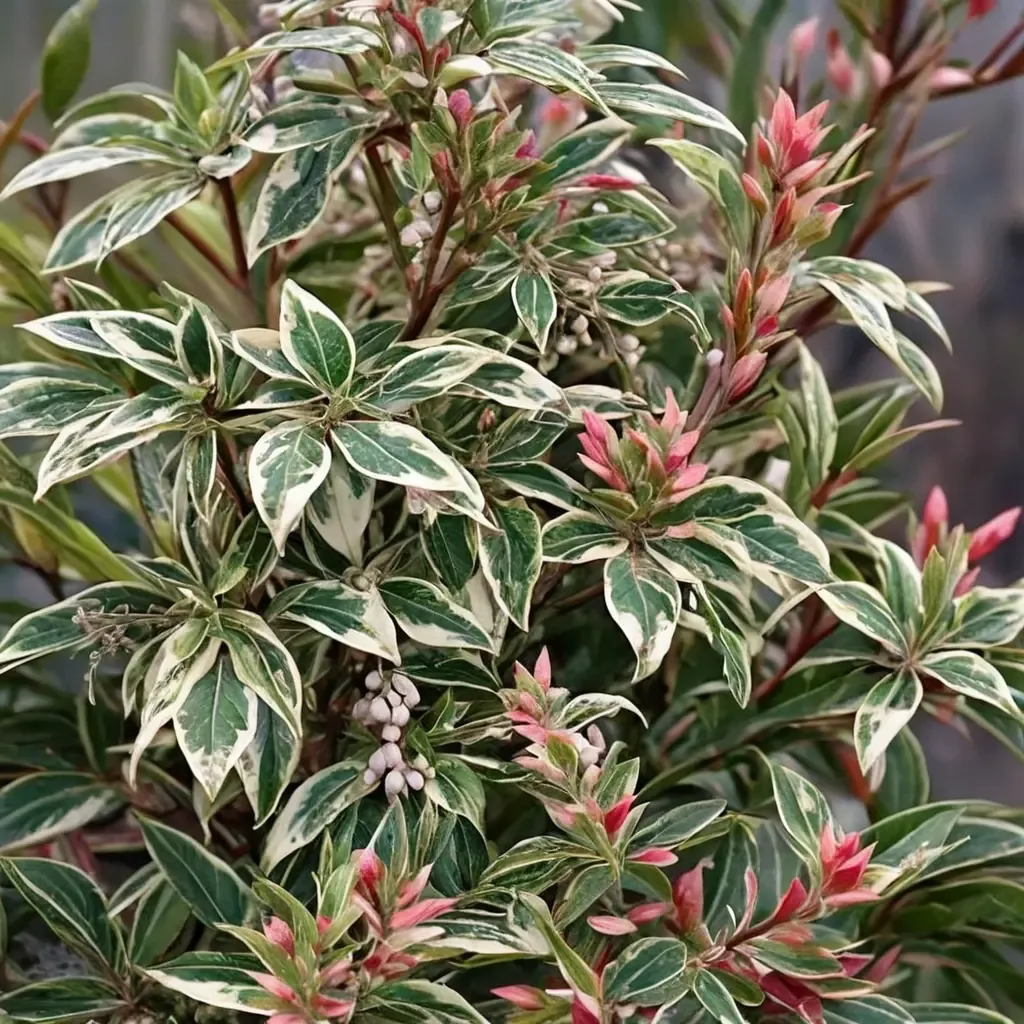
Little Heath Pieris Japanese Pieris
Pieris japonica 'Little Heath'
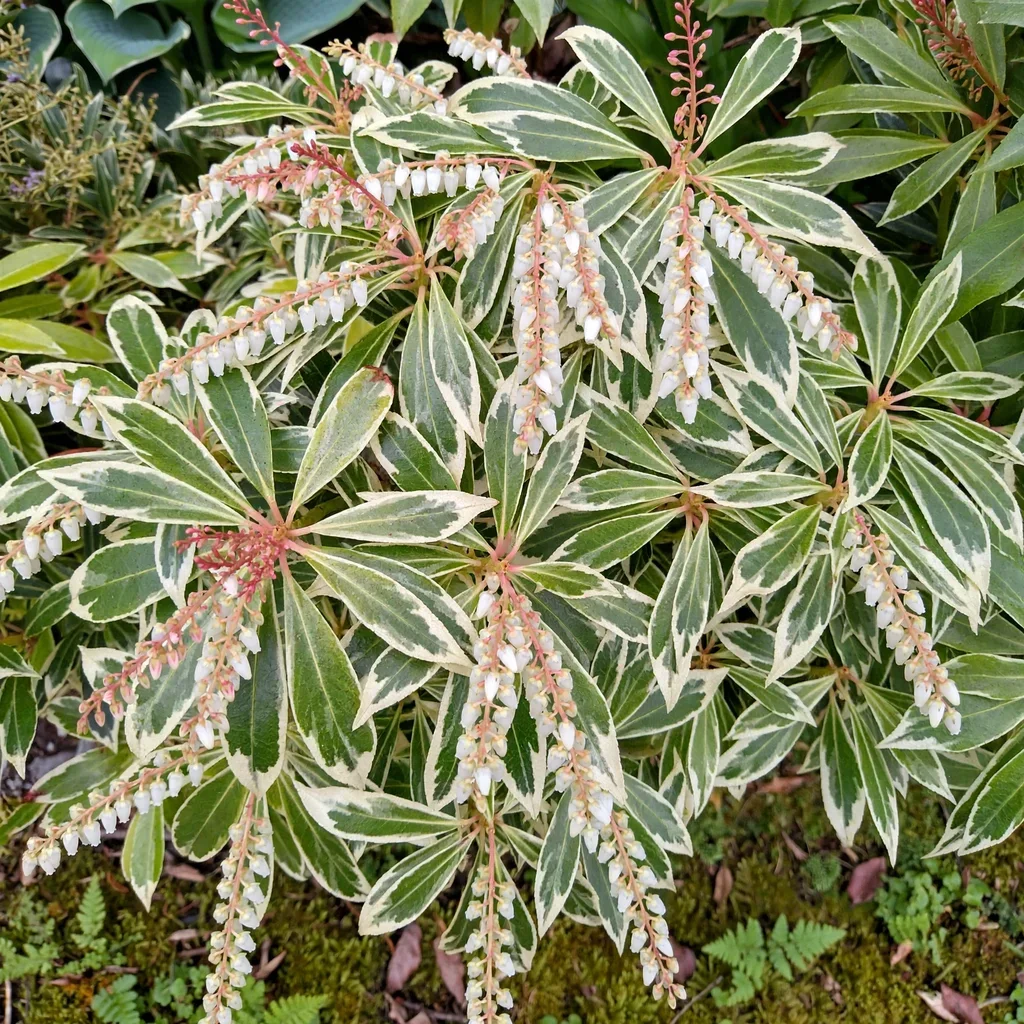
Flaming Silver Pieris Japanese Pieris
Pieris japonica 'Flaming Silver'
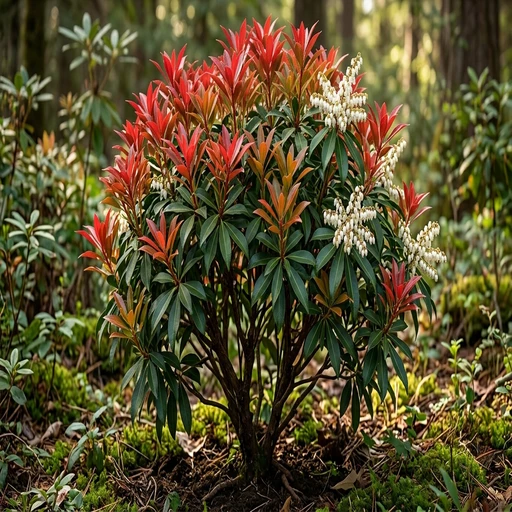
Mountain Fire Andromeda
Pieris japonica 'Mountain Fire'
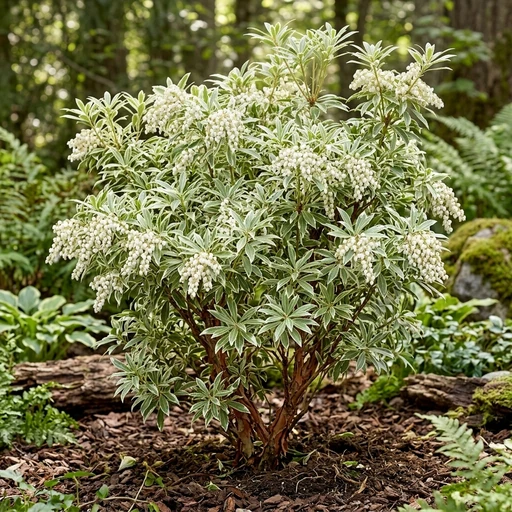
Mountain Snow Pieris
Pieris japonica 'Mountain Snow'
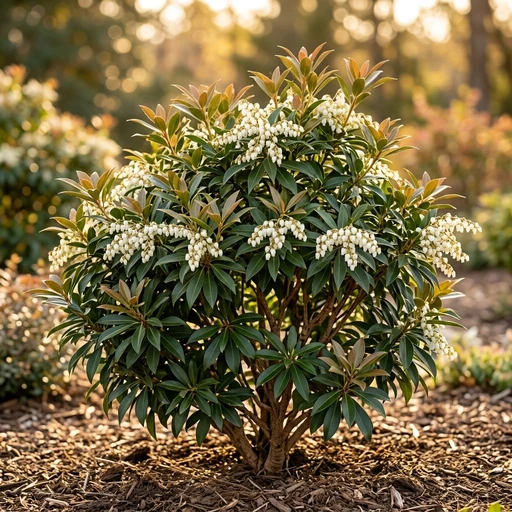
Cavatine Lily-of-the-Valley Bush
Pieris japonica 'Cavatine'
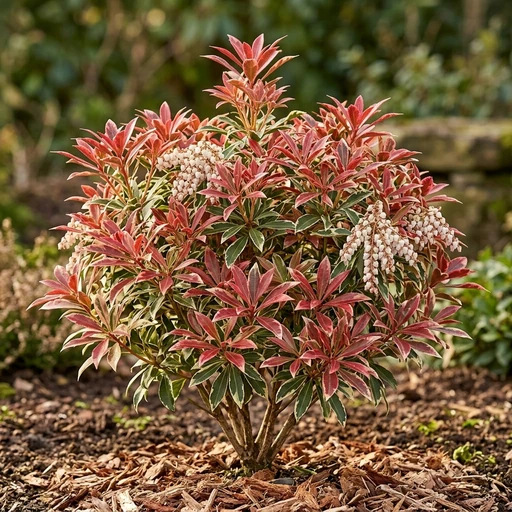
Scarlet O'Hara Japanese Andromeda
Pieris japonica 'Scarlet O'
Keep exploring
Explore the genus
Hardy in your zone?
Grow Japanese Pieris with confidence
See it in a design of your actual yard, get zone-matched care reminders, and track it season by season in your garden journal.