The Story
Plant Bio
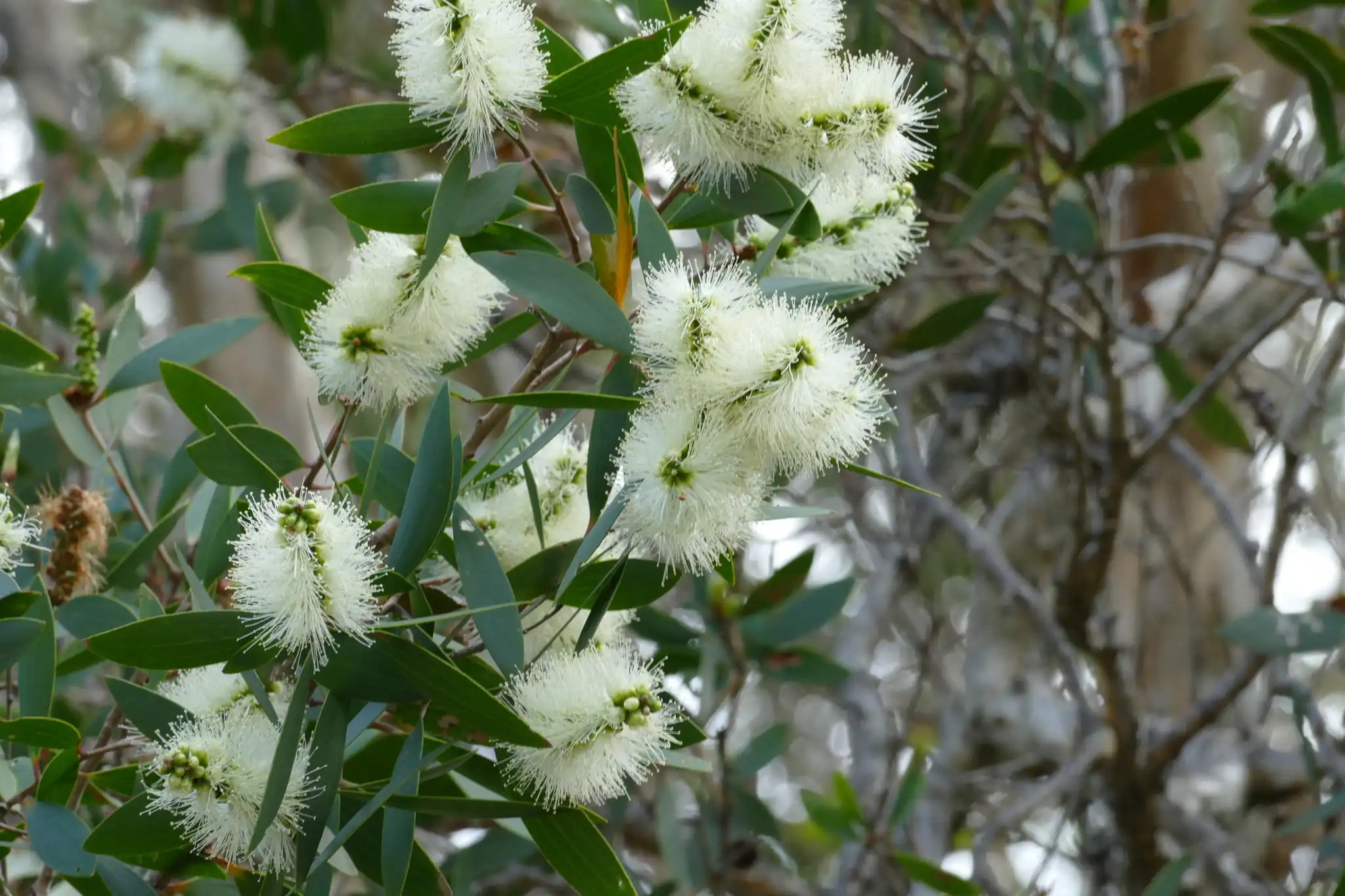
Melaleuca quinquenervia is an evergreen tree distinguished by its thick, spongy, whitish-brown papery bark that peels away in distinctive layers. It features rigid, grey-green lanceolate leaves with five prominent parallel veins and produces creamy-white, bottlebrush-like flower spikes.
This species is highly adapted to wet environments, effortlessly tolerating prolonged waterlogging, seasonal flooding, and brackish coastal conditions. New foliage emerges with a silky-pubescent texture, displaying temporary silvery or pinkish-bronze tones before maturing.
Uses & Benefits:
Essentials
At a Glance
Plant Type
Tree
Height
984"
Width
590"
Light
Full Sun, Partial Sun
Zones
9, 10
Water
High
Humidity
High
Native To
Oceania (Australia, Papua New Guinea, New Caledonia)
Toxicity
Mild skin irritant; pollen allergen
Bloom period
Autumn – Winter
In flower about 6 months of the year
Planting
How to Grow
- Select a planting site in full sun to partial shade with moist, poorly drained, or seasonally wet soil.
- Plant container-grown specimens at the same depth as their nursery pot, backfilling with native soil without amendments.
- Water deeply and regularly during the first growing season to establish a deep, resilient root system.
- Avoid applying high-phosphorus fertilizers, as this species is adapted to low-nutrient soils and requires minimal supplemental feeding.
Pro Tip
Avoid pruning back into thick, leafless woody branches, as this species fails to shoot from old wood.
Keep It Thriving
Care Guide
Do
- Grow in full sun to maximize canopy density and flowering.
- Ensure adequate space to accommodate the mature height and spreading crown.
- Monitor for localized skin irritation when handling the wood or foliage.
Don't
- Do not plant in North American wetlands or near wild areas due to its severe invasive potential.
- Do not prune into old, leafless wood when shaping the tree.
- Do not apply heavy general-purpose fertilizers.
Seasonal Care Calendar
| Task | Jan | Feb | Mar | Apr | May | Jun | Jul | Aug | Sep | Oct | Nov | Dec |
|---|---|---|---|---|---|---|---|---|---|---|---|---|
| Fertilize | ||||||||||||
| Pest Check | ||||||||||||
| Plant | ||||||||||||
| Prune |
Watch Out For
Pests & Diseases
Common Pests
Common Diseases
In the Garden
Landscape Uses & Companions
Landscape Uses
Companion Plants
Multiply
Propagation Methods
Good to Know
Common Questions
Broad-leaved Paperbark questions
What zones can Broad-leaved Paperbark grow in?
Broad-leaved Paperbark is hardy in USDA Zones 9–10. Inside that range it survives winter in the ground; outside it, grow it as an annual or a container plant you protect.
When does Broad-leaved Paperbark bloom?
Broad-leaved Paperbark typically blooms in autumn through winter. Exact timing shifts a week or two with your zone — Sow's bloom calendar maps it to your garden.
Does Broad-leaved Paperbark need full sun?
Broad-leaved Paperbark does best in full sun to part shade. In hot climates, afternoon shade keeps blooms fresher longer.
Is Broad-leaved Paperbark drought tolerant?
Yes — once established (usually after the first full season), Broad-leaved Paperbark handles dry spells with minimal watering. Water deeply its first year to build the root system that makes that possible.
More Melaleuca to compare
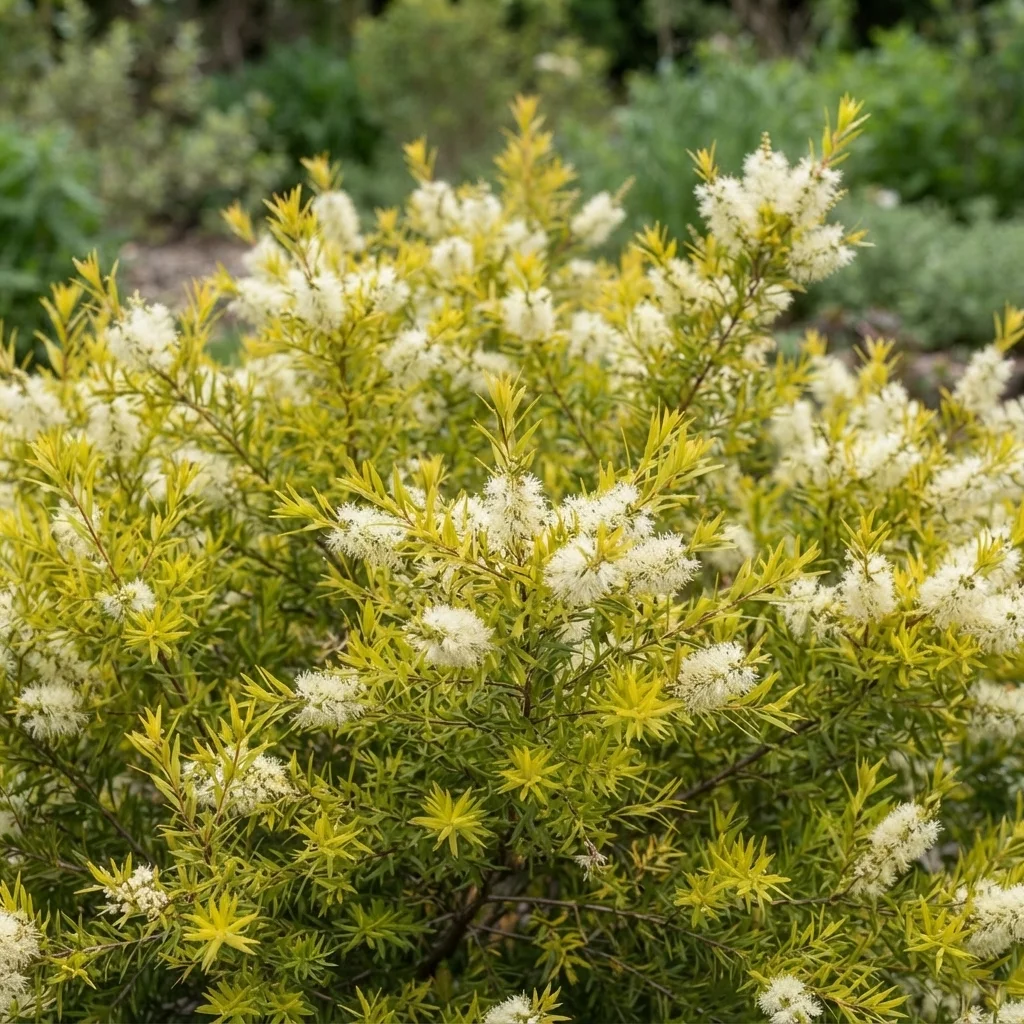
Golden Melaleuca
Melaleuca bracteata 'Golden Gem'
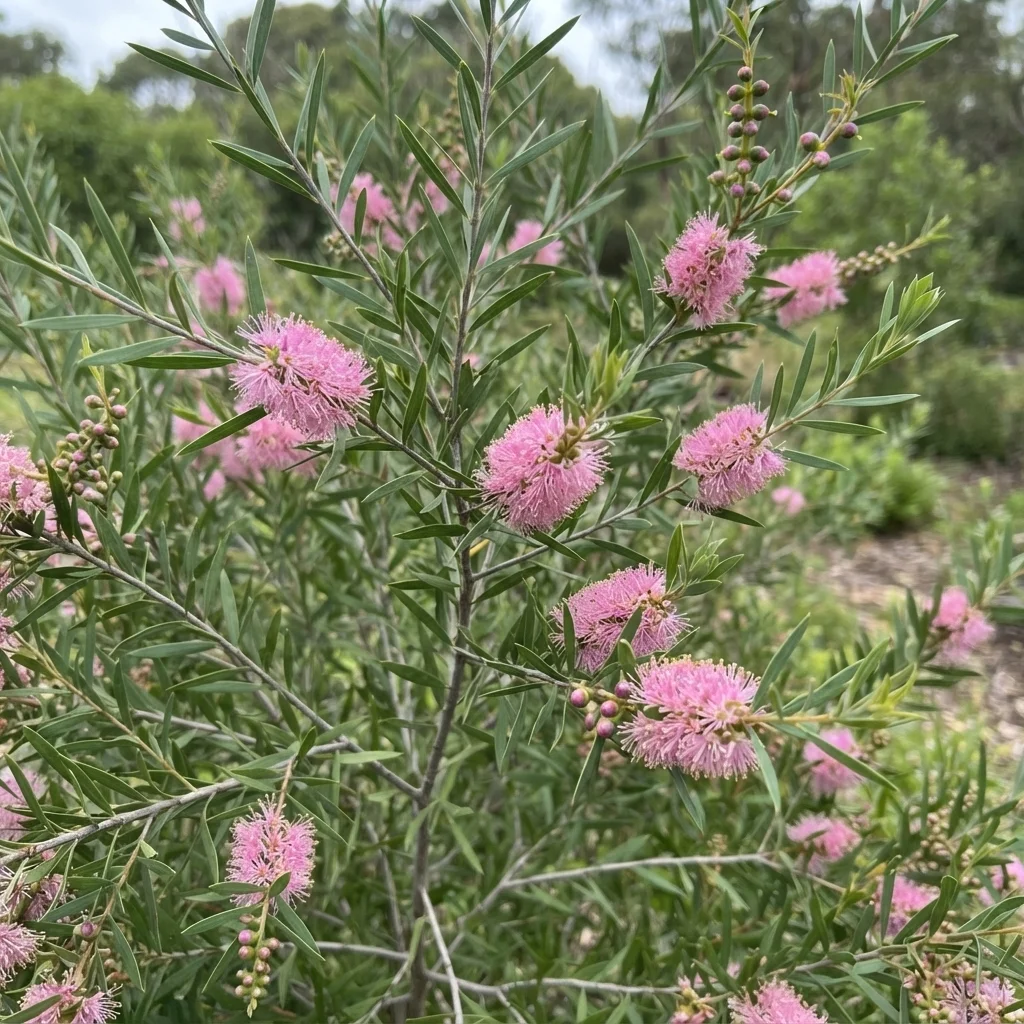
Graceful Honey-myrtle
Melaleuca radula
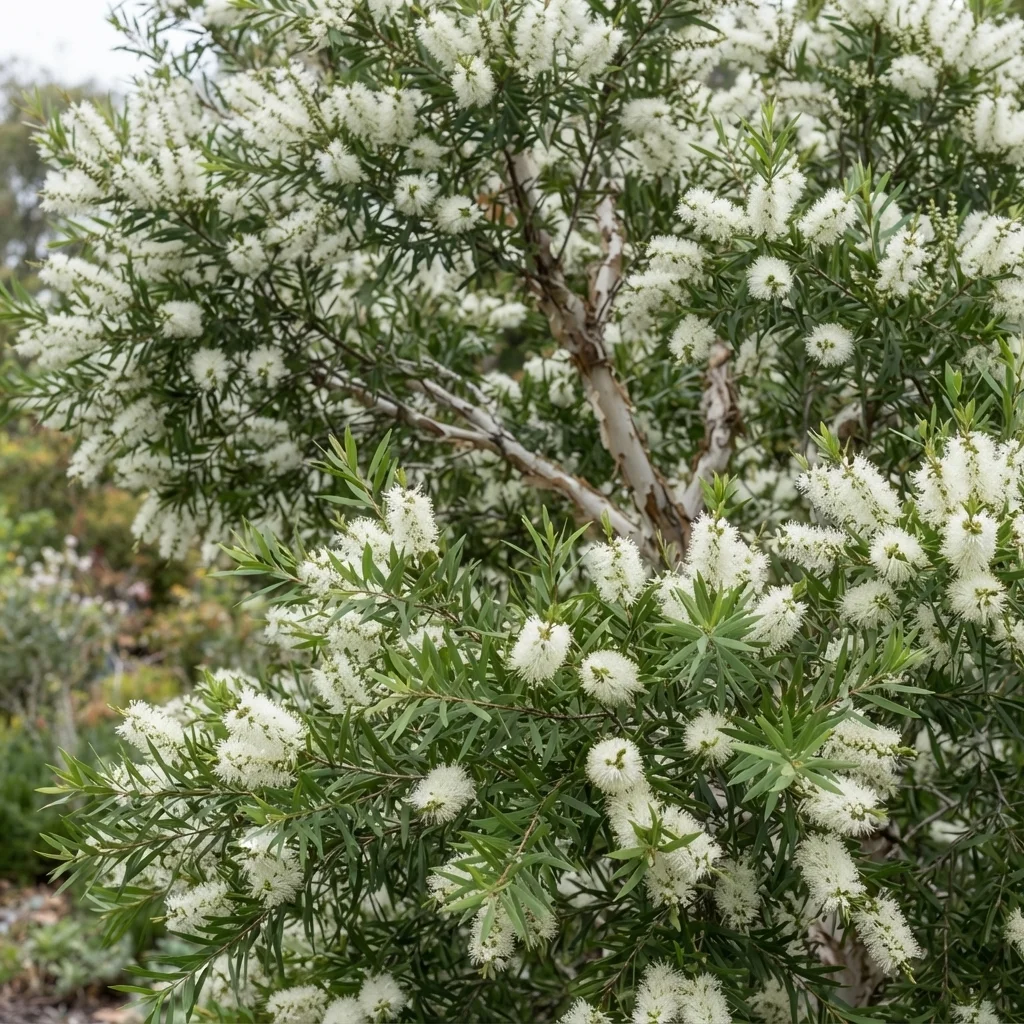
Snow-in-summer
Melaleuca linariifolia
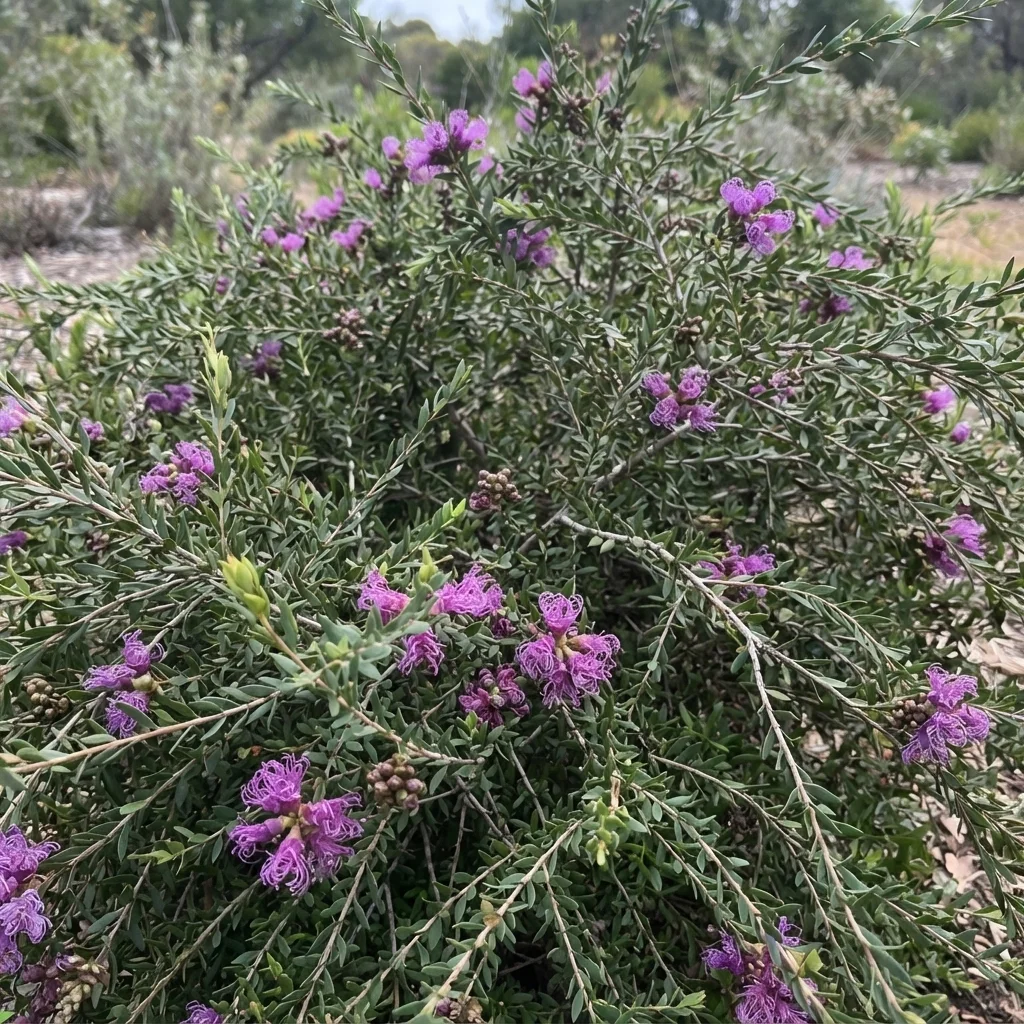
Thymeleaf Melaleuca
Melaleuca thymifolia
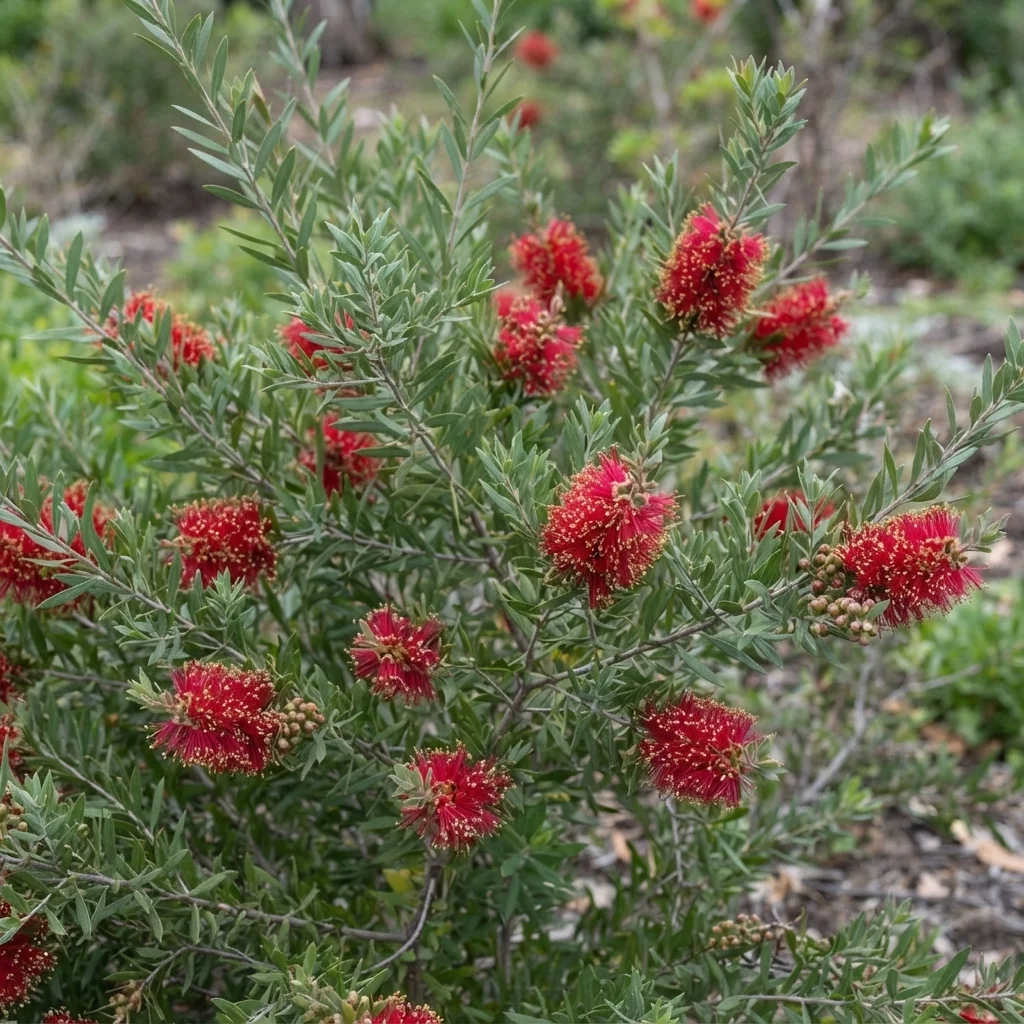
Scarlet Honey Myrtle
Melaleuca fulgens
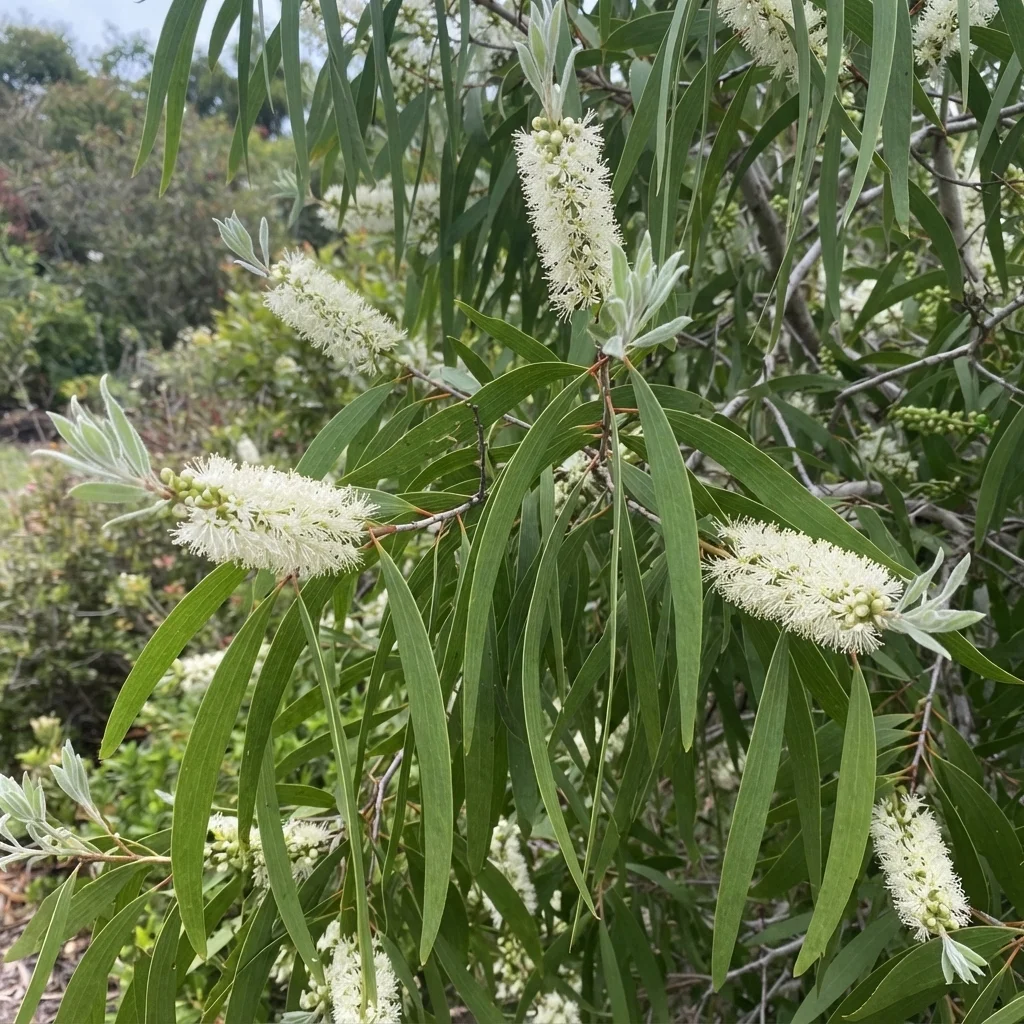
Weeping Paperbark
Melaleuca leucadendra
Keep exploring
Explore the genus
Hardy in your zone?
Grow Broad-leaved Paperbark with confidence
See it in a design of your actual yard, get zone-matched care reminders, and track it season by season in your garden journal.