
The Story
Plant Bio
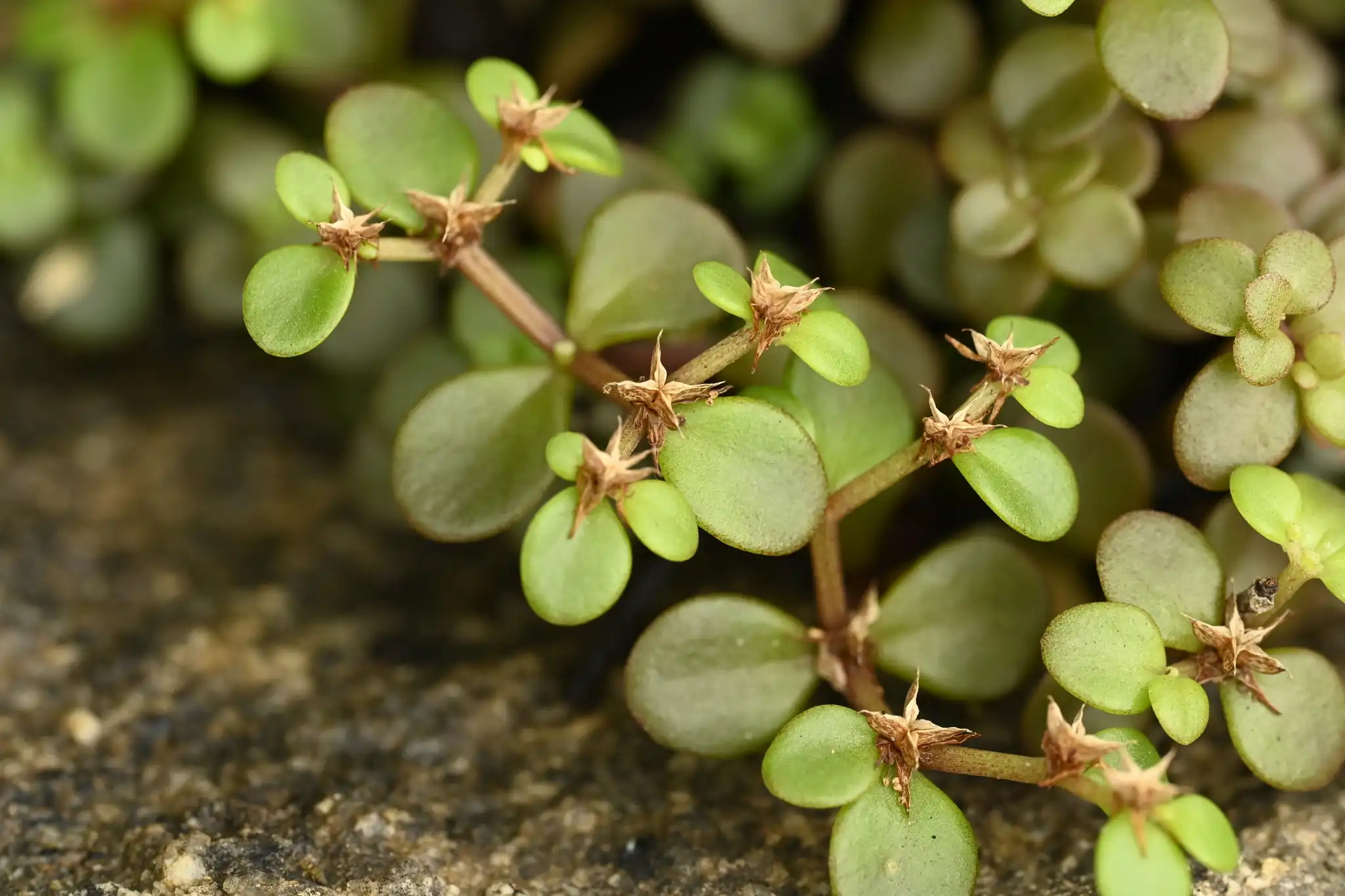
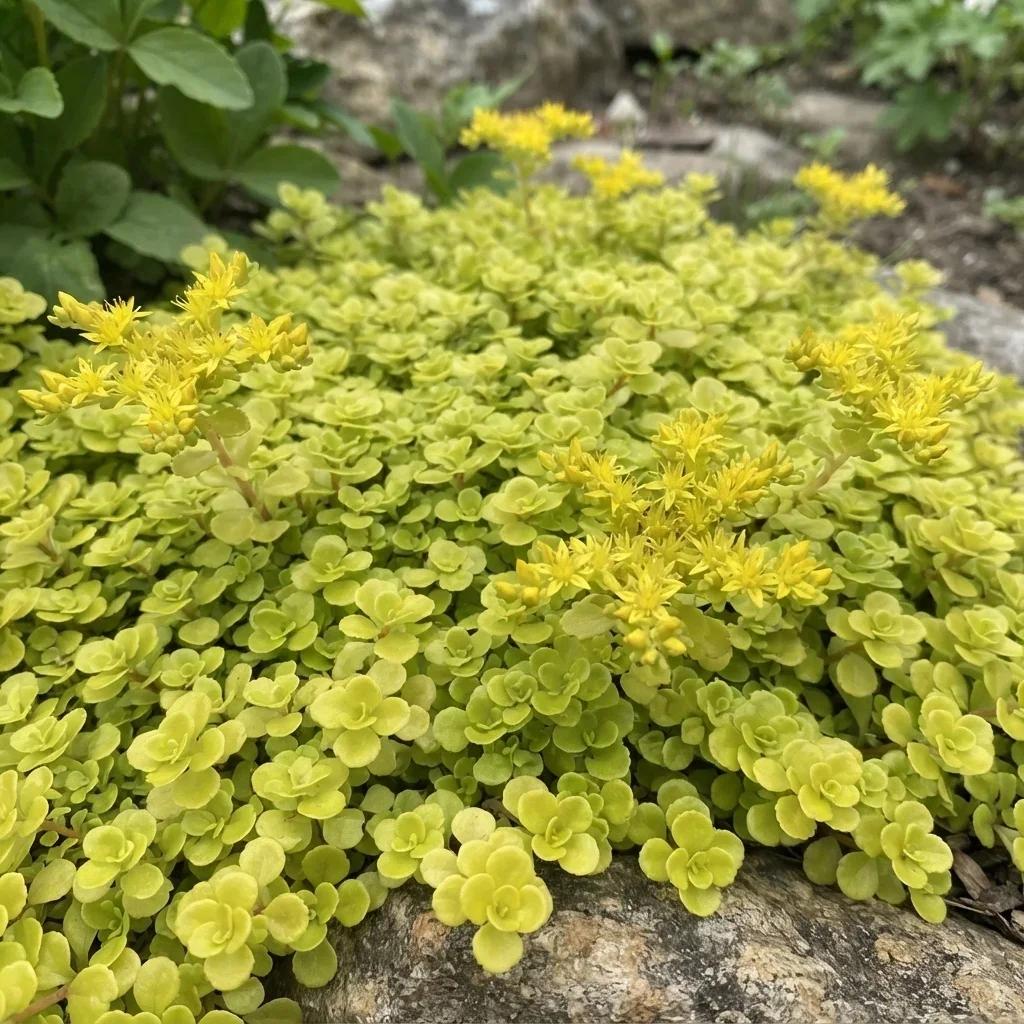
Sedum makinoi is a low creeping succulent from China, Korea and Japan, forming a dense mat only two to four inches high and spreading four inches to a foot. Thick blunt conical leaves barely a quarter of an inch long overlap along low fleshy stems, and small star-shaped yellow flowers open in summer above the foliage.
The leaves are much smaller and finer than most stonecrops, which makes it one of the neatest fillers for the gaps between paving, for shallow troughs and for green roofs. It takes partial shade better than most sedums. Broken pieces root wherever they fall, so bare patches are filled simply by scattering stems on the soil.
Uses & Benefits:
Essentials
At a Glance
Plant Type
Cactus Succulent
Height
3"
Width
12"
Light
Full Sun, Partial Sun
Zones
6, 7, 8, 9, 10
Water
Low
Humidity
Low
Lifespan
Perennial
Native To
China, Korea and Japan
Toxicity
Non-toxic; young shoots edible
Planting
How to Grow
- Plant in sun or partial shade in gritty, free-draining soil.
- Use shallow containers or troughs; it needs little depth.
- Water sparingly and let it dry out between waterings.
- Avoid feeding, which makes growth soft and loose.
- Scatter broken stems to fill any bare patches.
- Clear fallen leaves off the mat in autumn.
Pro Tip
Fallen tree leaves left on the mat over winter rot it out in patches — a quick sweep in autumn prevents most losses.
Keep It Thriving
Care Guide
Do
- Give it gritty, sharply drained soil 🌵
- Let it dry between waterings ☀️
- Scatter stems to fill gaps 🌱
- Sweep fallen leaves off in autumn 🍂
Don't
- Overwater or plant in heavy soil ❌
- Feed it richly ❌
- Leave wet leaf litter on the mat ❌
Seasonal Care Calendar
| Task | Jan | Feb | Mar | Apr | May | Jun | Jul | Aug | Sep | Oct | Nov | Dec |
|---|---|---|---|---|---|---|---|---|---|---|---|---|
| Clear | ||||||||||||
| Plant |
Watch Out For
Pests & Diseases
Common Pests
Common Diseases
In the Garden
Landscape Uses & Companions
Landscape Uses
Companion Plants
Multiply
Propagation Methods
Good to Know
Common Questions
Japanese Stonecrop questions
What zones can Japanese Stonecrop grow in?
Japanese Stonecrop is hardy in USDA Zones 6–10. Inside that range it survives winter in the ground; outside it, grow it as an annual or a container plant you protect.
Is Japanese Stonecrop deer resistant?
Yes — Japanese Stonecrop is rated deer-resistant. Deer typically pass it over, though extreme hunger can override any plant's defenses.
When does Japanese Stonecrop bloom?
Japanese Stonecrop typically blooms in summer through mid-fall. Exact timing shifts a week or two with your zone — Sow's bloom calendar maps it to your garden.
Does Japanese Stonecrop need full sun?
Japanese Stonecrop does best in full sun to part shade. In hot climates, afternoon shade keeps blooms fresher longer.
Is Japanese Stonecrop drought tolerant?
Yes — once established (usually after the first full season), Japanese Stonecrop handles dry spells with minimal watering. Water deeply its first year to build the root system that makes that possible.
More Sedum to compare
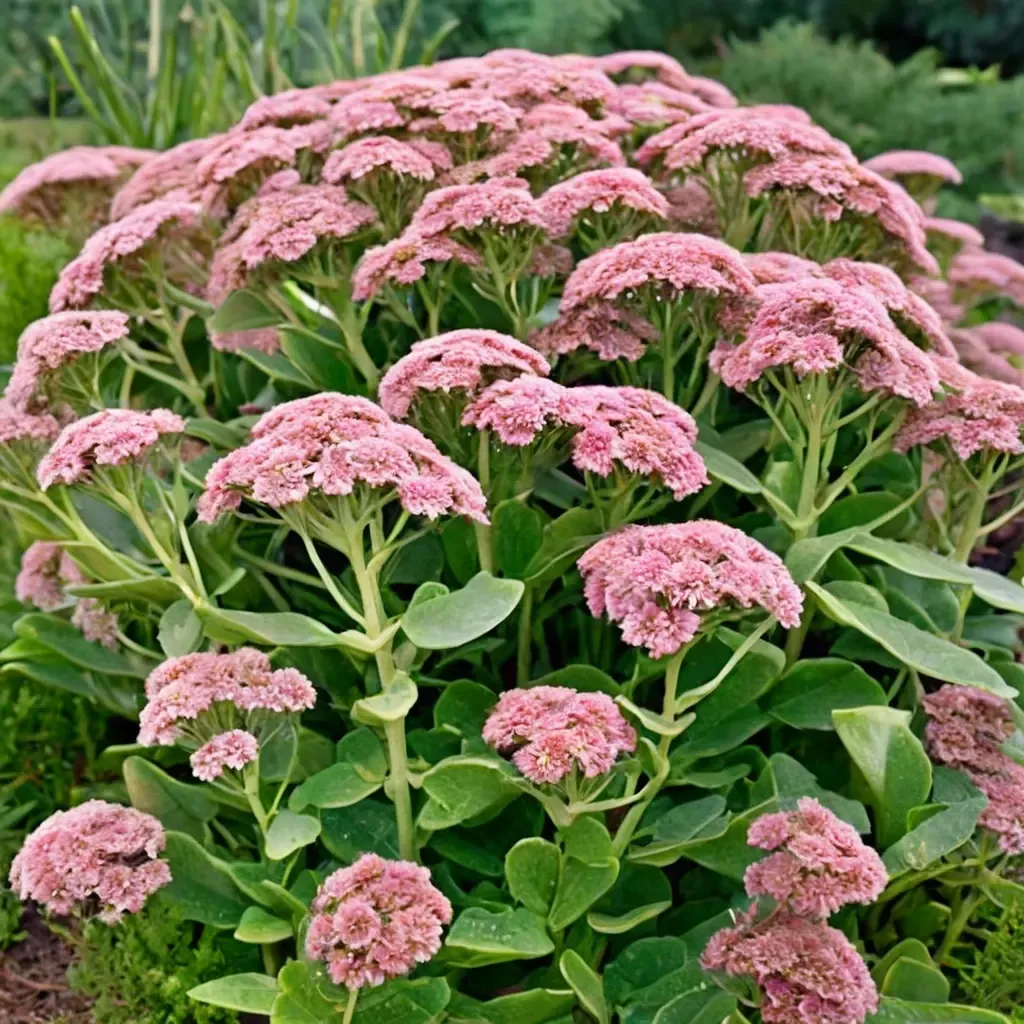
Autumn Joy Stonecrop
Sedum telephium 'Autumn Joy'
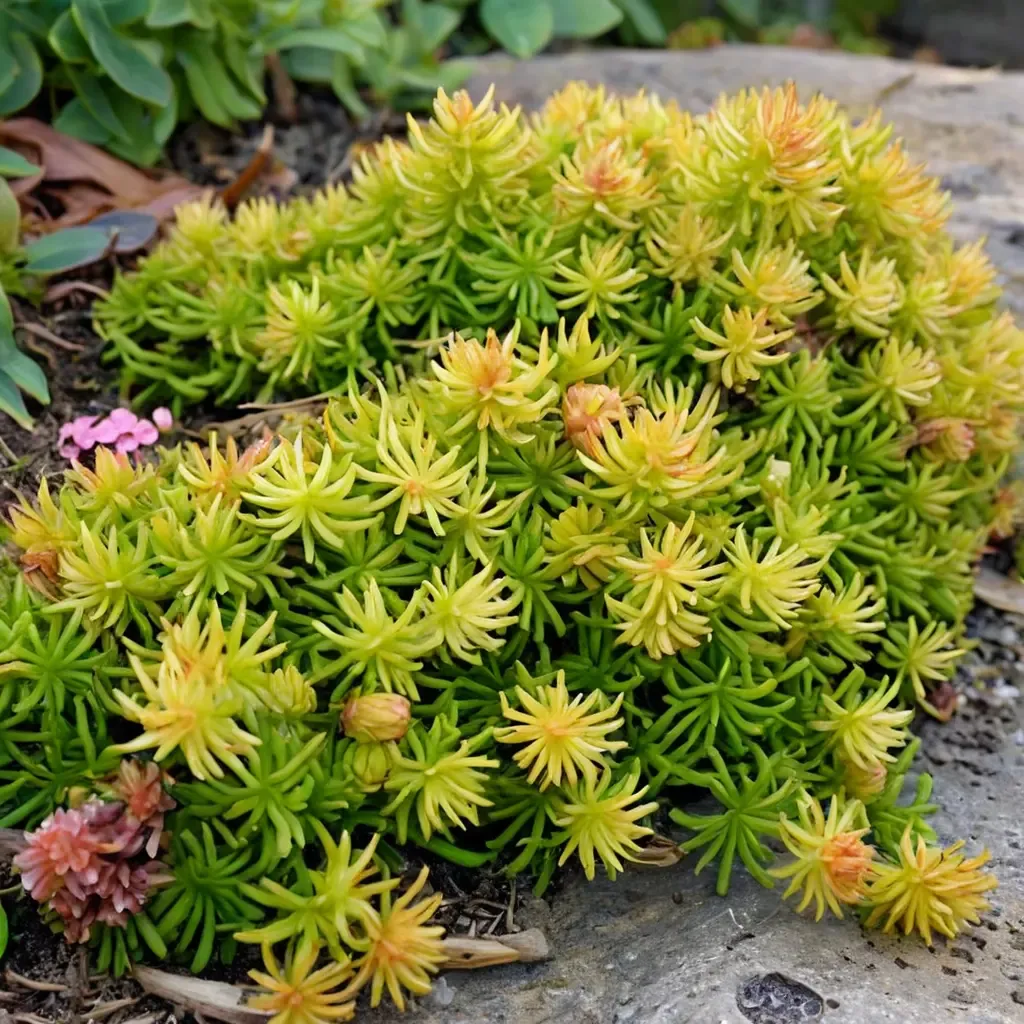
Angelina Stonecrop
Sedum rupestre 'Angelina'
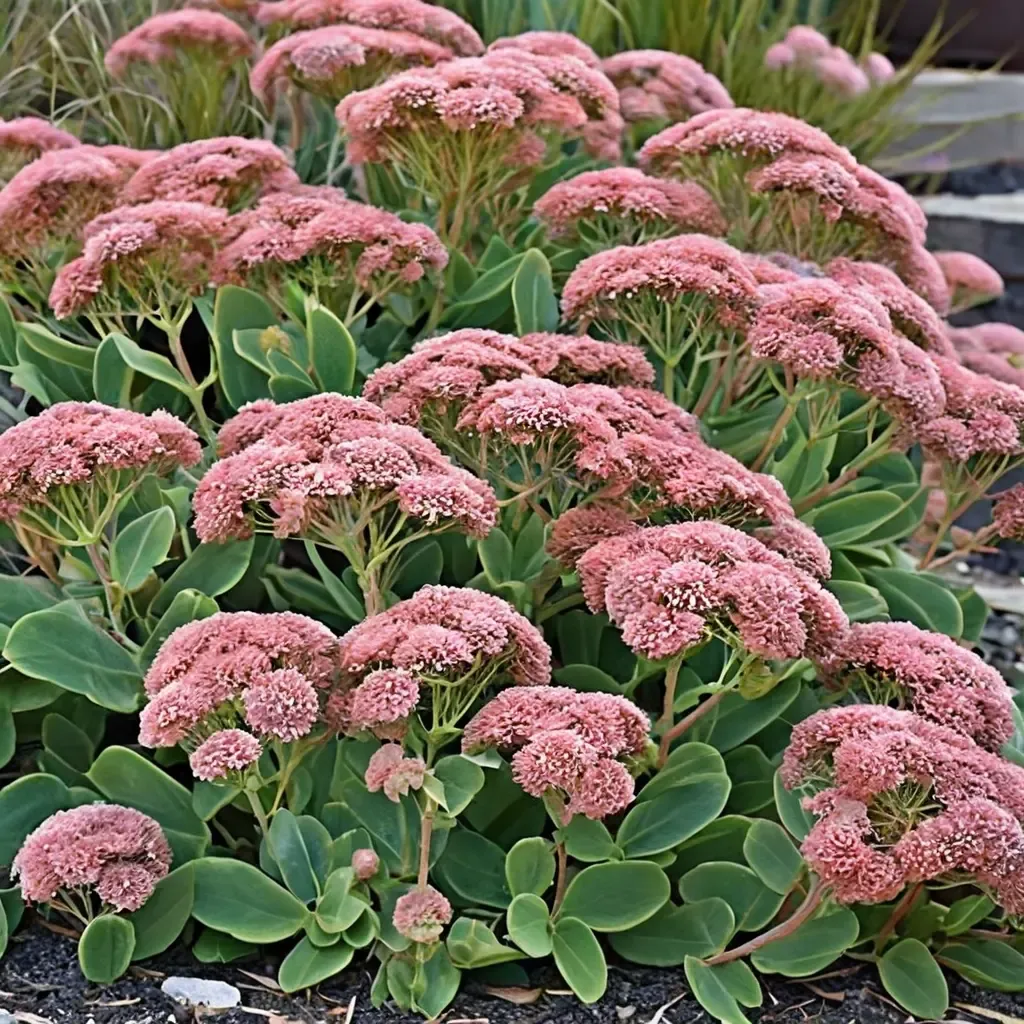
Autumn Fire Stonecrop
Sedum spectabile 'Autumn Fire'
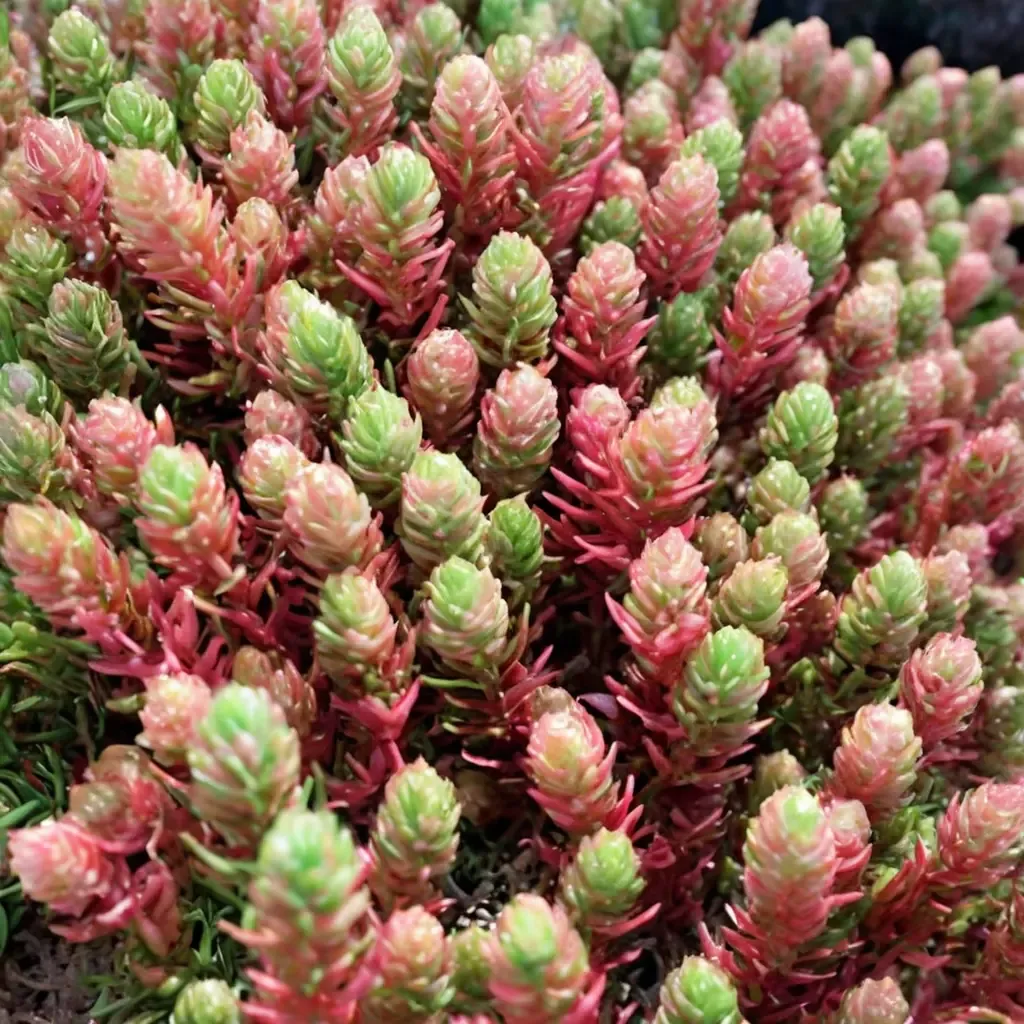
Red Wiggle Stonecrop
Sedum ochroleucum 'Red Wiggle'
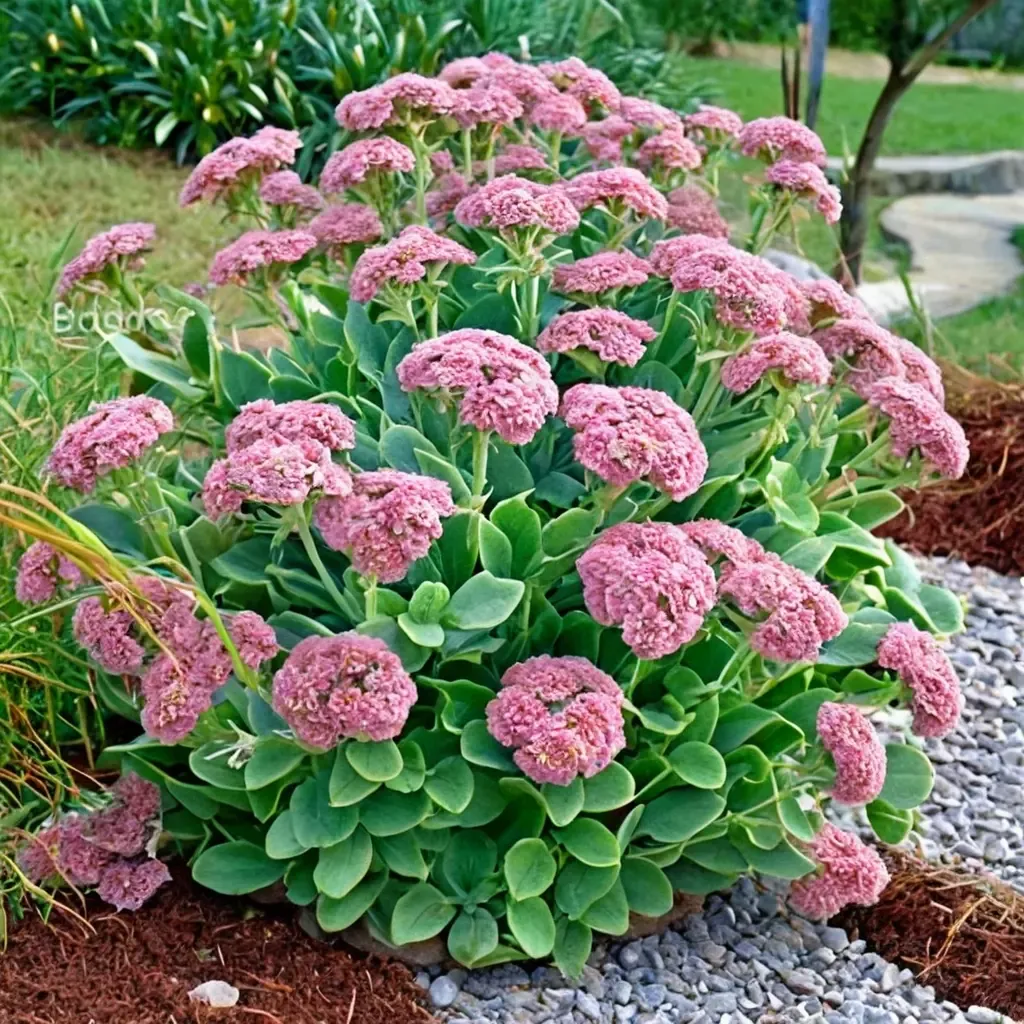
Autumn Joy Sedum
Sedum telephium 'Herbstfreude'
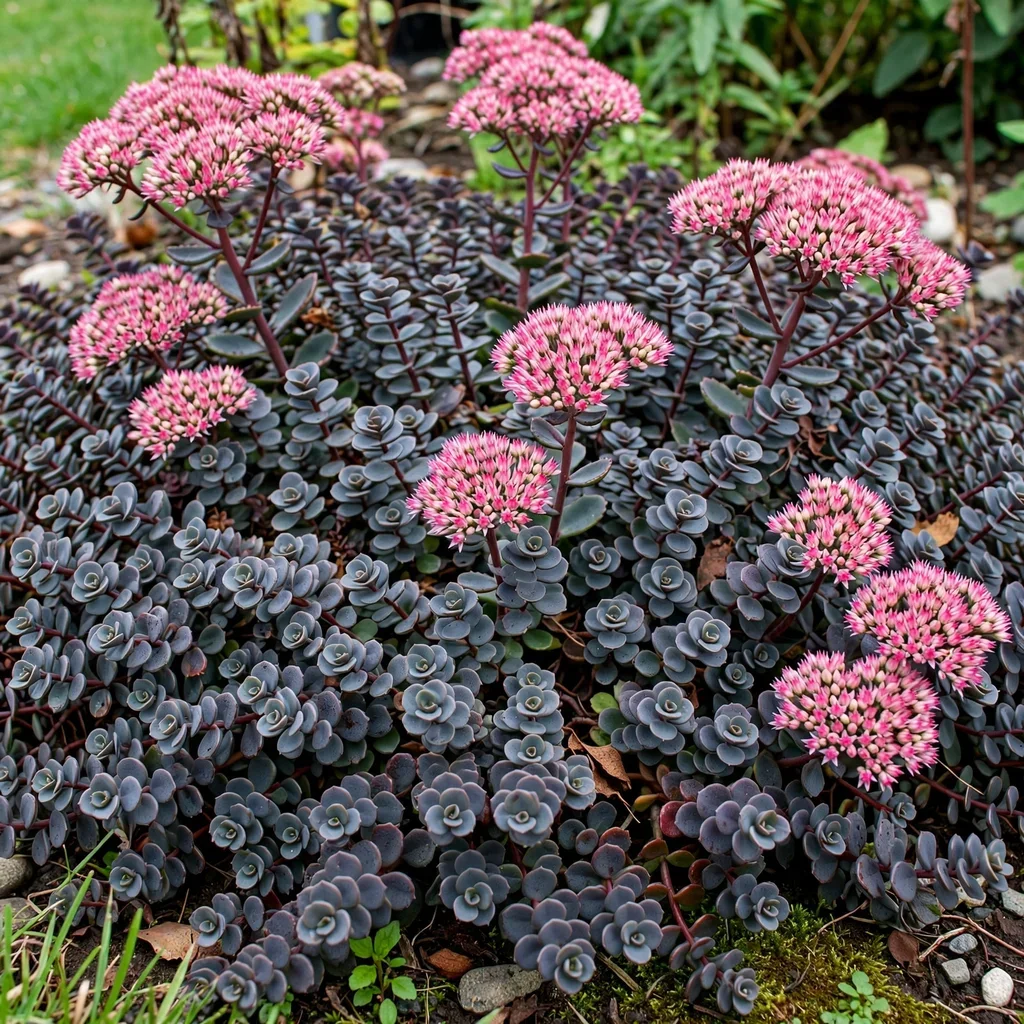
Dazzleberry Sedum
Sedum rubrotinctum 'Dazzleberry'
Keep exploring
Explore the genus
Hardy in your zone?
Grow Japanese Stonecrop with confidence
See it in a design of your actual yard, get zone-matched care reminders, and track it season by season in your garden journal.