The Story
Plant Bio
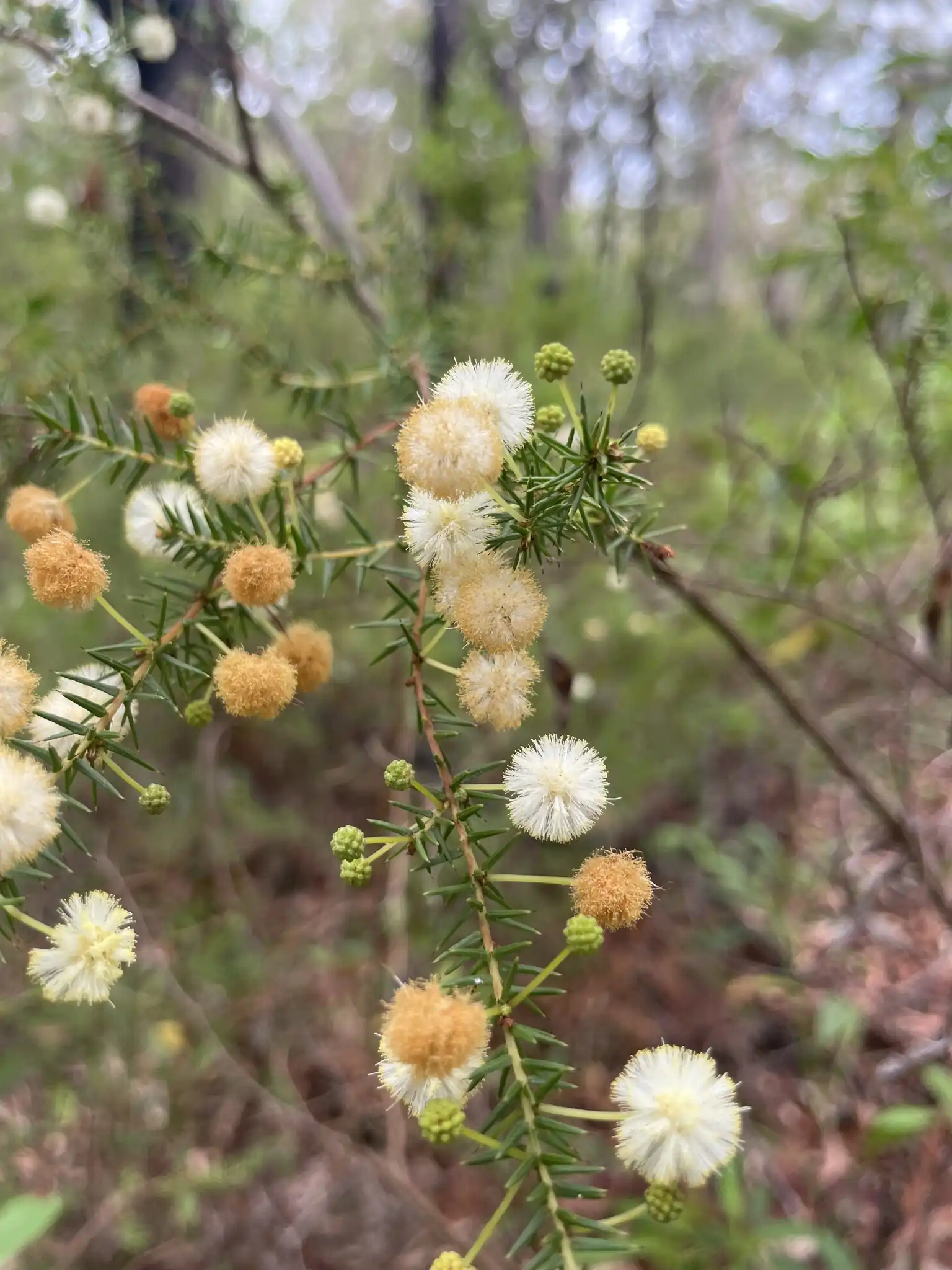
Acacia ulicifolia is an evergreen Australian shrub featuring stiff, rigid branches covered in needle-like green phyllodes that taper into sharp terminal spines. From autumn through spring, small globular flower heads ranging from pale cream to soft yellow open individually from the leaf axils.
The dense, gorse-like habit forms an impenetrable protective barrier that acts as a natural security screen and sanctuary for small wildlife. Its rigid growth pattern thrives in gritty, fast-draining soils within mild Mediterranean or coastal environments.
Uses & Benefits:
Essentials
At a Glance
Plant Type
Shrub
Height
79"
Width
79"
Light
Full Sun, Partial Sun
Zones
9, 10
Water
Low to moderate
Humidity
Low to moderate
Lifespan
Perennial
Native To
Eastern Australia
Toxicity
Sharp foliage causes skin punctures
Bloom period
Autumn – Spring
In flower about 9 months of the year
Planting
How to Grow
- Select a planting location in full sun to partial shade with light, sandy, or sandstone-derived soil.
- Amend heavy ground with coarse sand or grit to guarantee rapid drainage before planting.
- Backfill around the root ball with unfertilized native soil and water thoroughly to settle.
- Establish a light mulch layer around the base while keeping material clear of the main stem.
Pro Tip
Tip-prune non-woody shoots immediately after flowering to maintain a dense shape; cutting into old leafless wood prevents new growth from sprouting.
Keep It Thriving
Care Guide
Do
- Plant in open, light soils that drain freely.
- Prune lightly after spring flowering finishes.
- Use low-phosphorus fertilizers only if feeding is necessary.
Don't
- Do not allow soil to remain waterlogged or saturated.
- Do not prune back into hard, leafless woody stems.
- Do not apply standard high-phosphorus garden fertilizers.
Seasonal Care Calendar
| Task | Jan | Feb | Mar | Apr | May | Jun | Jul | Aug | Sep | Oct | Nov | Dec |
|---|---|---|---|---|---|---|---|---|---|---|---|---|
| Fertilize | ||||||||||||
| Pest Check | ||||||||||||
| Prune | ||||||||||||
| Winter Prep |
Watch Out For
Pests & Diseases
Common Pests
Common Diseases
In the Garden
Landscape Uses & Companions
Landscape Uses
Multiply
Propagation Methods
Good to Know
Common Questions
Prickly Moses questions
What zones can Prickly Moses grow in?
Prickly Moses is hardy in USDA Zones 9–10: in that range it survives winter in the ground. Colder than Zone 9, grow it in a container you can move to shelter for the winter.
Is Prickly Moses deer resistant?
Not reliably. Deer may browse Prickly Moses, especially tender spring growth — plan on repellents or fencing where pressure is high.
When does Prickly Moses bloom?
Prickly Moses typically blooms from fall to spring. Exact timing shifts a week or two with your zone — Sow's bloom calendar maps it to your garden.
Does Prickly Moses need full sun?
Prickly Moses does best in full sun to part shade. In hot climates, afternoon shade keeps blooms fresher longer.
Is Prickly Moses drought tolerant?
Yes — once established (usually after the first full season), Prickly Moses handles dry spells with minimal watering. Water deeply its first year to build the root system that makes that possible.
More Acacia to compare
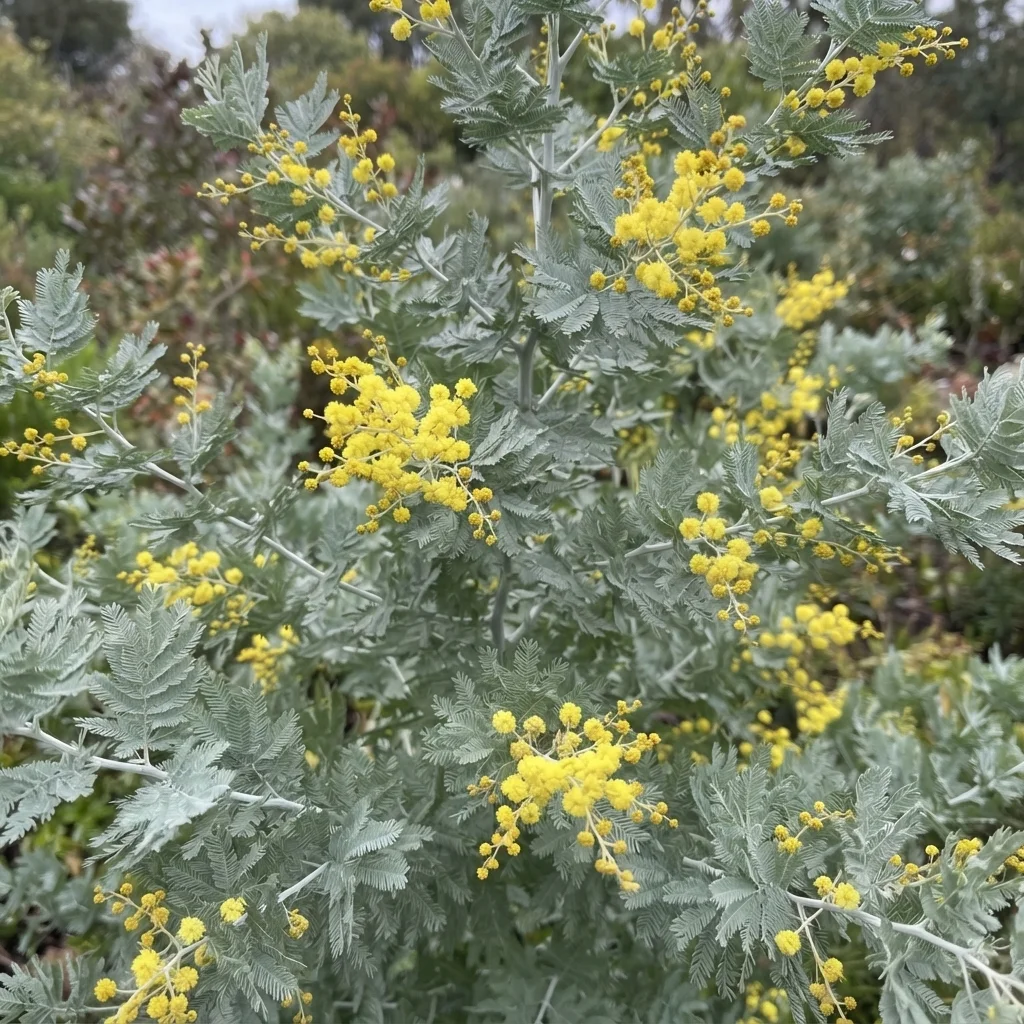
Silver wattle
Acacia dealbata
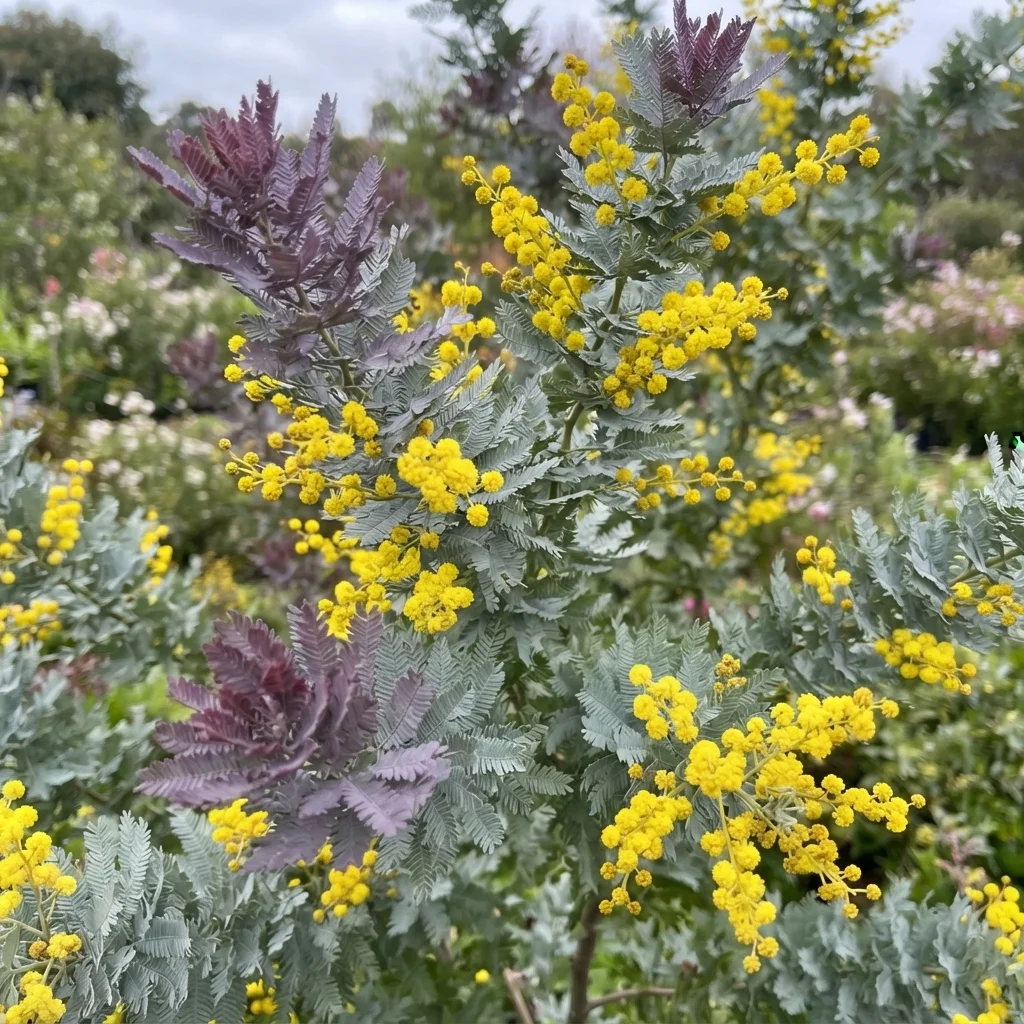
Cootamundra Wattle 'Purpurea'
Acacia baileyana 'Purpurea'
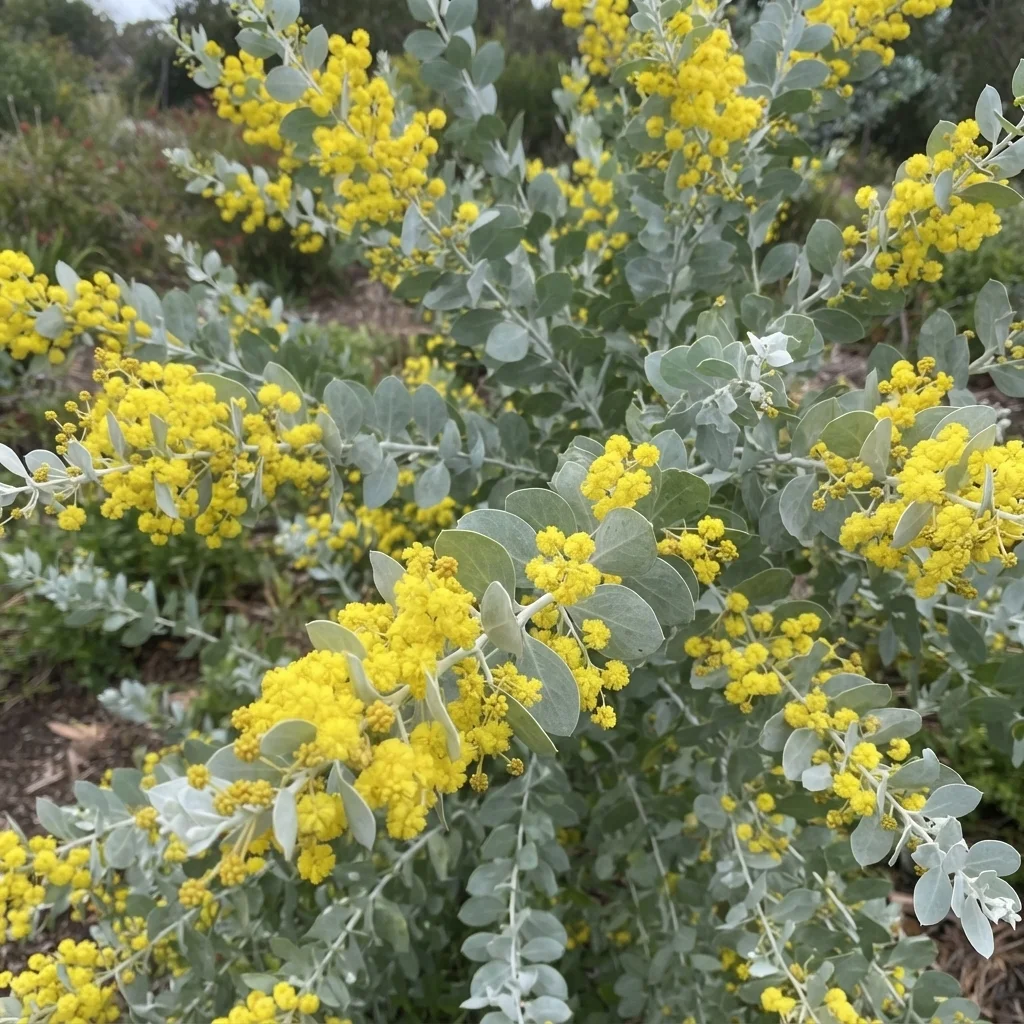
Pearl Acacia
Acacia podalyriifolia
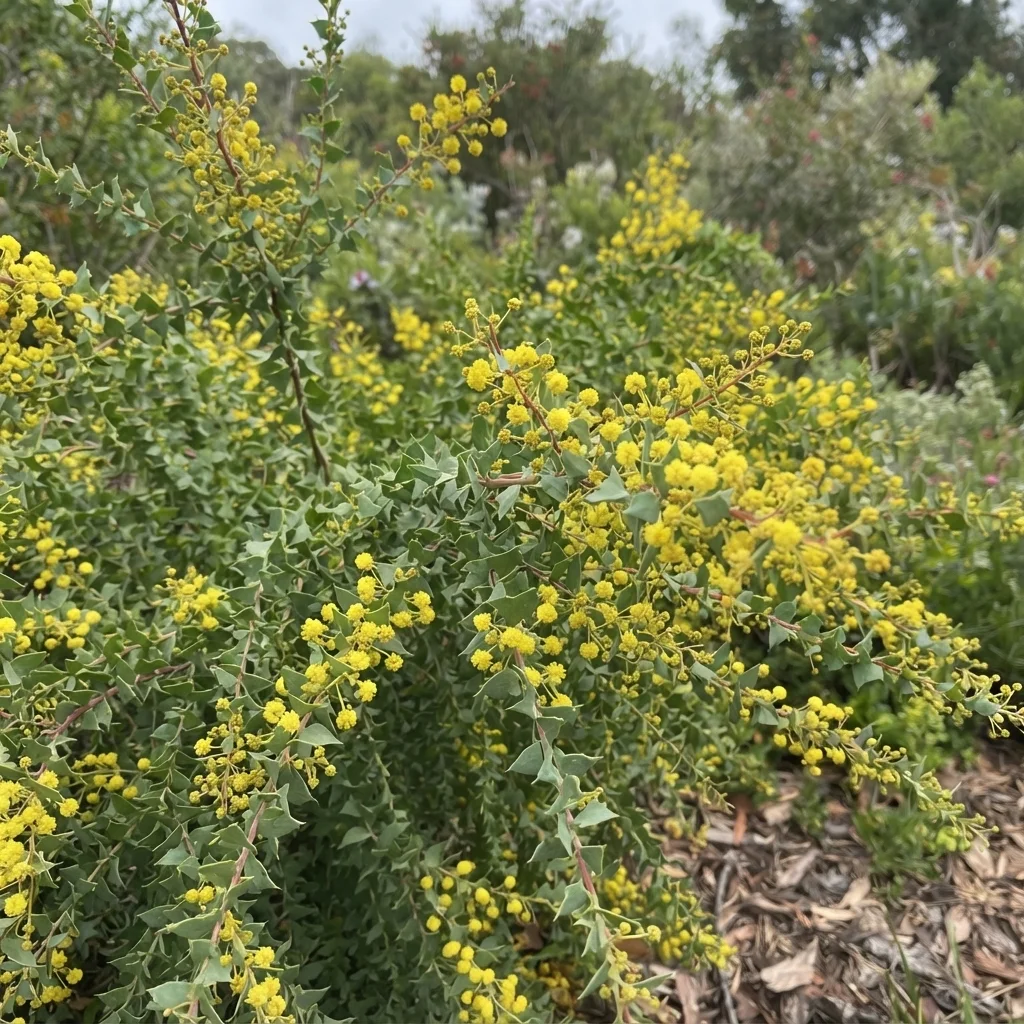
Ovens Wattle
Acacia pravissima
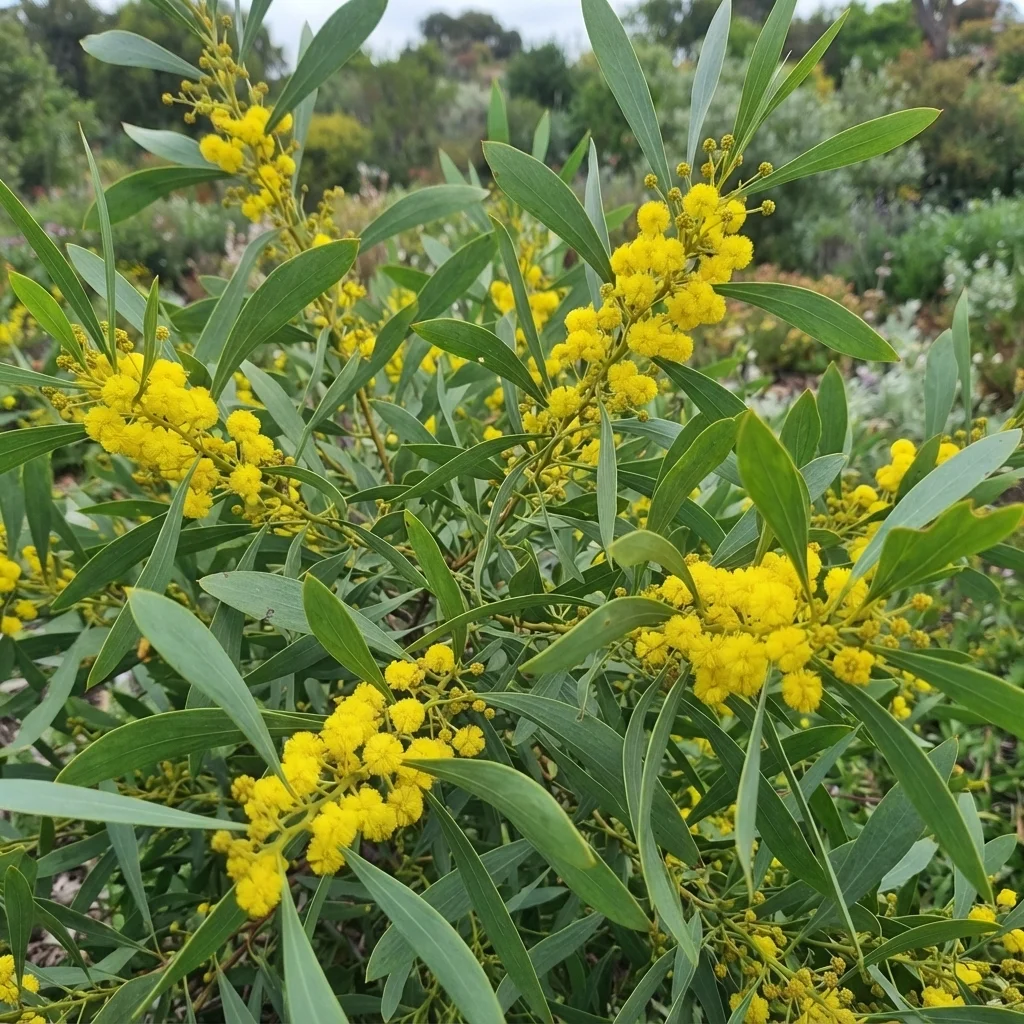
Golden Wreath Wattle
Acacia saligna
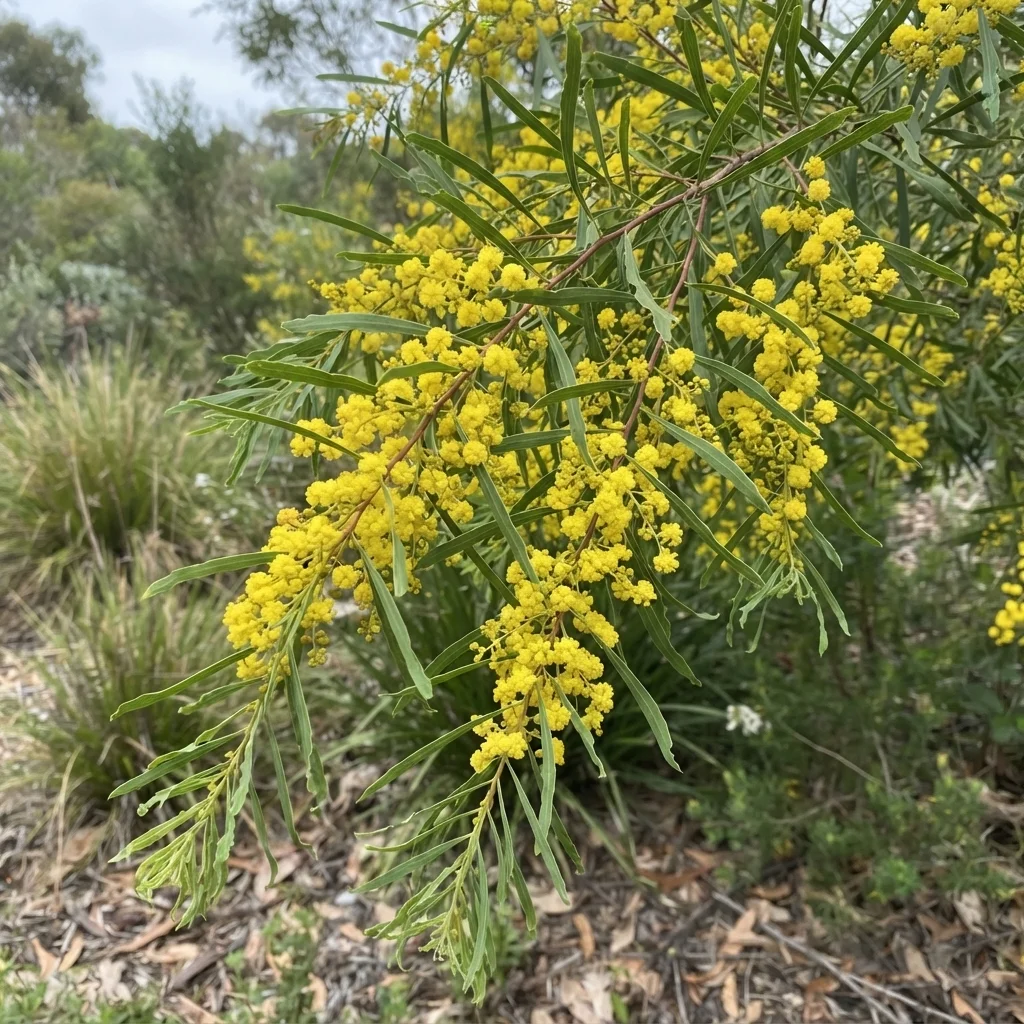
Fringed Wattle
Acacia fimbriata
Keep exploring
Explore the genus
Hardy in your zone?
Grow Prickly Moses with confidence
See it in a design of your actual yard, get zone-matched care reminders, and track it season by season in your garden journal.