The Story
Plant Bio
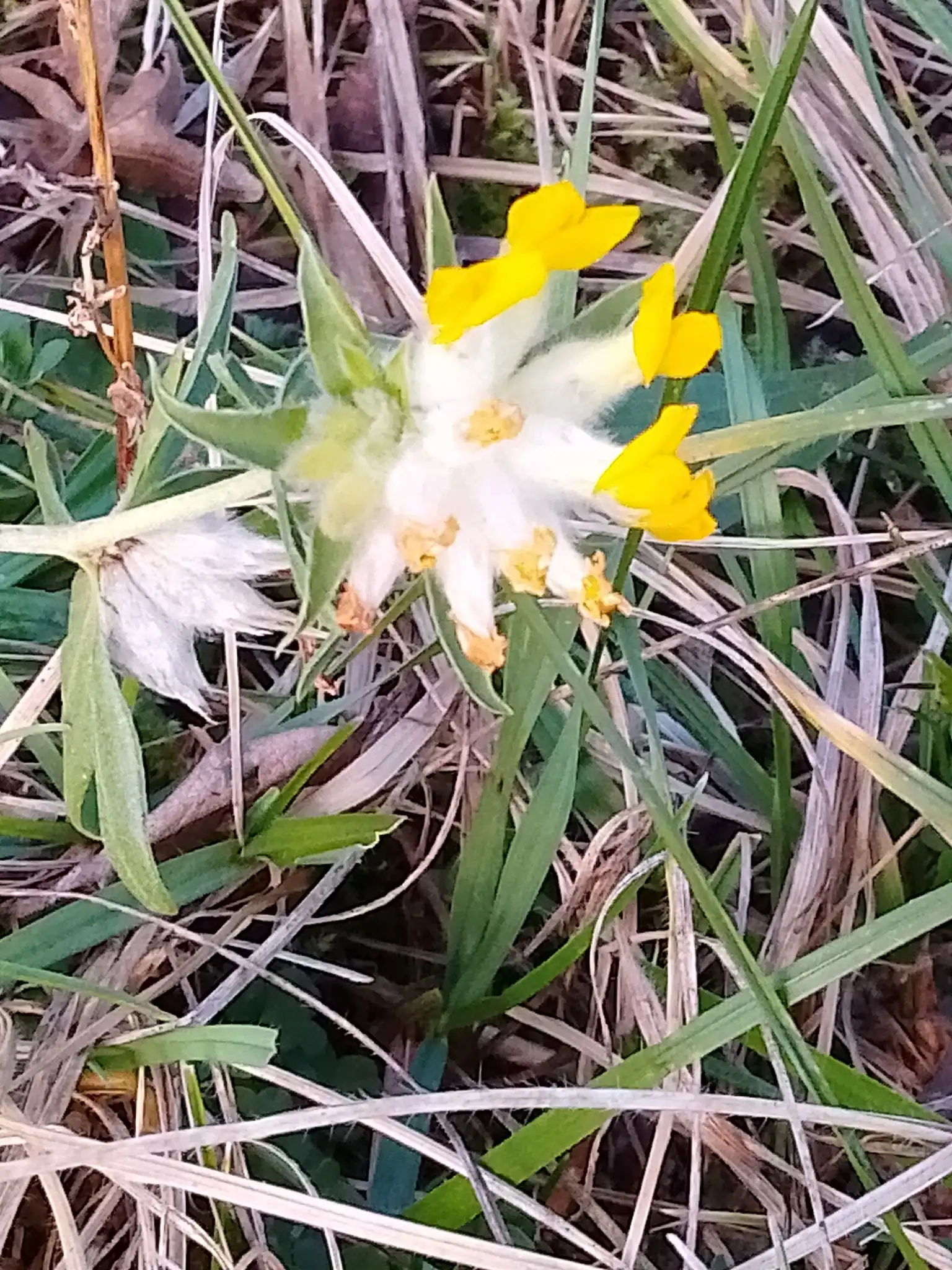
Anthyllis vulneraria is a low-growing, mat-forming perennial producing compound grey-green leaves covered in soft, flattened hairs. From late spring into summer, leafy stems bear paired, rounded clusters of bright yellow pea-like flowers wrapped in inflated, woolly calyces.
A deep taproot equips this legume to excel in lean, gravelly, and highly alkaline soils where other species wither from drought. The woolly flower heads yield abundant nectar, serving as a key foraging target for native bees and butterflies.
Uses & Benefits:
Essentials
At a Glance
Plant Type
Perennial
Height
20"
Width
24"
Light
Full Sun
Zones
4, 5, 6, 7, 8, 9
Water
Low
Humidity
Low to Moderate
Lifespan
Perennial
Native To
Europe, Northern Africa, Western Asia
Toxicity
Non-toxic
Bloom period
Spring – Summer
In flower about 6 months of the year
Planting
How to Grow
- Select a site in full sun with poor, gritty, or sandy soil that drains completely.
- Dig a planting hole deep enough to fit the taproot vertically without bending or crowding.
- Backfill with lean, native mineral soil, firming gently around the crown without burying foliage.
- Water lightly at planting to settle the soil, then withhold routine irrigation once growth initiates.
Pro Tip
Plant in unamended, sharply draining substrates; fertile soil and excess summer moisture cause rapid taproot rot and shorten plant longevity.
Keep It Thriving
Care Guide
Do
- Provide exceptional winter drainage by amending heavy soils with coarse grit or gravel.
- Lightly trim back spent flower stems to tidy the mound after the main spring flush.
- Keep soil lean by omitting high-nitrogen fertilizers completely.
Don't
- Do not prune hard into old, leafless stem bases, as new growth rarely regenerates from bare wood.
- Do not overwater established plants or plant in heavy, waterlogged clay.
- Do not mulch thickly around the crown with organic material that retains moisture.
Seasonal Care Calendar
| Task | Jan | Feb | Mar | Apr | May | Jun | Jul | Aug | Sep | Oct | Nov | Dec |
|---|---|---|---|---|---|---|---|---|---|---|---|---|
| Pest Check | ||||||||||||
| Plant | ||||||||||||
| Propagate | ||||||||||||
| Prune |
Watch Out For
Pests & Diseases
Common Pests
Common Diseases
In the Garden
Landscape Uses & Companions
Landscape Uses
Multiply
Propagation Methods
Good to Know
Common Questions
Common Kidneyvetch questions
What zones can Common Kidneyvetch grow in?
Common Kidneyvetch is hardy in USDA Zones 4–9: in that range it survives winter in the ground. Warmer than Zone 9, winter isn't the problem: it prefers colder winters, and summer heat can shorten its life.
Is Common Kidneyvetch deer resistant?
Not reliably. Deer may browse Common Kidneyvetch, especially tender spring growth — plan on repellents or fencing where pressure is high.
When does Common Kidneyvetch bloom?
Common Kidneyvetch typically blooms from spring to summer. Exact timing shifts a week or two with your zone — Sow's bloom calendar maps it to your garden.
Does Common Kidneyvetch need full sun?
Common Kidneyvetch does best in full sun (6+ hours).
Is Common Kidneyvetch drought tolerant?
Yes — once established (usually after the first full season), Common Kidneyvetch handles dry spells with minimal watering. Water deeply its first year to build the root system that makes that possible.
Keep exploring
Explore the genus
Grow Common Kidneyvetch with confidence
See it in a design of your actual yard, get zone-matched care reminders, and track it season by season in your garden journal.