The Story
Plant Bio
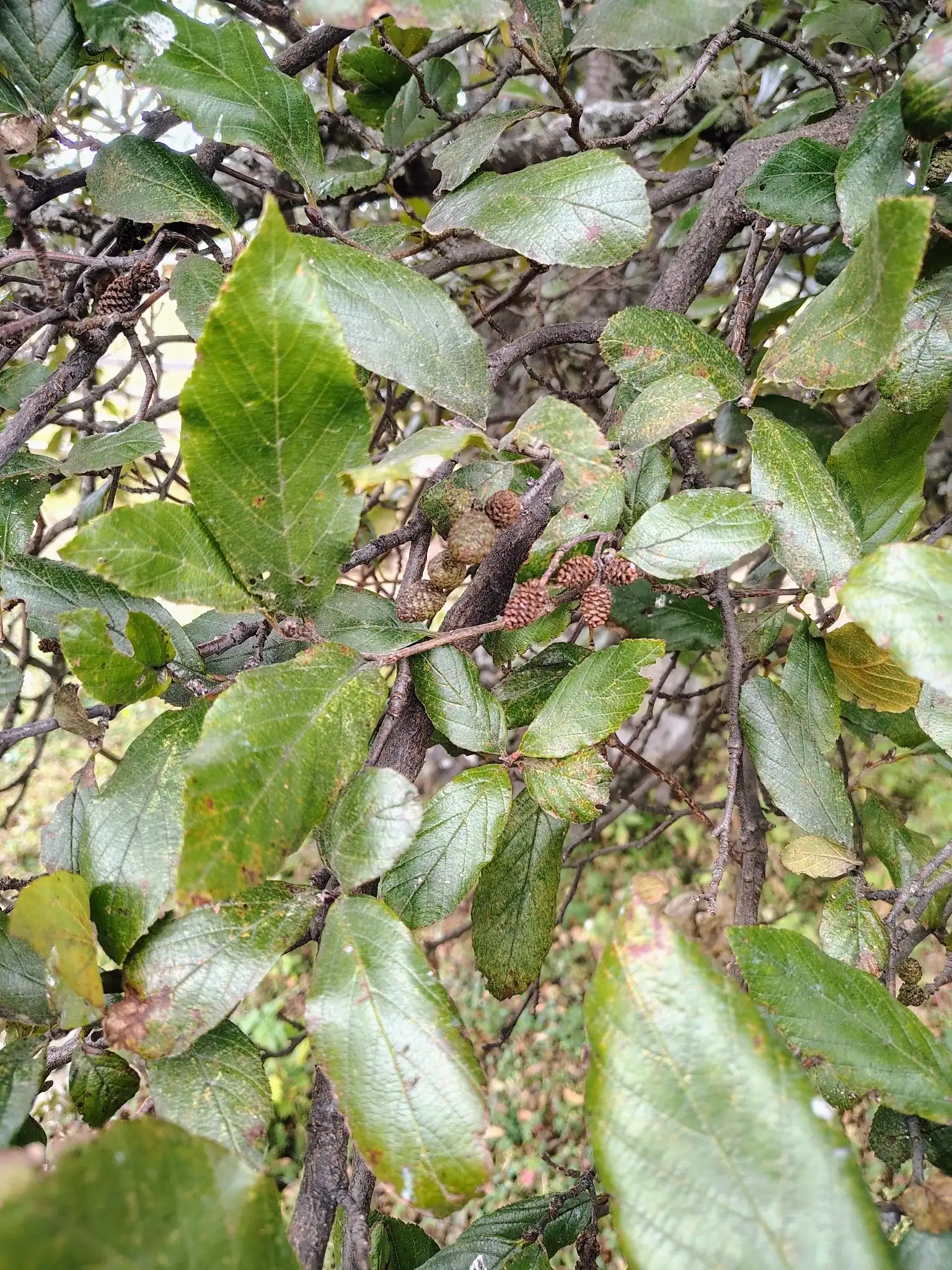
Alnus jorullensis, commonly known as Mexican alder, is a fast-growing evergreen or semi-evergreen tree native to the high-elevation mountains of Mexico and Guatemala. It develops an erect, pyramidal to spreading form with drooping, slender branches and dark glossy green, leathery leaves that persist through mild winters.
This species is distinguished by its ability to retain its foliage in warm climates, unlike strictly deciduous alders, though it will shed leaves in response to severe winter chill. In spring, it produces long, drooping chartreuse staminate catkins alongside small, terminal clusters of female flowers.
Uses & Benefits:
Essentials
At a Glance
Plant Type
Tree
Height
984"
Width
787"
Light
Full Sun, Partial Sun
Zones
7, 8, 9, 10
Water
High
Humidity
High
Lifespan
Moderate
Native To
Central America (Mexico and Guatemala)
Toxicity
Non-toxic
Bloom period
Spring
In flower about 3 months of the year
Planting
How to Grow
- Select a planting site in full sun to partial shade with ample space for the mature canopy and root spread.
- Dig a hole twice as wide as the root ball and of equal depth, ensuring the soil is moist or wet.
- Position the tree so the root flare sits level with or slightly above the surrounding soil grade.
- Backfill with native soil, water deeply to settle, and apply a thick layer of organic mulch to retain moisture.
Pro Tip
Plant this tree at least 30 feet away from sewer lines, water pipes, and foundations, as the highly aggressive root system actively seeks out moisture and can easily penetrate subterranean infrastructure.
Keep It Thriving
Care Guide
Do
- Provide regular deep watering during dry summer periods to support the tree's high moisture requirements.
- Plant in areas with wet soil or poor drainage where other tree species fail to establish.
- Protect young trees from severe, icy winter winds which can damage foliage and kill tender stems.
Don't
- Do not plant near sewer pipes, septic fields, drains, or concrete foundations.
- Do not apply nitrogen-heavy fertilizers, as the tree hosts symbiotic bacteria that fix their own nitrogen.
- Do not prune heavily into old, leafless wood, which results in slow and patchy regrowth.
Seasonal Care Calendar
| Task | Jan | Feb | Mar | Apr | May | Jun | Jul | Aug | Sep | Oct | Nov | Dec |
|---|---|---|---|---|---|---|---|---|---|---|---|---|
| Mulch | ||||||||||||
| Pest Check | ||||||||||||
| Propagate | ||||||||||||
| Prune |
Watch Out For
Pests & Diseases
Common Pests
Common Diseases
In the Garden
Landscape Uses & Companions
Landscape Uses
Companion Plants
Multiply
Propagation Methods
Good to Know
Common Questions
Mexican Alder questions
What zones can Mexican Alder grow in?
Mexican Alder is hardy in USDA Zones 7–10. Inside that range it survives winter in the ground; outside it, grow it as an annual or a container plant you protect.
When does Mexican Alder bloom?
Mexican Alder typically blooms in spring through spring. Exact timing shifts a week or two with your zone — Sow's bloom calendar maps it to your garden.
Does Mexican Alder need full sun?
Mexican Alder does best in full sun to part shade. In hot climates, afternoon shade keeps blooms fresher longer.
More Alnus to compare
Keep exploring
Explore the genus
Hardy in your zone?
Grow Mexican Alder with confidence
See it in a design of your actual yard, get zone-matched care reminders, and track it season by season in your garden journal.