The Story
Plant Bio
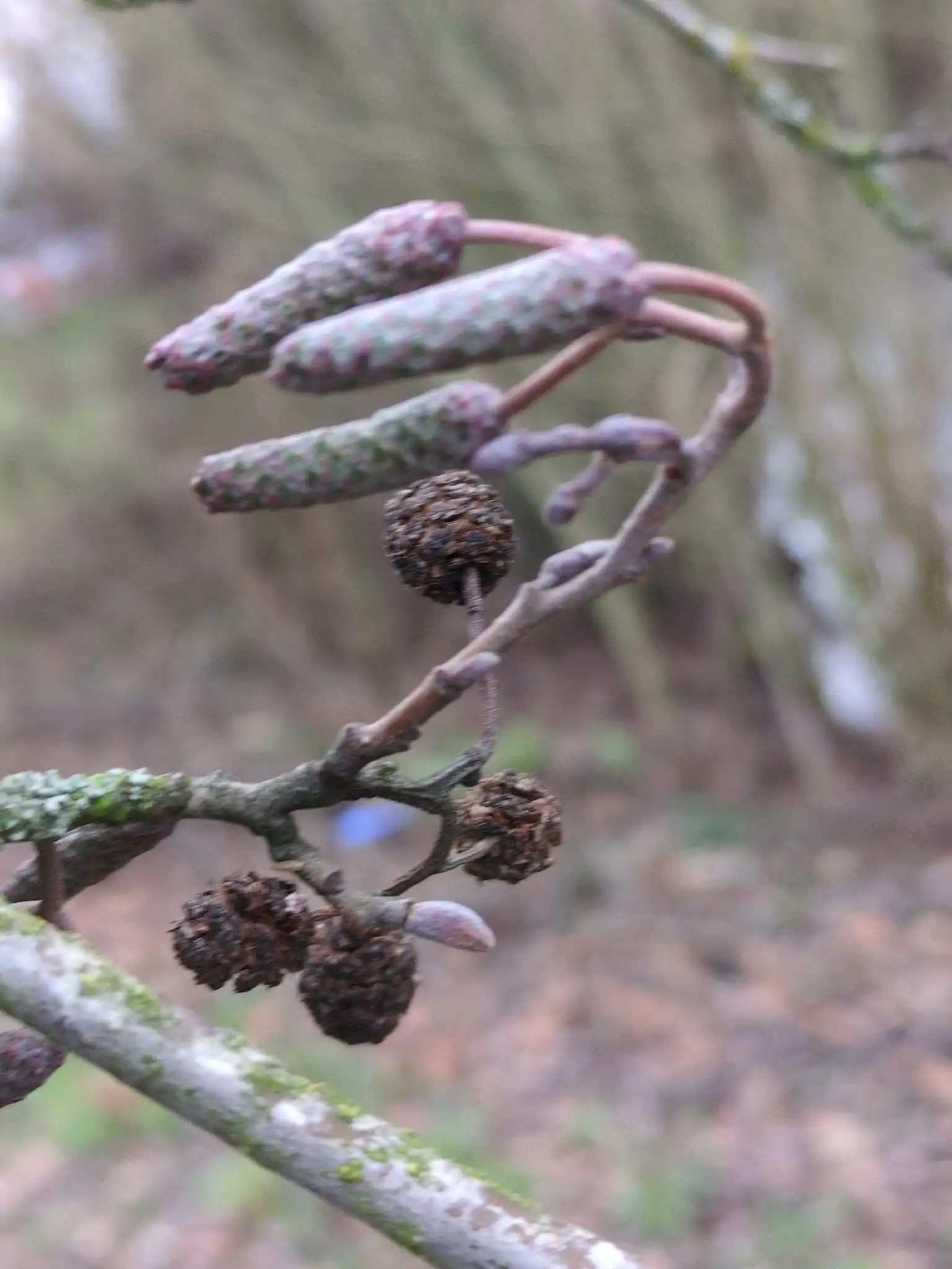
Alnus glutinosa, the black alder, is a deciduous tree reaching forty to sixty feet in cultivation, distinguished by its dark green, rounded leaves with notched tips and sticky young twigs. The species is highly adapted to saturated soils, producing wind-pollinated, reddish-brown male catkins in early spring before the foliage emerges.
This species forms a symbiotic relationship with nitrogen-fixing bacteria, allowing it to thrive in nutrient-poor, waterlogged soils where other trees fail. The female flowers mature into woody, cone-like structures that persist on the branches through winter, providing food for small birds.
Uses & Benefits:
Essentials
At a Glance
Plant Type
Tree
Height
708"
Width
472"
Light
Full Sun, Partial Sun
Zones
4, 5, 6, 7
Water
High
Humidity
High
Lifespan
50 to 100 years
Native To
Europe, western Asia, northern Africa
Toxicity
Non-toxic but can cause minor skin irritation from resin
Bloom period
Early spring
In flower about 1 month of the year
Planting
How to Grow
- Plant in a full sun to partially shaded location with moist, wet, or poorly drained soil.
- Water regularly during the first two growing seasons to establish a deep root system.
- Prune in mid-winter to remove root suckers if a single-trunked tree form is desired.
- Avoid applying nitrogen fertilizers, as the root nodules fix sufficient nitrogen naturally.
Pro Tip
Prune root suckers in mid-winter to maintain a single-trunked tree form; cutting aggressively into old, leafless wood without visible buds results in poor recovery.
Keep It Thriving
Care Guide
Do
- Prune during winter dormancy to shape the canopy and control suckers.
- Plant in wet areas, rain gardens, or boggy sites where other trees struggle.
- Monitor for Japanese beetles and apply targeted insecticidal soaps if damage is severe.
Don't
- Do not plant in dry, upland landscape beds where the tree will suffer from drought stress.
- Do not prune aggressively into old, leafless wood lacking visible growth buds.
- Do not apply nitrogen-heavy fertilizers, which can disrupt the natural root nodule symbiosis.
Seasonal Care Calendar
| Task | Jan | Feb | Mar | Apr | May | Jun | Jul | Aug | Sep | Oct | Nov | Dec |
|---|---|---|---|---|---|---|---|---|---|---|---|---|
| Pest Check | ||||||||||||
| Plant | ||||||||||||
| Prune | ||||||||||||
| Spring Cleanup |
Watch Out For
Pests & Diseases
Common Pests
Common Diseases
In the Garden
Landscape Uses & Companions
Landscape Uses
Companion Plants
Multiply
Propagation Methods
Good to Know
Common Questions
Black Alder questions
What zones can Black Alder grow in?
Black Alder is hardy in USDA Zones 4–7. Inside that range it survives winter in the ground; outside it, grow it as an annual or a container plant you protect.
Is Black Alder deer resistant?
Not reliably. Deer may browse Black Alder, especially tender spring growth — plan on repellents or fencing where pressure is high.
When does Black Alder bloom?
Black Alder typically blooms in early spring through early spring. Exact timing shifts a week or two with your zone — Sow's bloom calendar maps it to your garden.
Does Black Alder need full sun?
Black Alder does best in full sun to part shade. In hot climates, afternoon shade keeps blooms fresher longer.
More Alnus to compare
Keep exploring
Explore the genus
Hardy in your zone?
Grow Black Alder with confidence
See it in a design of your actual yard, get zone-matched care reminders, and track it season by season in your garden journal.