The Story
Plant Bio
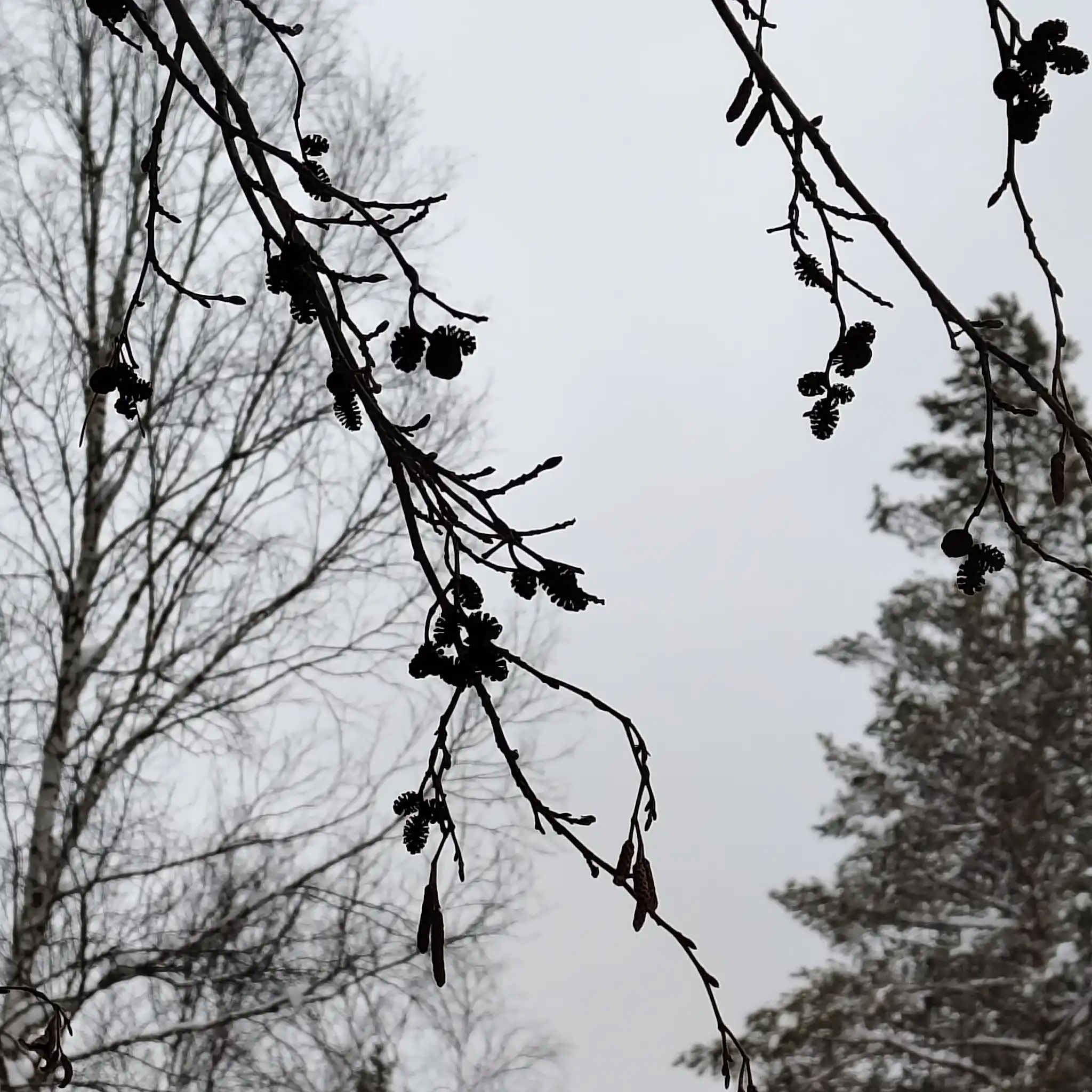
Alnus incana is a deciduous, multi-stemmed large shrub or medium tree native to the cooler regions of the Northern Hemisphere, where it thrives in wet, saturated soils. In early spring, before the foliage emerges, the branches hang with long, pendulous male catkins that shed wind-borne pollen.
The species features matte dark green, doubly serrated leaves with pale, sometimes downy undersides. It spreads via an extensive root system that produces vigorous suckers, readily forming dense thickets ideal for stabilizing banks.
Uses & Benefits:
Essentials
At a Glance
Plant Type
Tree
Height
480"
Width
240"
Light
Full Sun, Partial Sun
Zones
4, 5, 6
Water
High
Humidity
High
Lifespan
Moderate
Native To
Northern Hemisphere
Toxicity
Non-toxic
Bloom period
Early spring – Mid-spring
In flower about 2 months of the year
Planting
How to Grow
- Select a planting site with full sun to partial shade and consistently moist, wet, or poorly drained soil.
- Dig a hole twice as wide as the root ball and set the plant at the same depth it grew in the container.
- Water thoroughly after planting and maintain consistent soil moisture, especially during dry spells.
- Prune in late winter or early spring while dormant to remove dead wood or manage multi-stemmed growth.
Pro Tip
Avoid applying nitrogen fertilizer, as the root system hosts symbiotic Frankia bacteria that fix atmospheric nitrogen directly into the soil. Minimize root disturbance and heavy pruning near the base to prevent the rapid development of aggressive root suckers.
Keep It Thriving
Care Guide
Do
- Plant in poorly drained, heavy clay, or seasonally flooded areas where other trees struggle.
- Prune during the dormant winter period to shape the canopy and remove cankered wood.
- Maintain high soil moisture levels, as the root system is highly susceptible to drought stress.
Don't
- Do not apply nitrogen-heavy fertilizers, as the plant fixes its own nitrogen.
- Do not plant in dry, sandy soils or areas prone to prolonged drought.
- Do not prune heavily or disturb the soil around the root zone unless you want to stimulate sucker growth.
Seasonal Care Calendar
| Task | Jan | Feb | Mar | Apr | May | Jun | Jul | Aug | Sep | Oct | Nov | Dec |
|---|---|---|---|---|---|---|---|---|---|---|---|---|
| Mulch | ||||||||||||
| Pest Check | ||||||||||||
| Plant | ||||||||||||
| Prune |
Watch Out For
Pests & Diseases
Common Pests
Common Diseases
In the Garden
Landscape Uses & Companions
Landscape Uses
Companion Plants
Multiply
Propagation Methods
Good to Know
Common Questions
Grey Alder questions
What zones can Grey Alder grow in?
Grey Alder is hardy in USDA Zones 4–6. Inside that range it survives winter in the ground; outside it, grow it as an annual or a container plant you protect.
Is Grey Alder deer resistant?
Not reliably. Deer may browse Grey Alder, especially tender spring growth — plan on repellents or fencing where pressure is high.
When does Grey Alder bloom?
Grey Alder typically blooms in early spring through mid-spring. Exact timing shifts a week or two with your zone — Sow's bloom calendar maps it to your garden.
Does Grey Alder need full sun?
Grey Alder does best in full sun to part shade. In hot climates, afternoon shade keeps blooms fresher longer.
More Alnus to compare
Keep exploring
Explore the genus
Hardy in your zone?
Grow Grey Alder with confidence
See it in a design of your actual yard, get zone-matched care reminders, and track it season by season in your garden journal.