The Story
Plant Bio
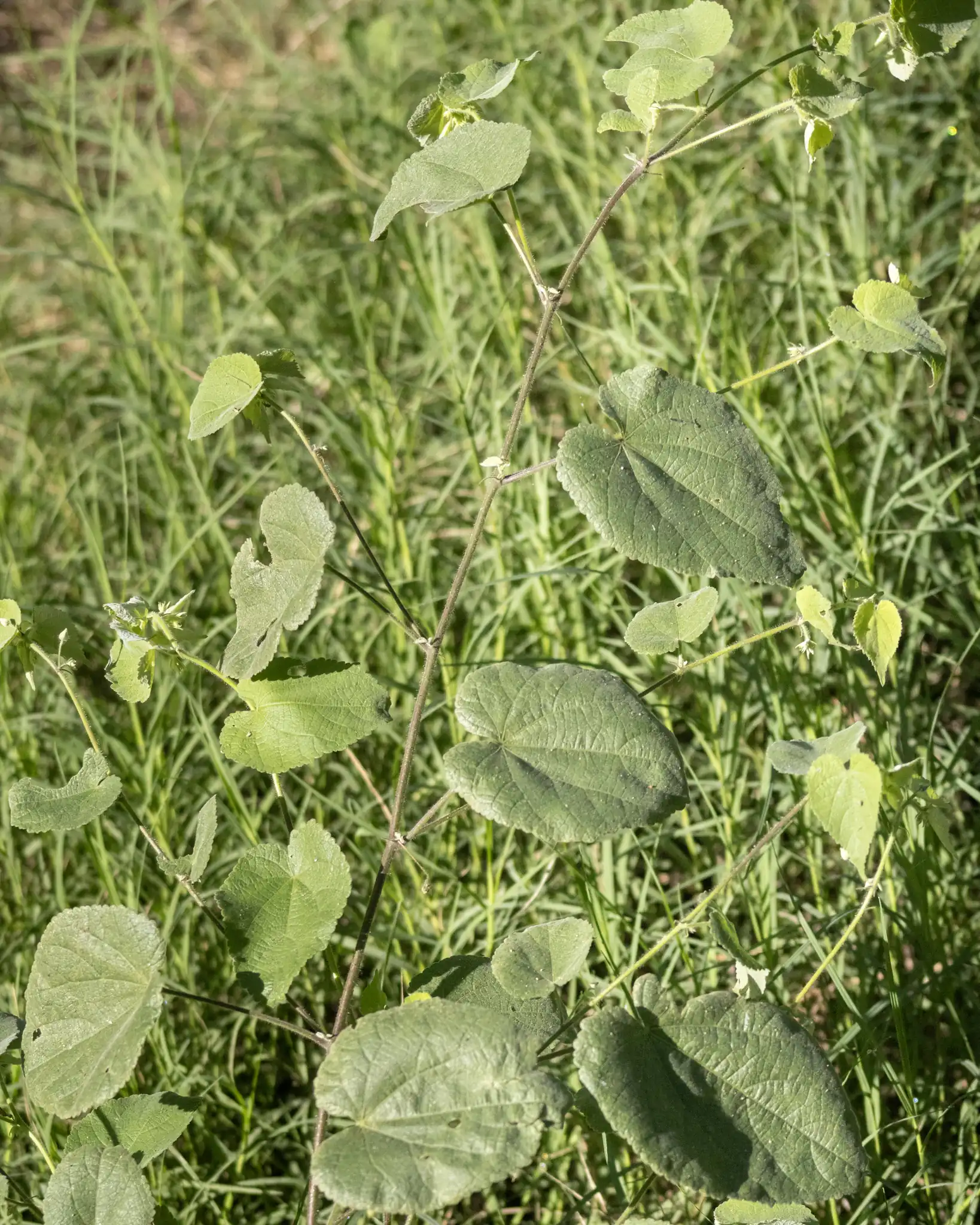
Herissantia crispa is a sprawling mallow of the tropical Americas that grows as a procumbent annual or short-lived perennial herb, with stems woody only at the base and reaching three to five feet long. The leaves are ovate to heart-shaped, one to three inches long with crenate edges and a coat of star-shaped hairs mixed with long simple hairs, and the solitary leaf-axil flowers mature into inflated papery bladders that fall apart when dry.
It carries single pale yellow to creamy-white flowers on jointed pedicels about one inch long that recurve as the fruit swells, with five petals a quarter to one-half inch long and the calyx folded back beneath the bladder. It differs from shrubby Abutilon, under which name it was long sold, by its low trailing habit to about three feet wide and its spring to winter bloom in frost-free ground.
Uses & Benefits:
Essentials
At a Glance
Plant Type
Perennial
Height
59"
Width
39"
Light
Full Sun, Partial Sun
Zones
9, 10
Water
Low
Humidity
Average
Lifespan
Short-lived perennial
Native To
Tropical Americas, southern USA to Argentina
Toxicity
Seeds toxic if ingested
Bloom period
Spring – Winter
In flower about 12 months of the year
Planting
How to Grow
- Plant in full sun in poor, well-drained sandy or loamy soil after danger of frost has passed.
- Space plants 24 to 36 inches apart to allow trailing stems to sprawl.
- Water to establish, then water sparingly; established plants tolerate dry spells.
- Do not enrich with heavy fertilizer; lean conditions keep growth compact and flowering.
- Leave bladders to dry on the plant if you want self-sown seedlings the next warm season.
Pro Tip
Give it lean, sharply drained soil in full sun and keep water and fertilizer low; rich, frequently watered beds produce soft sprawling growth with fewer bladders.
Keep It Thriving
Care Guide
Do
- Plant in full sun with sharp drainage
- Allow stems room to trail along the ground
- Leave flowers for bees and butterflies
Don't
- Do not plant in rich, wet soil
- Do not overwater or overfeed
- Do not eat seeds; seed oil is unfit for consumption
Seasonal Care Calendar
| Task | Jan | Feb | Mar | Apr | May | Jun | Jul | Aug | Sep | Oct | Nov | Dec |
|---|---|---|---|---|---|---|---|---|---|---|---|---|
| Mulch | ||||||||||||
| Pest Check | ||||||||||||
| Plant | ||||||||||||
| Propagate | ||||||||||||
| Prune |
Watch Out For
Pests & Diseases
Common Pests
Common Diseases
In the Garden
Landscape Uses & Companions
Landscape Uses
Multiply
Propagation Methods
Good to Know
Common Questions
Bladdermallow questions
What zones can Bladdermallow grow in?
Bladdermallow is hardy in USDA Zones 9–10: in that range it survives winter in the ground. Colder than Zone 9, grow it in a container you can move to shelter for the winter, or as an annual.
When does Bladdermallow bloom?
Bladdermallow typically blooms in spring. Exact timing shifts a week or two with your zone — Sow's bloom calendar maps it to your garden.
Does Bladdermallow need full sun?
Bladdermallow does best in full sun to part shade. In hot climates, afternoon shade keeps blooms fresher longer.
Is Bladdermallow drought tolerant?
Yes — once established (usually after the first full season), Bladdermallow handles dry spells with minimal watering. Water deeply its first year to build the root system that makes that possible.
Keep exploring
Explore the genus
Hardy in your zone?
Grow Bladdermallow with confidence
See it in a design of your actual yard, get zone-matched care reminders, and track it season by season in your garden journal.