The Story
Plant Bio
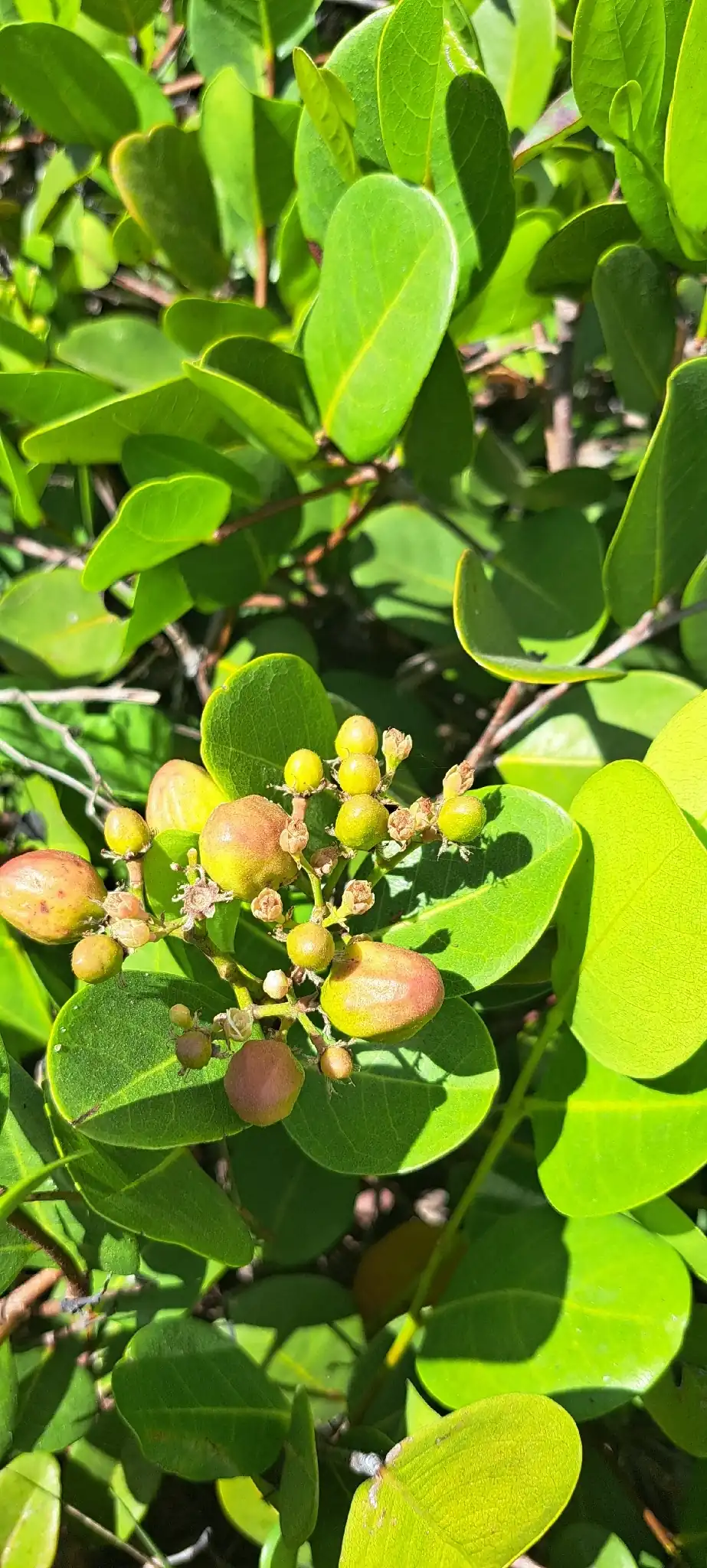
Chrysobalanus icaco, the cocoplum, is an evergreen shrub to small tree with alternate thick leathery leaves 1.5 to 3.5 inches long, glossy dark green above with turned-under margins and yellow-green to red-tinged new growth. The flowers have no petals to speak of; the display comes from short axillary clusters of small white flowers with a yellow staminal tube, followed by thin-skinned white to purple drupes.
Cocoplum grows as two intergrading forms: a low wide-spreading coastal mound to about 6 feet tall used for hedges and groundcover, and a fast upright inland form that makes a rounded multi-trunked tree 15 to 25 feet tall if left unpruned. Inland selections with burgundy-red new leaves are sold as Red Tip and those with light green new leaves as Green Tip, while the low coastal form is sold as Horizontal, and seed-grown plants between them hybridize freely.
Uses & Benefits:
Essentials
At a Glance
Plant Type
Shrub
Height
240"
Width
240"
Light
Full Sun, Partial Sun
Zones
9, 10
Water
Medium
Humidity
High
Lifespan
Long-lived
Native To
Florida, Caribbean, tropical Americas, West and Central Africa
Toxicity
Non-toxic
Bloom period
Late spring – Summer
In flower about 4 months of the year
Planting
How to Grow
- Set potted plants in full sun to light shade in sandy to clay soil after danger of frost has passed.
- Water deeply at planting and through the first dry season, then taper to natural rainfall.
- Mulch 2 to 3 inches deep, keeping mulch off the stems, to hold moisture on sand.
- Shear or hand-prune after fruiting to hold hedge height and let light into the interior.
- Feed lightly if at all; excess fertilizer pushes soft upright shoots that need more pruning.
Pro Tip
Shear Horizontal for low hedges and hand-prune Red Tip to keep colored new growth coming; both refill from leafy wood but fill slowly from old bare stems.
Keep It Thriving
Care Guide
Do
- Do plant Horizontal where salt spray and wind prune other hedges.
- Do pick fruit only when fully white to purple and soft; it will not ripen off the plant.
- Do propagate named forms from cuttings or layers to keep form and tip color true.
Don't
- Do not plant where hard freezes occur; foliage is killed near 32F.
- Do not buy seed-grown plants labeled dwarf and expect them to stay small without pruning.
- Do not cut inland forms back to leafless trunks and expect fast even regrowth.
Seasonal Care Calendar
| Task | Jan | Feb | Mar | Apr | May | Jun | Jul | Aug | Sep | Oct | Nov | Dec |
|---|---|---|---|---|---|---|---|---|---|---|---|---|
| Fertilize | ||||||||||||
| Harvest | ||||||||||||
| Pest Check | ||||||||||||
| Plant | ||||||||||||
| Prune |
Watch Out For
Pests & Diseases
Common Pests
Common Diseases
In the Garden
Landscape Uses & Companions
Landscape Uses
Companion Plants
Multiply
Propagation Methods
Good to Know
Common Questions
Cocoplum questions
What zones can Cocoplum grow in?
Cocoplum is hardy in USDA Zones 9–10: in that range it survives winter in the ground. Colder than Zone 9, grow it in a container you can move to shelter for the winter.
When does Cocoplum bloom?
Cocoplum typically blooms from late spring to late summer. Exact timing shifts a week or two with your zone — Sow's bloom calendar maps it to your garden.
Does Cocoplum need full sun?
Cocoplum does best in full sun to part shade. In hot climates, afternoon shade keeps blooms fresher longer.
Is Cocoplum drought tolerant?
Yes — once established (usually after the first full season), Cocoplum handles dry spells with minimal watering. Water deeply its first year to build the root system that makes that possible.
Keep exploring
Explore the genus
Hardy in your zone?
Grow Cocoplum with confidence
See it in a design of your actual yard, get zone-matched care reminders, and track it season by season in your garden journal.