The Story
Plant Bio
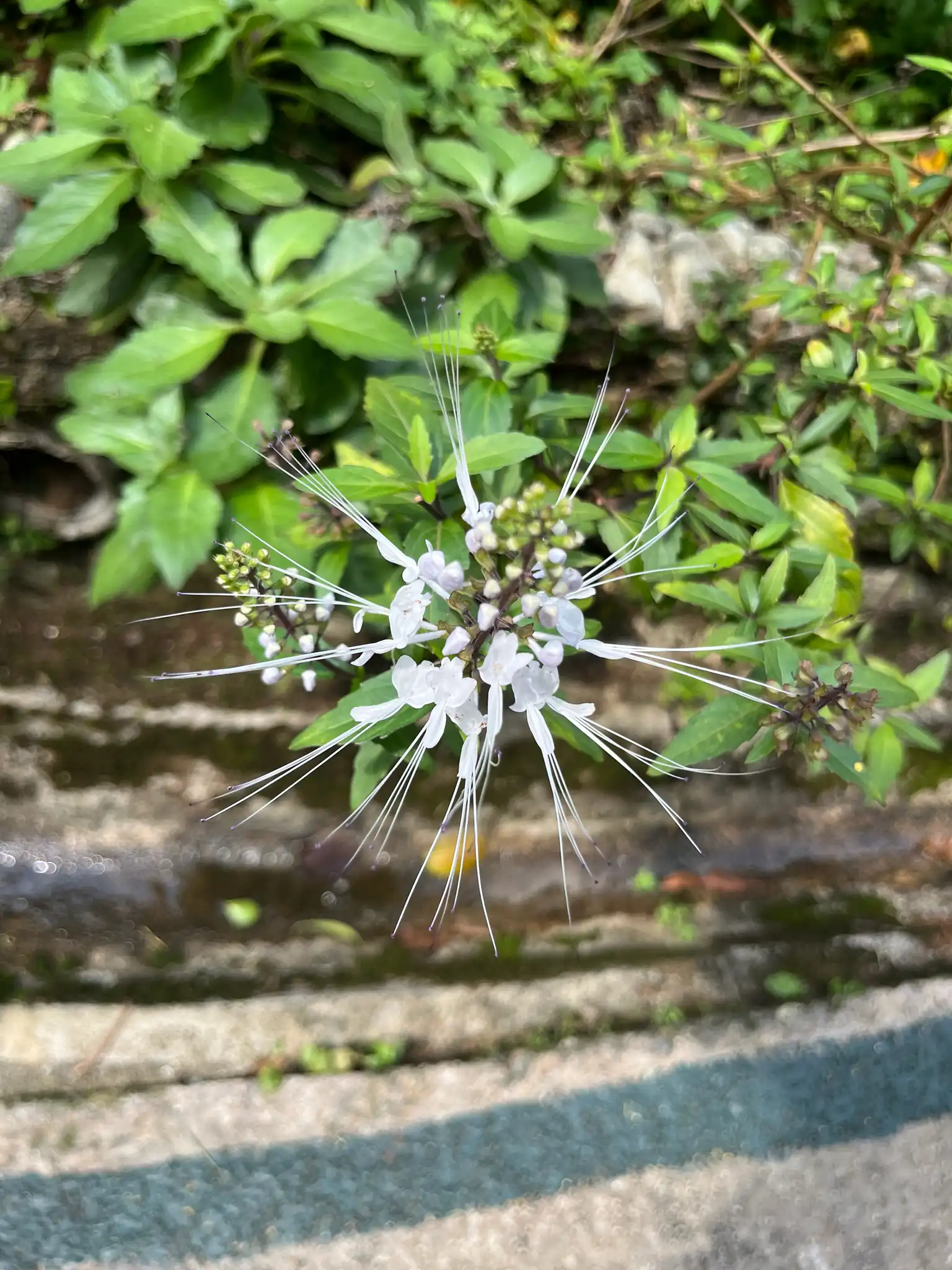
Orthosiphon aristatus, commonly known as cat's whiskers, is an upright subshrub featuring square stems and dark green, toothed foliage. From summer through fall, it produces terminal racemes of white to pale purple blooms with extraordinarily long, protruding stamens.
The protruding stamens extend up to two inches beyond the tubular corolla, creating the distinct whisker-like appearance that attracts hummingbirds and butterflies. Though a tender subshrub in warm regions, it functions effectively as a summer container plant or bedding annual in frost-prone areas.
Uses & Benefits:
Essentials
At a Glance
Plant Type
Perennial
Height
36"
Width
20"
Light
Full Sun, Partial Sun
Zones
9, 10
Water
Moderate
Humidity
Moderate to High
Lifespan
Perennial
Native To
Asia, Northern Australia
Toxicity
Mild skin irritant
Bloom period
Summer – Fall
In flower about 6 months of the year
Planting
How to Grow
- Select a planting site in full sun to partial shade with light, fertile, sharply draining soil.
- Space plants 12 to 18 inches apart to ensure proper air circulation around mature growth.
- Water regularly to keep the soil evenly moist during the active growing season, taking care never to leave roots in waterlogged soil.
- Pinch back stem tips during early growth to encourage bushy branching and increase flower production.
Pro Tip
Maintain consistent soil moisture paired with strict drainage; drying out completely triggers immediate leaf drop, while stagnant moisture rapidly causes root rot.
Keep It Thriving
Care Guide
Do
- Do plant in fertile, exceptionally well-drained soil to avoid root issues.
- Do pinch young growing tips regularly to build a full, bushy habit.
- Do bring potted plants indoors before the first fall frost in cold regions.
Don't
- Don't let the soil waterlog or sit in standing water.
- Don't allow the root zone to dry out completely during active summer growth.
- Don't cut into old, dead leafless stem wood without visible live buds when pruning.
Seasonal Care Calendar
| Task | Jan | Feb | Mar | Apr | May | Jun | Jul | Aug | Sep | Oct | Nov | Dec |
|---|---|---|---|---|---|---|---|---|---|---|---|---|
| Fertilize | ||||||||||||
| Pest Check | ||||||||||||
| Pinch | ||||||||||||
| Prune |
Watch Out For
Pests & Diseases
Common Pests
Common Diseases
In the Garden
Landscape Uses & Companions
Landscape Uses
Companion Plants
Multiply
Propagation Methods
Good to Know
Common Questions
Cat's Whiskers questions
What zones can Cat's Whiskers grow in?
Cat's Whiskers is hardy in USDA Zones 9–10: in that range it survives winter in the ground. Colder than Zone 9, grow it in a container you can move to shelter for the winter, or as an annual.
When does Cat's Whiskers bloom?
Cat's Whiskers typically blooms from summer to fall. Exact timing shifts a week or two with your zone — Sow's bloom calendar maps it to your garden.
Does Cat's Whiskers need full sun?
Cat's Whiskers does best in full sun to part shade. In hot climates, afternoon shade keeps blooms fresher longer.
Is Cat's Whiskers drought tolerant?
Yes — once established (usually after the first full season), Cat's Whiskers handles dry spells with minimal watering. Water deeply its first year to build the root system that makes that possible.
Keep exploring
Explore the genus
Hardy in your zone?
Grow Cat's Whiskers with confidence
See it in a design of your actual yard, get zone-matched care reminders, and track it season by season in your garden journal.