The Story
Plant Bio
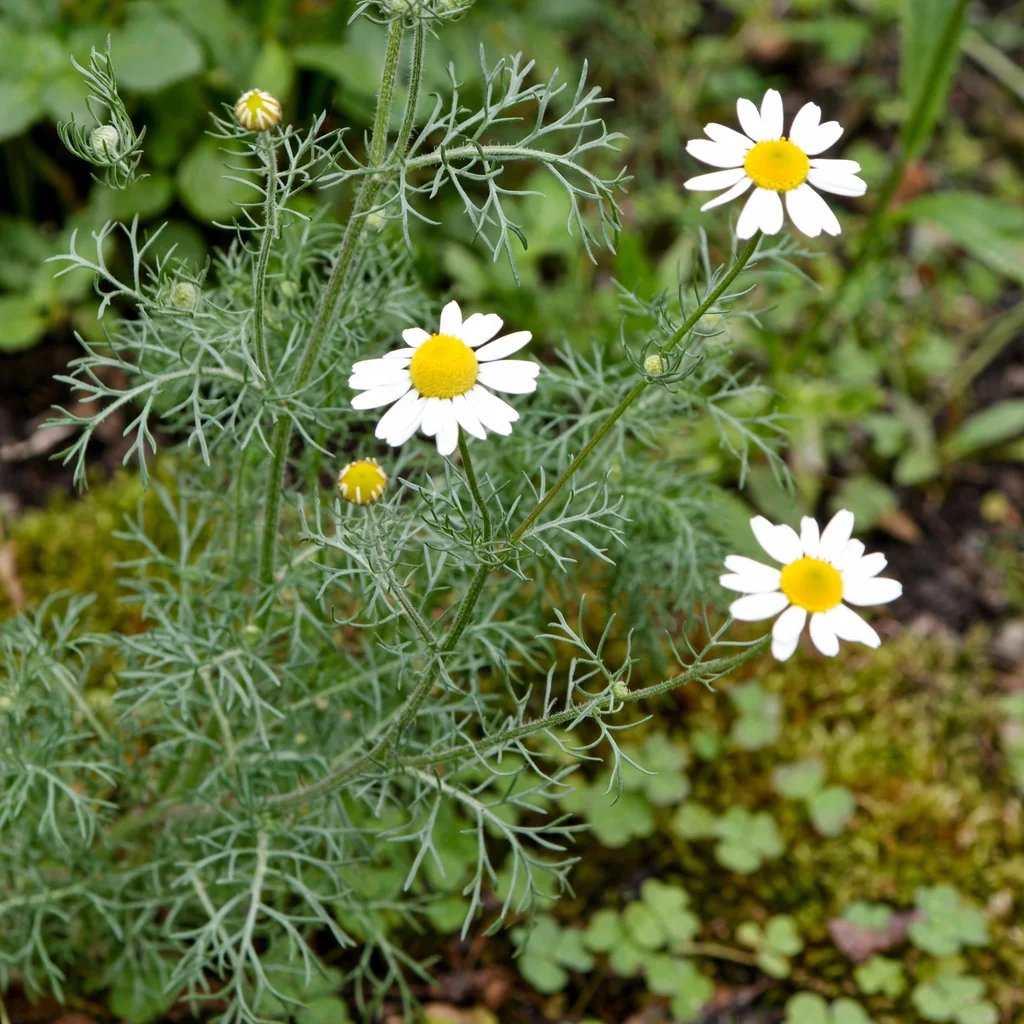
Chamaemelum nobile is a low, mat-forming evergreen perennial from western Europe and North Africa, rooting along decumbent stems to make a dense, fine-textured turf. The foliage is alternate, finely divided and downy, releasing an apple scent when crushed.
Unlike annual German chamomile, it persists year to year as a spreading perennial that tolerates light foot traffic and mowing as a scented lawn. Solitary daisy heads under an inch across, with 7 to 20 white rays around a gold disc, open in summer into fall above the foliage.
Uses & Benefits:
Essentials
At a Glance
Plant Type
Perennial
Height
12"
Width
12"
Light
Full Sun, Partial Sun
Zones
4, 5, 6, 7, 8, 9
Water
Moist to occasionally dry
Humidity
Low to moderate; needs airflow in humidity
Lifespan
Perennial
Native To
Western Europe to North Africa and Azores
Toxicity
Toxic; skin irritant, harmful to cats, dogs and horses
Bloom period
Summer – Fall
In flower about 6 months of the year
Planting
How to Grow
- Plant in full sun to partial shade in loam or sand with good drainage, spacing for airflow.
- Set crowns at soil level and water in, then keep evenly moist until rooted.
- Water at the base and let soil dry briefly between waterings; avoid overhead irrigation.
- Mow or shear a chamomile lawn lightly and deadhead flowering patches to reduce mildew.
Pro Tip
Set divisions in full sun with space for airflow and water at the base; crowding and overhead watering cause mildew, not vigor.
Keep It Thriving
Care Guide
Do
- Do plant in well-drained soil with room for air movement.
- Do water at the base and allow brief drying between waterings.
- Do deadhead spent blooms and mow lawn plantings to keep the mat dense.
Don't
- Don't overwater or crowd plants; wet foliage invites mildew and rot.
- Don't plant in heavy clay or soggy ground.
- Don't ingest in quantity; foliage oils cause dermatitis and are harmful to cats, dogs and horses.
Seasonal Care Calendar
| Task | Jan | Feb | Mar | Apr | May | Jun | Jul | Aug | Sep | Oct | Nov | Dec |
|---|---|---|---|---|---|---|---|---|---|---|---|---|
| Deadhead | ||||||||||||
| Divide | ||||||||||||
| Pest Check | ||||||||||||
| Plant | ||||||||||||
| Spring Cleanup |
Watch Out For
Pests & Diseases
Common Pests
Common Diseases
In the Garden
Landscape Uses & Companions
Landscape Uses
Multiply
Propagation Methods
Good to Know
Common Questions
Roman Chamomile questions
What zones can Roman Chamomile grow in?
Roman Chamomile is hardy in USDA Zones 4–9: in that range it survives winter in the ground. Warmer than Zone 9, winter isn't the problem: it prefers colder winters, and summer heat can shorten its life.
When does Roman Chamomile bloom?
Roman Chamomile typically blooms from summer to fall. Exact timing shifts a week or two with your zone — Sow's bloom calendar maps it to your garden.
Does Roman Chamomile need full sun?
Roman Chamomile does best in full sun to part shade. In hot climates, afternoon shade keeps blooms fresher longer.
Is Roman Chamomile drought tolerant?
Yes — once established (usually after the first full season), Roman Chamomile handles dry spells with minimal watering. Water deeply its first year to build the root system that makes that possible.
Keep exploring
Explore the genus
Grow Roman Chamomile with confidence
See it in a design of your actual yard, get zone-matched care reminders, and track it season by season in your garden journal.