The Story
Plant Bio
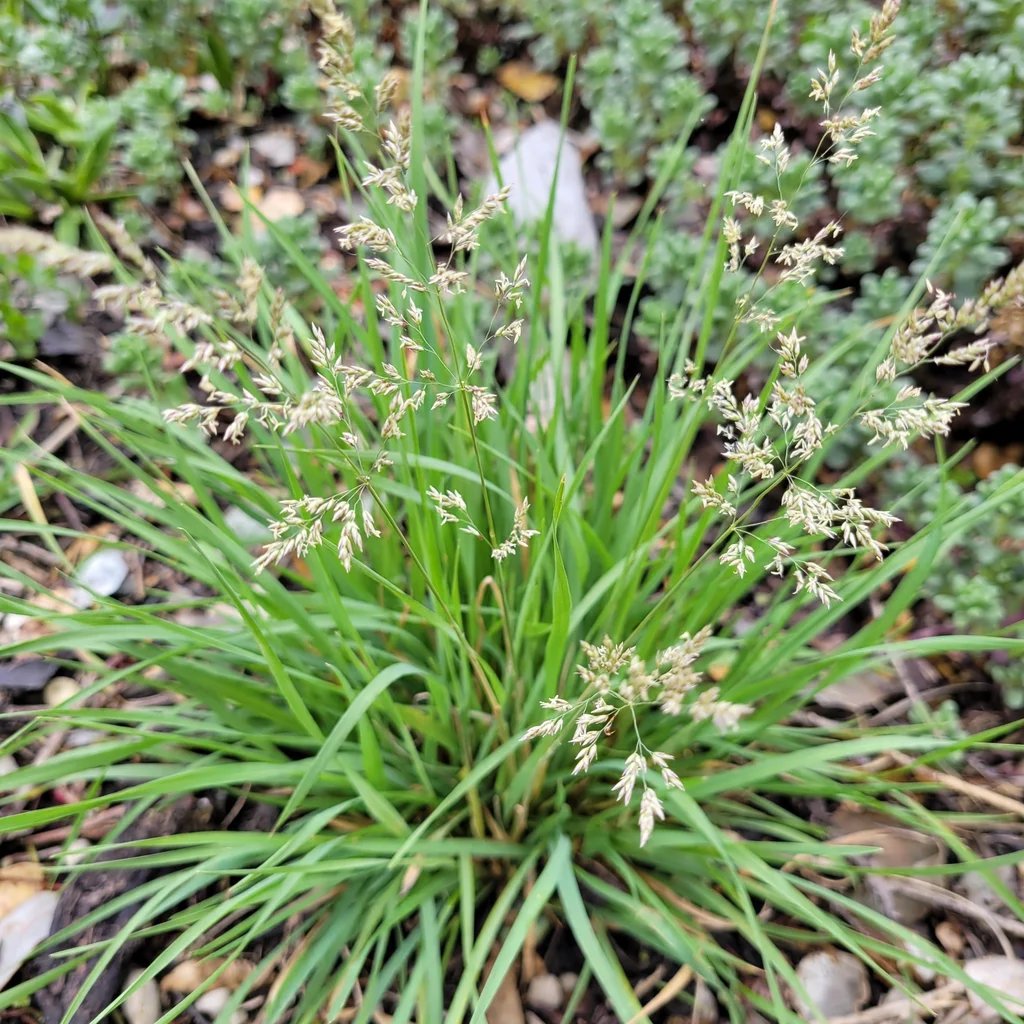
Agrostis pallens, thingrass, is a perennial cool-season bunchgrass from western North America that forms a fine-textured tuft 4 to 24 inches high and spreads slowly by short rhizomes into a low mat. The blades are narrow flat to inrolled leaves 1 to 6 millimeters wide that hold green color with summer water and go dormant without it, topped in spring by an open 3 to 10 centimeter panicle that opens purplish and ripens straw colored.
Unlike the creeping bentgrass used for golf greens, thingrass is a low-water native grown as a mowable lawn or as an unmowed meadow with little fertilizer and at most weekly summer irrigation. Stands that turn brown in dry summers are dormant rather than dead and green up again with fall rain, so summer browning calls for reduced mowing rather than extra water or feed.
Uses & Benefits:
Essentials
At a Glance
Plant Type
Grass
Height
12"
Width
12"
Light
Full Sun, Partial Sun
Zones
6, 7, 8, 9
Water
Low
Humidity
Unknown
Lifespan
Perennial
Native To
Western North America
Toxicity
Non-toxic
Bloom period
Spring
In flower about 3 months of the year
Planting
How to Grow
- Set plugs 12 inches apart in fall to early spring into well-drained sandy to loam soil cleared of weeds.
- Water evenly through the first growing season to root the rhizomes, then taper to no more than once per week in summer.
- Mow lawn stands at 1 to 3 inches, or leave meadow stands unmowed and rake out thatch in early spring.
- Feed lightly if at all in early spring; excess nitrogen softens growth and invites leaf disease.
- Reduce or stop mowing if foliage browns in summer drought and resume normal care with fall rain.
Pro Tip
Plant plugs in fall and keep them evenly moist through the first year, then taper to deep infrequent water; never cut a tall shaggy stand down to lawn height in one pass.
Keep It Thriving
Care Guide
Do
- Plant in fall to early spring for cool-season rooting
- Give full sun to part shade with open air and good drainage
- Water deeply but infrequently once established
Don't
- Do not plant in standing water or heavy unamended clay
- Do not shear a tall shaggy stand to short turf in one cut
- Do not overwater or overfertilize to force summer green
Seasonal Care Calendar
| Task | Jan | Feb | Mar | Apr | May | Jun | Jul | Aug | Sep | Oct | Nov | Dec |
|---|---|---|---|---|---|---|---|---|---|---|---|---|
| Fertilize | ||||||||||||
| Pest Check | ||||||||||||
| Plant | ||||||||||||
| Prune | ||||||||||||
| Spring Cleanup |
Watch Out For
Pests & Diseases
Common Pests
Common Diseases
In the Garden
Landscape Uses & Companions
Landscape Uses
Multiply
Propagation Methods
Good to Know
Common Questions
Thingrass questions
What zones can Thingrass grow in?
Thingrass is hardy in USDA Zones 6–9: in that range it survives winter in the ground. Colder than Zone 6, grow it in a container you can move to shelter for the winter, or as an annual. Warmer than Zone 9, winter isn't the problem: it prefers colder winters, and summer heat can shorten its life.
Is Thingrass deer resistant?
Yes — Thingrass is rated deer-resistant. Deer typically pass it over, though extreme hunger can override any plant's defenses.
When does Thingrass bloom?
Thingrass typically blooms in spring. Exact timing shifts a week or two with your zone — Sow's bloom calendar maps it to your garden.
Does Thingrass need full sun?
Thingrass does best in full sun to part shade. In hot climates, afternoon shade keeps blooms fresher longer.
Is Thingrass drought tolerant?
Yes — once established (usually after the first full season), Thingrass handles dry spells with minimal watering. Water deeply its first year to build the root system that makes that possible.
Keep exploring
Explore the genus
Hardy in your zone?
Grow Thingrass with confidence
See it in a design of your actual yard, get zone-matched care reminders, and track it season by season in your garden journal.