The Story
Plant Bio
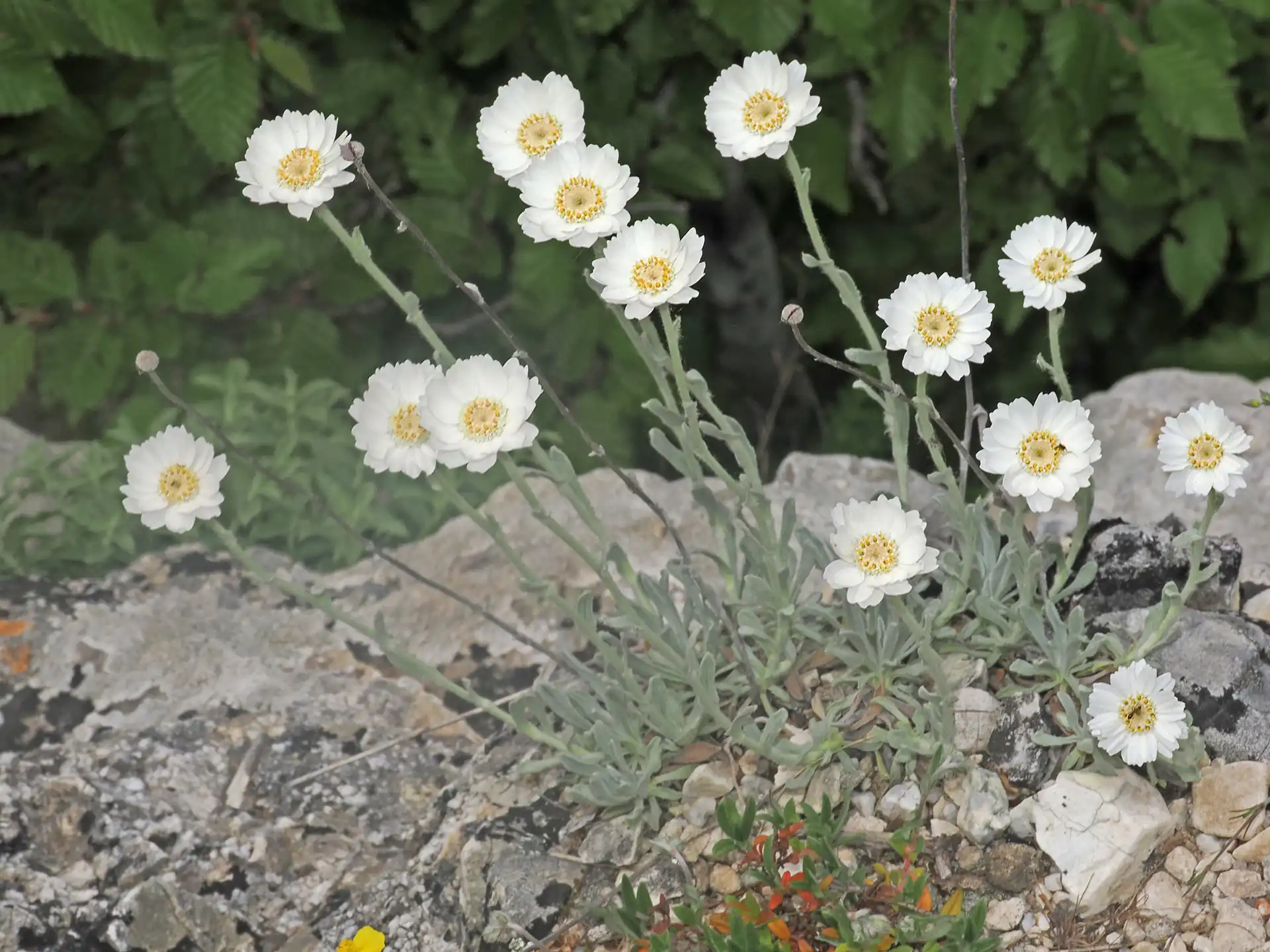
Achillea ageratifolia is a low, woody-based perennial from the limestone cliffs and scree of the Balkan Peninsula. It forms a tight mat of narrow, hairy gray-green leaves that hold through winter in mild climates and carries white daisy heads with yellow centers on short stems in late spring.
Unlike common yarrow, it stays as a compact 6- to 8-inch cushion and bears solitary 1-inch heads in a loose, unbranched cluster rather than a dense flat umbel. Its silvery, toothed foliage demands sharp drainage in lean, stony or calcareous gravel and rots where soil stays wet or rich.
Uses & Benefits:
Essentials
At a Glance
Plant Type
Perennial
Height
8"
Width
14"
Light
Full Sun
Zones
4, 5, 6, 7, 8
Water
Low
Humidity
Low
Lifespan
Perennial
Native To
Balkan Peninsula
Toxicity
Unknown - may irritate skin
Bloom period
Late spring – Summer
In flower about 4 months of the year
Planting
How to Grow
- Plant in full sun in lean, sandy or stony soil with limestone grit for sharp drainage.
- Set the crown level with the soil surface and water in once, then keep dry to medium.
- Water at the base only and let soil dry between waterings; never overhead water.
- Clip spent heads after bloom and clear weeds that trap moisture around the mat.
- Divide congested mats in spring to renew vigor and keep drainage open at the crown.
Pro Tip
Plant high in gritty, lime-amended scree and withhold water once established; wet, rich soil kills it faster than cold.
Keep It Thriving
Care Guide
Do
- Plant in full sun with open air flow
- Use lean, stony or calcareous gravel soil
- Water at the base and let soil dry out
- Deadhead after bloom to keep the mat tight
Don't
- Do not plant in rich, wet or shaded soil
- Do not overwater or apply heavy fertilizer
- Do not mulch heavily over the crown
Seasonal Care Calendar
| Task | Jan | Feb | Mar | Apr | May | Jun | Jul | Aug | Sep | Oct | Nov | Dec |
|---|---|---|---|---|---|---|---|---|---|---|---|---|
| Deadhead | ||||||||||||
| Divide | ||||||||||||
| Pest Check | ||||||||||||
| Plant | ||||||||||||
| Spring Cleanup |
Watch Out For
Pests & Diseases
Common Pests
Common Diseases
In the Garden
Landscape Uses & Companions
Landscape Uses
Multiply
Propagation Methods
Good to Know
Common Questions
Greek Yarrow questions
What zones can Greek Yarrow grow in?
Greek Yarrow is hardy in USDA Zones 4–8: in that range it survives winter in the ground. Warmer than Zone 8, winter isn't the problem: it prefers colder winters, and summer heat can shorten its life.
Is Greek Yarrow deer resistant?
Yes — Greek Yarrow is rated deer-resistant. Deer typically pass it over, though extreme hunger can override any plant's defenses.
When does Greek Yarrow bloom?
Greek Yarrow typically blooms from late spring to late summer. Exact timing shifts a week or two with your zone — Sow's bloom calendar maps it to your garden.
Does Greek Yarrow need full sun?
Greek Yarrow does best in full sun (6+ hours).
Is Greek Yarrow drought tolerant?
Yes — once established (usually after the first full season), Greek Yarrow handles dry spells with minimal watering. Water deeply its first year to build the root system that makes that possible.
More Achillea to compare
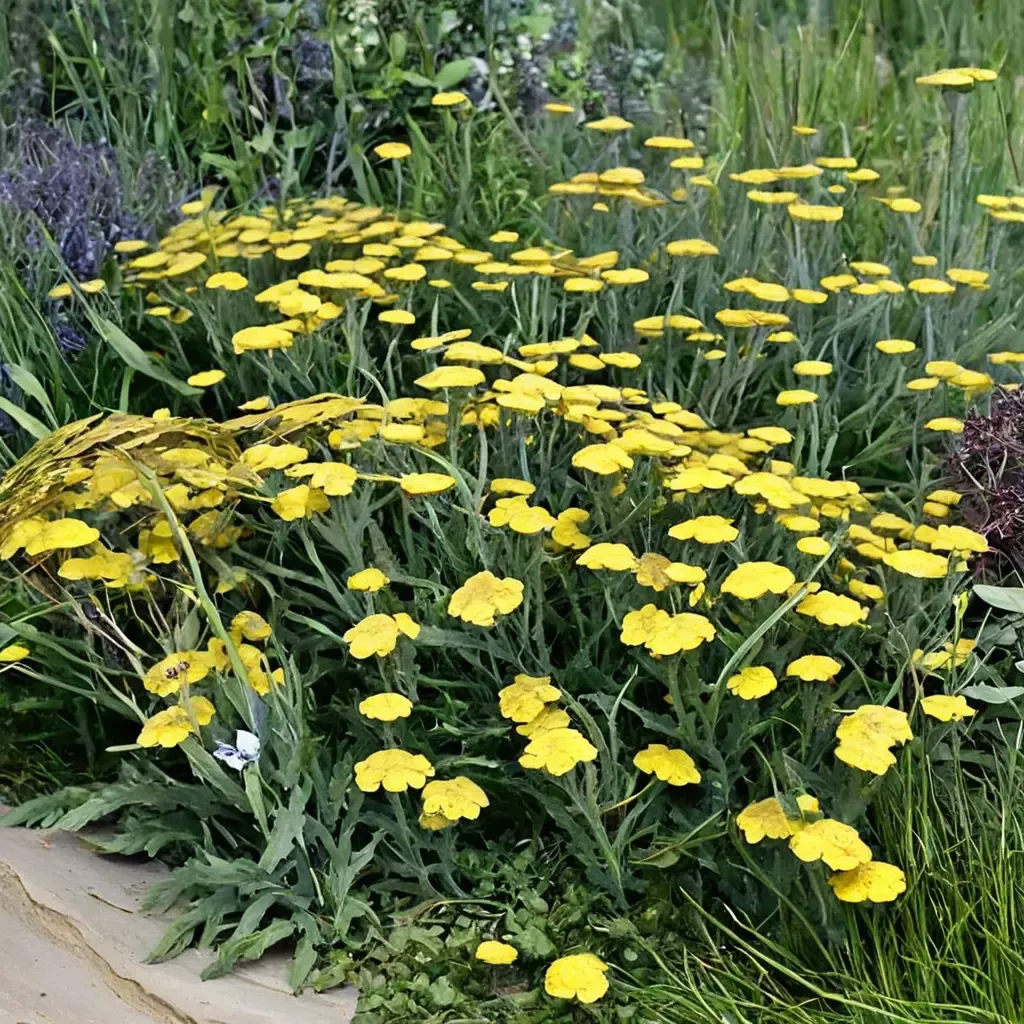
Moonshine Yarrow
Achillea millefolium 'Moonshine'
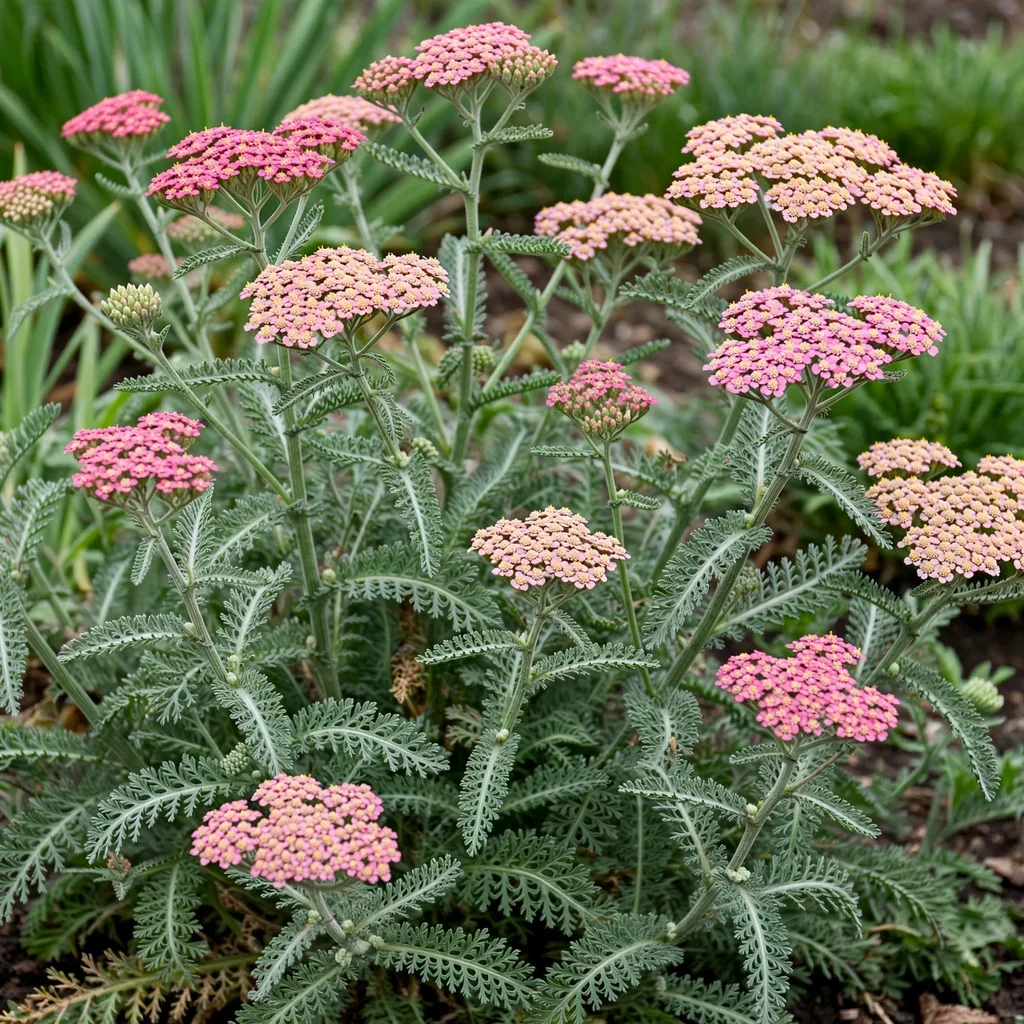
Sassy Summer Taffy Common Yarrow
Achillea millefolium 'Sassy Summer Taffy'
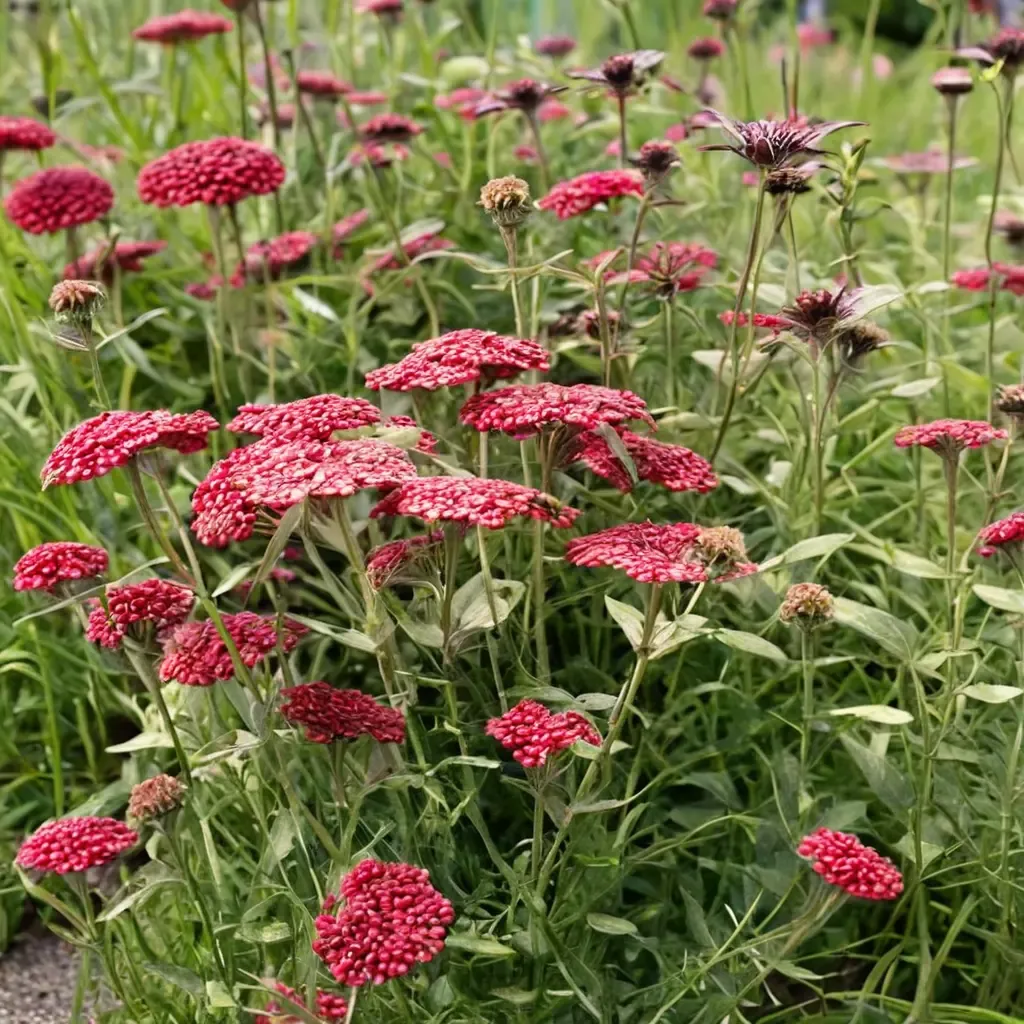
Red Velvet Yarrow
Achillea millefolium 'Red Velvet'
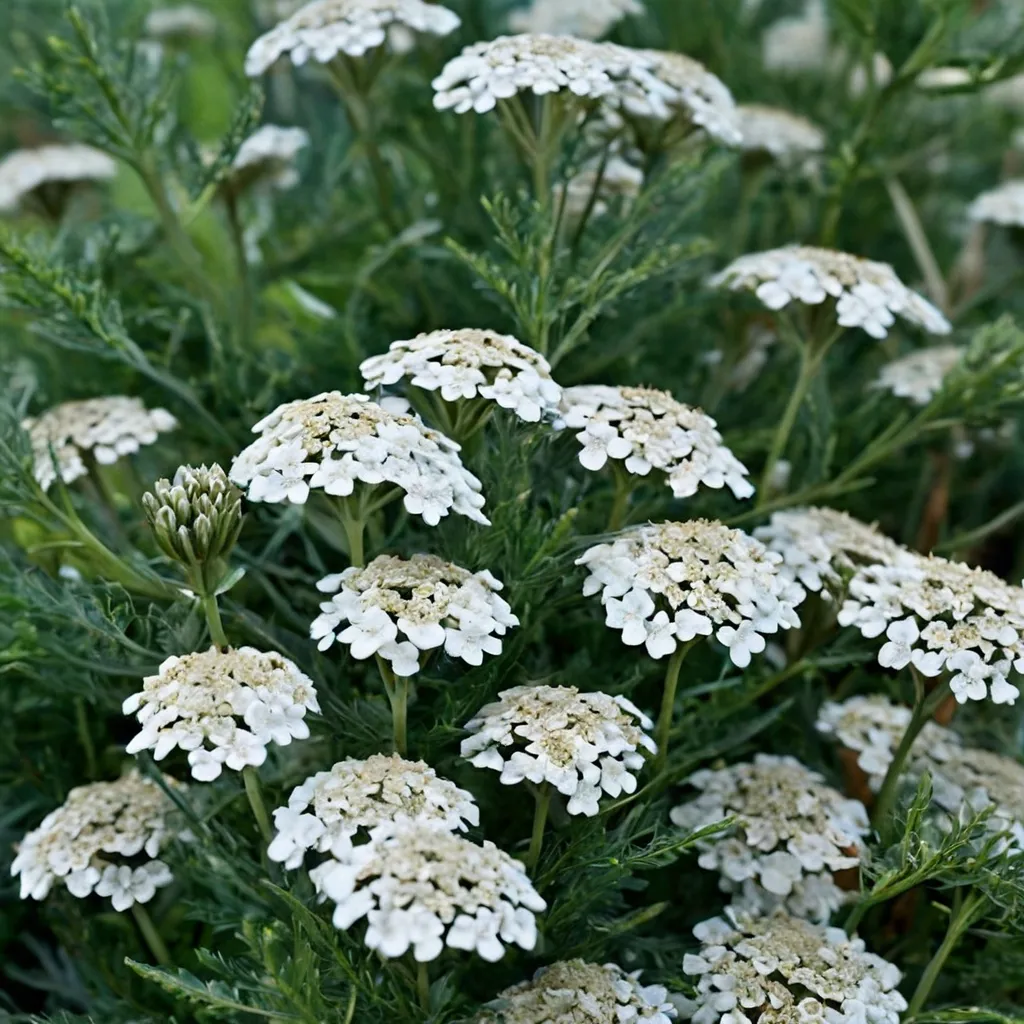
New Vintage White Common Yarrow
Achillea millefolium 'New Vintage White'
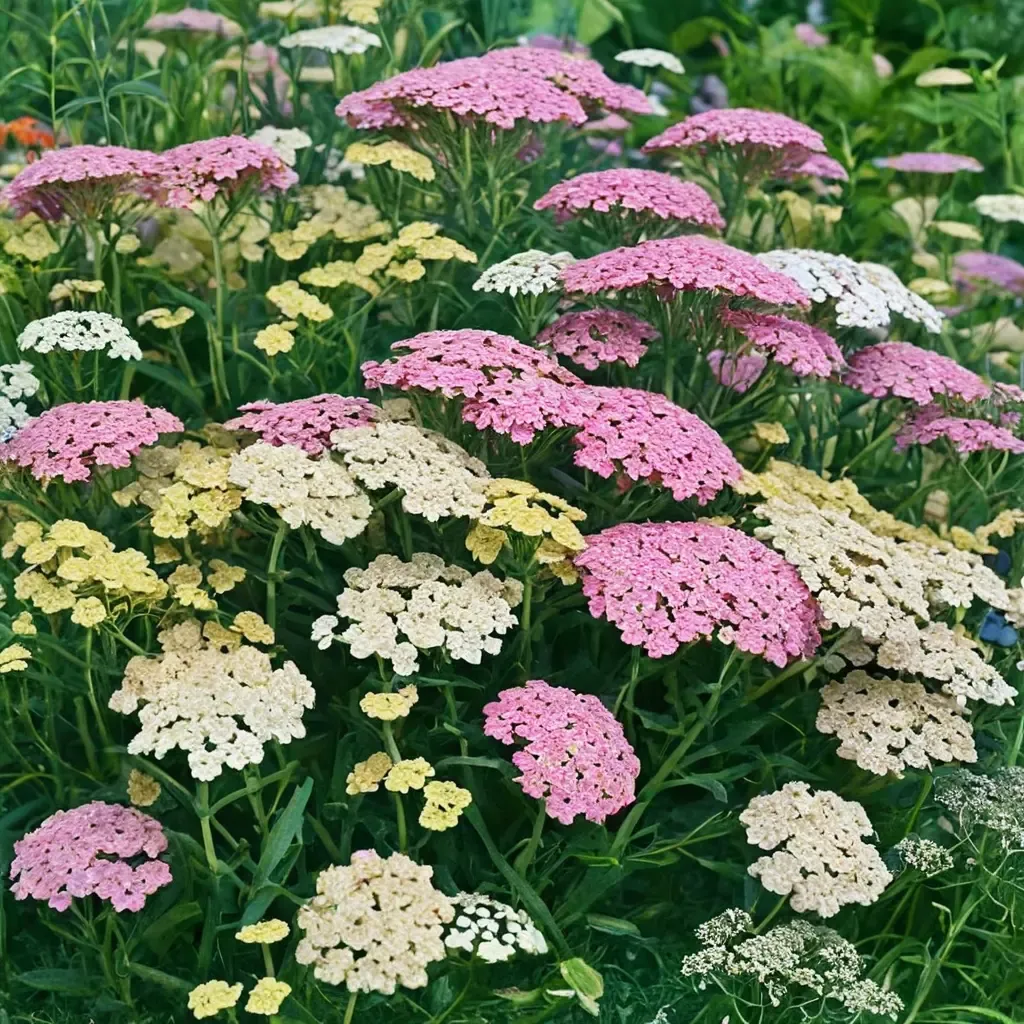
Summer Pastels Yarrow
Achillea millefolium 'Summer Pastels'
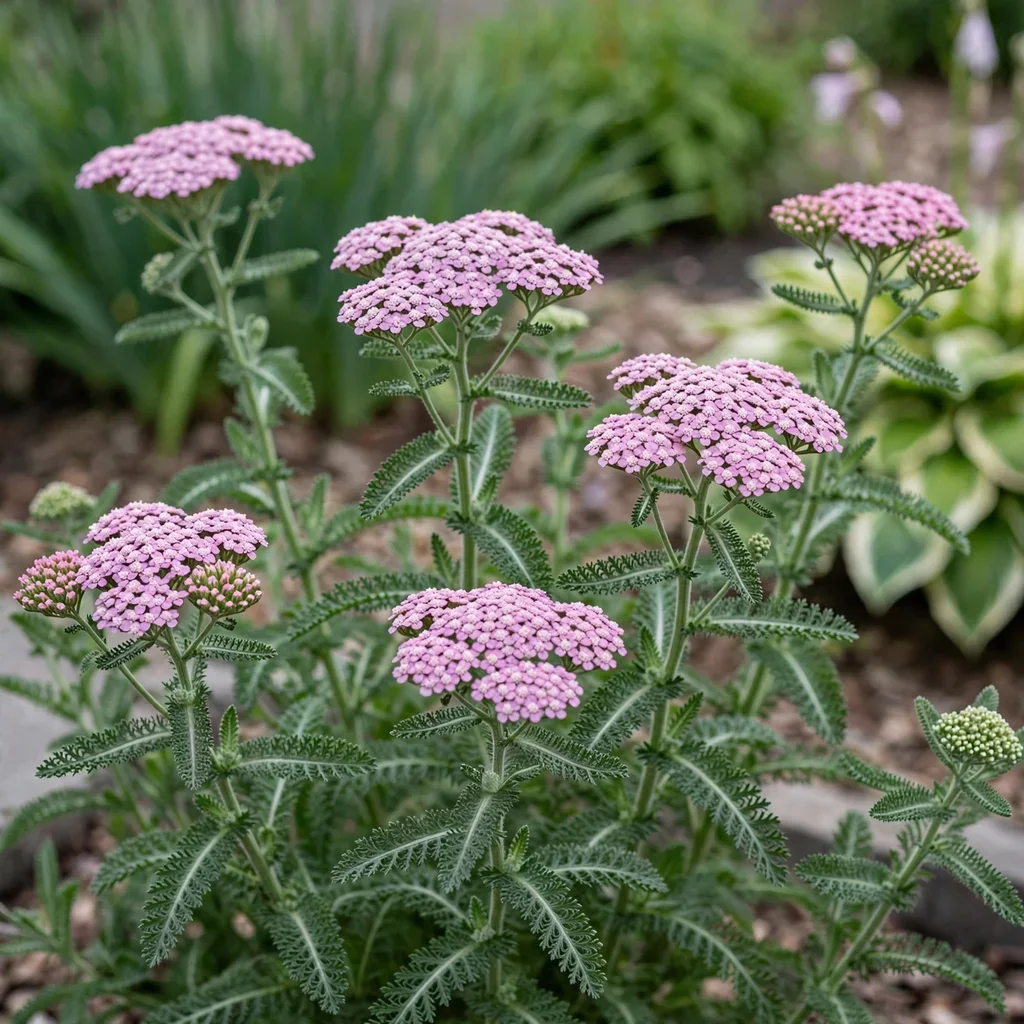
Pink Grapefruit Yarrow
Achillea millefolium 'Pink Grapefruit'
Keep exploring
Explore the genus
Hardy in your zone?
Grow Greek Yarrow with confidence
See it in a design of your actual yard, get zone-matched care reminders, and track it season by season in your garden journal.