The Story
Plant Bio
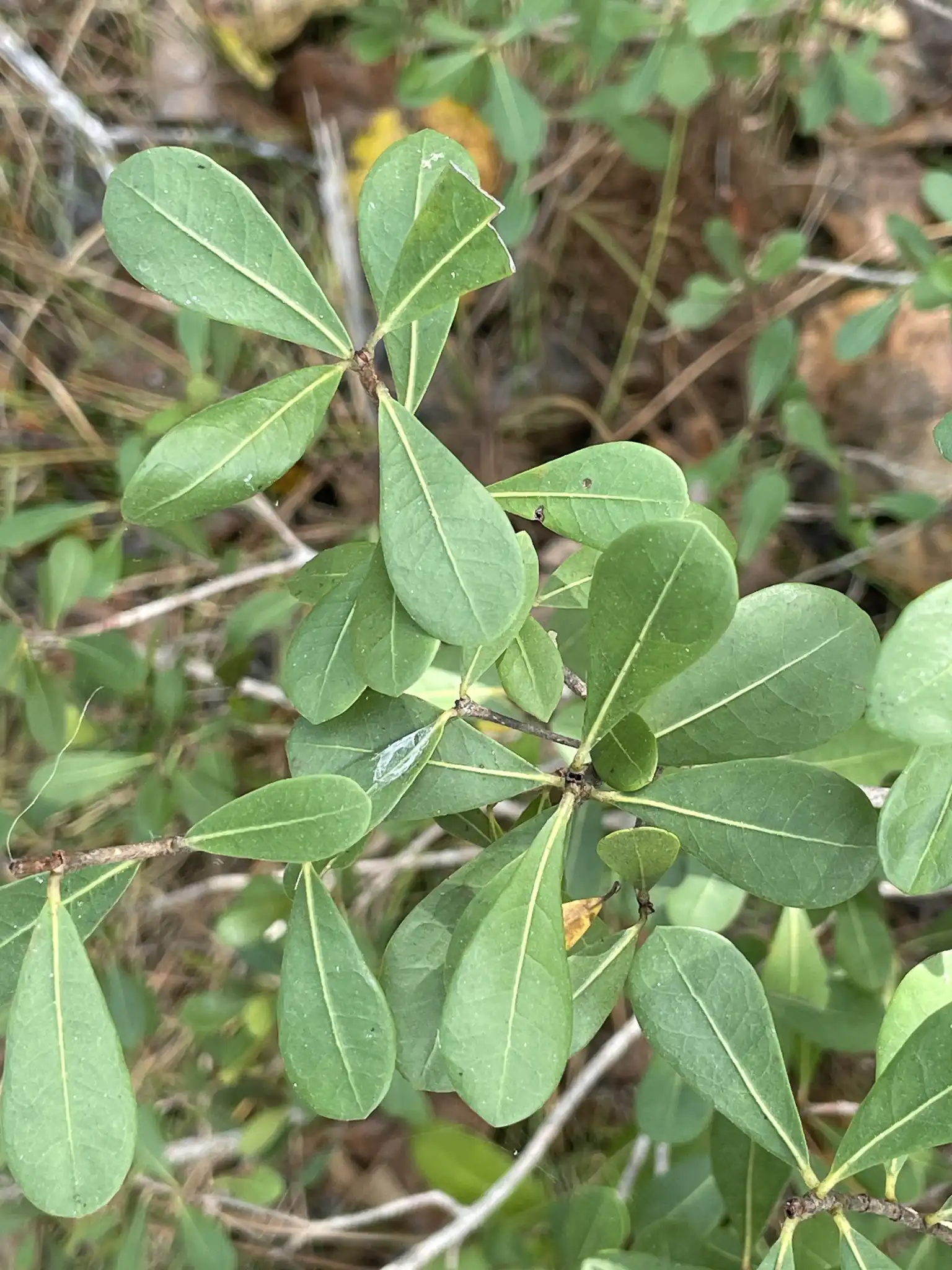
Byrsonima lucida is an evergreen shrub to small tree from southern Florida and the Caribbean, many-branched from the base with smooth gray bark and small crisp green leaves. It blooms in terminal racemes of white flowers that age to pink then crimson, followed by small fleshy fruits that birds eat.
In rich hammock soil it makes an 8 to 10 foot spreading shrub as broad as tall, while in poor pineland sand it stays a low 2 to 3 foot shrub. It is the sole larval host for the Florida duskywing butterfly and provides oil and nectar for Centris bees, with no pests or diseases that affect long-term health.
Uses & Benefits:
Essentials
At a Glance
Plant Type
Shrub
Height
120"
Width
120"
Light
Full Sun, Partial Sun
Zones
10
Water
Low
Humidity
Unknown
Lifespan
Long-lived shrub
Native To
South Florida and Caribbean
Toxicity
Unknown
Bloom period
Spring – Summer
In flower about 6 months of the year
Planting
How to Grow
- Plant in full sun to light shade in moist well-drained sand, loam, or limestone with a humusy top layer.
- Set the root ball level with the soil surface and water in deeply to settle sand around roots.
- Water regularly until established, then taper off; established plants need no supplemental water.
- Prune lightly after the main bloom to shape as a hedge or screen and keep the canopy dense.
Pro Tip
Let size follow soil; do not push a pineland planting with fertilizer and water to make a tall screen, and expect white flowers to turn pink to red on the same cluster.
Keep It Thriving
Care Guide
Do
- Plant nursery-propagated stock in USDA zones 10B to 11B.
- Provide well-drained sand or limestone and full sun to light shade.
- Use as hedge, screen, or wildlife cover for birds and pollinators.
Don't
- Do not collect from the wild in Florida.
- Do not plant where hard frost or standing floodwater occurs.
- Do not overwater or overfertilize poor sand to force height.
Seasonal Care Calendar
| Task | Jan | Feb | Mar | Apr | May | Jun | Jul | Aug | Sep | Oct | Nov | Dec |
|---|---|---|---|---|---|---|---|---|---|---|---|---|
| Mulch | ||||||||||||
| Pest Check | ||||||||||||
| Plant | ||||||||||||
| Prune |
Watch Out For
Pests & Diseases
Common Pests
Common Diseases
In the Garden
Landscape Uses & Companions
Landscape Uses
Multiply
Propagation Methods
Good to Know
Common Questions
Long Key Locustberry questions
What zones can Long Key Locustberry grow in?
Long Key Locustberry is hardy in USDA Zone 10: in that range it survives winter in the ground. Colder than Zone 10, grow it in a container you can move to shelter for the winter.
When does Long Key Locustberry bloom?
Long Key Locustberry typically blooms from spring to summer. Exact timing shifts a week or two with your zone — Sow's bloom calendar maps it to your garden.
Does Long Key Locustberry need full sun?
Long Key Locustberry does best in full sun to part shade. In hot climates, afternoon shade keeps blooms fresher longer.
Is Long Key Locustberry drought tolerant?
Yes — once established (usually after the first full season), Long Key Locustberry handles dry spells with minimal watering. Water deeply its first year to build the root system that makes that possible.
Keep exploring
Explore the genus
Hardy in your zone?
Grow Long Key Locustberry with confidence
See it in a design of your actual yard, get zone-matched care reminders, and track it season by season in your garden journal.