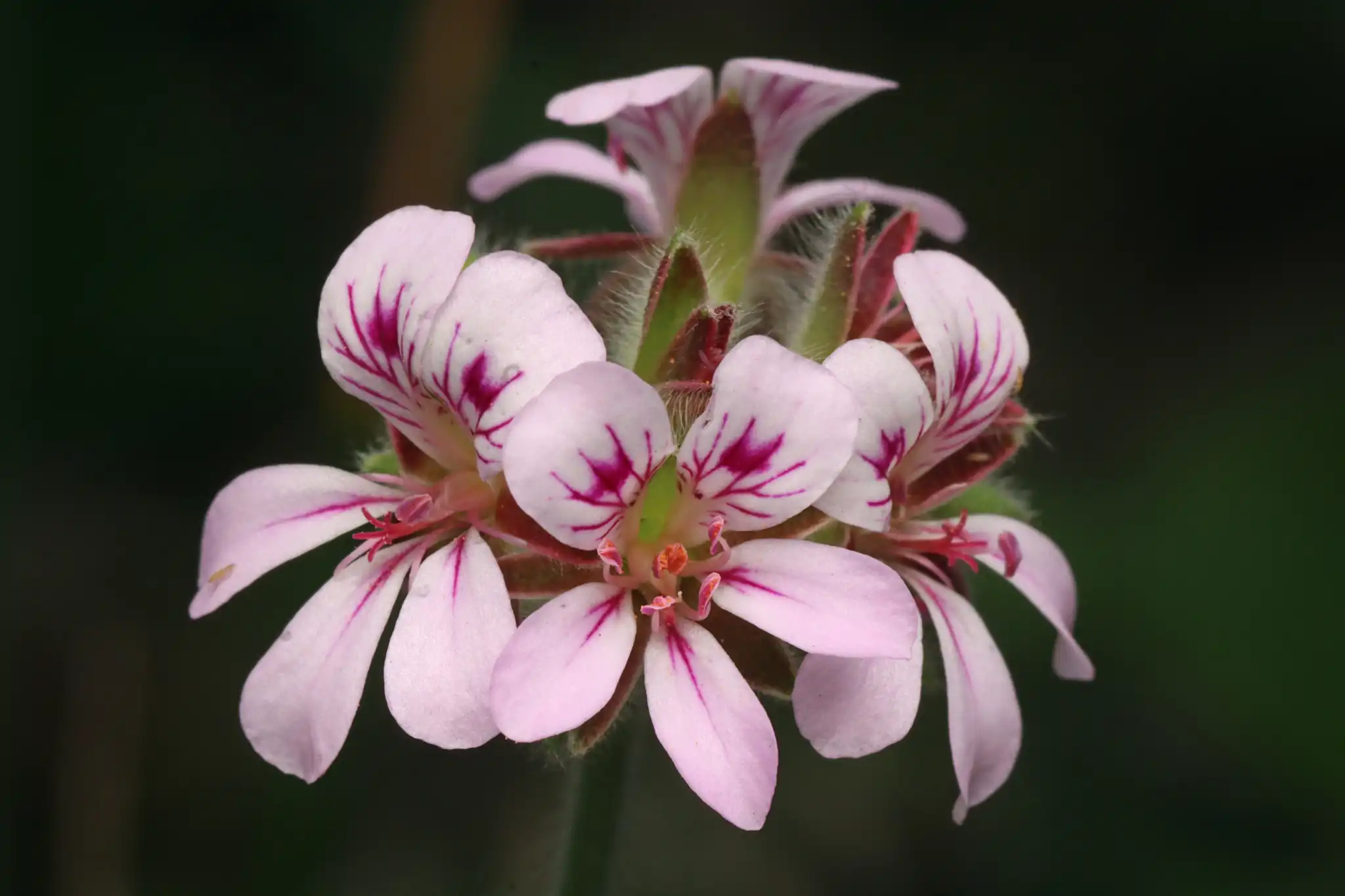
The Story
Plant Bio
Pelargonium australe is a sprawling herbaceous perennial native to southern and eastern Australia and New Zealand, forming low mounds in coastal and inland habitats. The soft, rounded foliage is covered in fine velvety hairs that release a subtle aromatic scent when crushed.
Tight clusters of white to delicate pink flowers rise above the foliage from spring through fall, each bloom marked with dark red or purple streaks on the upper petals. Its sprawling growth habit and high tolerance for salt spray make it an excellent groundcover for exposed maritime gardens.
Uses & Benefits:
Essentials
At a Glance
Plant Type
Perennial
Height
31"
Width
59"
Light
Full Sun, Partial Sun
Zones
8, 9, 10
Water
Low
Humidity
Moderate
Lifespan
Perennial
Native To
Australia, New Zealand
Toxicity
Non-toxic (sap may irritate skin)
Bloom period
Spring – Fall
In flower about 9 months of the year
Planting
How to Grow
- Choose a site with full sun to light shade in fast-draining sandy or loamy soil.
- Dig a planting hole as deep as the root ball and twice as wide.
- Set the plant into the hole, backfill with native soil, and firm lightly around the crown.
- Water thoroughly to settle soil, then allow the top inch of soil to dry completely between future waterings.
Pro Tip
Prune hard back into active leafy growth after heavy blooming flushes to maintain a tight compact shape, taking care never to cut deep into old bare woody stems.
Keep It Thriving
Care Guide
Do
- Plant in sharply draining soil to prevent root rot.
- Prune back lightly into leafy stems after main flower flushes.
- Provide full sun to partial shade for dense growth.
Don't
- Never cut deep into old, leafless woody stems.
- Do not overwater or leave roots sitting in waterlogged soil.
- Avoid heavy applications of nitrogen fertilizer.
Seasonal Care Calendar
| Task | Jan | Feb | Mar | Apr | May | Jun | Jul | Aug | Sep | Oct | Nov | Dec |
|---|---|---|---|---|---|---|---|---|---|---|---|---|
| Fertilize | ||||||||||||
| Pest Check | ||||||||||||
| Plant | ||||||||||||
| Propagate | ||||||||||||
| Prune |
Watch Out For
Pests & Diseases
Common Pests
Common Diseases
In the Garden
Landscape Uses & Companions
Landscape Uses
Multiply
Propagation Methods
Good to Know
Common Questions
Austral Stork's-Bill questions
What zones can Austral Stork's-Bill grow in?
Austral Stork's-Bill is hardy in USDA Zones 8–10: in that range it survives winter in the ground. Colder than Zone 8, grow it in a container you can move to shelter for the winter, or as an annual.
Is Austral Stork's-Bill deer resistant?
Not reliably. Deer may browse Austral Stork's-Bill, especially tender spring growth — plan on repellents or fencing where pressure is high.
When does Austral Stork's-Bill bloom?
Austral Stork's-Bill typically blooms from spring to fall. Exact timing shifts a week or two with your zone — Sow's bloom calendar maps it to your garden.
Does Austral Stork's-Bill need full sun?
Austral Stork's-Bill does best in full sun to part shade. In hot climates, afternoon shade keeps blooms fresher longer.
Is Austral Stork's-Bill drought tolerant?
Yes — once established (usually after the first full season), Austral Stork's-Bill handles dry spells with minimal watering. Water deeply its first year to build the root system that makes that possible.
More Pelargonium to compare
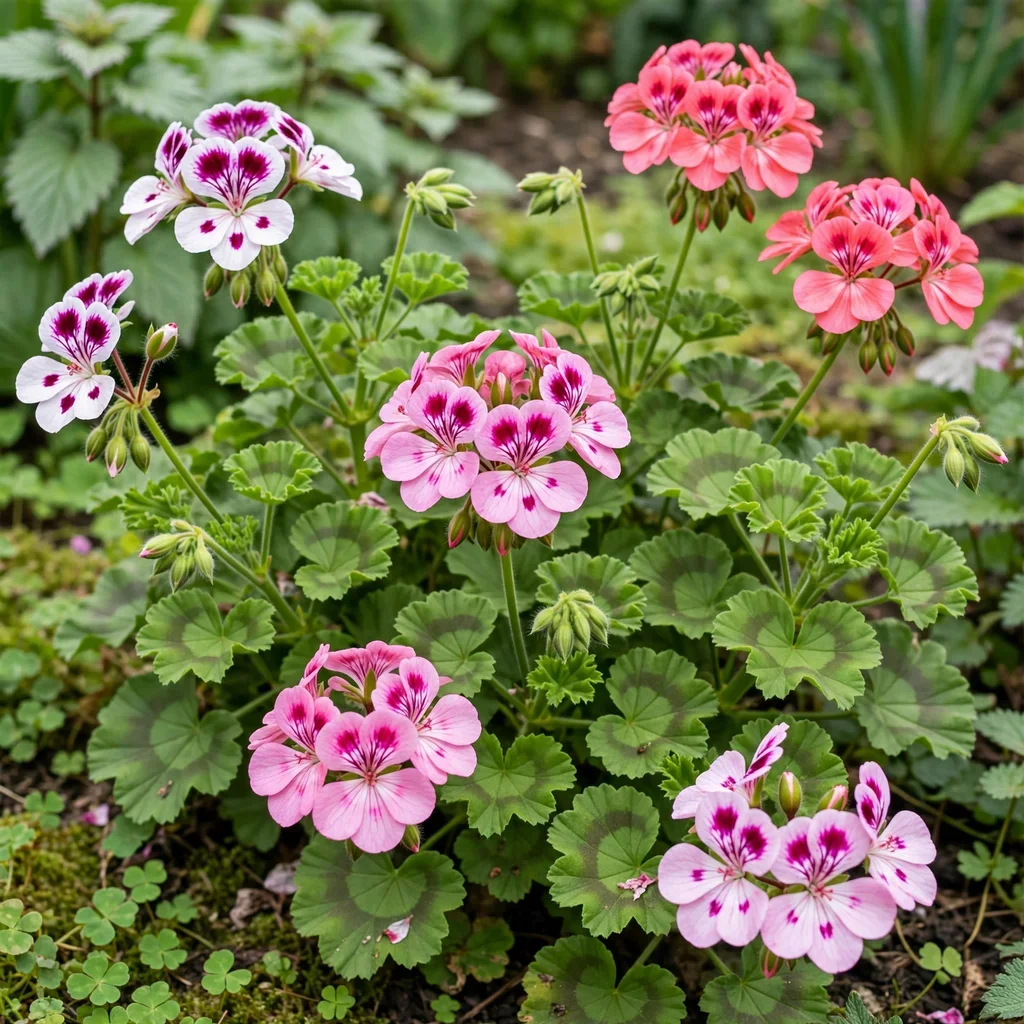
Breeders Mix Zonal Geranium
Pelargonium x hortorum 'Breeders Mix'
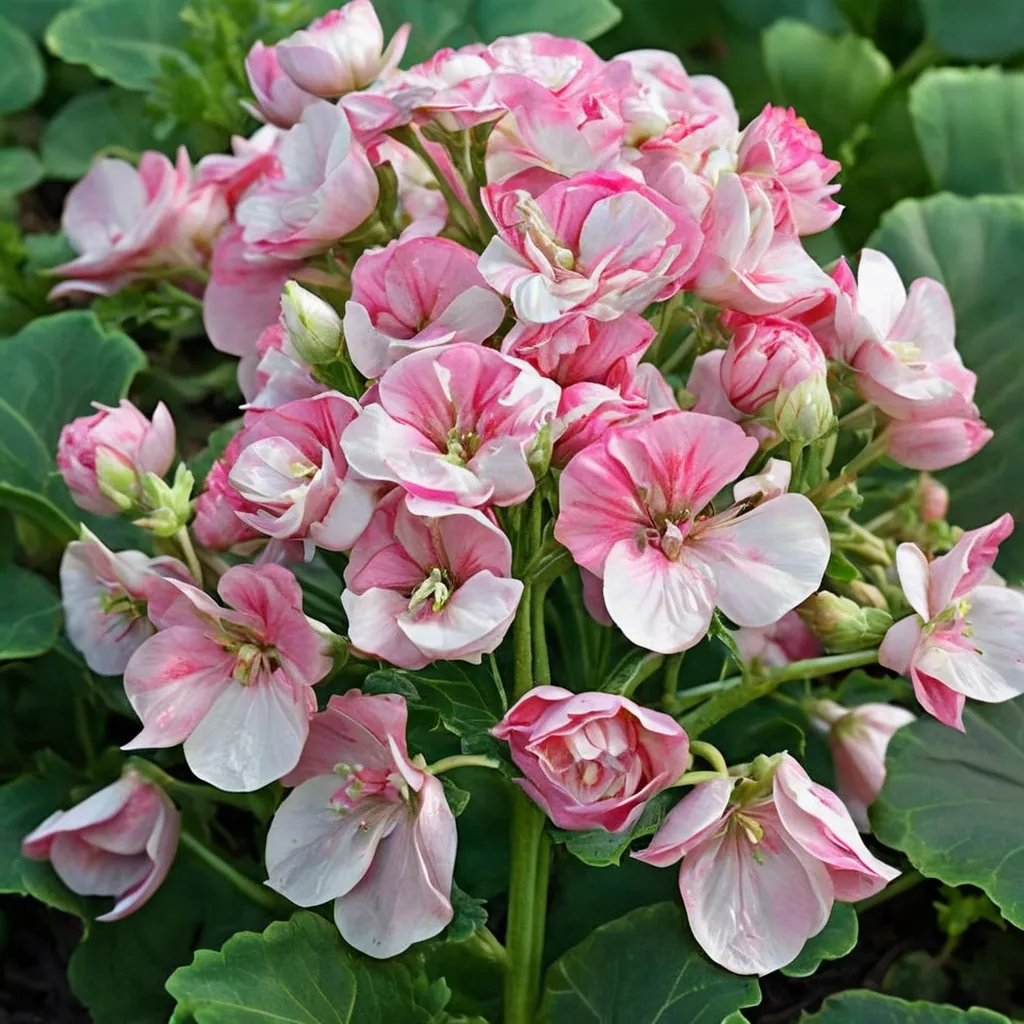
Zonal Geranium 'Appleblossom'
Pelargonium x hortorum 'Appleblossom'
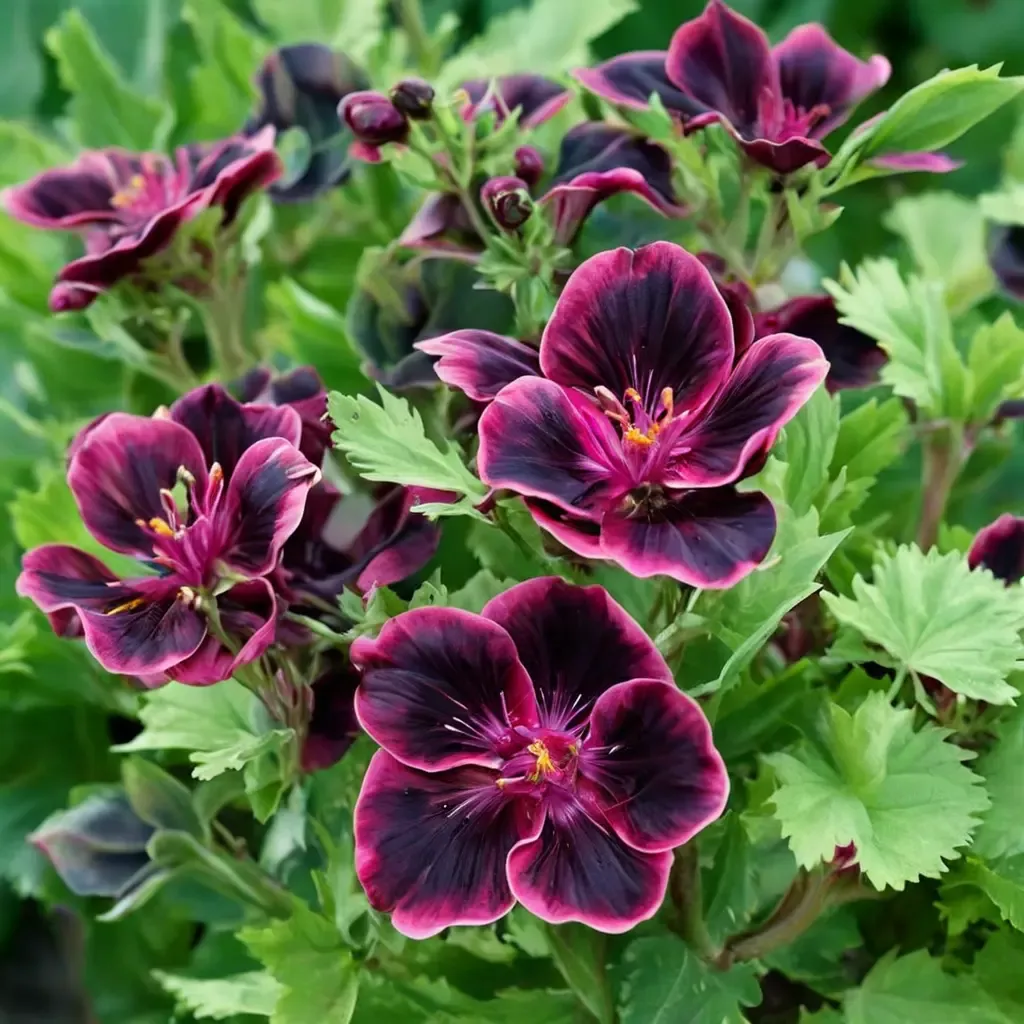
'Lord Bute' Regal Pelargonium
Pelargonium x hortorum 'Lord Bute'
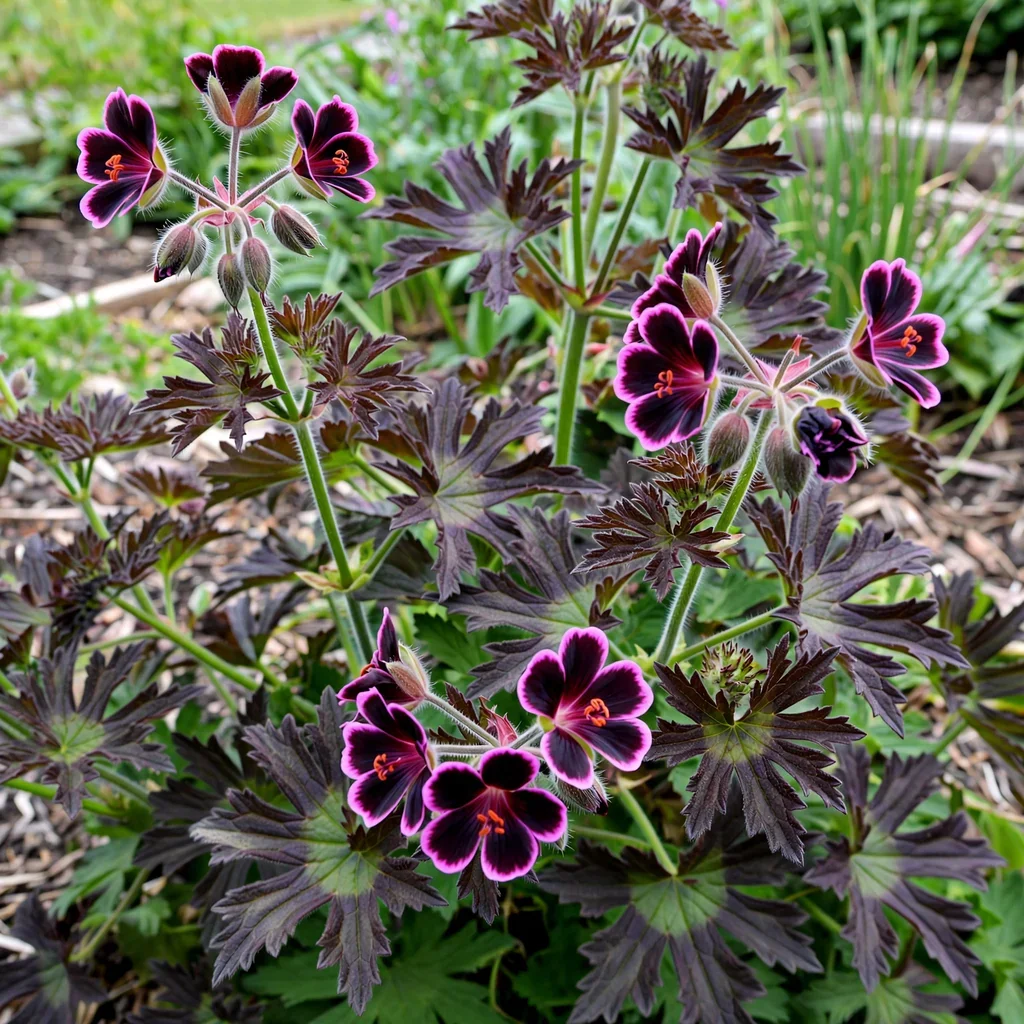
Midnight Ghost Geranium
Pelargonium x hortorum 'Midnight Ghost'
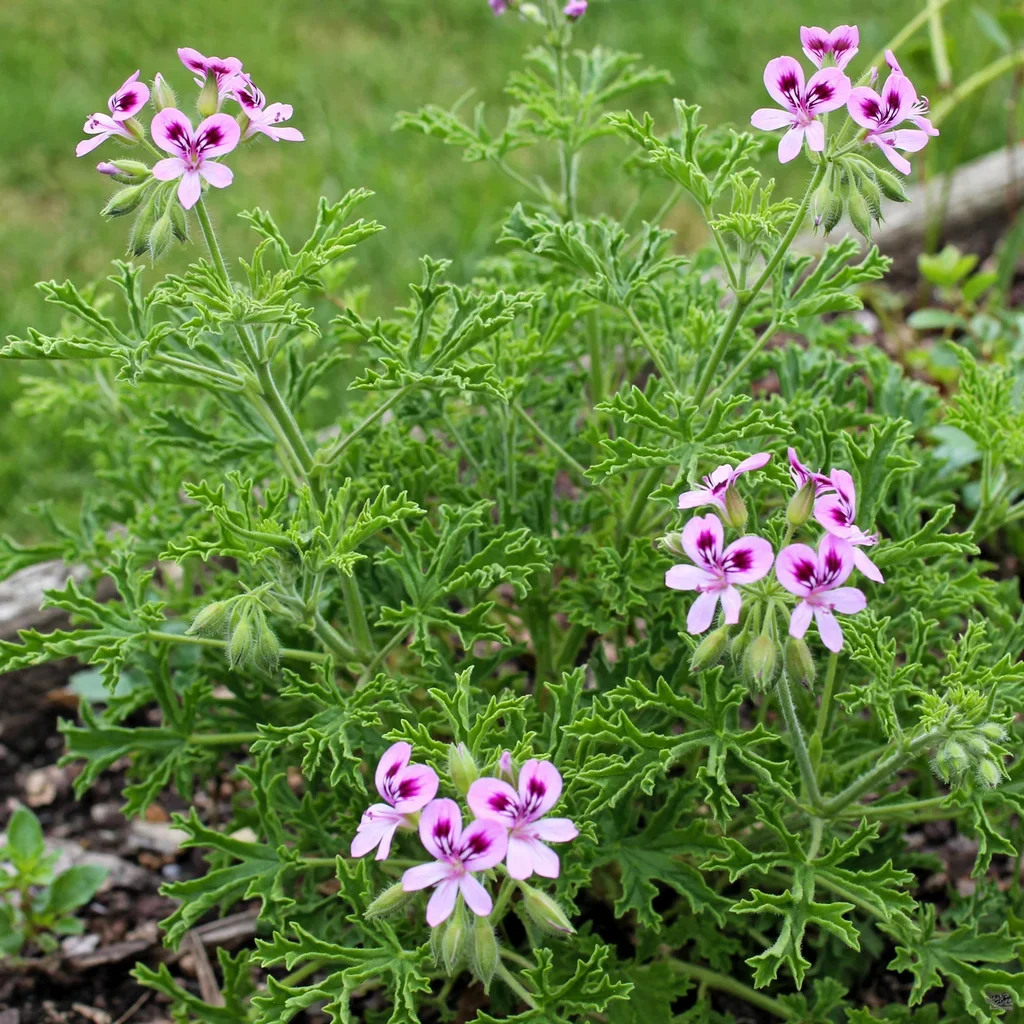
Citronella Plant
Pelargonium citrosum
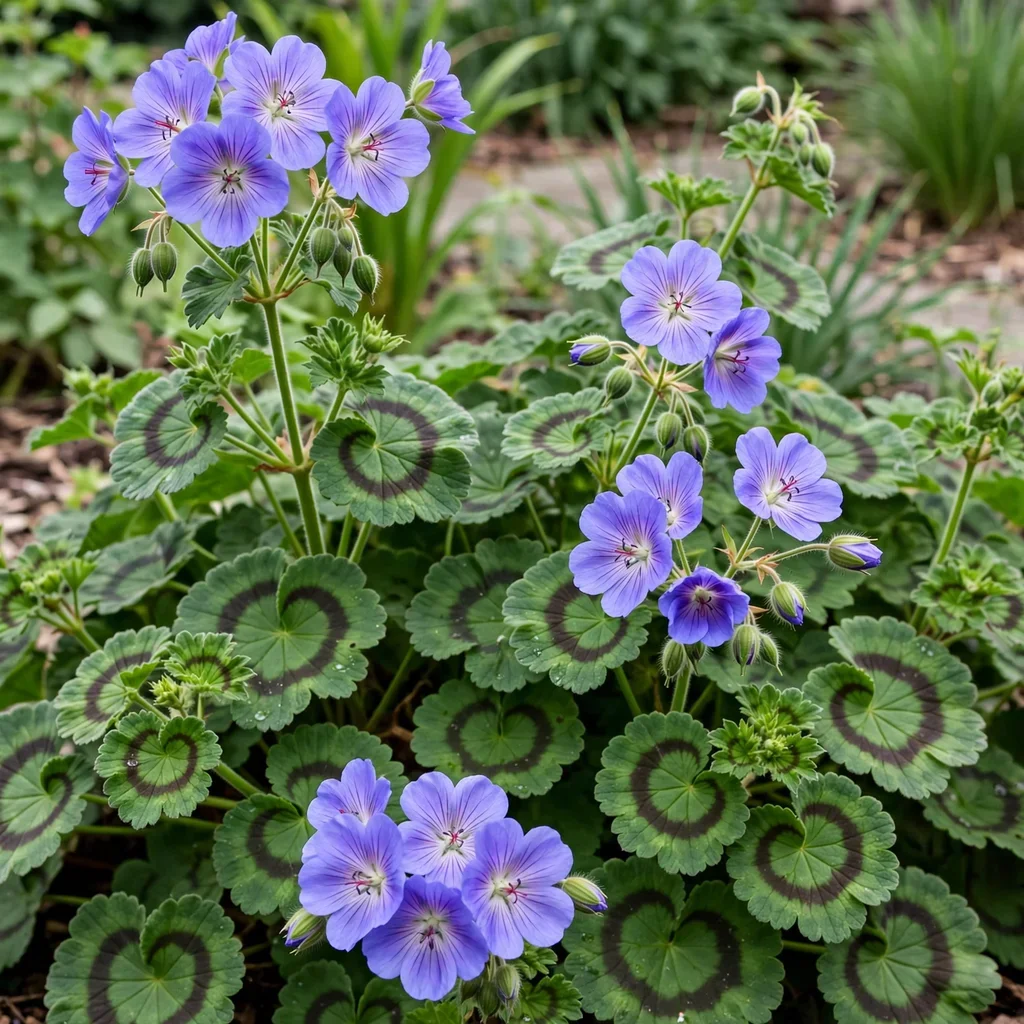
Azure Rush Zonal Geranium
Pelargonium x hortorum 'Azure Rush'
Keep exploring
Explore the genus
Hardy in your zone?
Grow Austral Stork's-Bill with confidence
See it in a design of your actual yard, get zone-matched care reminders, and track it season by season in your garden journal.