The Story
Plant Bio
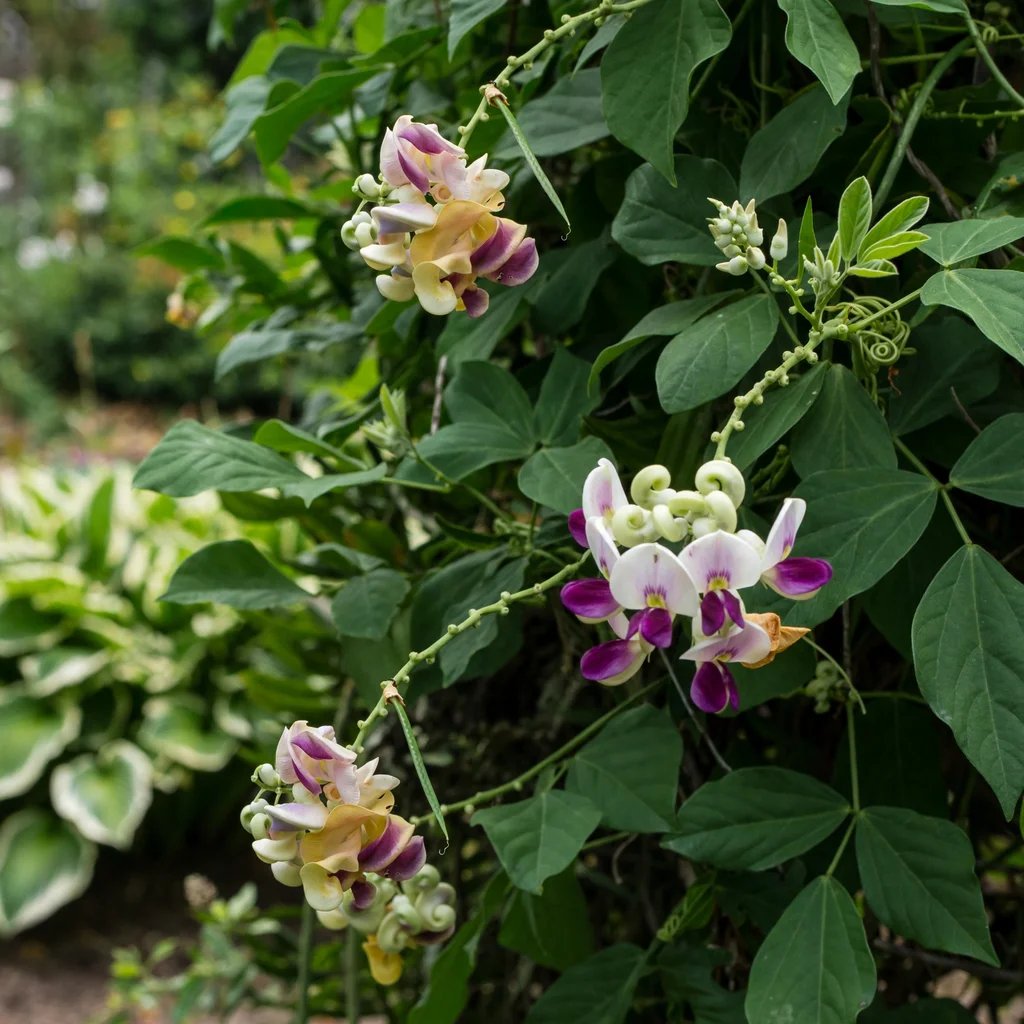
Cochliasanthus caracalla is a fast-growing twining perennial vine from tuberous roots, climbing 15 to 20 feet in one season on support with soft dark green trifoliate leaves. Its pea-like blooms are carried in upright racemes, each 1- to 2-inch flower with a tightly coiled keel that forms the snail-shell shape.
The true snail vine bears fragrant flowers streaked white and pale purple that age to light yellow and maroon, all colours often present in one raceme from summer to fall. Nursery stock sold under Vigna caracalla is often the uncoiled, unscented Sigmoidotropis speciosa, so check for the corkscrew keel and sweet scent before buying.
Uses & Benefits:
Essentials
At a Glance
Plant Type
Vine
Height
240"
Width
180"
Light
Full Sun, Partial Sun
Zones
9, 10
Water
Moderate to high
Humidity
Loves heat and humidity
Lifespan
Tender perennial, annual in cold zones
Native To
Tropical South America to Mexico
Toxicity
Reported non-toxic; bean-like pods not for eating
Bloom period
Summer – Fall
In flower about 6 months of the year
Planting
How to Grow
- Plant out after last frost in fertile humus-rich loam or sand that stays moist but drains fast.
- Set a sturdy 15- to 20-foot trellis, arbor or fence at planting time and tie stems until they twine.
- Water steadily through summer to keep soil evenly damp; fuller sun gives more flowers.
- Trim back to contain vigorous growth and remove spent racemes.
- In zones below 9, grow in a large container and move the tuberous roots frost-free for winter.
Pro Tip
Plant in full sun against a strong trellis or arbor and water steadily through summer; shade and dry checks stall the coiled buds.
Keep It Thriving
Care Guide
Do
- Give full sun for heaviest flowering, with afternoon shade tolerated in hot zones.
- Water steadily to keep soil evenly moist but well drained.
- Provide a strong support and guide young stems onto it early.
Don't
- Do not plant out before frost has passed; growth is tender.
- Do not leave soil waterlogged around the tuberous roots.
- Do not eat the bean-like pods; they are ornamental and can upset the stomach in quantity.
Seasonal Care Calendar
| Task | Jan | Feb | Mar | Apr | May | Jun | Jul | Aug | Sep | Oct | Nov | Dec |
|---|---|---|---|---|---|---|---|---|---|---|---|---|
| Lift Store | ||||||||||||
| Pest Check | ||||||||||||
| Plant | ||||||||||||
| Prune | ||||||||||||
| Stake |
Watch Out For
Pests & Diseases
Common Pests
In the Garden
Landscape Uses & Companions
Landscape Uses
Companion Plants
Multiply
Propagation Methods
Good to Know
Common Questions
Snail Vine questions
What zones can Snail Vine grow in?
Snail Vine is hardy in USDA Zones 9–10: in that range it survives winter in the ground. Colder than Zone 9, grow it in a container you can move to shelter for the winter, or as an annual.
When does Snail Vine bloom?
Snail Vine typically blooms from summer to fall. Exact timing shifts a week or two with your zone — Sow's bloom calendar maps it to your garden.
Does Snail Vine need full sun?
Snail Vine does best in full sun to part shade. In hot climates, afternoon shade keeps blooms fresher longer.
Keep exploring
Explore the genus
Hardy in your zone?
Grow Snail Vine with confidence
See it in a design of your actual yard, get zone-matched care reminders, and track it season by season in your garden journal.