The Story
Plant Bio
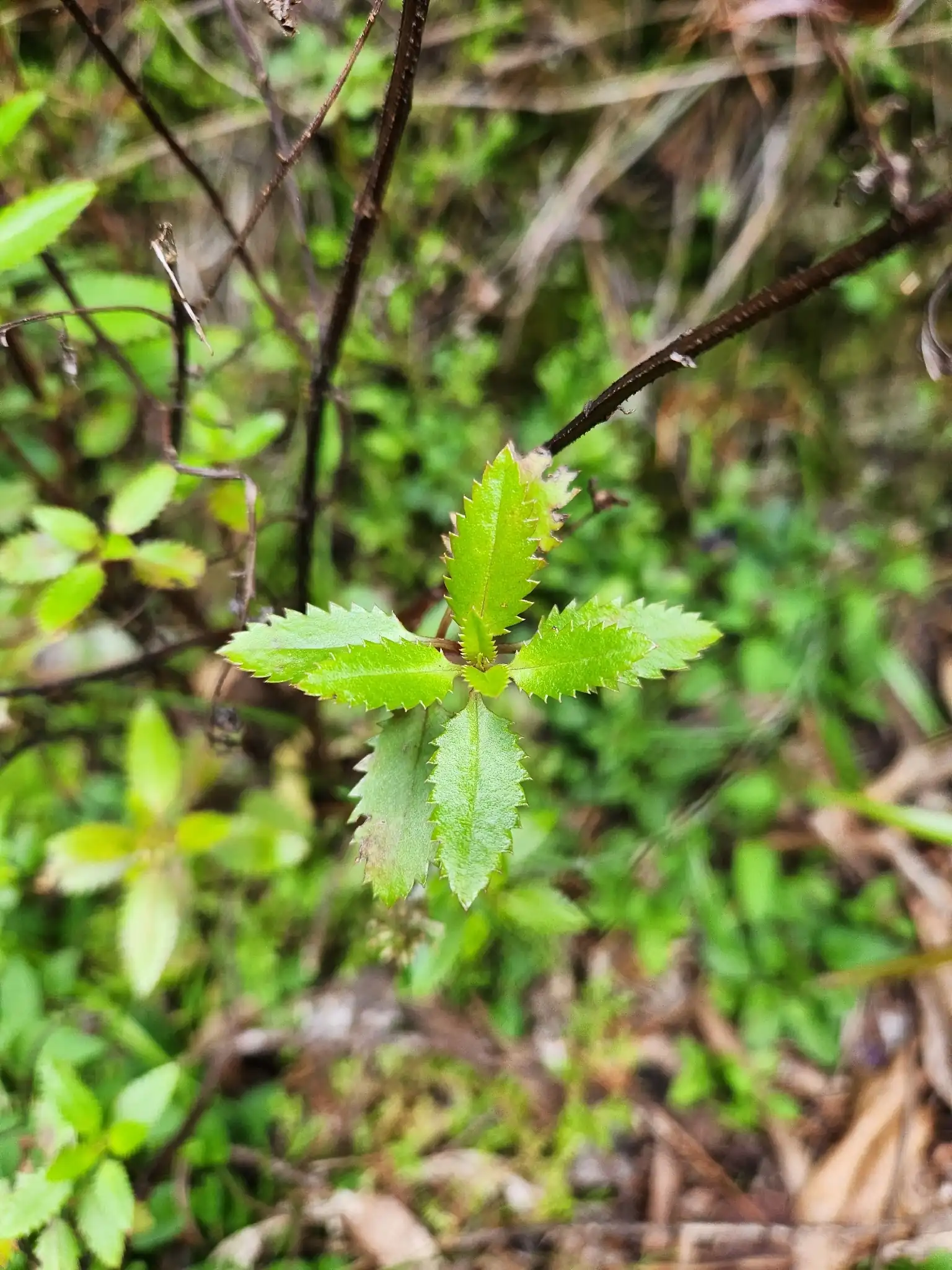
Haloragis erecta, commonly known as shrubby haloragis, is an upright New Zealand subshrub reaching three to four feet in height, distinctive for its square, reddish-maroon stems and sharply serrated foliage. Small, inconspicuous greenish to reddish flowers appear in terminal spikes from spring through fall, giving way to tiny nut-like fruits.
The species is notable for its high salt tolerance and dark foliage variations that intensify under direct sunlight. Its four-angled stems and coarse leaf margins offer textured structural contrast in coastal and gravel plantings.
Uses & Benefits:
Essentials
At a Glance
Plant Type
Perennial
Height
47"
Width
47"
Light
Full Sun, Partial Sun
Zones
8, 9, 10
Water
Low to moderate
Humidity
Moderate
Lifespan
Perennial
Native To
New Zealand
Toxicity
Non-toxic
Bloom period
Spring – Fall
In flower about 9 months of the year
Planting
How to Grow
- Select a planting site in full sun or light partial shade with high-drainage soil.
- Dig a hole twice as wide as the root ball and mix coarse sand or gravel into clay soils.
- Set the plant at the same depth as its original container and backfill firmly.
- Water thoroughly at planting, then allow top soil to dry completely between waterings.
Pro Tip
Although belonging to the water-milfoil family, this species requires dry to moderately moist, sharply drained soil; standing water or overwatering rapidly triggers fatal root rot.
Keep It Thriving
Care Guide
Do
- Plant in sharply draining soil
- Tip-prune lightly in spring to promote density
- Expose to full sun for richest stem and foliage color
Don't
- Do not overwater or allow soil to remain waterlogged
- Do not cut hard into old leafless wood
- Do not plant in heavy, wet clay without drainage remediation
Seasonal Care Calendar
| Task | Jan | Feb | Mar | Apr | May | Jun | Jul | Aug | Sep | Oct | Nov | Dec |
|---|---|---|---|---|---|---|---|---|---|---|---|---|
| Fertilize | ||||||||||||
| Pest Check | ||||||||||||
| Propagate | ||||||||||||
| Prune | ||||||||||||
| Spring Cleanup |
Watch Out For
Pests & Diseases
Common Pests
Common Diseases
In the Garden
Landscape Uses & Companions
Landscape Uses
Multiply
Propagation Methods
Good to Know
Common Questions
Shrubby Haloragis questions
What zones can Shrubby Haloragis grow in?
Shrubby Haloragis is hardy in USDA Zones 8–10: in that range it survives winter in the ground. Colder than Zone 8, grow it in a container you can move to shelter for the winter, or as an annual.
Is Shrubby Haloragis deer resistant?
Not reliably. Deer may browse Shrubby Haloragis, especially tender spring growth — plan on repellents or fencing where pressure is high.
When does Shrubby Haloragis bloom?
Shrubby Haloragis typically blooms from spring to fall. Exact timing shifts a week or two with your zone — Sow's bloom calendar maps it to your garden.
Does Shrubby Haloragis need full sun?
Shrubby Haloragis does best in full sun to part shade. In hot climates, afternoon shade keeps blooms fresher longer.
Is Shrubby Haloragis drought tolerant?
Yes — once established (usually after the first full season), Shrubby Haloragis handles dry spells with minimal watering. Water deeply its first year to build the root system that makes that possible.
Keep exploring
Explore the genus
Hardy in your zone?
Grow Shrubby Haloragis with confidence
See it in a design of your actual yard, get zone-matched care reminders, and track it season by season in your garden journal.