The Story
Plant Bio
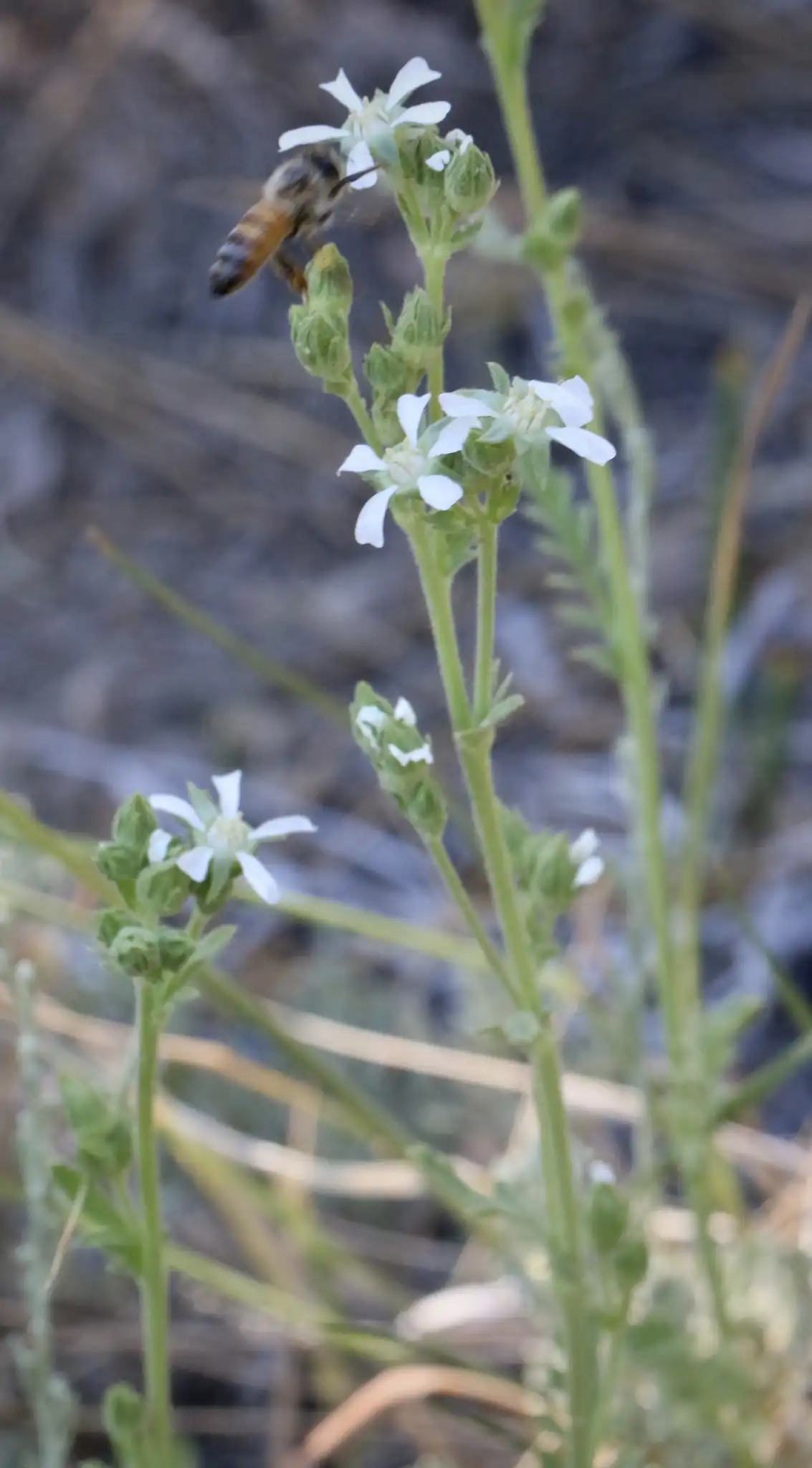
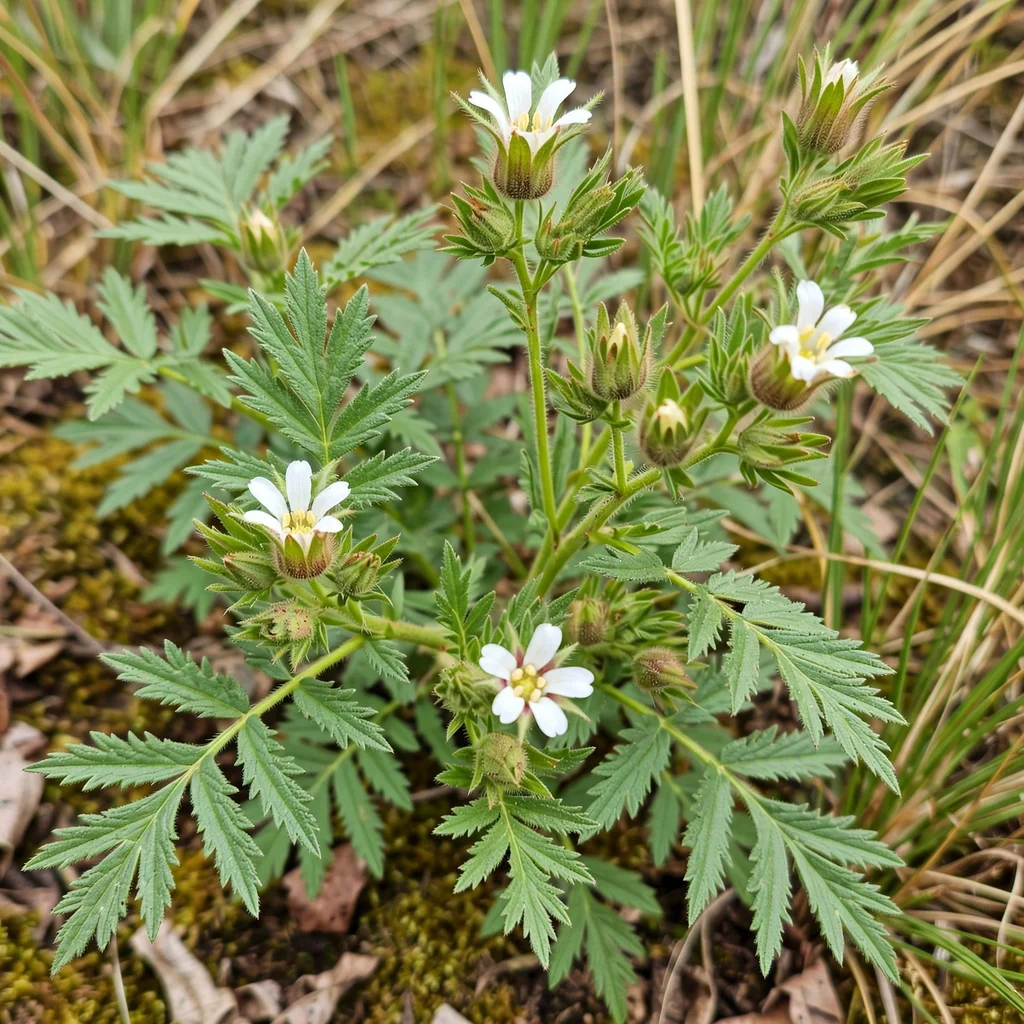
Horkelia rydbergii is a tufted to matted perennial herb with ascending to erect grayish to grayish-green stems 4 to 28 inches tall from a basal crown. Basal leaves 3 to 8 inches long carry 7 to 14 cuneate fan-shaped leaflets per side, each cut one-third to midrib into 5 to 10 teeth, topped by an open to congested cluster of 3/8- to 5/8-inch flowers with 20 to 50 carpels.
It separates from similar horkelias by its two regional hair and color phases, a gray phase with tightly curled hairs around Mount Pinos and Frazier Mountain and a greener phase in the San Bernardino and San Gabriel ranges. It is a narrow endemic of dry to moist montane meadows and streambanks at 3900 to 9200 feet in Kern, Los Angeles, San Bernardino and Ventura counties, critically imperiled and readily confused with Horkelia parryi.
Uses & Benefits:
Essentials
At a Glance
Plant Type
Perennial
Height
28"
Width
12"
Light
Full Sun, Partial Sun
Water
Low to moderate
Humidity
Unknown
Lifespan
Perennial
Native To
California, USA
Toxicity
Unknown
Bloom period
Summer
In flower about 3 months of the year
Planting
How to Grow
- Plant in full sun to partial shade in a dry to moist meadow position that drains yet holds some moisture.
- Set the crown at soil level in lean meadow soil and firm gently.
- Water deeply at planting, then taper to natural rainfall to establish.
- After the first year limit summer irrigation to once a month at most.
- Leave basal foliage through winter to protect the crown.
Pro Tip
Once established, limit summer water to no more than once a month and keep the crown in open sun to partial shade; excess water rots montane crowns.
Keep It Thriving
Care Guide
Do
- Plant in full sun to partial shade with open air around the crown.
- Water to establish, then keep summer water low.
- Keep soil lean and never bury the crown.
Don't
- Do not overwater in summer or hold water at the crown.
- Do not collect wild seed or dig wild plants.
- Do not fertilize heavily or enrich with rich compost.
Seasonal Care Calendar
| Task | Jan | Feb | Mar | Apr | May | Jun | Jul | Aug | Sep | Oct | Nov | Dec |
|---|---|---|---|---|---|---|---|---|---|---|---|---|
| Deadhead | ||||||||||||
| Mulch | ||||||||||||
| Pest Check | ||||||||||||
| Plant | ||||||||||||
| Winter Prep |
Watch Out For
Pests & Diseases
Common Pests
Common Diseases
In the Garden
Landscape Uses & Companions
Landscape Uses
Multiply
Propagation Methods
Good to Know
Common Questions
Rydberg's Horkelia questions
When does Rydberg's Horkelia bloom?
Rydberg's Horkelia typically blooms in summer. Exact timing shifts a week or two with your zone — Sow's bloom calendar maps it to your garden.
Does Rydberg's Horkelia need full sun?
Rydberg's Horkelia does best in full sun to part shade. In hot climates, afternoon shade keeps blooms fresher longer.
Is Rydberg's Horkelia drought tolerant?
Yes — once established (usually after the first full season), Rydberg's Horkelia handles dry spells with minimal watering. Water deeply its first year to build the root system that makes that possible.
More Horkelia to compare
Keep exploring
Explore the genus
Grow Rydberg's Horkelia with confidence
See it in a design of your actual yard, get zone-matched care reminders, and track it season by season in your garden journal.