The Story
Plant Bio
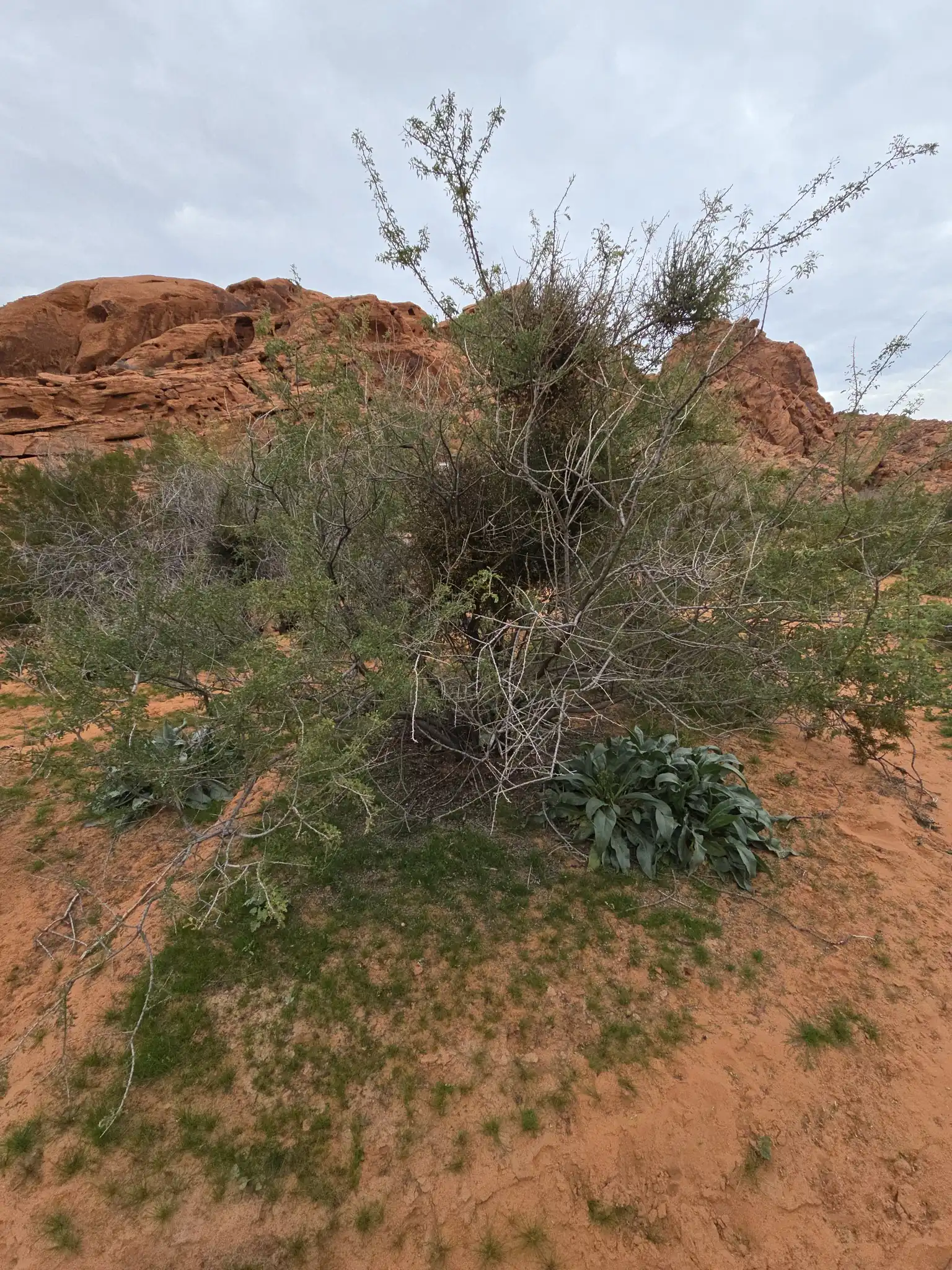
Senegalia greggii, commonly known as catclaw acacia, is a deciduous desert shrub or small multi-trunked tree native to the southwestern United States and northern Mexico. It produces gray-green bipinnate foliage and fragrant, creamy-white cylindrical flower spikes in spring that reach up to two inches in length.
The branches are heavily armed with short, recurved prickles resembling cat claws that readily snag clothing and skin. It serves as an essential larval host plant for native yellow and blue butterfly species while providing dense protective cover for desert fauna.
Uses & Benefits:
Essentials
At a Glance
Plant Type
Shrub
Height
240"
Width
240"
Light
Full Sun
Zones
7, 8, 9, 10
Water
Low
Humidity
Low
Lifespan
Perennial
Native To
Southwestern USA, Northern Mexico
Toxicity
Toxic if ingested
Bloom period
Spring – Summer
In flower about 6 months of the year
Planting
How to Grow
- Select a planting site in full sun with sharp drainage and coarse, mineral-rich soil.
- Dig a hole twice as wide as the root ball and equal to its depth to prevent settling.
- Backfill using native soil without adding organic compost or moisture-retentive conditioners.
- Water thoroughly at installation, then withhold supplementary water except during extended hot droughts while establishing.
Pro Tip
Plant in unamended, lean, highly drained soil and keep organic mulch completely away from the root collar to prevent fatal root rot.
Keep It Thriving
Care Guide
Do
- Ensure maximum sunlight exposure and sharp soil drainage.
- Allow the root zone to dry out completely between sparse waterings.
- Prune lightly following the spring bloom to clear pathways of armed stems.
Don't
- Do not apply rich organic mulch around the trunk base.
- Do not irrigate established plants during cold winter months.
- Do not prune severely into old bare wood where secondary buds fail to break.
Seasonal Care Calendar
| Task | Jan | Feb | Mar | Apr | May | Jun | Jul | Aug | Sep | Oct | Nov | Dec |
|---|---|---|---|---|---|---|---|---|---|---|---|---|
| Pest Check | ||||||||||||
| Propagate | ||||||||||||
| Prune | ||||||||||||
| Spring Cleanup |
Watch Out For
Pests & Diseases
Common Pests
Common Diseases
In the Garden
Landscape Uses & Companions
Landscape Uses
Companion Plants
Multiply
Propagation Methods
Good to Know
Common Questions
Catclaw Acacia questions
What zones can Catclaw Acacia grow in?
Catclaw Acacia is hardy in USDA Zones 7–10: in that range it survives winter in the ground. Colder than Zone 7, grow it in a container you can move to shelter for the winter.
When does Catclaw Acacia bloom?
Catclaw Acacia typically blooms from spring to summer. Exact timing shifts a week or two with your zone — Sow's bloom calendar maps it to your garden.
Does Catclaw Acacia need full sun?
Catclaw Acacia does best in full sun (6+ hours).
Is Catclaw Acacia drought tolerant?
Yes — once established (usually after the first full season), Catclaw Acacia handles dry spells with minimal watering. Water deeply its first year to build the root system that makes that possible.
Keep exploring
Explore the genus
Hardy in your zone?
Grow Catclaw Acacia with confidence
See it in a design of your actual yard, get zone-matched care reminders, and track it season by season in your garden journal.