The Story
Plant Bio
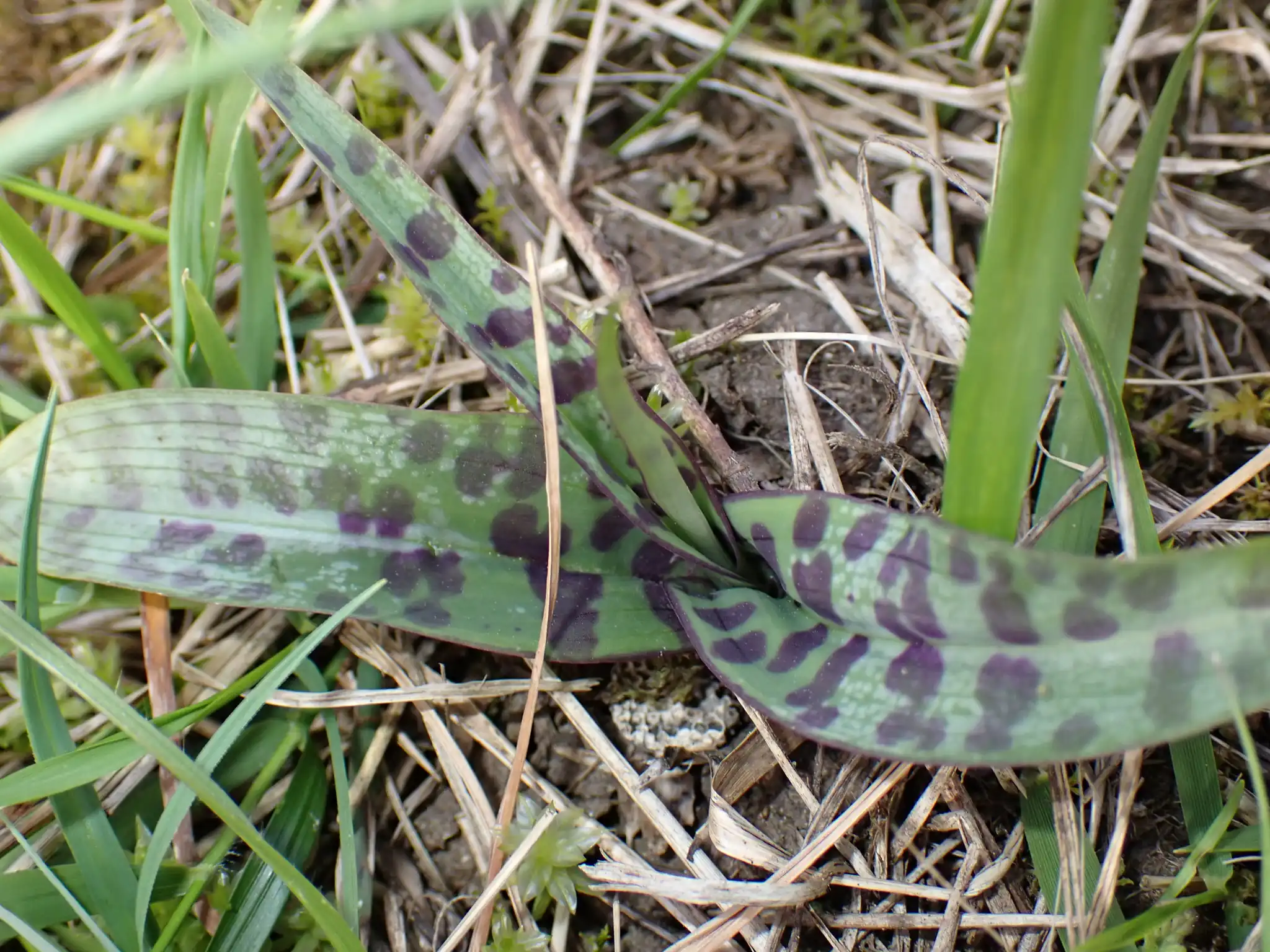
Dactylorhiza fuchsii is a hardy terrestrial geophyte with upright stems rising from palmate underground tubers. Glossy bright green leaves feature distinct dark purple spots, forming a basal rosette that gives rise to dense, cylindrical spikes of pale pink to purplish flowers in summer.
The lower petals feature intricate dark purple chevron patterns that direct insect pollinators to the three-lobed labellum. Its root system relies on symbiotic soil mycorrhizae rather than standard root hairs for nutrient intake.
Uses & Benefits:
Essentials
At a Glance
Plant Type
Bulb Corm Tuber
Height
24"
Width
8"
Light
Full Sun, Partial Sun
Zones
4, 5, 6, 7, 8
Water
Medium to High
Humidity
Moderate to High
Lifespan
Perennial
Native To
Europe, Temperate Asia
Toxicity
Non-Toxic
Bloom period
Late spring – Mid summer
In flower about 3 months of the year
Planting
How to Grow
- Plant dormant tubers in early spring with the growing tip positioned 1 to 2 inches below the soil surface.
- Choose a location with full sun to partial shade and alkaline to neutral soil rich in organic matter.
- Water regularly to keep the root zone consistently moist throughout the spring and summer growing season.
- Allow the foliage to die back completely in fall to transfer nutrients back into the underground tubers before winter.
Pro Tip
Maintain steady root-zone moisture through summer growth without creating stagnant conditions, and top-dress lightly with leaf mold instead of synthetic fertilizers.
Keep It Thriving
Care Guide
Do
- Keep the soil evenly moist through active spring growth and summer flowering.
- Incorporate leaf mold or crushed limestone to maintain a neutral to alkaline pH.
- Protect emerging spring shoots from slugs and snails.
Don't
- Do not cut back green leaves before they turn yellow and die naturally in fall.
- Do not apply heavy synthetic chemical fertilizers, which damage beneficial mycorrhizal fungi.
- Do not allow the soil to dry out completely during the summer growing season.
Seasonal Care Calendar
| Task | Jan | Feb | Mar | Apr | May | Jun | Jul | Aug | Sep | Oct | Nov | Dec |
|---|---|---|---|---|---|---|---|---|---|---|---|---|
| Divide | ||||||||||||
| Mulch | ||||||||||||
| Pest Check | ||||||||||||
| Plant |
Watch Out For
Pests & Diseases
Common Pests
Common Diseases
In the Garden
Landscape Uses & Companions
Landscape Uses
Companion Plants
Multiply
Propagation Methods
Good to Know
Common Questions
Common Spotted Orchid questions
What zones can Common Spotted Orchid grow in?
Common Spotted Orchid is hardy in USDA Zones 4–8: in that range it survives winter in the ground. Warmer than Zone 8, winter isn't the problem: it prefers colder winters, and summer heat can shorten its life.
Is Common Spotted Orchid deer resistant?
Not reliably. Deer may browse Common Spotted Orchid, especially tender spring growth — plan on repellents or fencing where pressure is high.
When does Common Spotted Orchid bloom?
Common Spotted Orchid typically blooms from late spring to mid-summer. Exact timing shifts a week or two with your zone — Sow's bloom calendar maps it to your garden.
Does Common Spotted Orchid need full sun?
Common Spotted Orchid does best in full sun to part shade. In hot climates, afternoon shade keeps blooms fresher longer.
Keep exploring
Explore the genus
Hardy in your zone?
Grow Common Spotted Orchid with confidence
See it in a design of your actual yard, get zone-matched care reminders, and track it season by season in your garden journal.