The Story
Plant Bio
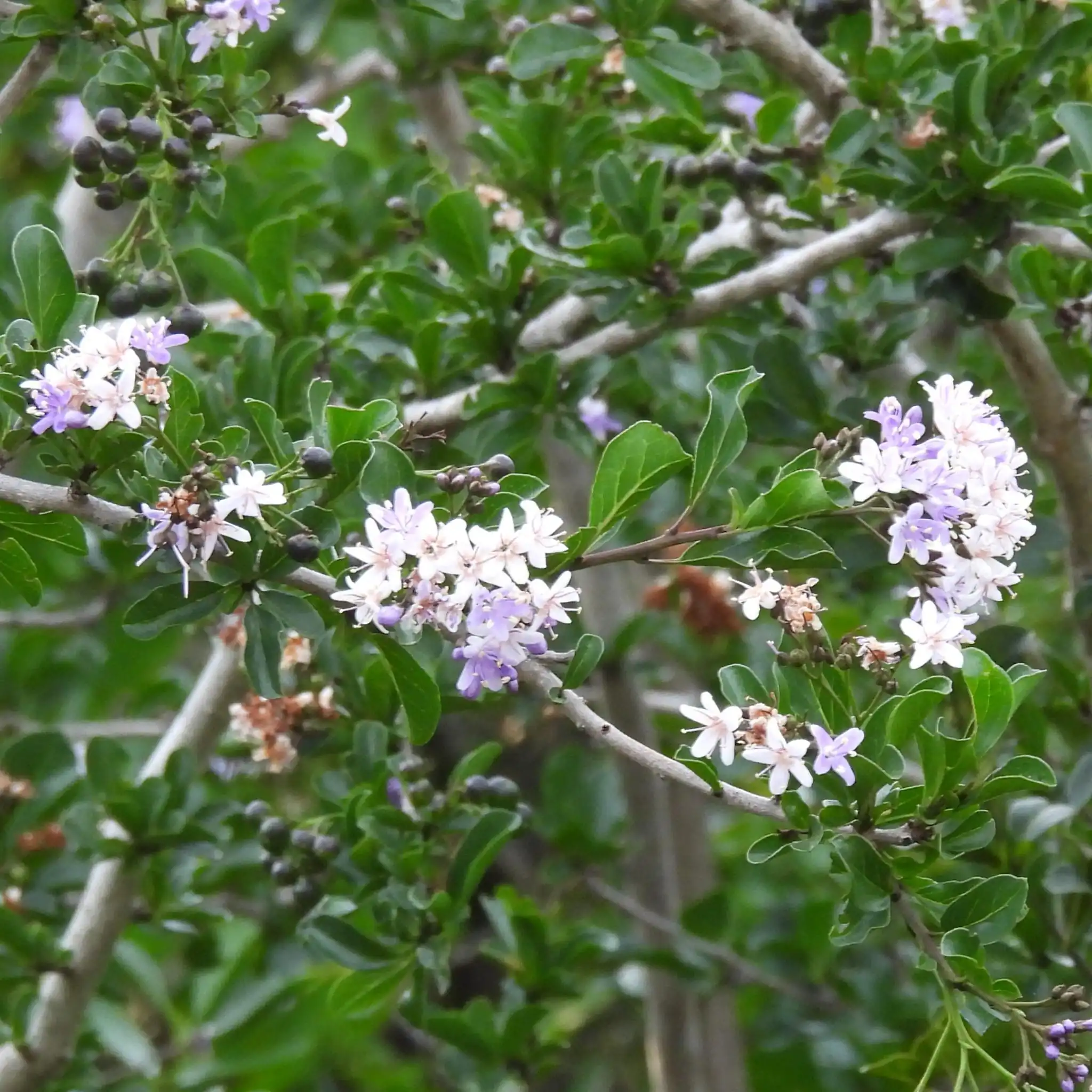
Ehretia rigida is a deciduous multi-stemmed shrub or small tree 6 to 12 feet tall and wide in cultivation, forming an untidy rounded crown of tangled, arching and drooping branches. The stiff, rough-textured dark green leaves cluster at the tips of short spur shoots, falling in winter and flushing with spring growth.
It bears dense terminal clusters of small sweetly scented pale lilac-mauve to white flowers 7 mm across in spring into summer, carried in coiled scorpioid cymes. Plants are dioecious, so only female plants set the round orange-red to black fruits that birds eat; male plants flower only.
Uses & Benefits:
Essentials
At a Glance
Plant Type
Shrub
Height
144"
Width
144"
Light
Full Sun, Partial Sun
Zones
7, 8, 9, 10
Water
Low
Humidity
Low to moderate
Lifespan
Woody perennial, decades
Native To
Eastern and southern Africa
Toxicity
Ripe fruit edible but unpalatable; toxicity unknown
Bloom period
Late spring – Early summer
In flower about 2 months of the year
Planting
How to Grow
- Plant in full sun to part sun in well-draining sandy soil after last frost.
- Set the rootball level with the soil surface and backfill without burying the stems.
- Water deeply at planting, then water sparingly once established; it is drought resistant.
- Mulch thinly to conserve moisture and prune to thin or shape after bloom.
Pro Tip
Thin to open the tangle after flowering and do not shear it into a ball; buy a female plant if you want fruit, since males bloom but never set berries.
Keep It Thriving
Care Guide
Do
- Plant in sharply draining soil in full sun to light shade.
- Water to establish, then keep on low water.
- Prune after flowering to thin crowded stems or clip as a hedge.
Don't
- Do not plant in soggy or heavy clay that stays wet in winter.
- Do not shear into a tight formal shape that removes flowering wood.
- Do not expect a tidy shrub; the tangled arching habit is its normal form.
Seasonal Care Calendar
| Task | Jan | Feb | Mar | Apr | May | Jun | Jul | Aug | Sep | Oct | Nov | Dec |
|---|---|---|---|---|---|---|---|---|---|---|---|---|
| Mulch | ||||||||||||
| Pest Check | ||||||||||||
| Plant | ||||||||||||
| Propagate | ||||||||||||
| Prune |
Watch Out For
Pests & Diseases
Common Pests
Common Diseases
In the Garden
Landscape Uses & Companions
Landscape Uses
Multiply
Propagation Methods
Good to Know
Common Questions
Puzzle Bush questions
What zones can Puzzle Bush grow in?
Puzzle Bush is hardy in USDA Zones 7–10: in that range it survives winter in the ground. Colder than Zone 7, grow it in a container you can move to shelter for the winter.
When does Puzzle Bush bloom?
Puzzle Bush typically blooms from late spring to early summer. Exact timing shifts a week or two with your zone — Sow's bloom calendar maps it to your garden.
Does Puzzle Bush need full sun?
Puzzle Bush does best in full sun to part shade. In hot climates, afternoon shade keeps blooms fresher longer.
Is Puzzle Bush drought tolerant?
Yes — once established (usually after the first full season), Puzzle Bush handles dry spells with minimal watering. Water deeply its first year to build the root system that makes that possible.
More Ehretia to compare
Keep exploring
Explore the genus
Hardy in your zone?
Grow Puzzle Bush with confidence
See it in a design of your actual yard, get zone-matched care reminders, and track it season by season in your garden journal.