
Species
 Nandina domesticaHeavenly Bamboo
10 other cultivars
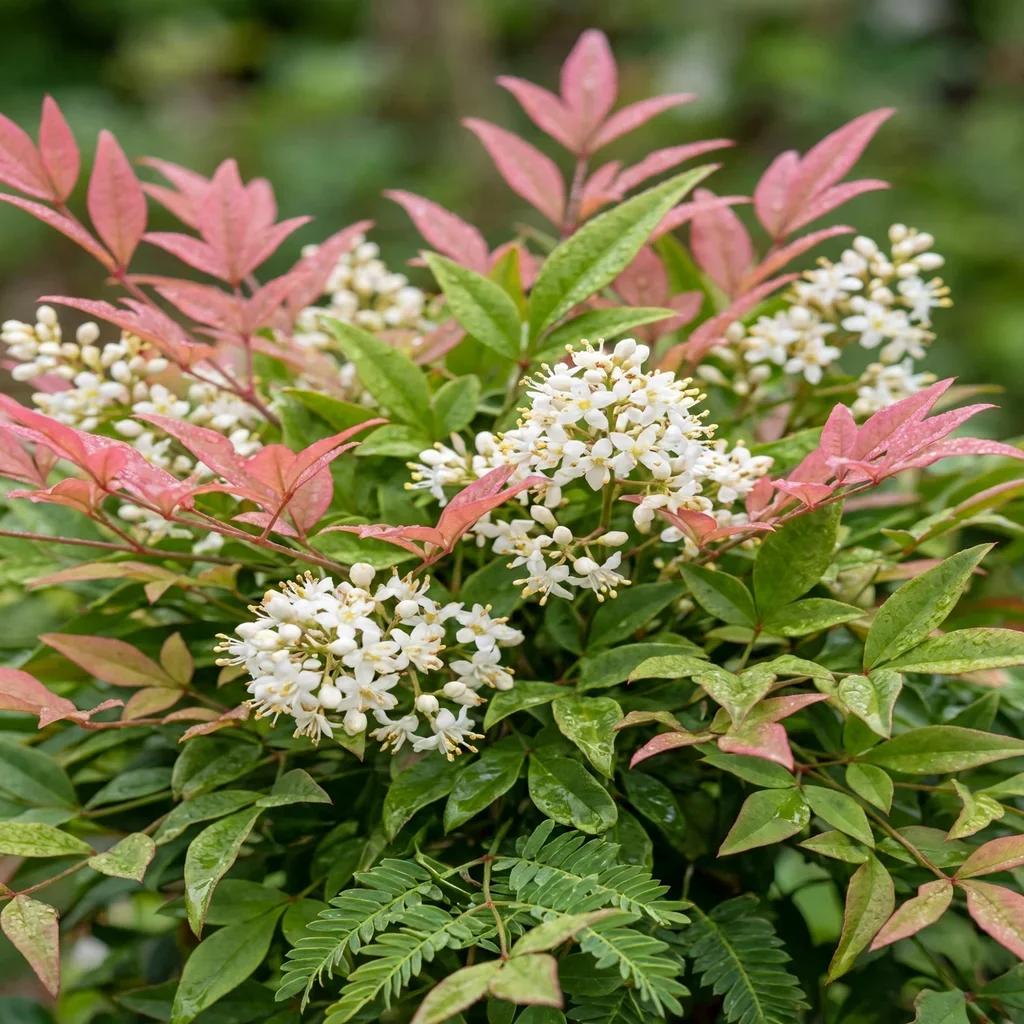 ‘Blush Pink’Blush Pink Heavenly Bamboo
 ‘Gulf Stream’Gulf Stream Nandina
 ‘Seika’Obsession Nandina
 ‘Harbor Dwarf’Heavenly Bamboo
 ‘Jaytee’Harbor Dwarf Heavenly Bamboo
 ‘Compacta’Compact Heavenly Bamboo
 ‘Aka’Aka Blush Pink Heavenly Bamboo
 ‘Fire Power’Heavenly Bamboo
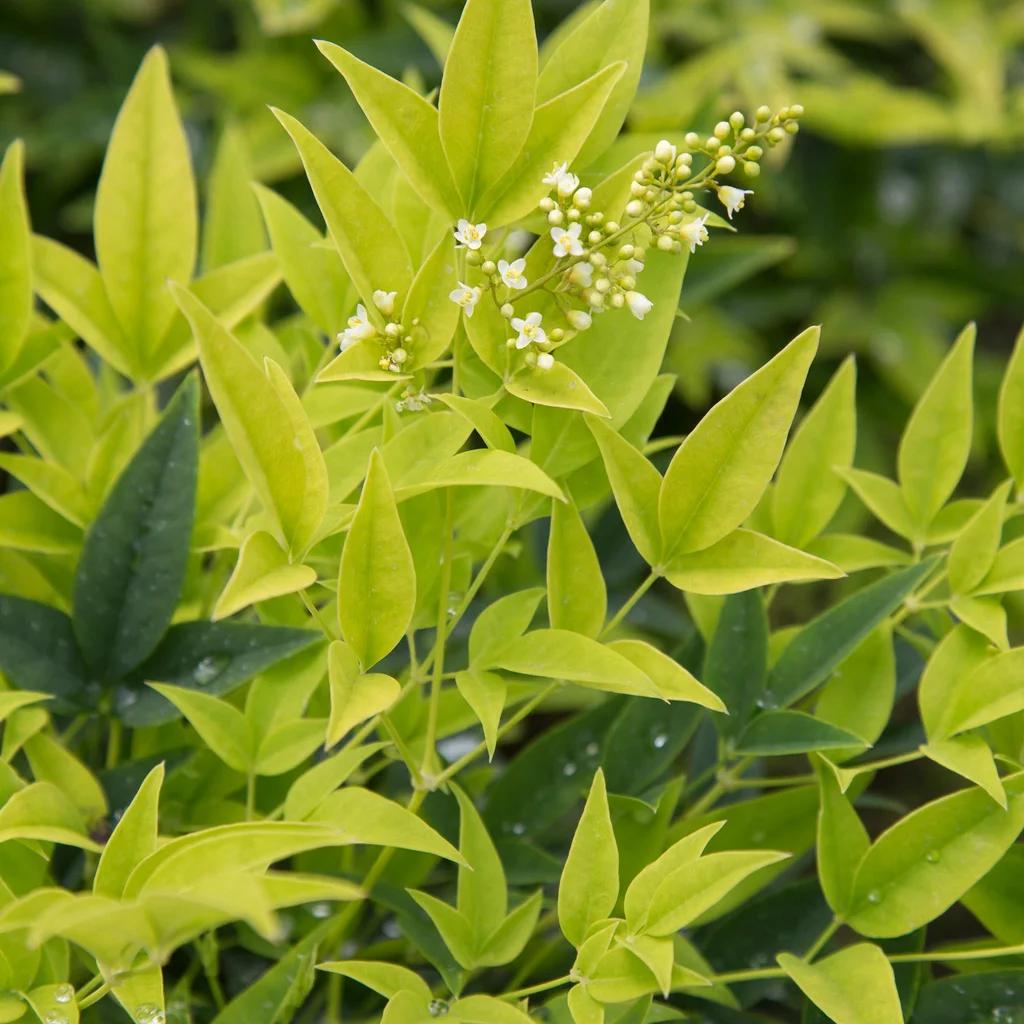 ‘Lemon and Lime’Heavenly Bamboo
 ‘Moon Bay’Heavenly Bamboo
The Story
Plant Bio
Nandina domestica, commonly known as heavenly bamboo, is an erect, evergreen shrub native to eastern Asia that features delicate, compound foliage resembling bamboo leaves. In late spring, it produces terminal panicles of small white flowers followed by bright red winter berries, though the species can aggressively colonize natural areas via bird-dispersed seeds.
'Flirt' is a dwarf, tightly mounded cultivar distinguished by its persistent wine-red new growth that retains its deep purple coloration through the heat of summer. This sterile-leaning selection rarely flowers or fruits, making it a safer landscape alternative to the invasive parent species.
Uses & Benefits:
Essentials
At a Glance
Plant Type
Shrub
Height
24"
Width
24"
Light
Full Sun, Partial Sun
Zones
6, 7, 8, 9, 10
Water
Low to moderate
Humidity
High
Lifespan
Perennial
Native To
Asia
Toxicity
Highly toxic to humans and animals
Bloom period
Late spring – Summer
In flower about 4 months of the year
Marketplace
Where to Buy
Shipping costs Year-round shipping Free shipping
Planting
How to Grow
- Select a site with full sun to partial shade, ensuring the soil is well-drained to prevent root rot.
- Dig a hole twice as wide as the root ball and set the plant at the same depth it was in the container.
- Water deeply after planting and maintain consistent moisture until the root system is established.
- Apply a balanced, slow-release fertilizer in early spring to support deep foliage color.
Pro Tip
Avoid shearing this dwarf shrub into formal shapes; tight shearing removes the wine-red foliage tips and exposes bare, woody interior stems.
Keep It Thriving
Care Guide
Do
- Grow in full sun to maximize the intensity of the red and purple foliage colors.
- Ensure the soil drains freely to avoid waterlogging and root rot.
- Apply a layer of organic mulch around the base to retain soil moisture and regulate root temperature.
Don't
- Do not shear the plant into formal shapes, which removes wine-red growth tips and leaves bare wood.
- Do not plant in highly alkaline soils, which can cause leaf chlorosis.
- Do not propagate this patented cultivar, as unauthorized vegetative propagation is legally prohibited.
Seasonal Care Calendar
| Task | Jan | Feb | Mar | Apr | May | Jun | Jul | Aug | Sep | Oct | Nov | Dec |
|---|---|---|---|---|---|---|---|---|---|---|---|---|
| Fertilize | ||||||||||||
| Mulch | ||||||||||||
| Pest Check | ||||||||||||
| Prune |
Watch Out For
Pests & Diseases
Common Pests
Common Diseases
In the Garden
Landscape Uses & Companions
Landscape Uses
Companion Plants
Multiply
Propagation Methods
Good to Know
Common Questions
Flirt Nandina questions
What zones can Flirt Nandina grow in?
Flirt Nandina is hardy in USDA Zones 6–10. Inside that range it survives winter in the ground; outside it, grow it as an annual or a container plant you protect.
Is Flirt Nandina deer resistant?
Yes — Flirt Nandina is rated deer-resistant. Deer typically pass it over, though extreme hunger can override any plant's defenses.
When does Flirt Nandina bloom?
Flirt Nandina typically blooms in late spring through summer. Exact timing shifts a week or two with your zone — Sow's bloom calendar maps it to your garden.
Does Flirt Nandina need full sun?
Flirt Nandina does best in full sun to part shade. In hot climates, afternoon shade keeps blooms fresher longer.
Is Flirt Nandina drought tolerant?
Yes — once established (usually after the first full season), Flirt Nandina handles dry spells with minimal watering. Water deeply its first year to build the root system that makes that possible.
More Nandina to compare
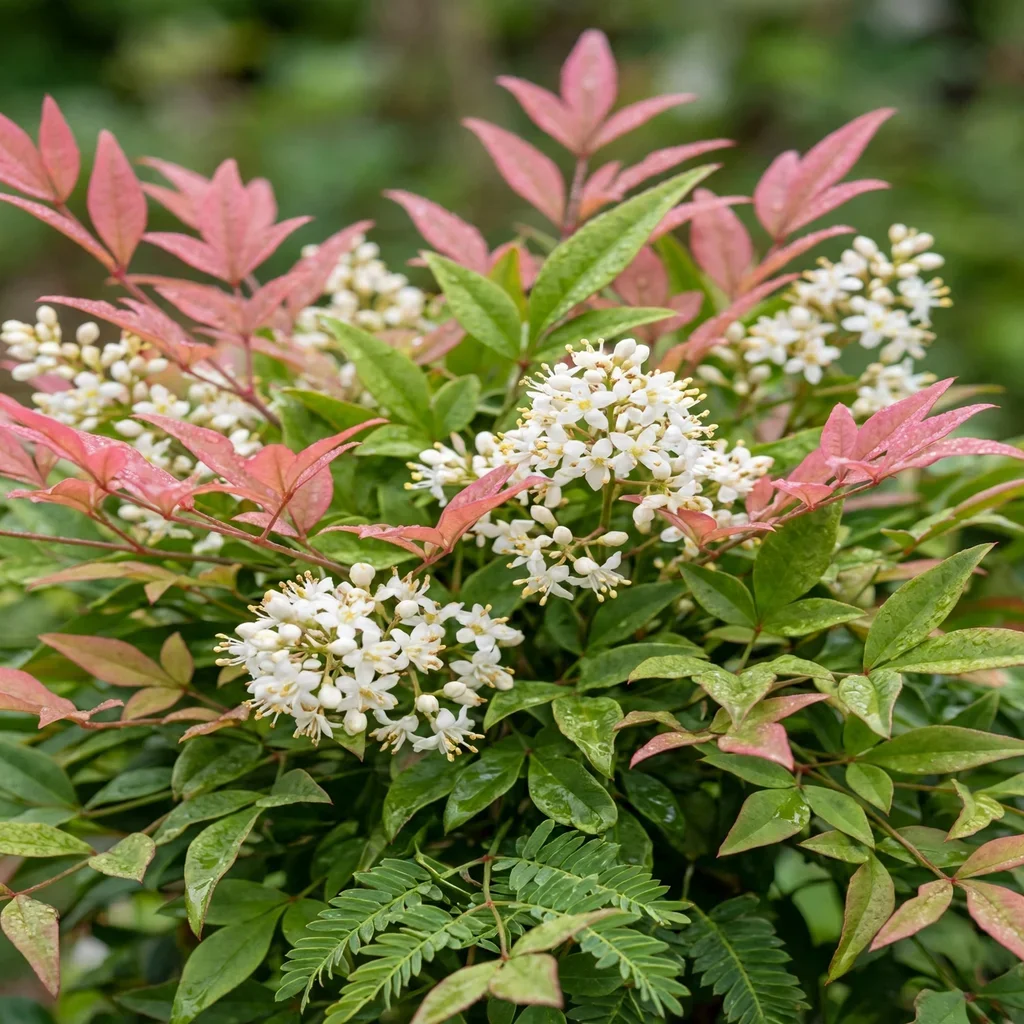
Blush Pink Heavenly Bamboo
Nandina domestica 'Blush Pink'
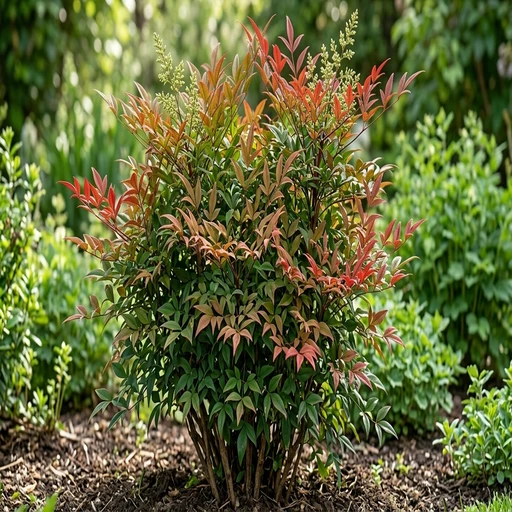
Gulf Stream Nandina
Nandina domestica 'Gulf Stream'
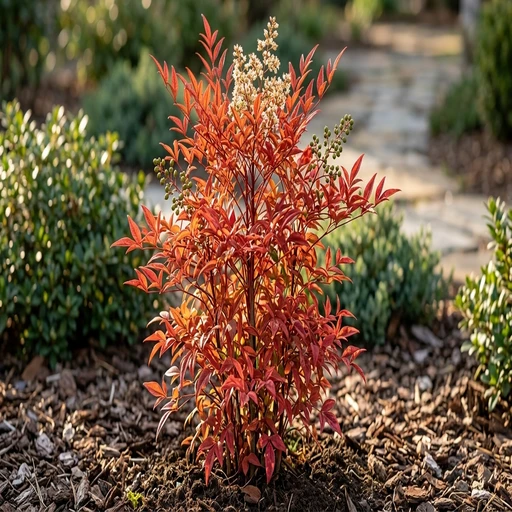
Obsession Nandina
Nandina domestica 'Seika'
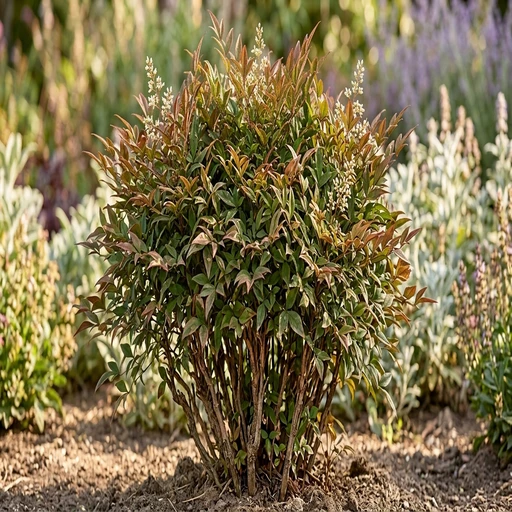
Heavenly Bamboo
Nandina domestica 'Harbor Dwarf'
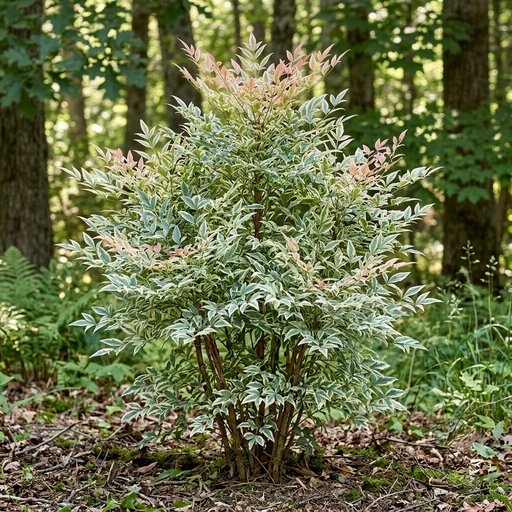
Harbor Dwarf Heavenly Bamboo
Nandina domestica 'Jaytee'
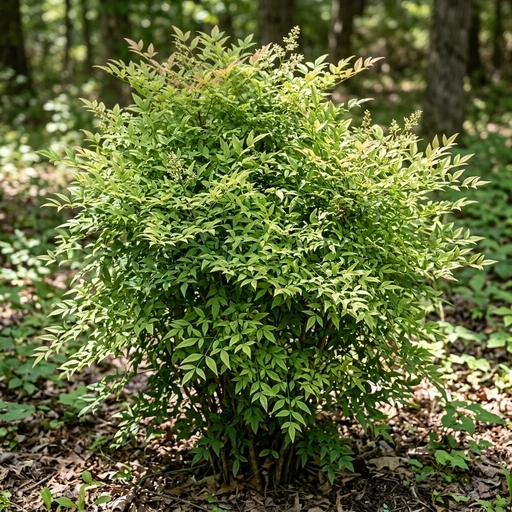
Compact Heavenly Bamboo
Nandina domestica 'Compacta'
Keep exploring
Explore the genus
Hardy in your zone?
Grow Flirt Nandina with confidence
See it in a design of your actual yard, get zone-matched care reminders, and track it season by season in your garden journal.