
Species
 Nandina domesticaHeavenly Bamboo
10 other cultivars
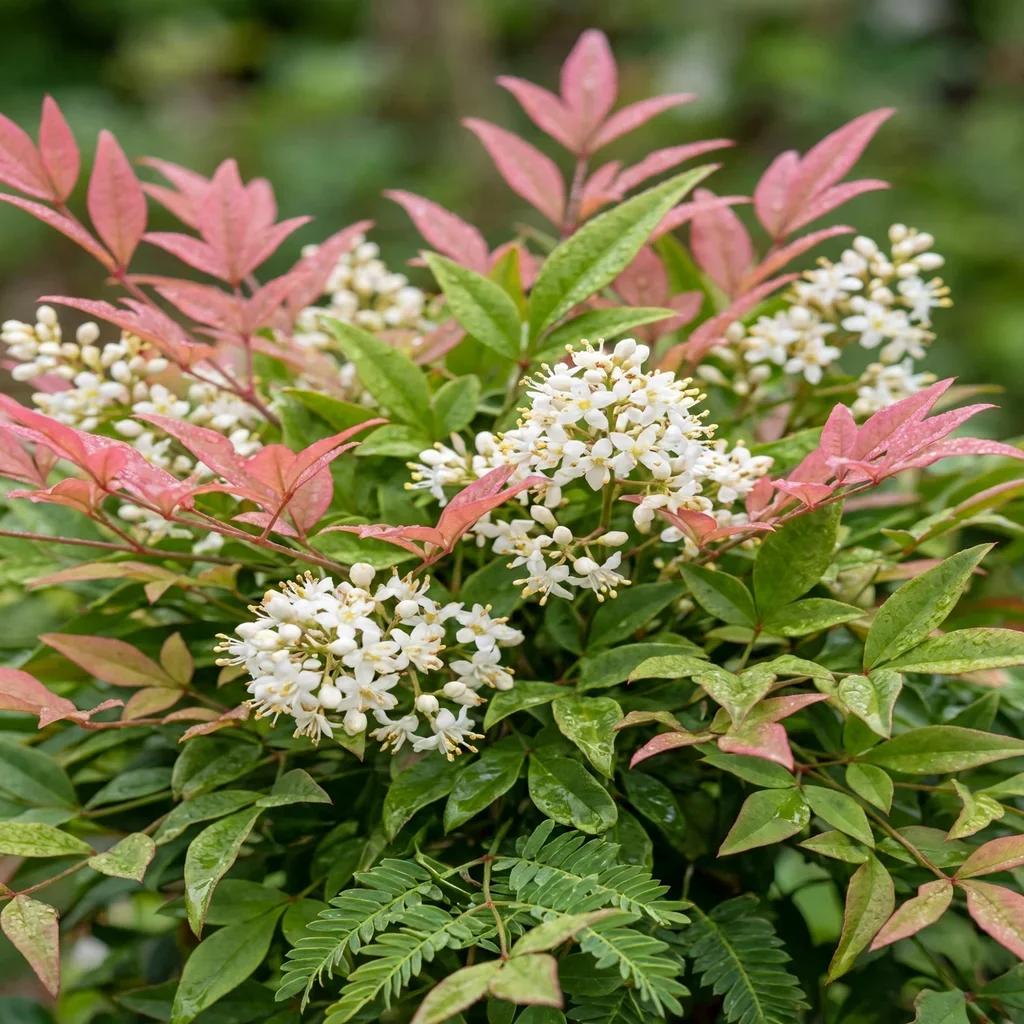 ‘Blush Pink’Blush Pink Heavenly Bamboo
 ‘Gulf Stream’Gulf Stream Nandina
 ‘Seika’Obsession Nandina
 ‘Harbor Dwarf’Heavenly Bamboo
 ‘Jaytee’Harbor Dwarf Heavenly Bamboo
 ‘Compacta’Compact Heavenly Bamboo
 ‘Aka’Aka Blush Pink Heavenly Bamboo
 ‘Fire Power’Heavenly Bamboo
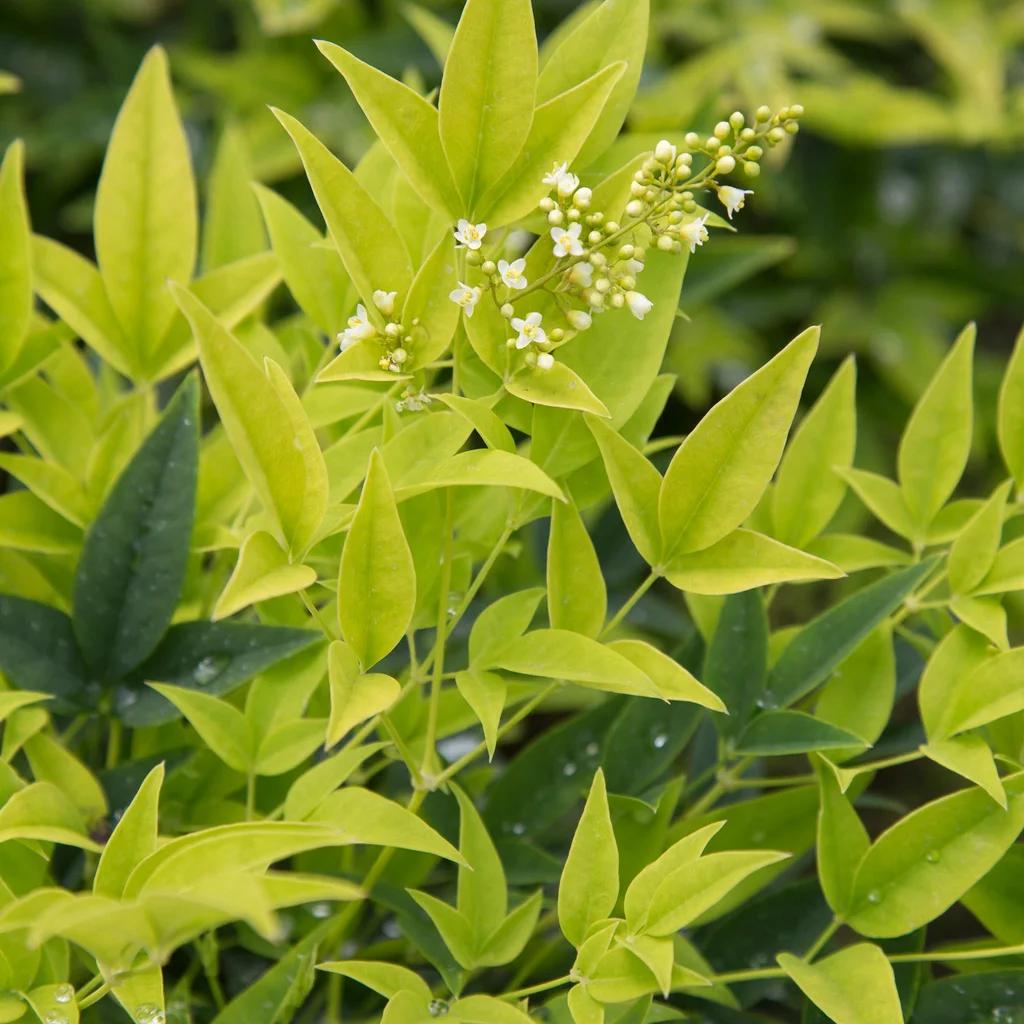 ‘Lemon and Lime’Heavenly Bamboo
 ‘Flirt’Flirt Nandina
The Story
Plant Bio
Nandina domestica, commonly known as heavenly bamboo, is an upright, multi-stemmed evergreen shrub native to eastern Asia that belongs to the barberry family rather than the grass family. It features finely divided, bi- to tri-pinnately compound leaves and produces loose terminal panicles of small white flowers with prominent yellow anthers in late spring to early summer.
'Moon Bay' is a compact, dense, and globular selection that reaches two to three feet in height and width, originating as a chance seedling in Houston, Texas. It is distinguished by its fine-textured branching, bright lime-green to bronze-red spring foliage, and a lower-fruiting habit compared to the species.
Uses & Benefits:
Essentials
At a Glance
Plant Type
Shrub
Height
36"
Width
36"
Light
Full Sun, Partial Sun
Zones
6, 7, 8, 9
Water
Low to moderate
Humidity
High tolerance
Lifespan
Perennial
Native To
Eastern Asia
Toxicity
Toxic to pets, livestock, and birds
Bloom period
Late spring – Early summer
In flower about 2 months of the year
Marketplace
Where to Buy
Shipping costs Year-round shipping Free shipping
Planting
How to Grow
- Select a planting site in full sun to partial shade with rich, well-drained soil, ensuring the location does not collect standing water.
- Dig a hole twice as wide as the root ball and set the plant at the same depth it was growing in its container.
- Water deeply at planting and maintain consistent moisture until the root system is established.
- Apply a balanced, slow-release general-purpose fertilizer once annually in early spring to support new growth.
Pro Tip
Prune only to remove dead wood or lightly shape in late winter; shearing heavily into old, leafless stems prevents reliable regeneration of new foliage.
Keep It Thriving
Care Guide
Do
- Plant in full sun to maximize the intensity of the red foliage coloration.
- Ensure the soil is well-draining to prevent root rot.
- Clear fallen debris from around the base of the plant to minimize fungal leaf spot.
Don't
- Do not plant in soggy, waterlogged, or poorly drained soils.
- Do not shear heavily into old, bare wood when pruning.
- Do not allow pets or livestock to ingest the toxic berries or foliage.
Seasonal Care Calendar
| Task | Jan | Feb | Mar | Apr | May | Jun | Jul | Aug | Sep | Oct | Nov | Dec |
|---|---|---|---|---|---|---|---|---|---|---|---|---|
| Fertilize | ||||||||||||
| Pest Check | ||||||||||||
| Prune | ||||||||||||
| Spring Cleanup |
Watch Out For
Pests & Diseases
Common Pests
Common Diseases
In the Garden
Landscape Uses & Companions
Landscape Uses
Companion Plants
Multiply
Propagation Methods
Good to Know
Common Questions
Heavenly Bamboo questions
What zones can Heavenly Bamboo grow in?
Heavenly Bamboo is hardy in USDA Zones 6–9. Inside that range it survives winter in the ground; outside it, grow it as an annual or a container plant you protect.
Is Heavenly Bamboo deer resistant?
Not reliably. Deer may browse Heavenly Bamboo, especially tender spring growth — plan on repellents or fencing where pressure is high.
When does Heavenly Bamboo bloom?
Heavenly Bamboo typically blooms in late spring through early summer. Exact timing shifts a week or two with your zone — Sow's bloom calendar maps it to your garden.
Does Heavenly Bamboo need full sun?
Heavenly Bamboo does best in full sun to part shade. In hot climates, afternoon shade keeps blooms fresher longer.
Is Heavenly Bamboo drought tolerant?
Yes — once established (usually after the first full season), Heavenly Bamboo handles dry spells with minimal watering. Water deeply its first year to build the root system that makes that possible.
More Nandina to compare
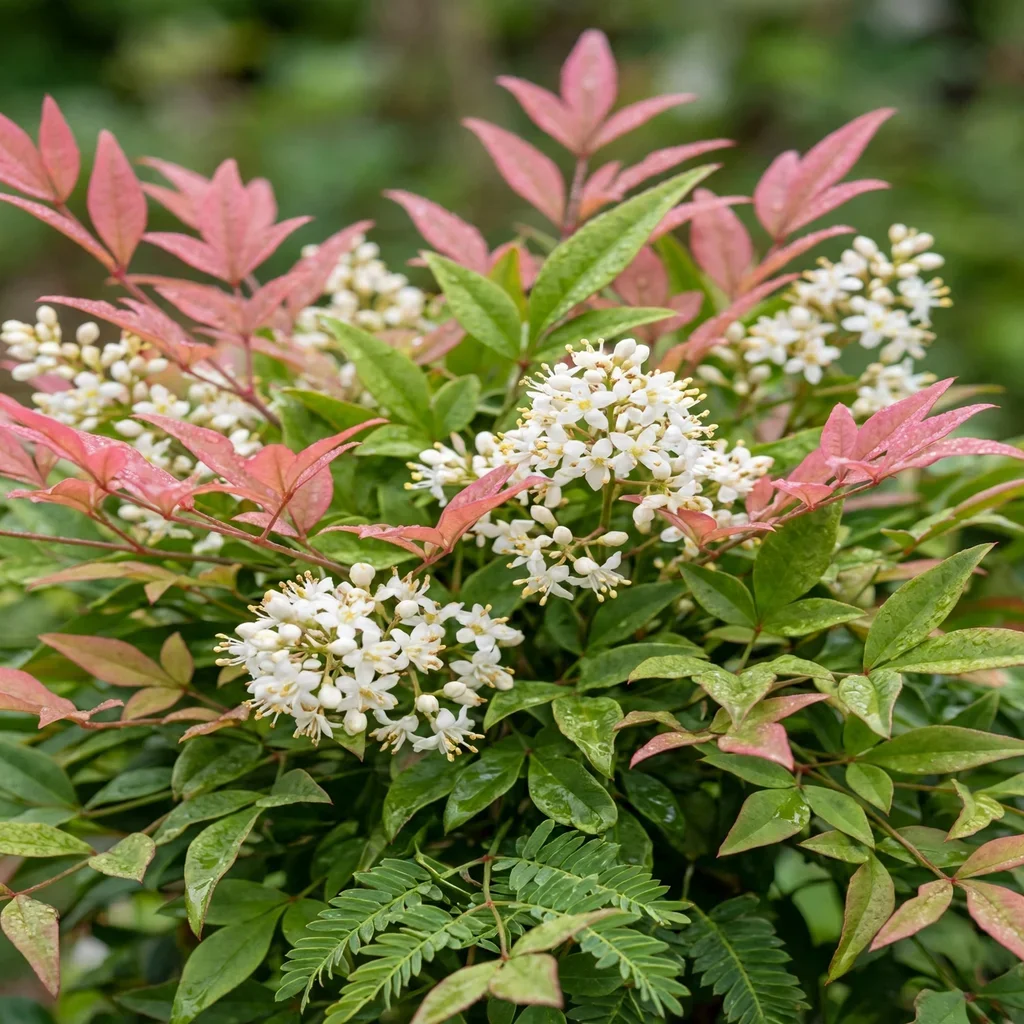
Blush Pink Heavenly Bamboo
Nandina domestica 'Blush Pink'
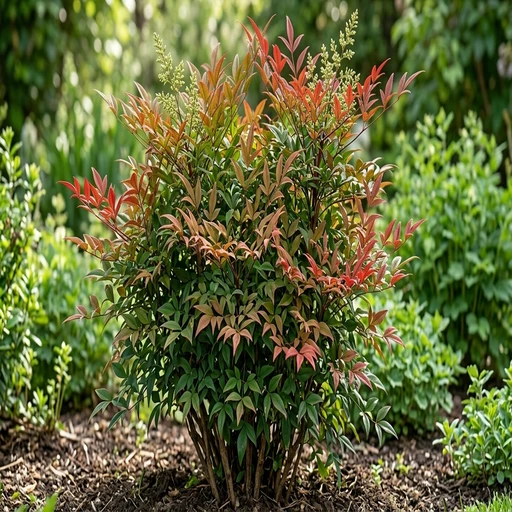
Gulf Stream Nandina
Nandina domestica 'Gulf Stream'
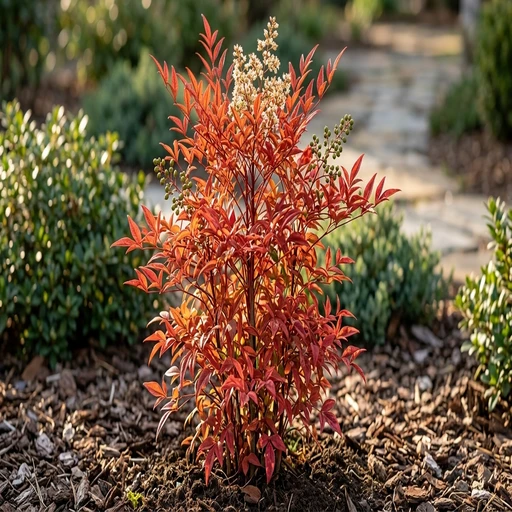
Obsession Nandina
Nandina domestica 'Seika'
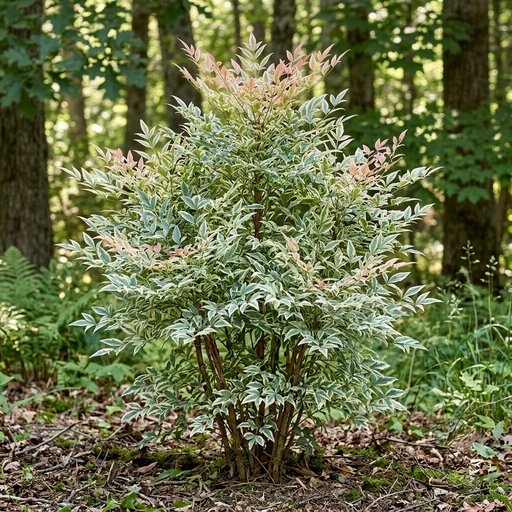
Harbor Dwarf Heavenly Bamboo
Nandina domestica 'Jaytee'
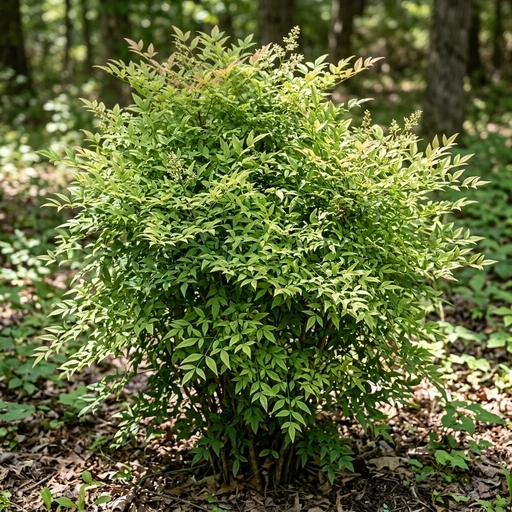
Compact Heavenly Bamboo
Nandina domestica 'Compacta'
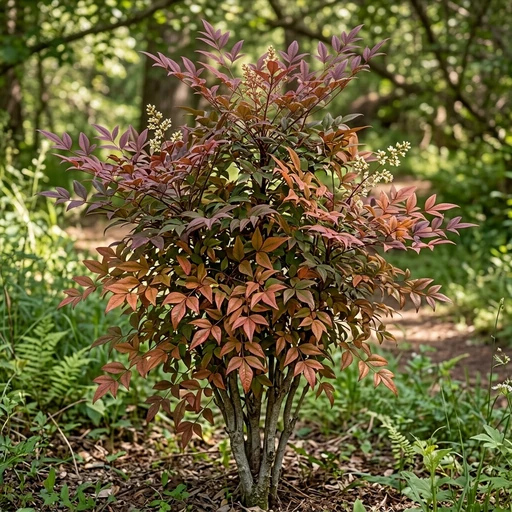
Aka Blush Pink Heavenly Bamboo
Nandina domestica 'Aka'
Keep exploring
Explore the genus
Hardy in your zone?
Grow Heavenly Bamboo with confidence
See it in a design of your actual yard, get zone-matched care reminders, and track it season by season in your garden journal.