The Story
Plant Bio
Canella winterana, the wild cinnamon, is a very slow-growing evergreen shrub to small tree reaching 15 to 20 feet in South Florida, with a straight trunk, slender spreading branches and a dense round-headed crown. The leaves are thick, glossy evergreen, 3 to 5 inches long, aromatic when crushed, carried on a compact crown that is taller than broad.
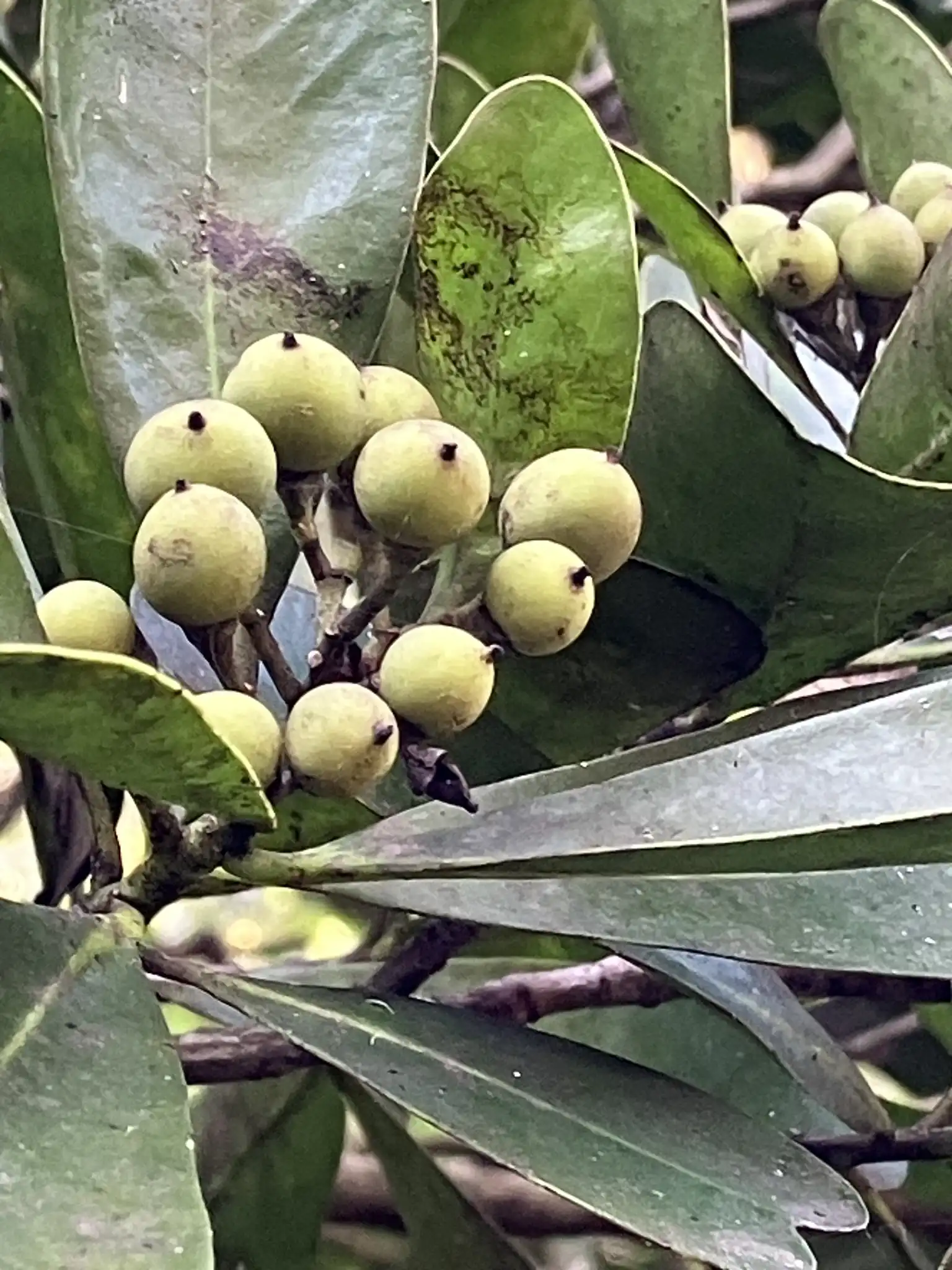
The flowers are small, about one-quarter inch across, borne in tight terminal clusters with thick fleshy deep red to purplish-red petals and yellow anthers, opening with a daffodil-like fragrance from late spring into summer followed by purplish-red berries in fall. The bark and crushed leaves smell of cinnamon but all parts except the berries are poisonous, and the plant is distinguished by extreme salt tolerance and adaptation to alkaline limestone hammocks.
Uses & Benefits:
Essentials
At a Glance
Plant Type
Tree
Height
240"
Width
144"
Light
Full Sun, Partial Sun
Zones
9, 10
Water
Moderate
Humidity
High
Lifespan
Long-lived
Native To
South Florida, Caribbean, Mexico, Venezuela
Toxicity
Toxic if ingested
Bloom period
Late spring – Summer
In flower about 4 months of the year
Planting
How to Grow
- Choose a frost-free spot in full sun to light shade with free-draining alkaline limestone or sandy soil.
- Plant the container-grown tree at the same depth it grew in the pot and water in deeply.
- Mulch lightly with 2 to 3 inches of organic mulch kept back from the trunk.
- Water regularly until established, then irrigate only during dry months.
Pro Tip
Plant in free-draining alkaline limestone or sandy soil in full sun to light shade; water only in dry months once established and never shear annually.
Keep It Thriving
Care Guide
Do
- Grow in alkaline, free-draining limestone or sandy soil
- Provide full sun to light shade
- Irrigate during extended dry periods in the first year
- Source only nursery-propagated plants
Don't
- Do not eat bark or leaves despite the cinnamon scent
- Do not shear annually or cut into old leafless wood
- Do not plant in acidic or waterlogged soil
- Do not wild-collect from native hammocks
Seasonal Care Calendar
| Task | Jan | Feb | Mar | Apr | May | Jun | Jul | Aug | Sep | Oct | Nov | Dec |
|---|---|---|---|---|---|---|---|---|---|---|---|---|
| Mulch | ||||||||||||
| Pest Check | ||||||||||||
| Plant | ||||||||||||
| Prune |
Watch Out For
Pests & Diseases
Common Pests
Common Diseases
In the Garden
Landscape Uses & Companions
Landscape Uses
Multiply
Propagation Methods
Good to Know
Common Questions
Wild Cinnamon questions
What zones can Wild Cinnamon grow in?
Wild Cinnamon is hardy in USDA Zones 9–10: in that range it survives winter in the ground. Colder than Zone 9, winters are too cold for it to survive outdoors.
When does Wild Cinnamon bloom?
Wild Cinnamon typically blooms from late spring to late summer. Exact timing shifts a week or two with your zone — Sow's bloom calendar maps it to your garden.
Does Wild Cinnamon need full sun?
Wild Cinnamon does best in full sun to part shade. In hot climates, afternoon shade keeps blooms fresher longer.
Is Wild Cinnamon drought tolerant?
Yes — once established (usually after the first full season), Wild Cinnamon handles dry spells with minimal watering. Water deeply its first year to build the root system that makes that possible.
Keep exploring
Explore the genus
Hardy in your zone?
Grow Wild Cinnamon with confidence
See it in a design of your actual yard, get zone-matched care reminders, and track it season by season in your garden journal.